


Chapter 1 of 6 · Fundamentals
Prevention
Introduction and Prevention Strategies
Expert statements on this page
No expert statements were drawn from this page.
Host summaries · secondary, not cited in answers
Educational content from recorded physician discussions — not medical advice. Talk to your (or your child's) care team about your situation.
Video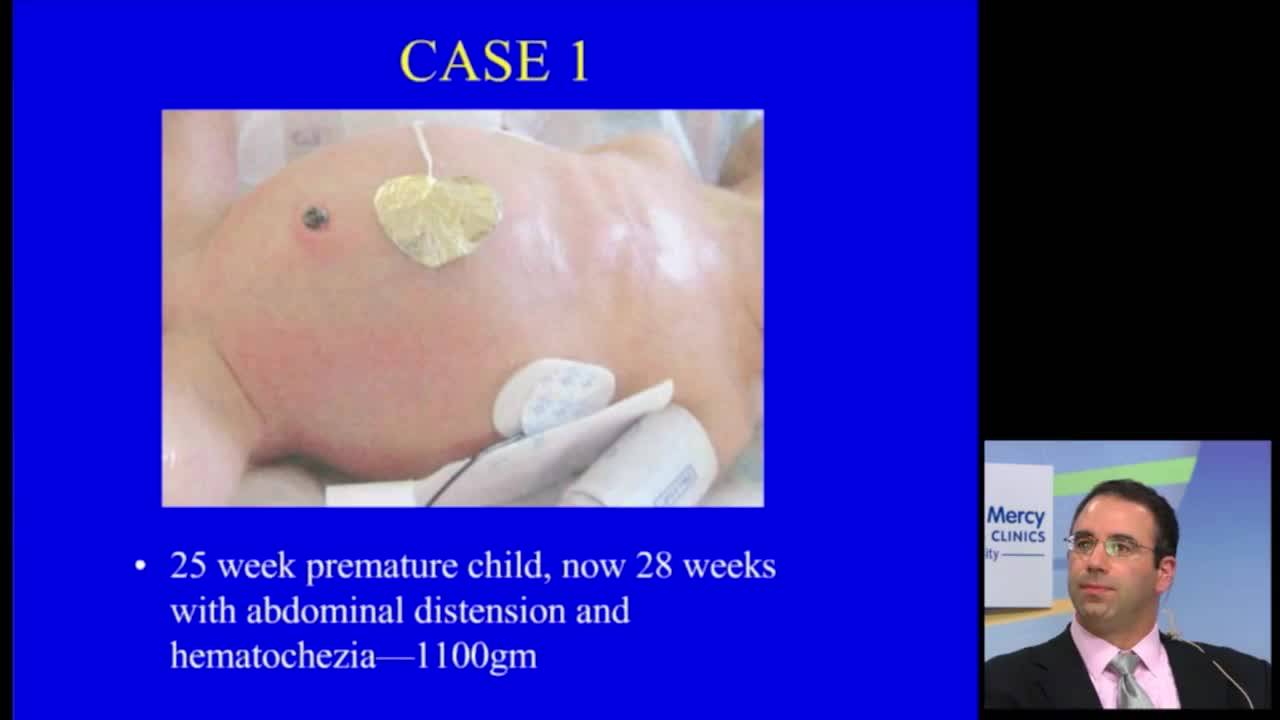
NEC: Update Course 2013
34 min · Published Sep 2013
Podcast
Necrotizing Enterocolitis with Dr. Gail Besner
46 min · Published May 2017
Podcast
Stay Current Throwbacks Necrotizing Enterocolitis with Dr. Gail Besner
47 min · Published May 2022
Video
Update Course Rewind 2025: Updates in NEC Management
11 min · Published Jul 2026
Video
Update Course Rewind: Laparotomy Over PPD 2022
Published Jul 2023
Video
Update Course 2022 - APSA PDC UPDATES - Mary Edwards, Paul Jeziorczak, Craig Lillehei, and Charles Snyder,
64 min · Published Sep 2022
Video
Impact of social determinants of health on outcomes in pediatric short bowel syndrome...
43 s · Published Aug 2026
Video
Advancements in Pediatric Intestinal Failure: Innovative Therapies and Improved Outcomes
17 min · Published Aug 2026
Podcast
Update Course Rewind: Omphalocele & Gastroschisis 2020
Miguel Guelfand · 15 min · Published Jul 2026
Video
Availability, utilization, and barriers to bowel ultrasound for necrotizing enterocolitis...
55 s · Published Jul 2026
Video
Malrotation and Volvulus with Trinity
Dr. Steve Rothenberg · 8 min · Published May 2026
Video
Malrotation Infant
Dr. Steve Rothenberg · 9 min · Published May 2026
Only a few other public items share this expert — go deeper there →
Video
Intestinal Atresia Types Explained: Grossfeld Classification for Pediatric Surgery
1 min · Published Sep 2026
Video
Derivation and validation of the Pediatric Community-Acquired Pneumonia Severity (PedCAPS) score: A prospective cohort study
50 s · Published Sep 2026
Video
FETO for Late-Diagnosed Severe Congenital Diaphragmatic Hernia (CDH) at Cincinnati Children's with Dr. Beth Rymeski
4 min · Published Sep 2026
Video
Severe Congenital Diaphragmatic Hernia (CDH) Case: FETO Management & Unexpected Findings with Dr. Beth Rymeski
3 min · Published Sep 2026
Video
Fetoscopic Endoluminal Tracheal Occlusion (FETO) Procedure: Step-by-Step Guide with Dr. Beth Rymeski
4 min · Published Sep 2026
Video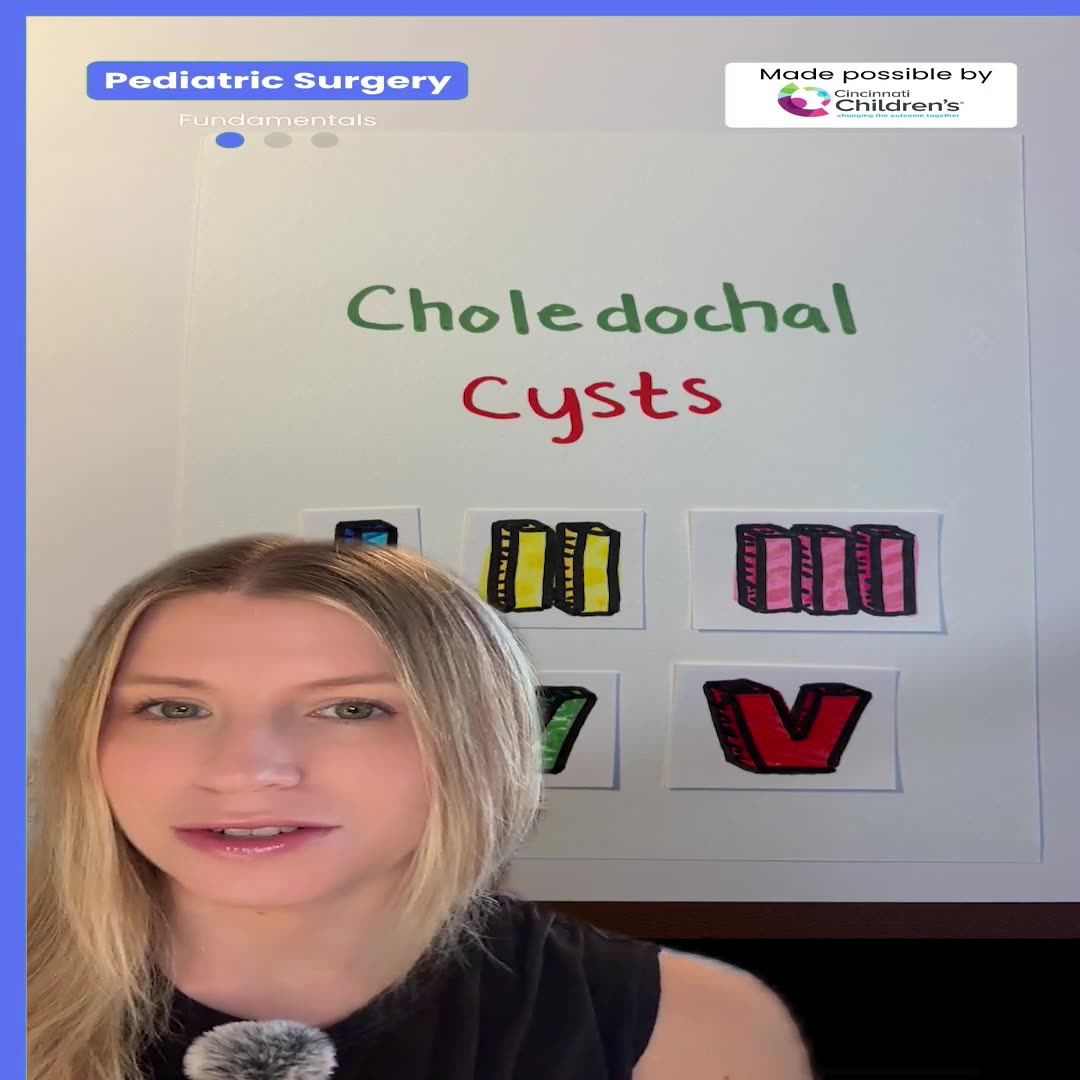
Choledochal Cyst Types Explained: Pediatric Surgery Fundamentals
1 min · Published Sep 2026
What the experts said
There are no clear predictive factors to identify which premature infants with early NEC will progress to require surgical intervention.
Many U.S. institutions do not routinely use probiotics despite evidence, due to uncertainty about formulation and dosing.
Pneumoperitoneum is the only single factor that would prompt operation; otherwise a constellation of findings (pneumatosis, hemodynamic instability, fixed loop, worsening acidosis/ventilation) is required.
Focal abdominal wall erythema is one of the most sensitive indicators for underlying dead bowel in NEC.
In a 600-g infant with pneumoperitoneum, transport to the OR increases risk of demise; bedside intervention (drainage or laparotomy) is preferred.
Bilateral grade 4 intraventricular hemorrhage does not alter surgical decision-making unless the family requests comfort measures only.
The 'Shishka baby' technique involves placing a tube through multiple necrotic segments with a few stitches to hold them together, then bringing both ends out as stomas with proximal diversion.
Bringing stomas out side-by-side in the incision (rather than separated) facilitates easier takedown without disturbing the entire abdominal cavity.
In pan-intestinal necrosis, decompressing distended bowel may reduce ischemia and salvage additional segments.
As of one year ago, no child with true NEC totalis (complete small bowel and colonic necrosis) has successfully survived intestinal transplant.
The threshold for viable bowel length has dropped to approximately 20 cm of small bowel, with better outcomes if the colon is intact.
Rate of feeding advancement does not correlate with development of necrotizing enterocolitis.
Probiotics have the most evidence for NEC prevention, supported by Cochrane database review.
Approximately 30% of infants treated with peritoneal drainage alone do not require subsequent laparotomy.
The Moss New England Journal trial showed no difference in outcomes between peritoneal drainage and laparotomy in extremely low birth weight infants with NEC, but the study population was heterogeneous.
Most panelists use 1 kg as the weight threshold above which they favor laparotomy over peritoneal drainage.
Primary anastomosis at initial NEC operation is rarely performed (8–10% of audience) due to inability to detect anastomotic leak in a sick neonate.
Dr. Miguel Guelfand presented impressive results with primary anastomosis in NEC at a prior conference.
Stoma takedown is typically performed at 4–6 weeks postoperatively and 2 kg body weight, though recent data (Andrew Badillo) suggest earlier reversal may be safe.