

From
EUPSA/ERNICA
Transition of Care - Parent-child interactions
Chapter 1 of 1 · Patient & Family Education
Transition framework
Developmental approach to transition of care in congenital anomalies
Expert statements on this page
No expert statements were drawn from this page.
Host summaries · secondary, not cited in answers
Educational content from recorded physician discussions — not medical advice. Talk to your (or your child's) care team about your situation.
Video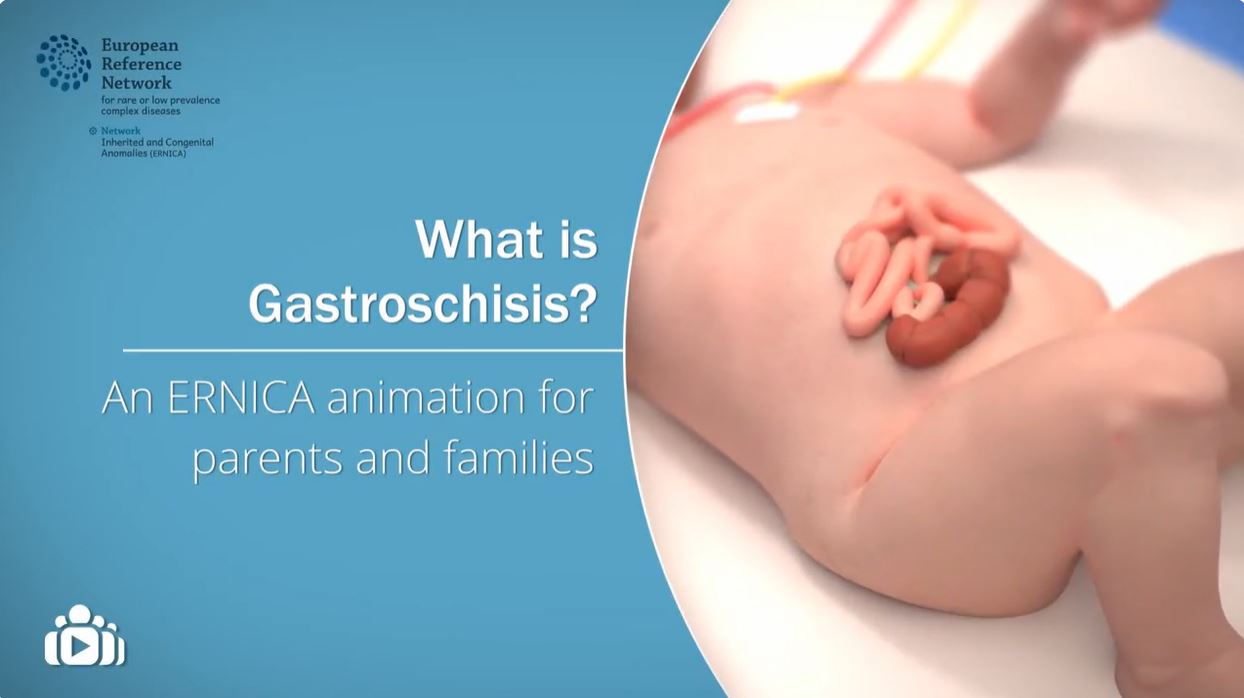
What is Gastroschisis? An ERNICA animation for parents and families
2 min · Published Dec 2023
Video
What is Omphalocele? An ERNICA animation for parents and families
3 min · Published Dec 2023
Video
What is Congenital Diaphragmatic Hernia (CDH)? An ERNICA animation for parents and families
3 min · Published Dec 2023
Video
What is small bowel atresia?: An ERNICA animation for parents and families
4 min · Published Dec 2023
Video
Hirschsprung-associated enterocolitis in children: An ERNICA animation for parents and families
3 min · Published Dec 2023
Video
Surgical treatment for Hirschsprung’s Disease: An ERNICA animation for parents and families
3 min · Published Dec 2023
What the experts said
Long-term follow up programs for children born with a congenital anomaly usually happen alongside the child's key developmental milestones.
Patient involvement and self awareness should be considered from an early stage, even though it is normal to address parents during the first years of life.
Patients should be informed about their own medical condition so that they can recognize problems in line with their developmental age, which is paramount to obtain intrinsic motivation and empower the child.
During outpatient evaluations, questions should be addressed directly to the child, and as the child grows older, focus should switch from parental to patients' and parents' needs.
Explaining the upcoming treatment plan and expected responsibilities to the patient will help them understand the need for follow up and why it is important to seek medical care if needed.
Asking for help can be difficult, especially for adolescents coping with problems that can be embarrassing or are considered taboo; bowel irrigations in patients with colorectal anomalies are a clear example.
Clinicians should teach children and adolescents how to ask for help, notwithstanding their need for independence and freedom.
The ultimate goal is to lead the patient to become independent in a safe and predictable environment.
Some parents need guidance in when and how to let go, and understanding that their child seeking and reaching independence is a normal part of development.
Clinicians and parents can encourage patients to formulate questions to ask during their next outpatient appointment, which helps children reflect on why they go to the hospital and on their inner doubts about their congenital anomaly.
Encouraging patients to formulate questions can trigger a conversation between child and parent concerning the disease itself and past hospital experiences.
Clinicians must acknowledge the parents' role in decision making, their knowledge, and their role in the patient's life.
Taking care of a child with a congenital anomaly can be stressful for a number of reasons, and some parents may become overprotective.
At the time of transition, parents need to learn how to transfer their knowledge to their children.
Referral of parents to support groups might be helpful during the transition period.
It is extremely important that parents and clinicians are able to identify and meet the patient's needs, but it is just as important to recognize when help is no longer needed and step back.
Stepping back when help is no longer needed helps children gain independence and become more confident to do things on their own, like managing their bowel irrigations to go out with friends or go camping.
Discussing social life aspects with both patient and parents might help patients identify the methods that fit them best and figure out how to best cope with their disease.
Dedicated questionnaires such as Ready Steady Go are available for adolescents and serve as a guideline to assess self awareness and readiness for taking care of their own health.
Spending time at the outpatient evaluation alone with the patient encourages direct contact with the clinician in a friendly and well known environment before transition to the adult department.
One-on-one time with the patient allows embarrassing topics or aspects that can be difficult to discuss with parents to be addressed.
Parents should receive an explanation on why discussing certain topics with the patient alone is important, so that there will be no conflict between parents and the child.