


From
StayCurrentMD
Update Course Rewind: Pectus Excavatum 2021
With Dr. Victor Garcia & Dr. Steven Rothenberg & Dr. Justin Wagner · hosted by Dr. Cecilia Gigena
Chapter 1 of 5 · Case-Based Learning
Case presentation
Introduction and Case Presentation
Expert statements on this page
No expert statements were drawn from this page.
Host summaries · secondary, not cited in answers
Educational content from recorded physician discussions — not medical advice. Talk to your (or your child's) care team about your situation.
Video
Cryoablation in 350 Nuss procedures
56 s · Published Oct 2023
Video
Cost and outcomes of intercostal nerve cryoablation versus thoracic epidural following the Nuss procedure
1 min · Published Oct 2023
Video
Update Course Rewind 2021 - Updates in Pectus
61 min · Published May 2022
Video
Quick Literature Updates Episode 16
4 min · Published Jan 2025
Podcast
Chest Wall Deformities with Dr. Robert Kelly
46 min · Published Jan 2017
Video
Update Course Rewind: 2021 Top Ten Key Takeaways
Dr. Todd Ponsky · 16 min · Published Oct 2021
Video
Intestinal Atresia Types Explained: Grossfeld Classification for Pediatric Surgery
1 min · Published Sep 2026
Video
Derivation and validation of the Pediatric Community-Acquired Pneumonia Severity (PedCAPS) score: A prospective cohort study
50 s · Published Sep 2026
Video
FETO for Late-Diagnosed Severe Congenital Diaphragmatic Hernia (CDH) at Cincinnati Children's with Dr. Beth Rymeski
4 min · Published Sep 2026
Video
Severe Congenital Diaphragmatic Hernia (CDH) Case: FETO Management & Unexpected Findings with Dr. Beth Rymeski
3 min · Published Sep 2026
Video
Fetoscopic Endoluminal Tracheal Occlusion (FETO) Procedure: Step-by-Step Guide with Dr. Beth Rymeski
4 min · Published Sep 2026
Video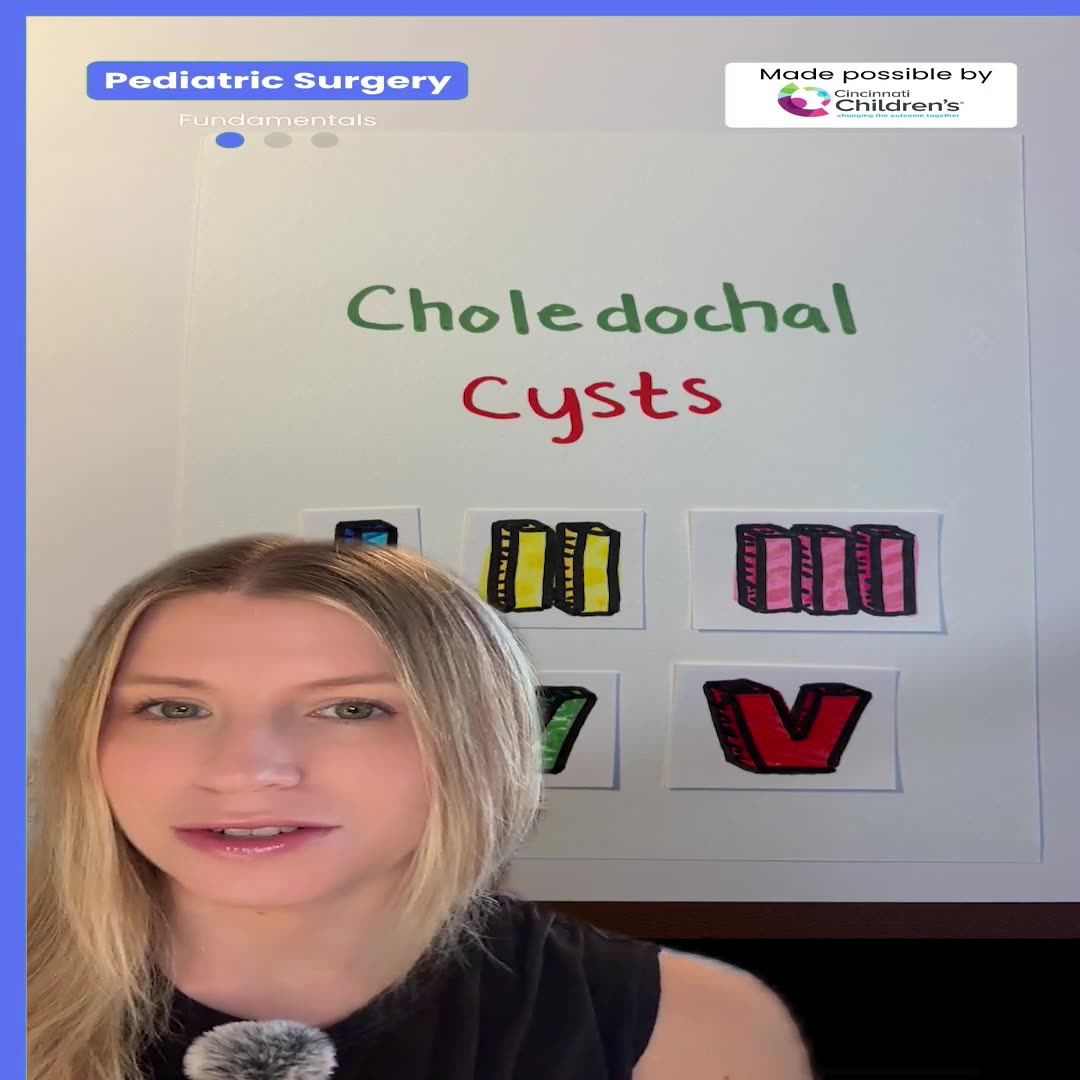
Choledochal Cyst Types Explained: Pediatric Surgery Fundamentals
1 min · Published Sep 2026
What the experts said
Cryoanalgesia technique involves counting down to the 4th rib and freezing underneath it for 2 minutes per rib, treating ribs 4 through 7.
Cryoanalgesia should not be performed on rib 8 or below because it can cause abdominal wall paralysis.
With cryoanalgesia, length of stay decreased from 4 days to 1 day.
Cryoanalgesia dramatically reduced median morphine equivalents compared to previous pain management methods.
There are no long-term studies on cryoanalgesia outcomes.
Medical devices and implants are not required to undergo clinical trials before being introduced to market, unlike drugs.
Erector spinal catheters are placed by the pain team with ultrasound guidance, positioned juxtaposed to but not in the vertebral space.
With erector spinal catheters, hospital stay is 2 days, catheters stay in for 5 days, and are pulled out by the family on day 3 while the patient is at home.
Erector spinal catheters reduced opioid requirements both in the hospital and outside the hospital.
With erector spinal catheters, hospital stays are 2 days, which is much less than the 4-5 days seen with epidurals.
With cryoanalgesia, it is not just when patients go home but how they feel when they go home that has changed dramatically.
For multimodal pain therapy, the best treatments are preoperative counseling, gabapentin both pre and postoperatively, and then methadone, clonidine, bowel regimen medications, and anti-emetics.
If bars are going to flip, they flip early because they were sitting in a funky inner space, in a bad spot, the bar wasn't wrapped tight enough, or it wasn't secured well.
The bar must sit in a comfortable position before securing it or it probably will not stay there.
Bar flippage is completely a surgical issue.
A sternal elevator is used in about 10% of cases, primarily in really deep stiff pectuses where it allows less tissue damage and a better repair.
In the average younger patient, thoracoscopy provides adequate visualization without needing a sternal elevator.
Using a sternal elevator in every case eliminates guesswork and allows entry and exit at the same interspace.
Techniques to avoid cardiac injury include thoracoscopy, sternal elevator, vacuum bell in the operating room, or subxiphoid incision.
Passing the bar from left chest to right chest is preferred by some because going right to left means the instrument points directly at the ventricle.
Bar passage direction (left-to-right versus right-to-left) is surgeon preference and probably does not make much difference as long as the substernal space is well dissected and everything is clear.
Cryoanalgesia uses cold temperatures to cause a conduction block, interrupting pain impulses to the brain.
The FDA requires clinical trials with long-term results for medications before approval, but not for medical devices and techniques.
In Nebraska, where Steve Rayner practices, length of stay is under 2 days and patients are off opioids by 1 week.
Computational modeling showed that shorter flat bars have different stress points compared to traditionally U-shaped bars, with shorter bars having more pressure on the sternum and therefore being more stable.