


From
Grand Rounds
Esophageal Replacement with Dr. Dan von Allmen
With Dr. Daniel von Allmen · hosted by Dr. Em Gootee
Chapter 1 of 5 · Fundamentals
EA terminology & epidemiology
Terminology, Epidemiology, and Classification of Esophageal Atresia
Expert statements on this page
No expert statements were drawn from this page.
Host summaries · secondary, not cited in answers
Educational content from recorded physician discussions — not medical advice. Talk to your (or your child's) care team about your situation.
Video
Esophageal Atresia - Arnold Coran: Update Course 2014
Published Nov 2018
Video
Esophageal Atresia
39 min · Published Nov 2018
Video
Posterior Tracheopexy during Primary Esophageal Atresia Repair
Published Sep 2018
Video
QUAD #26 - Use of Ultrashort Echo-Time MRI to Measure Tracheomalacia in Neonates with Esophageal Atresia with Dr. Douglas von Allmen
CCHMC Pediatric Surgery · 5 min · Published Feb 2025
Video
Posterior Tracheopexy For Severe Tracheomalacia
Dr. Todd Ponsky · 2 min · Published Feb 2018
Podcast
Tracheoesophageal Fistula with Dr. Daniel von Allmen
45 min · Published Dec 2016
Podcast
Treatment for Long Gap Esophageal Atresia: Esophageal Elongation and Replacement
10 min · Published Jan 2022
Video
7th Annual Pediatric Surgery Update Course 2019 - FULL SHOW
285 min · Published Jul 2020
Podcast
Neuroblastoma
56 min · Published Aug 2019
Video
Aerodigestive & Esophageal Surgery - The Unsalvageable Esophagus & Cases
CCHMC Pediatric Surgery · 101 min · Published Nov 2018
Video
Aerodigestive & Esophageal Surgery - Difficult Tracheal Esophageal Fistula
Dr. Todd Ponsky · 120 min · Published Nov 2018
Video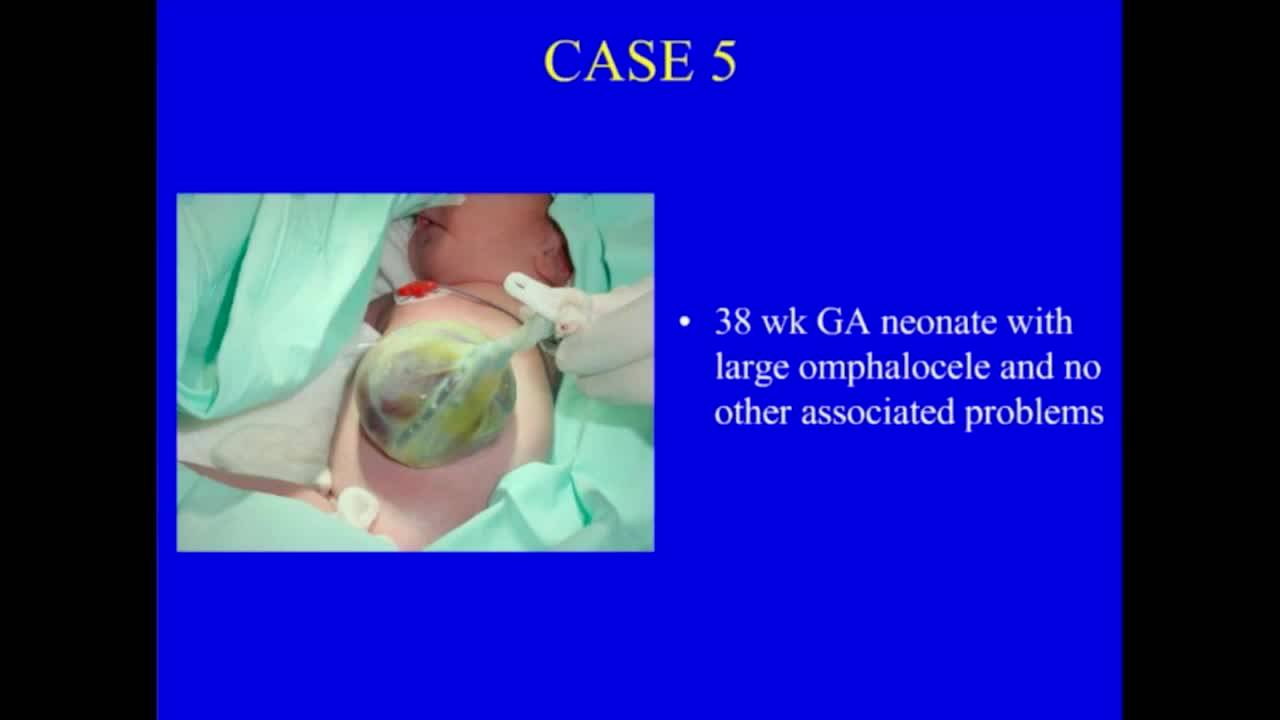
Abdominal Wall Defects
37 min · Published Nov 2018
Video
GYN #4 Management of Tubal Torsion: When to Consider Salpingectomy with Dr. Lesley Breech
CCHMC Pediatric Surgery · Published Oct 2024
Podcast
Pyloric Stenosis with Dr. Alex Bondoc
16 min · Published Jun 2024
Video
GYN #3 Management of an Adnexal Torsion with a Healthy Appearing Ovary with Dr. Lesley Breech
CCHMC Pediatric Surgery · Published May 2024
Video
GYN #2 Oophoropexy in Adnexal Torsion with Dr. Lesley Breech
CCHMC Pediatric Surgery · Published May 2024
Video
GYN #1 Importance of Documenting Reproductive Anatomy with Dr. Lesley Breech
CCHMC Pediatric Surgery · Published Feb 2024
Podcast
Hepatic Infections: Hepatitis, Abscess & Cysts with Dr. Alex Bondoc
15 min · Published Oct 2023
What the experts said
Esophageal atresia occurs in 1 in 4500 births in the United States with a slight male predominance
Chromosomal anomalies are fairly common in esophageal atresia, with recurrence risk of 0.5 to 2% among parents who have one affected child
Prenatal ultrasound detects only about half of esophageal atresia cases, primarily detecting pure atresia cases due to significant proximal pouch dilation
The most common type of esophageal atresia is proximal atresia with a distal fistula (type C)
VACTERL is an association, not a syndrome, requiring 3 of the defects (vertebral, anorectal, cardiac, tracheoesophageal, renal, limb) for diagnosis
Esophageal atresia associated with significant cardiac anomalies and low birth weight has only 27 to 30% survival rate
In type C fistula with respiratory distress, the low resistance pathway is into the intestine rather than the lungs, causing air to continuously enter the intestine and increase stomach size
Gastric decompression with G-tube or needle helps temporarily but air still preferentially exits through the G-tube rather than entering the lungs; placing G-tube end underwater provides some resistance but doesn't completely fix the problem
Placing a vessel loop around the distal esophagus is easier than dividing the fistula when in trouble during the procedure
Every child with tracheoesophageal fistula or esophageal atresia needs a bronchoscopy due to 10-15% association of airway issues
Virtually all children with esophageal atresia have some element of tracheomalacia, though bronchoscopy can show anatomic tracheomalacia but cannot determine if it is clinically significant
There is some growth in the esophagus over time in long-gap cases, with maximal growth occurring by 4-6 weeks
For long-gap cases, the approach at Cincinnati Children's is to support the child with enteral bolus feedings to stretch the distal esophagus, obtain sequential gap studies, and take the child to OR at 6 weeks
Thoracoscopic visualization of the esophagus is better than open surgery when the camera port is placed looking straight down at the esophagus
The azygos vein guides to the level of the fistula because the fistula typically occurs right about the level of the azygos vein
When clipping the fistula, the clip must be flush with the trachea to avoid leaving a long pouch that can pool secretions and cause problems
Anesthesiologist must push down repeatedly to help locate the proximal esophageal pouch during surgery
It is safer to put a hole in the esophageal pouch than in the trachea during dissection
Iatrogenic tracheal injury during thoracoscopy can be detected by sudden elevation of end-tidal CO2 as CO2 from the thoracoscopy enters the trachea
The Foker procedure uses traction sutures brought through the chest wall with sequential tightening to stimulate esophageal growth
In primary Foker cases, esophageal connection was achieved 96% of the time, compared to only 67% in secondary cases with previous operations
Primary Foker procedure cases spent more than 1 month in ICU on average and were paralyzed for more than 2 weeks
Secondary Foker cases spent a mean of 110 days in ICU and were paralyzed for more than 1 month
No esophageal replacement technique is superior to others; the most common is gastric pull-up, but reverse gastric tube, colon interposition, and duodenal interposition are also used
Reverse gastric tube is created from the greater curve of the stomach and requires preservation of the gastroepiploic artery when placing initial G-tube
Reverse gastric tube has many problems and is not used at Cincinnati Children's
Colon interposition provides tremendous length, allowing anastomosis to the pharynx in caustic ingestion patients with no remaining esophagus
The biggest challenge with colon interposition is that the colon dilates and elongates over time, causing food to collect and not empty properly
Contrary to initial teaching, colon interposition grafts are not hard to revise and do not necessarily damage blood supply during revision
In Cincinnati Children's first 13 colon interpositions, 12 of 13 patients were NPO at presentation, and there has been no graft loss since the initial case
Posterior tracheopexy involves placing sutures into the membranous trachea to hold it back and manage tracheomalacia
It is unknown which patients need posterior tracheopexy, but performing it prophylactically during initial repair takes only 15 minutes and avoids reoperation through previously operated field
At Cincinnati Children's, complex esophageal cases including colon interpositions are performed jointly with ENT surgeons, prioritizing patient outcomes over individual surgeon ego