Nothing matches these filters —
clear the search or widen the filters.
Summaries Rod gave as host
· 783 summaries
Recaps of other experts' statements, not Rod's own clinical position.
Summaries Rod gave as host · Abdominal Wall Defects
26 summaries
Open the Abdominal Wall Defects collection →
Gastroschisis and sutureless abdominal wall closure
 ▶
Ep 22 · 1:44
▶
Ep 22 · 1:44
host summary
Rod Gerardo summarizes what Dr. Jason Fraser said: In 2004, Tony Sandler published the first manuscript about suture disclosures to utilize the natural umbilical properties to closing that defect by itself.
↗
▶
Ep 22 · 1:44
host summary
Rod Gerardo summarizes what Dr. Jason Fraser said: In 2004, Tony Sandler published the first manuscript about sutureless closures utilizing the natural umbilical properties to close the gastroschisis defect by itself.
↗
▶
Ep 22 · 2:45
host summary
Rod Gerardo summarizes what Dr. Jason Fraser said: I think it's clearly been a massive change in practice. It's one of the examples of a big change that we don't actually operate on those and they can be done at the bedside. And it also is an example of something that took a while to adopt. And now most people are doing it, I think.
↗
▶
Ep 22 · 2:45
host summary
Rod Gerardo summarizes what Dr. Jason Fraser said: I didn't know about his article. I found out about it as a fellow when he taught us how to treat gastroschisis that way.
↗
▶
Ep 22 · 3:26
host summary
Rod Gerardo summarizes what Dr. Jason Fraser said: There have been so many articles in the last few years that go back and forth. I mean, one said gastro suture list is better. One said definitely don't do suture list. So my question is now, I don't know. I almost don't read these articles anymore.
↗
▶
Ep 22 · 5:29
host summary
Rod Gerardo summarizes what Dr. Jason Fraser said: I think anytime it's a Kansas City or an NWSPC, NWPSC. Anytime it's an NWPSC article, I pay attention. Anytime it's a Kansas City article, I pay attention. But other than that, I'm tired of seeing all these gastroschisis articles. I'm waiting for someone to give me something that is really meaningful.
↗
▶
Ep 22 · 6:01
host summary
Rod Gerardo summarizes what Dr. Jason Fraser said: Sutureless closure patients had fewer surgical site and deep space infections compared to sutured closure patients.
↗
▶
Ep 22 · 6:01
host summary
Rod Gerardo summarizes what Dr. Jason Fraser said: Sutureless closure patients had fewer episodes of general anesthetics compared to sutured closure patients.
↗
▶
Ep 22 · 6:01
host summary
Rod Gerardo summarizes what Dr. Jason Fraser said: Sutureless closure patients had less ventilator use compared to sutured closure patients.
↗
▶
Ep 22 · 6:01
host summary
Rod Gerardo summarizes what Dr. Jason Fraser said: The positive outcomes for sutureless repair were observed even when considering patients who required silo use.
↗
▶
Ep 22 · 6:01
host summary
Rod Gerardo summarizes what Dr. Jason Fraser said: Sutureless closure patients had less antibiotic use compared to sutured closure patients.
↗
▶
Ep 22 · 6:01
host summary
Rod Gerardo summarizes what Dr. Jason Fraser said: Patients who underwent sutureless abdominal wall closure had no difference in days on TPN, time to goal feeds, time to initial feeds, or length of stay compared to sutured closure.
↗
▶
Ep 22 · 6:01
host summary
Rod Gerardo summarizes what Dr. Jason Fraser said: The Midwest Pediatric Surgery Consortium study was a retrospective cohort of infants born with gastroschisis between 2013 and 2016, with a total of 315 patients.
↗
▶
Ep 22 · 6:01
host summary
Rod Gerardo summarizes what Dr. Jason Fraser said: The study divided patients into sutured versus sutureless abdominal wall closures and required subgroup analysis because some babies received silos and some did not.
↗
▶
Ep 22 · 11:13
host summary
Rod Gerardo summarizes what Dr. Jason Fraser said: Yeah, I think in general, I, I, you're right. I don't know how the pendulum is going to swing, but we are finding more and more. There are things that we don't have to operate on.
↗
▶
Ep 22 · 11:22
host summary
Rod Gerardo summarizes what Dr. Jason Fraser said: Gastroschisis is an abdominal wall defect that used to necessitate a trip to the OR and is now more like a safe bedside procedure.
↗
Intestinal rehabilitation: What is intestinal rehab? - Episode 1
 ▶
Ep 22 · 2:24
▶
Ep 22 · 2:24
host summary
Rod Gerardo summarizing the discussion: New guidelines define intestinal failure as requiring parenteral support for at least 60 days due to inadequate intestinal function.
↗
▶
Ep 22 · 3:33
host summary
Rod Gerardo summarizing the discussion: Intestinal rehabilitation requires managing comorbidities including sepsis and liver disease that challenge infant growth.
↗
▶
Ep 22 · 8:41
host summary
Rod Gerardo summarizing the discussion: Access and availability to intestinal rehabilitation programs is still very rare.
↗
▶
Ep 22 · 12:34
host summary
Rod Gerardo summarizing the discussion: Overall long-term survival in major intestinal rehabilitation programs is usually over 90%.
↗
Intestinal Rehabilitation, Episode 1: What is intestinal rehabilitation?
 ▶
Ep 23 · 2:24
▶
Ep 23 · 2:24
host summary
Rod Gerardo summarizing the discussion: New guidelines define intestinal failure as inadequate intestinal function requiring parenteral support for at least 60 days.
↗
▶
Ep 23 · 3:33
host summary
Rod Gerardo summarizing the discussion: Intestinal rehabilitation requires managing comorbidities including sepsis and liver disease that challenge infant growth.
↗
▶
Ep 23 · 12:34
host summary
Rod Gerardo summarizing the discussion: Overall survival in big intestinal rehabilitation programs is usually over 90% long-term.
↗
Journal of Pediatric Surgery Article Review: January 2022 APSA Issue
 ▶
Ep 26 · 3:58
▶
Ep 26 · 3:58
host summary
Rod Gerardo summarizing the discussion: External federal research funding at Nationwide increased from $750,000 to $5.7 million, representing a 7.7-fold increase.
↗
Quick Literature Updates Episode 6
 ▶
Ep 29 · 2:50
▶
Ep 29 · 2:50
host summary
Rod Gerardo summarizing a resource: Miyata et al. used the Canadian Association of Pediatric Surgery Network to study pediatric patients with gastroschisis who underwent bedside reduction and closure.
↗
▶
Ep 29 · 2:50
host summary
Rod Gerardo summarizing a resource: There was no significant difference in the rate of successful primary closure between intubated and non-intubated neonates with gastroschisis.
↗
Summaries Rod gave as host · Advances in Pediatric Surgery
7 summaries
Open the Advances in Pediatric Surgery collection →
Journal of Pediatric Surgery Article Review: September 2021
 ▶
Ep 1 · 0:44
▶
Ep 1 · 0:44
host summary
Rod Gerardo summarizing the discussion: A Chinese randomized multi-center trial of 156 neonates who underwent surgery for gastrointestinal malformation with intestinal anastomosis compared early internal feeding versus traditional nasogastric decompression.
↗
▶
Ep 1 · 0:44
host summary
Rod Gerardo summarizing the discussion: There was no significant difference between early and traditional feeding groups in length of stay, time to full feeds, postoperative complications, 30-day mortality, or 30-day readmissions.
↗
▶
Ep 1 · 0:44
host summary
Rod Gerardo summarizing the discussion: The early feeding group started feeds at 2 days compared to 6 days in the traditional feeding group.
↗
▶
Ep 1 · 3:06
host summary
Rod Gerardo summarizing the discussion: In the early feeding group, patients did not have a decompressing nasogastric tube, suggesting nasogastric decompression is not needed after neonatal intestinal anastomosis.
↗
▶
Ep 1 · 3:06
host summary
Rod Gerardo summarizing the discussion: A Utah study examined patients under age 18 who presented with hematochezia to identify which factors predict Meckel diverticulum and created a risk score.
↗
▶
Ep 1 · 3:06
host summary
Rod Gerardo summarizing the discussion: The Meckel score could help clinicians skip the Meckel scan and go straight to laparoscopy in high-score patients, even with a negative scan.
↗
▶
Ep 1 · 10:06
host summary
Rod Gerardo summarizing the discussion: Under age 10, clinicians do not need to worry about doing a workup for Crohn disease in children with perianal symptoms; over age 10, they should.
↗
Summaries Rod gave as host · Aerodigestive / ENT
10 summaries
Open the Aerodigestive / ENT collection →
Laryngeal Clefts
 ▶
Ep 10 · 1:41
▶
Ep 10 · 1:41
host summary
Rod Gerardo summarizing the discussion: Flexible bronchoscopy is not adequate for diagnosing a posterior laryngeal cleft.
↗
▶
Ep 10 · 1:41
host summary
Rod Gerardo summarizing the discussion: The mass closure technique developed in Cincinnati uses the same concept as endoscopic tracheoesophageal fistula repair: you want raw against raw, with wide strips of raw tissue opposed after removing the non-stick mucosal surface.
↗
▶
Ep 10 · 1:41
host summary
Rod Gerardo summarizing the discussion: The Benjamin Inglis classification should be modified to include a type 4 long because type 4 could be proximal above the carina, at the carina, or go straight through the carina.
↗
▶
Ep 10 · 1:41
host summary
Rod Gerardo summarizing the discussion: Flexible bronchoscopy is not adequate for diagnosing a posterior laryngeal cleft.
↗
▶
Ep 10 · 1:41
host summary
Rod Gerardo summarizing the discussion: We've been nagging Andy for years, Andy Inglis, to actually modify that classification.
↗
▶
Ep 10 · 1:41
host summary
Rod Gerardo summarizing the discussion: Endoscopically or endoscopically unless there's a reason to do an open approach.
↗
▶
Ep 10 · 1:41
host summary
Rod Gerardo summarizing the discussion: Type 3 laryngeal cleft means it extends down into the trachea.
↗
▶
Ep 10 · 1:41
host summary
Rod Gerardo summarizing the discussion: Type 2 laryngeal cleft means it extends below the vocal cords.
↗
▶
Ep 10 · 1:41
host summary
Rod Gerardo summarizing the discussion: Type 1 laryngeal cleft means the opening is above the vocal cords.
↗
▶
Ep 10 · 1:41
host summary
Rod Gerardo summarizing the discussion: You want raw against raw. Mucosa is a nonstick surface. Get rid of the mucosa. You want a wide strip of raw against a wide strip of raw.
↗
Summaries Rod gave as host · Anorectal Malformation
23 summaries
Open the Anorectal Malformation collection →
The Colorectal Quiz Episode 1: ARM - Low Bulbar Fistula
 ▶
Ep 35 · 0:09
▶
Ep 35 · 0:09
host summary
Rod Gerardo summarizing the discussion: These patients can come with anatomic variances, really rare anomalies, their care can be complex, dynamic, multidisciplinary, and pose a lot of clinical challenges to your everyday pediatric surgeon.
↗
▶
Ep 35 · 0:25
host summary
Rod Gerardo summarizing the discussion: At those times, it might be nice to just step inside the mind of a pediatric colorectal surgeon who's been around the block.
↗
▶
Ep 35 · 12:17
host summary
Rod Gerardo summarizing the discussion: In low anorectal malformations, dissecting a small portion of the anterior rectal wall and carefully lifting it off the urinary tract will usually rule out a fistula.
↗
Colorectal Quiz Episode 13: Newborn ARM Part 2
 ▶
Ep 39 · 13:38
▶
Ep 39 · 13:38
host summary
Rod Gerardo summarizing the discussion: Don't use your fingers because every surgeon has a different size glove.
↗
▶
Ep 39 · 13:38
host summary
Rod Gerardo summarizing the discussion: Use Hagar dilators starting low and working up for accurate anal size measurement; do not use fingers because every surgeon has different size glove
↗
Colorectal Quiz Episode 14: ARM Newborn Part 3
 ▶
Ep 40 · 7:09
▶
Ep 40 · 7:09
host summary
Rod Gerardo summarizing the discussion: Posterior rectal wall only mobilization technique is only appropriate in situations where the dot of the fistula is in the sphincteric ellipse.
↗
Colorectal Quiz Episode 1 - Low Bulbar Fistua
 ▶
Ep 83 · 0:09
▶
Ep 83 · 0:09
host summary
Rod Gerardo summarizing the discussion: These patients can come with anatomic variances, really rare anomalies. Their care can be complex, dynamic, multidisciplinary, and pose a lot of clinical challenges to your everyday pediatric surgeon.
↗
▶
Ep 83 · 12:17
host summary
Rod Gerardo summarizing the discussion: In patients with low rectum, dissecting a small portion of the anterior rectal wall and carefully lifting it off the urinary tract will usually rule out a fistula.
↗
▶
Ep 83 · 14:02
host summary
Rod Gerardo summarizing the discussion: Complete workup for anorectal malformations includes evaluation for associated anomalies, preoperative cross-table lateral X-ray to evaluate air column, and surgical planning that considers colostomy as a reasonable and safe choice even when imaging suggests straightforward primary repair.
↗
▶
Ep 83 · 14:30
host summary
Rod Gerardo summarizing the discussion: If proceeding with primary posterior sagittal anorectoplasty, the surgeon must rule out a fistula intraoperatively.
↗
Colorectal Quiz Episode 32: Anorectal Malformations And Cardiac Anomalies
 ▶
Ep 91 · 0:00
▶
Ep 91 · 0:00
host summary
Rod Gerardo summarizing the discussion: whether you are watching us on YouTube, listening to us on Apple Podcasts, Spotify, Stitcher, or Amazon Music, really the best way to get the colorectal quiz is on the Stay Current Pediatric Surgery app
↗
▶
Ep 91 · 2:44
host summary
Rod Gerardo summarizing the discussion: When a baby in Georgia gets diagnosed with prenatal cardiac disease, the Sibley cardiology group gets called early and involved, including reviewing echocardiogram and meeting with high-risk OB.
↗
▶
Ep 91 · 6:13
host summary
Rod Gerardo summarizing the discussion: For hospitals that take care of many pediatric cardiac patients, an ostomy is probably the standard choice for ARM with really significant cardiac anomaly.
↗
▶
Ep 91 · 10:50
host summary
Rod Gerardo summarizing the discussion: Starting flow rate at 1 liter per minute for laparoscopy in babies is a cautious approach.
↗
▶
Ep 91 · 10:50
host summary
Rod Gerardo summarizing the discussion: I always start on the babies at a flow rate of one
↗
▶
Ep 91 · 11:21
host summary
Rod Gerardo summarizing the discussion: Dr. Tim Jackson's technique involves looking laparoscopically while passing a tube into the distal segment to perform irrigation under direct visualization.
↗
Colorectal Quiz Episode 32: Anorectal Malformations And Cardiac Anomalies
 ▶
Ep 82 · 0:00
▶
Ep 82 · 0:00
host summary
Rod Gerardo summarizing the discussion: really the best way to get the colorectal quiz is on the Stay Current Pediatric Surgery app. It's free, it's in the Apple App Store, it's in the Google Play Store.
↗
▶
Ep 82 · 2:44
host summary
Rod Gerardo summarizing the discussion: Whenever a baby in Georgia gets diagnosed with prenatal cardiac disease, the Sibley cardiac group gets called early and involvement means going over the echocardiogram and meeting with high risk OB.
↗
▶
Ep 82 · 4:58
host summary
Rod Gerardo summarizing the discussion: I think a good physical exam and a good listen to the heart with a stethoscope can bypass that need if necessary.
↗
▶
Ep 82 · 6:13
host summary
Rod Gerardo summarizing the discussion: In a baby with significant cardiac anomaly and ARM, an ostomy is probably the standard choice at hospitals that care for many pediatric cardiac patients.
↗
▶
Ep 82 · 11:00
host summary
Rod Gerardo summarizing the discussion: If the baby has an umbilical line, consider going into Palmer's Point rather than accessing through the umbilicus, using a Hassan technique.
↗
Colorectal Quiz: Episode 2
 ▶
Ep 94 · 0:00
▶
Ep 94 · 0:00
host summary
Rod Gerardo summarizing the discussion: After anorectoplasty, your first shot might be your only shot to give the patient a good outcome
↗
Colorectal Quiz: Episode 2
 ▶
Ep 86 · 0:00
▶
Ep 86 · 0:00
host summary
Rod Gerardo summarizing the discussion: After anorectal malformation repair, the first operation might be the only shot to give the patient a good outcome and proper anatomy.
↗
Summaries Rod gave as host · Anorectal Malformations
4 summaries
Open the Anorectal Malformations collection →
The Colorectal Quiz Episode 1: ARM - Low Bulbar Fistula
▶
Ep 9 · 0:09
host summary
Rod Gerardo summarizing the discussion: These patients can come with anatomic variances, really rare anomalies, their care can be complex, dynamic, multidisciplinary, and pose a lot of clinical challenges to your everyday pediatric surgeon.
↗
▶
Ep 9 · 0:25
host summary
Rod Gerardo summarizing the discussion: At those times, it might be nice to just step inside the mind of a pediatric colorectal surgeon who's been around the block.
↗
▶
Ep 9 · 12:17
host summary
Rod Gerardo summarizing the discussion: In low anorectal malformations, dissecting a small portion of the anterior rectal wall and carefully lifting it off the urinary tract will usually rule out a fistula.
↗
Colorectal Quiz Episode 14: ARM Newborn Part 3
▶
Ep 12 · 7:09
host summary
Rod Gerardo summarizing the discussion: Posterior rectal wall only mobilization technique is only appropriate in situations where the dot of the fistula is in the sphincteric ellipse.
↗
Summaries Rod gave as host · Anorectal Malformations & Cloacal Reconstruction
11 summaries
Open the Anorectal Malformations & Cloacal Reconstruction collection →
Colorectal Quiz Episode 1 - Low Bulbar Fistua
▶
Ep 14 · 0:09
host summary
Rod Gerardo summarizing the discussion: These patients can come with anatomic variances, really rare anomalies. Their care can be complex, dynamic, multidisciplinary, and pose a lot of clinical challenges to your everyday pediatric surgeon.
↗
▶
Ep 14 · 12:17
host summary
Rod Gerardo summarizing the discussion: In patients with low rectum, dissecting a small portion of the anterior rectal wall and carefully lifting it off the urinary tract will usually rule out a fistula.
↗
▶
Ep 14 · 14:02
host summary
Rod Gerardo summarizing the discussion: Complete workup for anorectal malformations includes evaluation for associated anomalies, preoperative cross-table lateral X-ray to evaluate air column, and surgical planning that considers colostomy as a reasonable and safe choice even when imaging suggests straightforward primary repair.
↗
▶
Ep 14 · 14:30
host summary
Rod Gerardo summarizing the discussion: If proceeding with primary posterior sagittal anorectoplasty, the surgeon must rule out a fistula intraoperatively.
↗
Colorectal Quiz Episode 32: Anorectal Malformations And Cardiac Anomalies
▶
Ep 17 · 0:00
host summary
Rod Gerardo summarizing the discussion: whether you are watching us on YouTube, listening to us on Apple Podcasts, Spotify, Stitcher, or Amazon Music, really the best way to get the colorectal quiz is on the Stay Current Pediatric Surgery app
↗
▶
Ep 17 · 2:44
host summary
Rod Gerardo summarizing the discussion: When a baby in Georgia gets diagnosed with prenatal cardiac disease, the Sibley cardiology group gets called early and involved, including reviewing echocardiogram and meeting with high-risk OB.
↗
▶
Ep 17 · 6:13
host summary
Rod Gerardo summarizing the discussion: For hospitals that take care of many pediatric cardiac patients, an ostomy is probably the standard choice for ARM with really significant cardiac anomaly.
↗
▶
Ep 17 · 10:50
host summary
Rod Gerardo summarizing the discussion: Starting flow rate at 1 liter per minute for laparoscopy in babies is a cautious approach.
↗
▶
Ep 17 · 10:50
host summary
Rod Gerardo summarizing the discussion: I always start on the babies at a flow rate of one
↗
▶
Ep 17 · 11:21
host summary
Rod Gerardo summarizing the discussion: Dr. Tim Jackson's technique involves looking laparoscopically while passing a tube into the distal segment to perform irrigation under direct visualization.
↗
Colorectal Quiz: Episode 2
▶
Ep 21 · 0:00
host summary
Rod Gerardo summarizing the discussion: After anorectoplasty, your first shot might be your only shot to give the patient a good outcome
↗
Summaries Rod gave as host · Appendicitis
13 summaries
Open the Appendicitis collection →
Update Course Rewind: Perforated Appendicitis 2019
 ▶
Ep 13 · 2:08
▶
Ep 13 · 2:08
host summary
Rod Gerardo summarizing the discussion: In a study of 200 CT scans reviewed by 6 surgeons (including 2 fellows) and 2 radiologists, reviewers were only 72% accurate in determining whether an appendix was perforated or non-perforated.
↗
▶
Ep 13 · 4:00
host summary
Rod Gerardo summarizing the discussion: Among 110 surgeons (62 attendings and 48 fellows, including adult and pediatric surgeons from university, community, and children's hospitals), inter-observer agreement in defining intraoperative images as perforated or non-perforated appendicitis was 27%.
↗
▶
Ep 13 · 6:00
host summary
Rod Gerardo summarizing the discussion: At Kansas City (Doctor Saint Peter's group), perforated appendicitis is defined as a hole in the appendix or a fecalith in the abdomen.
↗
▶
Ep 13 · 6:30
host summary
Rod Gerardo summarizing the discussion: When patients did not have either a hole in the appendix or stool in the abdomen, the incidence of postoperative abscess was less than 5%.
↗
▶
Ep 13 · 7:00
host summary
Rod Gerardo summarizing the discussion: After implementing a standardized definition for perforated appendicitis, the non-perforation abscess rate decreased and the perforation abscess rate increased, suggesting previous misclassification of cases.
↗
▶
Ep 13 · 7:54
host summary
Rod Gerardo summarizing the discussion: In a randomized trial with 110 patients per arm using minimum 500cc irrigation (average 850cc), there was no difference in postoperative abscess rate, length of stay, hospital cost, or operative time between irrigation and no irrigation groups.
↗
Journal Club: Appendicitis in 2021
 ▶
Ep 14 · 0:05
▶
Ep 14 · 0:05
host summary
Rod Gerardo summarizes what Dr. Jose Campos said: Hey there, listeners, this is Rod Gerardo, research resident at Cincinnati Children's Hospital.
↗
▶
Ep 14 · 4:11
host summary
Rod Gerardo summarizes what Dr. Jose Campos said: The Shira score had an area under the curve of 0.84 and a failure rate of 3%, making it the best performing model for ruling out appendicitis.
↗
▶
Ep 14 · 9:13
host summary
Rod Gerardo summarizes what Dr. Jose Campos said: Four intraoperative findings correlate with complicated postoperative course for appendicitis: visible hole, abscess, fecal material, and diffuse fibrinopurulent exudate outside the right iliac fossa or pelvis.
↗
▶
Ep 14 · 10:07
host summary
Rod Gerardo summarizes what Dr. Jose Campos said: Pus in the abdomen is a predictor of abscess in the recent study, which differs from Sean Saint Peter's study where it was not a predictor.
↗
▶
Ep 14 · 11:08
host summary
Rod Gerardo summarizes what Dr. Jose Campos said: A 6% baseline infection rate for simple appendicitis seems too high.
↗
▶
Ep 14 · 12:45
host summary
Rod Gerardo summarizes what Dr. Jose Campos said: This has been one of the hardest things for me to adjust to out of all the things you brought up today because I, I really felt like these patients need opiates. And once I started converting to Tylenol and or Motrin, They're fine. And it, it totally surprised me, and patients really do not come back asking for opiates.
↗
▶
Ep 14 · 12:45
host summary
Rod Gerardo summarizes what Dr. Jose Campos said: After converting from opiates to Tylenol and/or Motrin for post-appendectomy pain, patients are fine and do not come back asking for opiates.
↗
Summaries Rod gave as host · Appendicitis
13 summaries
Open the Appendicitis collection →
Update Course Rewind: Perforated Appendicitis 2019
▶
Ep 8 · 2:08
host summary
Rod Gerardo summarizing the discussion: In a study of 200 CT scans reviewed by 6 surgeons (including 2 fellows) and 2 radiologists, reviewers were only 72% accurate in determining whether an appendix was perforated or non-perforated.
↗
▶
Ep 8 · 4:00
host summary
Rod Gerardo summarizing the discussion: Among 110 surgeons (62 attendings and 48 fellows, including adult and pediatric surgeons from university, community, and children's hospitals), inter-observer agreement in defining intraoperative images as perforated or non-perforated appendicitis was 27%.
↗
▶
Ep 8 · 6:00
host summary
Rod Gerardo summarizing the discussion: At Kansas City (Doctor Saint Peter's group), perforated appendicitis is defined as a hole in the appendix or a fecalith in the abdomen.
↗
▶
Ep 8 · 6:30
host summary
Rod Gerardo summarizing the discussion: When patients did not have either a hole in the appendix or stool in the abdomen, the incidence of postoperative abscess was less than 5%.
↗
▶
Ep 8 · 7:00
host summary
Rod Gerardo summarizing the discussion: After implementing a standardized definition for perforated appendicitis, the non-perforation abscess rate decreased and the perforation abscess rate increased, suggesting previous misclassification of cases.
↗
▶
Ep 8 · 7:54
host summary
Rod Gerardo summarizing the discussion: In a randomized trial with 110 patients per arm using minimum 500cc irrigation (average 850cc), there was no difference in postoperative abscess rate, length of stay, hospital cost, or operative time between irrigation and no irrigation groups.
↗
Journal Club: Appendicitis in 2021
▶
Ep 9 · 0:05
host summary
Rod Gerardo summarizes what Dr. Jose Campos said: Hey there, listeners, this is Rod Gerardo, research resident at Cincinnati Children's Hospital.
↗
▶
Ep 9 · 4:11
host summary
Rod Gerardo summarizes what Dr. Jose Campos said: The Shira score had an area under the curve of 0.84 and a failure rate of 3%, making it the best performing model for ruling out appendicitis.
↗
▶
Ep 9 · 9:13
host summary
Rod Gerardo summarizes what Dr. Jose Campos said: Four intraoperative findings correlate with complicated postoperative course for appendicitis: visible hole, abscess, fecal material, and diffuse fibrinopurulent exudate outside the right iliac fossa or pelvis.
↗
▶
Ep 9 · 10:07
host summary
Rod Gerardo summarizes what Dr. Jose Campos said: Pus in the abdomen is a predictor of abscess in the recent study, which differs from Sean Saint Peter's study where it was not a predictor.
↗
▶
Ep 9 · 11:08
host summary
Rod Gerardo summarizes what Dr. Jose Campos said: A 6% baseline infection rate for simple appendicitis seems too high.
↗
▶
Ep 9 · 12:45
host summary
Rod Gerardo summarizes what Dr. Jose Campos said: This has been one of the hardest things for me to adjust to out of all the things you brought up today because I, I really felt like these patients need opiates. And once I started converting to Tylenol and or Motrin, They're fine. And it, it totally surprised me, and patients really do not come back asking for opiates.
↗
▶
Ep 9 · 12:45
host summary
Rod Gerardo summarizes what Dr. Jose Campos said: After converting from opiates to Tylenol and/or Motrin for post-appendectomy pain, patients are fine and do not come back asking for opiates.
↗
Summaries Rod gave as host · Aspiration
10 summaries
Open the Aspiration collection →
Laryngeal Clefts
▶
Ep 3 · 1:41
host summary
Rod Gerardo summarizing the discussion: You want raw against raw. Mucosa is a nonstick surface. Get rid of the mucosa. You want a wide strip of raw against a wide strip of raw.
↗
▶
Ep 3 · 1:41
host summary
Rod Gerardo summarizing the discussion: Flexible bronchoscopy is not adequate for diagnosing a posterior laryngeal cleft.
↗
▶
Ep 3 · 1:41
host summary
Rod Gerardo summarizing the discussion: We've been nagging Andy for years, Andy Inglis, to actually modify that classification.
↗
▶
Ep 3 · 1:41
host summary
Rod Gerardo summarizing the discussion: Endoscopically or endoscopically unless there's a reason to do an open approach.
↗
▶
Ep 3 · 1:41
host summary
Rod Gerardo summarizing the discussion: The mass closure technique developed in Cincinnati uses the same concept as endoscopic tracheoesophageal fistula repair: you want raw against raw, with wide strips of raw tissue opposed after removing the non-stick mucosal surface.
↗
▶
Ep 3 · 1:41
host summary
Rod Gerardo summarizing the discussion: Flexible bronchoscopy is not adequate for diagnosing a posterior laryngeal cleft.
↗
▶
Ep 3 · 1:41
host summary
Rod Gerardo summarizing the discussion: The Benjamin Inglis classification should be modified to include a type 4 long because type 4 could be proximal above the carina, at the carina, or go straight through the carina.
↗
▶
Ep 3 · 1:41
host summary
Rod Gerardo summarizing the discussion: Type 3 laryngeal cleft means it extends down into the trachea.
↗
▶
Ep 3 · 1:41
host summary
Rod Gerardo summarizing the discussion: Type 2 laryngeal cleft means it extends below the vocal cords.
↗
▶
Ep 3 · 1:41
host summary
Rod Gerardo summarizing the discussion: Type 1 laryngeal cleft means the opening is above the vocal cords.
↗
Summaries Rod gave as host · Burnout
5 summaries
Open the Burnout collection →
StayCurrent Forum: Resident Wellness
 ▶
Ep 3 · 0:55
▶
Ep 3 · 0:55
host summary
Rod Gerardo summarizes what Dr. Trevor Schrobat said: I used to call me his doom-mate because it was just so much destruction and doom in our in our house together.
↗
▶
Ep 3 · 3:24
host summary
Rod Gerardo summarizes what Dr. Trevor Schrobat said: You could you could go home, you feel a little bit more refreshed as opposed to feeling burn out where you come home and you have nothing left in the tank.
↗
▶
Ep 3 · 6:41
host summary
Rod Gerardo summarizes what Dr. Trevor Schrobat said: Mandatory wellness activities (like yoga) can lead to bonding among co-residents and occasionally help individuals discover new beneficial habits.
↗
▶
Ep 3 · 10:33
host summary
Rod Gerardo summarizes what Dr. Trevor Schrobat said: Maintaining personal wellness (mental and physical) enables physicians to be at their best when caring for sick or complex patients.
↗
▶
Ep 3 · 10:33
host summary
Rod Gerardo summarizes what Dr. Trevor Schrobat said: you do those little things for yourself as the physician. and then ultimately, I the goal is that you are in a better place mentally, physically, etc. so that you are on your A game when you when the patient needs you.
↗
Summaries Rod gave as host · Colorectal / ARM & Hirschsprung
82 summaries
Open the Colorectal / ARM & Hirschsprung collection →
The Colorectal Quiz Episode 1: ARM - Low Bulbar Fistula
▶
Ep 84 · 0:09
host summary
Rod Gerardo summarizing the discussion: These patients can come with anatomic variances, really rare anomalies, their care can be complex, dynamic, multidisciplinary, and pose a lot of clinical challenges to your everyday pediatric surgeon.
↗
▶
Ep 84 · 0:25
host summary
Rod Gerardo summarizing the discussion: At those times, it might be nice to just step inside the mind of a pediatric colorectal surgeon who's been around the block.
↗
▶
Ep 84 · 12:17
host summary
Rod Gerardo summarizing the discussion: In low anorectal malformations, dissecting a small portion of the anterior rectal wall and carefully lifting it off the urinary tract will usually rule out a fistula.
↗
The Colorectal Quiz Episode 3.5: Proximal Hirschsprung Disease
 ▶
Ep 87 · 2:07
▶
Ep 87 · 2:07
host summary
Rod Gerardo summarizing the discussion: If a child is sick with bilious emesis and distension, resuscitation should be the first step before diagnostic workup.
↗
The Colorectal Quiz Episode 4: Classic Hirschsprung disease - Surgical Technique
 ▶
Ep 88 · 17:01
▶
Ep 88 · 17:01
host summary
Rod Gerardo summarizing the discussion: The reinforcement layer of sutures is critical for lining up the two pieces of bowel to achieve mucosa-to-mucosa edge approximation.
↗
▶
Ep 88 · 17:01
host summary
Rod Gerardo summarizing the discussion: The reinforcement layer of sutures is critical for lining up the two pieces of bowel to achieve mucosa-to-mucosa edge approximation.
↗
The Colorectal Quiz Episode 5: Proximal Hirschsprung Disease Surgical Technique
 ▶
Ep 89 · 5:23
▶
Ep 89 · 5:23
host summary
Rod Gerardo summarizing the discussion: Frozen sections can rule out Hirschsprung disease but cannot definitively rule it in.
↗
▶
Ep 89 · 6:00
host summary
Rod Gerardo summarizing the discussion: For proximal disease, the key question on biopsy is whether ganglion cells are present, not whether nerves are hypertrophic.
↗
▶
Ep 89 · 10:37
host summary
Rod Gerardo summarizing the discussion: Do no harm.
↗
Update Course Rewind: 2020 Colorectal Part 1
 ▶
Ep 90 · 5:32
▶
Ep 90 · 5:32
host summary
Rod Gerardo summarizing the discussion: Hirschsprung enterocolitis patients present across a spectrum from mild (slight white count elevation and concerning X-ray distention) to severe (gross distention with obvious shock), requiring different treatment approaches.
↗
▶
Ep 90 · 5:32
host summary
Rod Gerardo summarizing the discussion: Hirschsprung enterocolitis patients present across a spectrum from mild (slight white count elevation and concerning X-ray distention) to severe (gross distention with obvious shock), requiring different treatment approaches.
↗
▶
Ep 90 · 8:33
host summary
Rod Gerardo summarizing the discussion: The APSA algorithm for post-pull-through obstruction includes decision points starting with rectal exam and contrast enema, potentially moving to rectal biopsy, botulinum toxin injection, and ultimately motility workup that determines need for further colonic resection versus bowel management, stoma, or ACE.
↗
▶
Ep 90 · 8:33
host summary
Rod Gerardo summarizing the discussion: The APSA algorithm for post-pull-through obstruction includes decision points starting with rectal exam and contrast enema, potentially moving to rectal biopsy, botulinum toxin injection, and ultimately motility workup that determines need for further colonic resection versus bowel management, stoma, or ACE.
↗
▶
Ep 90 · 11:14
host summary
Rod Gerardo summarizing the discussion: The patient in Case 2 was diagnosed with pseudo-incontinence with hypermotility.
↗
▶
Ep 90 · 11:14
host summary
Rod Gerardo summarizing the discussion: The patient in Case 2 was diagnosed with pseudo-incontinence with hypermotility.
↗
▶
Ep 90 · 11:21
host summary
Rod Gerardo summarizing the discussion: Adjusting fiber intake, daily Imodium, and adding cholestyramine successfully managed the hypermotility patient, allowing return to school with other kids within about a year.
↗
▶
Ep 90 · 11:21
host summary
Rod Gerardo summarizing the discussion: Adjusting fiber intake, daily Imodium, and adding cholestyramine successfully managed the hypermotility patient, allowing return to school with other kids within about a year.
↗
The Colorectal Quiz Episode 10: Total Colonic Hirschsprung Disease Part 1
 ▶
Ep 94 · 0:00
▶
Ep 94 · 0:00
host summary
Rod Gerardo summarizing the discussion: Hey there listeners, it's Rod Gerardo and Amanda Jensen from Cincinnati Children's.
↗
▶
Ep 94 · 1:17
host summary
Rod Gerardo summarizes what Dr. Jason Frischer said: That's Doctor Jason Fisher, pediatric colorectal surgeon at Cincinnati Children's Hospital.
↗
▶
Ep 94 · 4:07
host summary
Rod Gerardo summarizing the discussion: Common causes of failure to pass meconium include Hirschsprung disease, meconium plug syndrome, meconium ileus, and anorectal malformation
↗
The Colorectal Quiz Episode 11: Total Colonic Hirschsprung's Part 2
 ▶
Ep 95 · 2:46
▶
Ep 95 · 2:46
host summary
Rod Gerardo summarizing the discussion: Studies showed no significant difference in skin excoriation between younger and older patients after pull-through.
↗
▶
Ep 95 · 6:26
host summary
Rod Gerardo summarizing the discussion: Oral sodium supplementation protocol: add 3 mEq/kg/day using a recipe of 1 tablespoon salt plus 40 mL water (yields 2.5 mEq sodium per mL), continue for 1-2 months, then recheck urine sodium.
↗
▶
Ep 95 · 7:48
host summary
Rod Gerardo summarizing the discussion: Serum sodium is usually normal even when total body sodium is depleted, which can be misleading.
↗
▶
Ep 95 · 9:36
host summary
Rod Gerardo summarizing the discussion: The vast majority of Duhamels do fine.
↗
▶
Ep 95 · 11:04
host summary
Rod Gerardo summarizing the discussion: Patients with total colonic Hirschsprung disease are more susceptible to severe enterocolitis compared to traditional rectosigmoid Hirschsprung patients.
↗
▶
Ep 95 · 11:14
host summary
Rod Gerardo summarizing the discussion: First-line medical management is diet modification, which can be started before pull-through to monitor bowel movements.
↗
▶
Ep 95 · 11:30
host summary
Rod Gerardo summarizing the discussion: Loperamide liquid form contains glucose and sugar which can cause hypermotility; crushing the pill and mixing with applesauce is an alternative.
↗
Colorectal Quiz Episode 13: Newborn ARM Part 2
▶
Ep 98 · 13:38
host summary
Rod Gerardo summarizing the discussion: Don't use your fingers because every surgeon has a different size glove.
↗
▶
Ep 98 · 13:38
host summary
Rod Gerardo summarizing the discussion: Use Hagar dilators starting low and working up for accurate anal size measurement; do not use fingers because every surgeon has different size glove
↗
▶
Ep 98 · 13:38
host summary
Rod Gerardo summarizing the discussion: Don't use your fingers because every surgeon has a different size glove.
↗
▶
Ep 98 · 13:38
host summary
Rod Gerardo summarizing the discussion: Use Hagar dilators starting low and working up for accurate anal size measurement; do not use fingers because every surgeon has different size glove
↗
Colorectal Quiz Episode 14: ARM Newborn Part 3
▶
Ep 99 · 7:09
host summary
Rod Gerardo summarizing the discussion: Posterior rectal wall only mobilization technique is only appropriate in situations where the dot of the fistula is in the sphincteric ellipse.
↗
Colorectal Collaboration: Neurogastroenterology/Motility Disorders
 ▶
Ep 104 · 6:54
▶
Ep 104 · 6:54
host summary
Rod Gerardo summarizing the discussion: Sennosides or bisacodyl can be used to induce high-amplitude propagated contractions (HAPCs).
↗
▶
Ep 104 · 7:15
host summary
Rod Gerardo summarizing the discussion: When an HAPC occurs, the internal anal sphincter should relax (coloanal reflex) to allow stool evacuation.
↗
▶
Ep 104 · 8:06
host summary
Rod Gerardo summarizing the discussion: Fluoroscopy (C-arm) is used during manometry catheter placement to confirm exact positioning.
↗
▶
Ep 104 · 8:51
host summary
Rod Gerardo summarizing the discussion: When an HAPC reaches the sigmoid or rectum, the internal anal sphincter relaxes to allow defecation.
↗
▶
Ep 104 · 9:51
host summary
Rod Gerardo summarizing the discussion: Decisions about surgical intervention for segmental dysmotility are based not only on manometry but also on imaging (contrast enema), physical exam, and patient/family history.
↗
▶
Ep 104 · 13:56
host summary
Rod Gerardo summarizing the discussion: Performing duodenal and colonic manometry in a patient with gastroparesis is valuable because it rules out more widespread dysmotility, which is especially important in patients with anorectal malformations.
↗
Hirschsprung Disease Workup
 ▶
Ep 106 · 7:50
▶
Ep 106 · 7:50
host summary
Rod Gerardo summarizing the discussion: Even with suggestive manometry findings, a biopsy is still required before surgical intervention; no surgeon would operate on manometry alone.
↗
▶
Ep 106 · 7:50
host summary
Rod Gerardo summarizing the discussion: Even with suggestive manometry findings, a biopsy is still required before surgical intervention; no surgeon would operate on manometry alone.
↗
▶
Ep 106 · 8:00
host summary
Rod Gerardo summarizing the discussion: nobody I know would operate on a manometry alone. So if there's a suggestive manometry, a biopsy will still be done.
↗
▶
Ep 106 · 8:00
host summary
Rod Gerardo summarizing the discussion: nobody I know would operate on a manometry alone. So if there's a suggestive manometry, a biopsy will still be done.
↗
▶
Ep 106 · 8:41
host summary
Rod Gerardo summarizing the discussion: Normal individuals without Hirschsprung disease have no ganglion cells in the very first (distal-most) part of the rectum.
↗
▶
Ep 106 · 8:41
host summary
Rod Gerardo summarizing the discussion: Normal individuals without Hirschsprung disease have no ganglion cells in the very first (distal-most) part of the rectum.
↗
▶
Ep 106 · 9:05
host summary
Rod Gerardo summarizing the discussion: In children over one year old, the suction biopsy tool cannot obtain adequate tissue depth because the tissue is thicker, necessitating surgical biopsy in the OR.
↗
▶
Ep 106 · 9:05
host summary
Rod Gerardo summarizing the discussion: In children over one year old, the suction biopsy tool cannot obtain adequate tissue depth because the tissue is thicker, necessitating surgical biopsy in the OR.
↗
▶
Ep 106 · 9:40
host summary
Rod Gerardo summarizing the discussion: Surgical rectal biopsy in older children is a simple 20-minute procedure with same-day discharge.
↗
▶
Ep 106 · 9:40
host summary
Rod Gerardo summarizing the discussion: Surgical rectal biopsy in older children is a simple 20-minute procedure with same-day discharge.
↗
Journal of Pediatric Surgery Article Review: October 2021
 ▶
Ep 110 · 2:50
▶
Ep 110 · 2:50
host summary
Rod Gerardo summarizing the discussion: Complete metadata for medical education content includes title, description, summary, keywords, duration, content type, specialty area, target audience level, and language.
↗
▶
Ep 110 · 2:50
host summary
Rod Gerardo summarizing the discussion: We might congratulate ourselves for having done a good job in perhaps saving the kid and identifying the problem, but perhaps not aware that we have a responsibility uh for the long-term health and uh we have to be advocates for the children.
↗
▶
Ep 110 · 8:32
host summary
Rod Gerardo summarizing the discussion: It is obvious that we currently do not have the objective clinical markers, whether they are the uh clinical features or uh novel biomarkers to help us make an earlier decision.
↗
▶
Ep 110 · 8:32
host summary
Rod Gerardo summarizing the discussion: We currently do not have objective clinical markers, whether clinical features or novel biomarkers, to help make earlier surgical decisions in NEC.
↗
▶
Ep 110 · 17:03
host summary
Rod Gerardo summarizing the discussion: The Italian study provides sufficient evidence to convince clinicians who are not doing routine spinal cord and spine assessment in anorectal malformation patients that they should be more serious with imaging.
↗
Intestinal rehabilitation: What is intestinal rehab? - Episode 1
▶
Ep 112 · 2:24
host summary
Rod Gerardo summarizing the discussion: New guidelines define intestinal failure as requiring parenteral support for at least 60 days due to inadequate intestinal function.
↗
▶
Ep 112 · 3:33
host summary
Rod Gerardo summarizing the discussion: Intestinal rehabilitation requires managing comorbidities including sepsis and liver disease that challenge infant growth.
↗
▶
Ep 112 · 8:41
host summary
Rod Gerardo summarizing the discussion: Access and availability to intestinal rehabilitation programs is still very rare.
↗
▶
Ep 112 · 12:34
host summary
Rod Gerardo summarizing the discussion: Overall long-term survival in major intestinal rehabilitation programs is usually over 90%.
↗
Intestinal Rehabilitation, Episode 1: What is intestinal rehabilitation?
▶
Ep 113 · 2:24
host summary
Rod Gerardo summarizing the discussion: New guidelines define intestinal failure as inadequate intestinal function requiring parenteral support for at least 60 days.
↗
▶
Ep 113 · 3:33
host summary
Rod Gerardo summarizing the discussion: Intestinal rehabilitation requires managing comorbidities including sepsis and liver disease that challenge infant growth.
↗
▶
Ep 113 · 12:34
host summary
Rod Gerardo summarizing the discussion: Overall survival in big intestinal rehabilitation programs is usually over 90% long-term.
↗
Quick Literature Updates Episode 7
 ▶
Ep 138 · 1:35
▶
Ep 138 · 1:35
host summary
Rod Gerardo summarizing a resource: Infants with an ileocecal valve had significantly shorter duration on parenteral nutrition.
↗
▶
Ep 138 · 1:35
host summary
Rod Gerardo summarizing a resource: Patients with less than 50% of their colon had significantly less time on parenteral nutrition as long as they had their ileocecal valve.
↗
▶
Ep 138 · 1:35
host summary
Rod Gerardo summarizing a resource: Peters et al. retrospectively reviewed 55 pediatric patients with small bowel syndrome to examine whether presence or absence of ileocecal valve and/or colon can predict enteral autonomy.
↗
Colorectal Quiz Episode 32: Anorectal Malformations And Cardiac Anomalies
▶
Ep 224 · 0:00
host summary
Rod Gerardo summarizing the discussion: whether you are watching us on YouTube, listening to us on Apple Podcasts, Spotify, Stitcher, or Amazon Music, really the best way to get the colorectal quiz is on the Stay Current Pediatric Surgery app
↗
▶
Ep 224 · 2:44
host summary
Rod Gerardo summarizing the discussion: When a baby in Georgia gets diagnosed with prenatal cardiac disease, the Sibley cardiology group gets called early and involved, including reviewing echocardiogram and meeting with high-risk OB.
↗
▶
Ep 224 · 6:13
host summary
Rod Gerardo summarizing the discussion: For hospitals that take care of many pediatric cardiac patients, an ostomy is probably the standard choice for ARM with really significant cardiac anomaly.
↗
▶
Ep 224 · 10:50
host summary
Rod Gerardo summarizing the discussion: I always start on the babies at a flow rate of one
↗
▶
Ep 224 · 10:50
host summary
Rod Gerardo summarizing the discussion: Starting flow rate at 1 liter per minute for laparoscopy in babies is a cautious approach.
↗
▶
Ep 224 · 11:21
host summary
Rod Gerardo summarizing the discussion: Dr. Tim Jackson's technique involves looking laparoscopically while passing a tube into the distal segment to perform irrigation under direct visualization.
↗
Colorectal Quiz Episode 32: Anorectal Malformations And Cardiac Anomalies
▶
Ep 232 · 0:00
host summary
Rod Gerardo summarizing the discussion: really the best way to get the colorectal quiz is on the Stay Current Pediatric Surgery app. It's free, it's in the Apple App Store, it's in the Google Play Store.
↗
▶
Ep 232 · 0:00
host summary
Rod Gerardo summarizing the discussion: really the best way to get the colorectal quiz is on the Stay Current Pediatric Surgery app. It's free, it's in the Apple App Store, it's in the Google Play Store.
↗
▶
Ep 232 · 2:44
host summary
Rod Gerardo summarizing the discussion: Whenever a baby in Georgia gets diagnosed with prenatal cardiac disease, the Sibley cardiac group gets called early and involvement means going over the echocardiogram and meeting with high risk OB.
↗
▶
Ep 232 · 2:44
host summary
Rod Gerardo summarizing the discussion: Whenever a baby in Georgia gets diagnosed with prenatal cardiac disease, the Sibley cardiac group gets called early and involvement means going over the echocardiogram and meeting with high risk OB.
↗
▶
Ep 232 · 4:58
host summary
Rod Gerardo summarizing the discussion: I think a good physical exam and a good listen to the heart with a stethoscope can bypass that need if necessary.
↗
▶
Ep 232 · 4:58
host summary
Rod Gerardo summarizing the discussion: I think a good physical exam and a good listen to the heart with a stethoscope can bypass that need if necessary.
↗
▶
Ep 232 · 6:13
host summary
Rod Gerardo summarizing the discussion: In a baby with significant cardiac anomaly and ARM, an ostomy is probably the standard choice at hospitals that care for many pediatric cardiac patients.
↗
▶
Ep 232 · 6:13
host summary
Rod Gerardo summarizing the discussion: In a baby with significant cardiac anomaly and ARM, an ostomy is probably the standard choice at hospitals that care for many pediatric cardiac patients.
↗
▶
Ep 232 · 11:00
host summary
Rod Gerardo summarizing the discussion: If the baby has an umbilical line, consider going into Palmer's Point rather than accessing through the umbilicus, using a Hassan technique.
↗
▶
Ep 232 · 11:00
host summary
Rod Gerardo summarizing the discussion: If the baby has an umbilical line, consider going into Palmer's Point rather than accessing through the umbilicus, using a Hassan technique.
↗
Colorectal Quiz: Episode 2
▶
Ep 230 · 0:00
host summary
Rod Gerardo summarizing the discussion: After anorectoplasty, your first shot might be your only shot to give the patient a good outcome
↗
Colorectal Quiz: Episode 2
▶
Ep 242 · 0:00
host summary
Rod Gerardo summarizing the discussion: After anorectal malformation repair, the first operation might be the only shot to give the patient a good outcome and proper anatomy.
↗
▶
Ep 242 · 0:00
host summary
Rod Gerardo summarizing the discussion: After anorectal malformation repair, the first operation might be the only shot to give the patient a good outcome and proper anatomy.
↗
Summaries Rod gave as host · Congenital Diaphragmatic Hernia
21 summaries
Open the Congenital Diaphragmatic Hernia collection →
Fetoscopic Endoluminal Tracheal Occlusion (FETO)
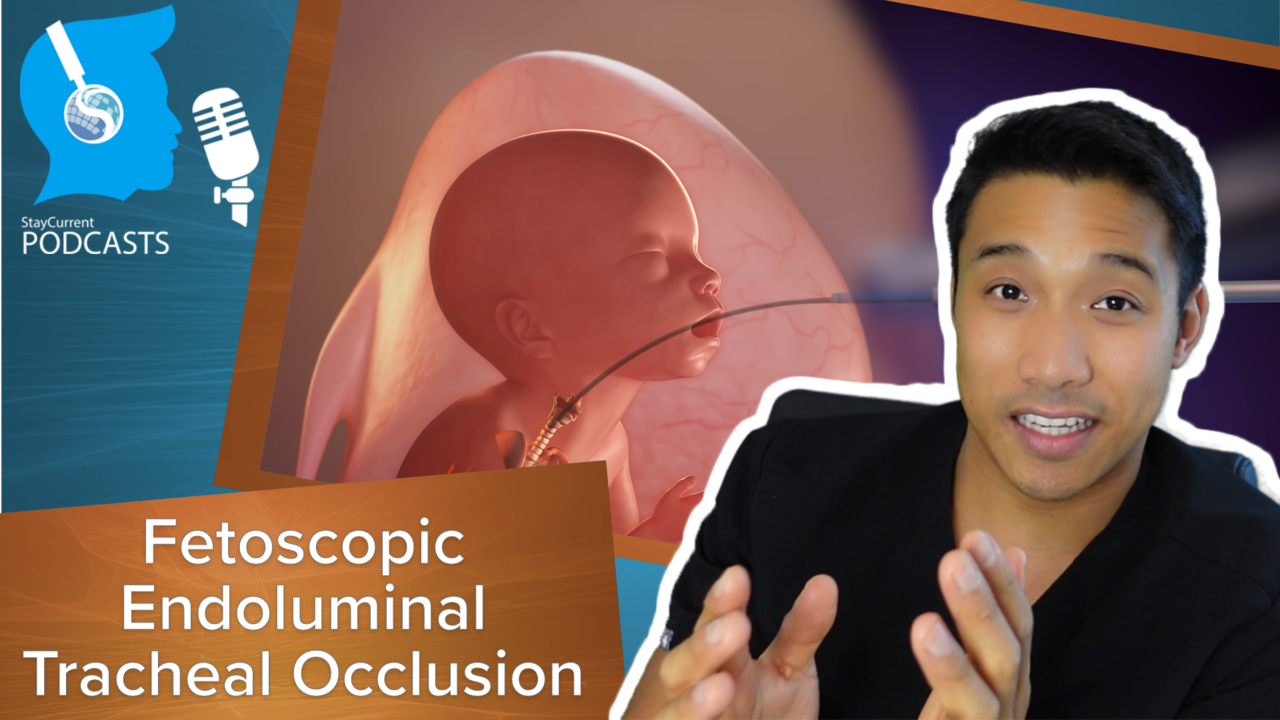 ▶
Ep 10 · 1:02
▶
Ep 10 · 1:02
host summary
Rod Gerardo summarizes what Dr. Fung Lim said: He's the surgical director of the Fetal Care Center at Cincinnati Children's Hospital Medical Center.
↗
▶
Ep 10 · 1:40
host summary
Rod Gerardo summarizes what Dr. Fung Lim said: Ultrasound is usually the screening tool to find congenital diaphragmatic hernia in the fetus.
↗
▶
Ep 10 · 1:48
host summary
Rod Gerardo summarizes what Dr. Fung Lim said: MRI provides higher resolution imaging than ultrasound and yields information about the pulmonary status of the fetus in CDH.
↗
▶
Ep 10 · 2:35
host summary
Rod Gerardo summarizes what Dr. Fung Lim said: Fetuses with severe CDH (liver herniation and bilateral lung hypoplasia) are good candidates for FETO.
↗
▶
Ep 10 · 3:48
host summary
Rod Gerardo summarizes what Dr. Fung Lim said: Because think about it, the fetal lung tissue is constantly creating this fluid. That escapes through the trachea normally, but if we occlude the trachea, then that fluid will continue to build up, the pressure will build up in that trachea, and for some reason, that seems to help the lungs develop.
↗
▶
Ep 10 · 3:48
host summary
Rod Gerardo summarizes what Dr. Fung Lim said: Fetal lung tissue constantly creates fluid that normally escapes through the trachea; occluding the trachea causes fluid and pressure to build up, which helps the lungs develop.
↗
▶
Ep 10 · 4:18
host summary
Rod Gerardo summarizes what Dr. Fung Lim said: The balloon is typically removed at about 34 weeks gestation.
↗
Journal of Pediatric Surgery Article Review: November 2021
 ▶
Ep 7 · 6:09
▶
Ep 7 · 6:09
host summary
Rod Gerardo summarizing the discussion: A lung that was infected is going to be a more difficult lung to operate on
↗
▶
Ep 7 · 6:09
host summary
Rod Gerardo summarizing the discussion: A lung that was infected is gonna be a more difficult lung to operate on.
↗
▶
Ep 7 · 6:09
host summary
Rod Gerardo summarizing the discussion: A lung that was infected is gonna be a more difficult lung to operate on.
↗
▶
Ep 7 · 6:09
host summary
Rod Gerardo summarizing the discussion: A lung that was infected is going to be a more difficult lung to operate on
↗
▶
Ep 7 · 9:26
host summary
Rod Gerardo summarizing the discussion: The most common indication for partial splenectomy in the Indianapolis study was hereditary spherocytosis
↗
▶
Ep 7 · 9:26
host summary
Rod Gerardo summarizing the discussion: The most common indication for partial splenectomy in the Indianapolis study was hereditary spherocytosis
↗
Neonatal Gastric Volvulus with Dr. Jason Frischer
 ▶
Ep 15 · 1:18
▶
Ep 15 · 1:18
host summary
Rod Gerardo summarizing the discussion: Gastric volvulus is associated with eventration of the diaphragm about 25% of the time.
↗
▶
Ep 15 · 1:18
host summary
Rod Gerardo summarizing the discussion: Gastric volvulus is associated with congenital diaphragmatic hernia about 17% of the time.
↗
▶
Ep 15 · 2:13
host summary
Rod Gerardo summarizing the discussion: Acute gastric volvulus presentations are usually due to anatomic problems like congenital diaphragmatic hernia.
↗
▶
Ep 15 · 3:27
host summary
Rod Gerardo summarizing the discussion: Without ligamentous attachments, the stomach is kept in place only at two points: the GE junction and the pylorus, and rotations occur about these points.
↗
▶
Ep 15 · 4:58
host summary
Rod Gerardo summarizing the discussion: Gastric volvulus typically presents in children in the first year of life with non-bilious emesis, gastric distention, and issues passing an NG tube.
↗
▶
Ep 15 · 5:41
host summary
Rod Gerardo summarizing the discussion: A classic bird's beak appearance may be seen when contrast is swallowed or placed in a tube sitting in the esophagus in gastric volvulus.
↗
▶
Ep 15 · 7:34
host summary
Rod Gerardo summarizing the discussion: Gastropexy should be performed at at least one other location in addition to G-tube placement, fixing the stomach in multiple planes to reduce the chance of re-volvulization.
↗
▶
Ep 15 · 7:47
host summary
Rod Gerardo summarizing the discussion: Fundoplication is not required in pediatric gastric volvulus repair, unlike in some adult cases.
↗
Summaries Rod gave as host · Congenital Diaphragmatic Hernia
15 summaries
Open the Congenital Diaphragmatic Hernia collection →
Fetoscopic Endoluminal Tracheal Occlusion (FETO)
▶
Ep 10 · 1:02
host summary
Rod Gerardo summarizes what Dr. Fung Lim said: He's the surgical director of the Fetal Care Center at Cincinnati Children's Hospital Medical Center.
↗
▶
Ep 10 · 1:40
host summary
Rod Gerardo summarizes what Dr. Fung Lim said: Ultrasound is usually the screening tool to find congenital diaphragmatic hernia in the fetus.
↗
▶
Ep 10 · 1:48
host summary
Rod Gerardo summarizes what Dr. Fung Lim said: MRI provides higher resolution imaging than ultrasound and yields information about the pulmonary status of the fetus in CDH.
↗
▶
Ep 10 · 2:35
host summary
Rod Gerardo summarizes what Dr. Fung Lim said: Fetuses with severe CDH (liver herniation and bilateral lung hypoplasia) are good candidates for FETO.
↗
▶
Ep 10 · 3:48
host summary
Rod Gerardo summarizes what Dr. Fung Lim said: Fetal lung tissue constantly creates fluid that normally escapes through the trachea; occluding the trachea causes fluid and pressure to build up, which helps the lungs develop.
↗
▶
Ep 10 · 3:48
host summary
Rod Gerardo summarizes what Dr. Fung Lim said: Because think about it, the fetal lung tissue is constantly creating this fluid. That escapes through the trachea normally, but if we occlude the trachea, then that fluid will continue to build up, the pressure will build up in that trachea, and for some reason, that seems to help the lungs develop.
↗
▶
Ep 10 · 4:18
host summary
Rod Gerardo summarizes what Dr. Fung Lim said: The balloon is typically removed at about 34 weeks gestation.
↗
Neonatal Gastric Volvulus with Dr. Jason Frischer
▶
Ep 12 · 1:18
host summary
Rod Gerardo summarizing the discussion: Gastric volvulus is associated with congenital diaphragmatic hernia about 17% of the time.
↗
▶
Ep 12 · 1:18
host summary
Rod Gerardo summarizing the discussion: Gastric volvulus is associated with eventration of the diaphragm about 25% of the time.
↗
▶
Ep 12 · 2:13
host summary
Rod Gerardo summarizing the discussion: Acute gastric volvulus presentations are usually due to anatomic problems like congenital diaphragmatic hernia.
↗
▶
Ep 12 · 3:27
host summary
Rod Gerardo summarizing the discussion: Without ligamentous attachments, the stomach is kept in place only at two points: the GE junction and the pylorus, and rotations occur about these points.
↗
▶
Ep 12 · 4:58
host summary
Rod Gerardo summarizing the discussion: Gastric volvulus typically presents in children in the first year of life with non-bilious emesis, gastric distention, and issues passing an NG tube.
↗
▶
Ep 12 · 5:41
host summary
Rod Gerardo summarizing the discussion: A classic bird's beak appearance may be seen when contrast is swallowed or placed in a tube sitting in the esophagus in gastric volvulus.
↗
▶
Ep 12 · 7:34
host summary
Rod Gerardo summarizing the discussion: Gastropexy should be performed at at least one other location in addition to G-tube placement, fixing the stomach in multiple planes to reduce the chance of re-volvulization.
↗
▶
Ep 12 · 7:47
host summary
Rod Gerardo summarizing the discussion: Fundoplication is not required in pediatric gastric volvulus repair, unlike in some adult cases.
↗
Summaries Rod gave as host · Congenital Diaphragmatic Hernia
7 summaries
Open the Congenital Diaphragmatic Hernia collection →
Fetoscopic Endoluminal Tracheal Occlusion (FETO)
▶
Ep 6 · 1:02
host summary
Rod Gerardo summarizes what Dr. Fung Lim said: He's the surgical director of the Fetal Care Center at Cincinnati Children's Hospital Medical Center.
↗
▶
Ep 6 · 1:40
host summary
Rod Gerardo summarizes what Dr. Fung Lim said: Ultrasound is usually the screening tool to find congenital diaphragmatic hernia in the fetus.
↗
▶
Ep 6 · 1:48
host summary
Rod Gerardo summarizes what Dr. Fung Lim said: MRI provides higher resolution imaging than ultrasound and yields information about the pulmonary status of the fetus in CDH.
↗
▶
Ep 6 · 2:35
host summary
Rod Gerardo summarizes what Dr. Fung Lim said: Fetuses with severe CDH (liver herniation and bilateral lung hypoplasia) are good candidates for FETO.
↗
▶
Ep 6 · 3:48
host summary
Rod Gerardo summarizes what Dr. Fung Lim said: Fetal lung tissue constantly creates fluid that normally escapes through the trachea; occluding the trachea causes fluid and pressure to build up, which helps the lungs develop.
↗
▶
Ep 6 · 3:48
host summary
Rod Gerardo summarizes what Dr. Fung Lim said: Because think about it, the fetal lung tissue is constantly creating this fluid. That escapes through the trachea normally, but if we occlude the trachea, then that fluid will continue to build up, the pressure will build up in that trachea, and for some reason, that seems to help the lungs develop.
↗
▶
Ep 6 · 4:18
host summary
Rod Gerardo summarizes what Dr. Fung Lim said: The balloon is typically removed at about 34 weeks gestation.
↗
Summaries Rod gave as host · Congenital Lung Lesions (CPAM)
19 summaries
Open the Congenital Lung Lesions (CPAM) collection →
Journal of Pediatric Surgery Article Review: November 2021
▶
Ep 26 · 6:09
host summary
Rod Gerardo summarizing the discussion: A lung that was infected is going to be a more difficult lung to operate on
↗
▶
Ep 26 · 6:09
host summary
Rod Gerardo summarizing the discussion: A lung that was infected is gonna be a more difficult lung to operate on.
↗
▶
Ep 26 · 9:26
host summary
Rod Gerardo summarizing the discussion: The most common indication for partial splenectomy in the Indianapolis study was hereditary spherocytosis
↗
Case Based Journal Review - CPAM in 2022
 ▶
Ep 27 · 2:00
▶
Ep 27 · 2:00
host summary
Rod Gerardo summarizing the discussion: A 2017 prospective study in Archives of Disease in Childhood followed 119 prenatally diagnosed congenital cystic lung lesions for a median of 10 years
↗
▶
Ep 27 · 2:00
host summary
Rod Gerardo summarizing the discussion: A 2017 prospective study in Archives of Disease in Childhood followed 119 prenatally diagnosed congenital cystic lung lesions for a median of 10 years
↗
▶
Ep 27 · 4:04
host summary
Rod Gerardo summarizing the discussion: A 2021 Pediatrics study by the Midwest Pediatric Surgery Consortium retrospectively examined histology of 521 lung lesions resected across 11 children's hospitals
↗
▶
Ep 27 · 4:04
host summary
Rod Gerardo summarizing the discussion: A 2021 Pediatrics study by the Midwest Pediatric Surgery Consortium retrospectively examined histology of 521 lung lesions resected across 11 children's hospitals
↗
▶
Ep 27 · 4:47
host summary
Rod Gerardo summarizing the discussion: Of 177 children with postnatal diagnosis of CPAM, 15 (8.7%) were classified as having a malignant tumor
↗
▶
Ep 27 · 4:47
host summary
Rod Gerardo summarizing the discussion: Of 177 children with postnatal diagnosis of CPAM, 15 (8.7%) were classified as having a malignant tumor
↗
▶
Ep 27 · 6:53
host summary
Rod Gerardo summarizing the discussion: A 2021 Journal of Pediatric Surgery study examined whether previous infection matters for thoracoscopic surgery outcomes in congenital lung malformations
↗
▶
Ep 27 · 6:53
host summary
Rod Gerardo summarizing the discussion: A 2021 Journal of Pediatric Surgery study examined whether previous infection matters for thoracoscopic surgery outcomes in congenital lung malformations
↗
▶
Ep 27 · 7:18
host summary
Rod Gerardo summarizing the discussion: Patients without prior pulmonary infection had shorter operative time, fewer postoperative fevers, less need for postoperative antibiotics, but no significant difference in postoperative complications or conversion rates
↗
▶
Ep 27 · 7:18
host summary
Rod Gerardo summarizing the discussion: Patients without prior pulmonary infection had shorter operative time, fewer postoperative fevers, less need for postoperative antibiotics, but no significant difference in postoperative complications or conversion rates
↗
▶
Ep 27 · 9:12
host summary
Rod Gerardo summarizing the discussion: A 2018 Journal of Pediatric Surgery study examined optimal timing for elective resection of asymptomatic CPAM, dividing patients under 1 year into three groups: 1-3 months, 4-6 months, and 6-12 months
↗
▶
Ep 27 · 9:12
host summary
Rod Gerardo summarizing the discussion: A 2018 Journal of Pediatric Surgery study examined optimal timing for elective resection of asymptomatic CPAM, dividing patients under 1 year into three groups: 1-3 months, 4-6 months, and 6-12 months
↗
▶
Ep 27 · 9:39
host summary
Rod Gerardo summarizing the discussion: Operative time increased with each increase in age; at younger ages the tissue planes are easier to dissect
↗
▶
Ep 27 · 9:39
host summary
Rod Gerardo summarizing the discussion: Operative time increased with each increase in age; at younger ages the tissue planes are easier to dissect
↗
▶
Ep 27 · 9:50
host summary
Rod Gerardo summarizing the discussion: The 1-3 month group had the shortest operative time at 115 minutes compared to 163 minutes in the 6-12 month group
↗
▶
Ep 27 · 9:50
host summary
Rod Gerardo summarizing the discussion: The 1-3 month group had the shortest operative time at 115 minutes compared to 163 minutes in the 6-12 month group
↗
Summaries Rod gave as host · Congenital Pulmonary Airway Malformation
8 summaries
Open the Congenital Pulmonary Airway Malformation collection →
Case Based Journal Review - CPAM in 2022
▶
Ep 22 · 2:00
host summary
Rod Gerardo summarizing the discussion: A 2017 prospective study in Archives of Disease in Childhood followed 119 prenatally diagnosed congenital cystic lung lesions for a median of 10 years
↗
▶
Ep 22 · 4:04
host summary
Rod Gerardo summarizing the discussion: A 2021 Pediatrics study by the Midwest Pediatric Surgery Consortium retrospectively examined histology of 521 lung lesions resected across 11 children's hospitals
↗
▶
Ep 22 · 4:47
host summary
Rod Gerardo summarizing the discussion: Of 177 children with postnatal diagnosis of CPAM, 15 (8.7%) were classified as having a malignant tumor
↗
▶
Ep 22 · 6:53
host summary
Rod Gerardo summarizing the discussion: A 2021 Journal of Pediatric Surgery study examined whether previous infection matters for thoracoscopic surgery outcomes in congenital lung malformations
↗
▶
Ep 22 · 7:18
host summary
Rod Gerardo summarizing the discussion: Patients without prior pulmonary infection had shorter operative time, fewer postoperative fevers, less need for postoperative antibiotics, but no significant difference in postoperative complications or conversion rates
↗
▶
Ep 22 · 9:12
host summary
Rod Gerardo summarizing the discussion: A 2018 Journal of Pediatric Surgery study examined optimal timing for elective resection of asymptomatic CPAM, dividing patients under 1 year into three groups: 1-3 months, 4-6 months, and 6-12 months
↗
▶
Ep 22 · 9:39
host summary
Rod Gerardo summarizing the discussion: Operative time increased with each increase in age; at younger ages the tissue planes are easier to dissect
↗
▶
Ep 22 · 9:50
host summary
Rod Gerardo summarizing the discussion: The 1-3 month group had the shortest operative time at 115 minutes compared to 163 minutes in the 6-12 month group
↗
Summaries Rod gave as host · Congenital Pulmonary Airway Malformation
8 summaries
Open the Congenital Pulmonary Airway Malformation collection →
Case Based Journal Review - CPAM in 2022
▶
Ep 22 · 2:00
host summary
Rod Gerardo summarizing the discussion: A 2017 prospective study in Archives of Disease in Childhood followed 119 prenatally diagnosed congenital cystic lung lesions for a median of 10 years
↗
▶
Ep 22 · 4:04
host summary
Rod Gerardo summarizing the discussion: A 2021 Pediatrics study by the Midwest Pediatric Surgery Consortium retrospectively examined histology of 521 lung lesions resected across 11 children's hospitals
↗
▶
Ep 22 · 4:47
host summary
Rod Gerardo summarizing the discussion: Of 177 children with postnatal diagnosis of CPAM, 15 (8.7%) were classified as having a malignant tumor
↗
▶
Ep 22 · 6:53
host summary
Rod Gerardo summarizing the discussion: A 2021 Journal of Pediatric Surgery study examined whether previous infection matters for thoracoscopic surgery outcomes in congenital lung malformations
↗
▶
Ep 22 · 7:18
host summary
Rod Gerardo summarizing the discussion: Patients without prior pulmonary infection had shorter operative time, fewer postoperative fevers, less need for postoperative antibiotics, but no significant difference in postoperative complications or conversion rates
↗
▶
Ep 22 · 9:12
host summary
Rod Gerardo summarizing the discussion: A 2018 Journal of Pediatric Surgery study examined optimal timing for elective resection of asymptomatic CPAM, dividing patients under 1 year into three groups: 1-3 months, 4-6 months, and 6-12 months
↗
▶
Ep 22 · 9:39
host summary
Rod Gerardo summarizing the discussion: Operative time increased with each increase in age; at younger ages the tissue planes are easier to dissect
↗
▶
Ep 22 · 9:50
host summary
Rod Gerardo summarizing the discussion: The 1-3 month group had the shortest operative time at 115 minutes compared to 163 minutes in the 6-12 month group
↗
Summaries Rod gave as host · Crohn's Disease
14 summaries
Open the Crohn's Disease collection →
Journal of Pediatric Surgery Article Review: September 2021
▶
Ep 7 · 0:44
host summary
Rod Gerardo summarizing the discussion: There was no significant difference between early and traditional feeding groups in length of stay, time to full feeds, postoperative complications, 30-day mortality, or 30-day readmissions.
↗
▶
Ep 7 · 0:44
host summary
Rod Gerardo summarizing the discussion: A Chinese randomized multi-center trial of 156 neonates who underwent surgery for gastrointestinal malformation with intestinal anastomosis compared early internal feeding versus traditional nasogastric decompression.
↗
▶
Ep 7 · 0:44
host summary
Rod Gerardo summarizing the discussion: The early feeding group started feeds at 2 days compared to 6 days in the traditional feeding group.
↗
▶
Ep 7 · 3:06
host summary
Rod Gerardo summarizing the discussion: A Utah study examined patients under age 18 who presented with hematochezia to identify which factors predict Meckel diverticulum and created a risk score.
↗
▶
Ep 7 · 3:06
host summary
Rod Gerardo summarizing the discussion: In the early feeding group, patients did not have a decompressing nasogastric tube, suggesting nasogastric decompression is not needed after neonatal intestinal anastomosis.
↗
▶
Ep 7 · 3:06
host summary
Rod Gerardo summarizing the discussion: The Meckel score could help clinicians skip the Meckel scan and go straight to laparoscopy in high-score patients, even with a negative scan.
↗
▶
Ep 7 · 10:06
host summary
Rod Gerardo summarizing the discussion: Under age 10, clinicians do not need to worry about doing a workup for Crohn disease in children with perianal symptoms; over age 10, they should.
↗
Intestinal rehabilitation: What is intestinal rehab? - Episode 1
▶
Ep 2 · 2:24
host summary
Rod Gerardo summarizing the discussion: New guidelines define intestinal failure as requiring parenteral support for at least 60 days due to inadequate intestinal function.
↗
▶
Ep 2 · 3:33
host summary
Rod Gerardo summarizing the discussion: Intestinal rehabilitation requires managing comorbidities including sepsis and liver disease that challenge infant growth.
↗
▶
Ep 2 · 8:41
host summary
Rod Gerardo summarizing the discussion: Access and availability to intestinal rehabilitation programs is still very rare.
↗
▶
Ep 2 · 12:34
host summary
Rod Gerardo summarizing the discussion: Overall long-term survival in major intestinal rehabilitation programs is usually over 90%.
↗
Intestinal Rehabilitation, Episode 1: What is intestinal rehabilitation?
▶
Ep 3 · 2:24
host summary
Rod Gerardo summarizing the discussion: New guidelines define intestinal failure as inadequate intestinal function requiring parenteral support for at least 60 days.
↗
▶
Ep 3 · 3:33
host summary
Rod Gerardo summarizing the discussion: Intestinal rehabilitation requires managing comorbidities including sepsis and liver disease that challenge infant growth.
↗
▶
Ep 3 · 12:34
host summary
Rod Gerardo summarizing the discussion: Overall survival in big intestinal rehabilitation programs is usually over 90% long-term.
↗
Summaries Rod gave as host · Early Assessment and Management of Trauma
8 summaries
Open the Early Assessment and Management of Trauma collection →
ATLS 2021 Pediatric Surgery Update
 ▶
Ep 9 · 0:08
▶
Ep 9 · 0:08
host summary
Rod Gerardo summarizes what Dr. Rich Falcone said: Trauma and trauma-related injuries are still the number one killer of pediatric patients.
↗
▶
Ep 9 · 0:08
host summary
Rod Gerardo summarizes what Dr. Rich Falcone said: Trauma and trauma-related injuries are still the number one killer of pediatric patients
↗
▶
Ep 9 · 6:57
host summary
Rod Gerardo summarizes what Dr. Rich Falcone said: A cricothyroidotomy is not a definitive airway but buys time to get to the OR to do a formal tracheostomy
↗
▶
Ep 9 · 8:14
host summary
Rod Gerardo summarizes what Dr. Rich Falcone said: When peripheral IV access cannot be obtained, the next step is intraosseous (IO) access
↗
▶
Ep 9 · 11:56
host summary
Rod Gerardo summarizes what Dr. Rich Falcone said: Over 75% of pediatric trauma deaths are due to head injuries
↗
▶
Ep 9 · 13:27
host summary
Rod Gerardo summarizes what Dr. Rich Falcone said: There are validated clinical decision rules for when not to obtain head CT in pediatric trauma patients, with different criteria for children less than 2 years versus older than 2 years
↗
▶
Ep 9 · 13:27
host summary
Rod Gerardo summarizes what Dr. Rich Falcone said: For blunt abdominal trauma, a multi-institutional algorithm identifies patients at very low risk (0.6%) of intraabdominal injury if they answer no to: abdominal pain, abdominal wall trauma/tenderness/distension, abnormal chest X-ray, AST greater than 200, or abnormal pancreatic enzymes
↗
▶
Ep 9 · 13:27
host summary
Rod Gerardo summarizes what Dr. Rich Falcone said: Approximately 35% of blunt abdominal trauma patients meet low-risk criteria (all negative findings), and 0.0% of those required intraabdominal injury intervention
↗
Summaries Rod gave as host · Enterocolitis
4 summaries
Open the Enterocolitis collection →
Update Course Rewind: 2020 Colorectal Part 1
▶
Ep 17 · 5:32
host summary
Rod Gerardo summarizing the discussion: Hirschsprung enterocolitis patients present across a spectrum from mild (slight white count elevation and concerning X-ray distention) to severe (gross distention with obvious shock), requiring different treatment approaches.
↗
▶
Ep 17 · 8:33
host summary
Rod Gerardo summarizing the discussion: The APSA algorithm for post-pull-through obstruction includes decision points starting with rectal exam and contrast enema, potentially moving to rectal biopsy, botulinum toxin injection, and ultimately motility workup that determines need for further colonic resection versus bowel management, stoma, or ACE.
↗
▶
Ep 17 · 11:14
host summary
Rod Gerardo summarizing the discussion: The patient in Case 2 was diagnosed with pseudo-incontinence with hypermotility.
↗
▶
Ep 17 · 11:21
host summary
Rod Gerardo summarizing the discussion: Adjusting fiber intake, daily Imodium, and adding cholestyramine successfully managed the hypermotility patient, allowing return to school with other kids within about a year.
↗
Summaries Rod gave as host · Enterocolitis
4 summaries
Open the Enterocolitis collection →
Update Course Rewind: 2020 Colorectal Part 1
▶
Ep 17 · 5:32
host summary
Rod Gerardo summarizing the discussion: Hirschsprung enterocolitis patients present across a spectrum from mild (slight white count elevation and concerning X-ray distention) to severe (gross distention with obvious shock), requiring different treatment approaches.
↗
▶
Ep 17 · 8:33
host summary
Rod Gerardo summarizing the discussion: The APSA algorithm for post-pull-through obstruction includes decision points starting with rectal exam and contrast enema, potentially moving to rectal biopsy, botulinum toxin injection, and ultimately motility workup that determines need for further colonic resection versus bowel management, stoma, or ACE.
↗
▶
Ep 17 · 11:14
host summary
Rod Gerardo summarizing the discussion: The patient in Case 2 was diagnosed with pseudo-incontinence with hypermotility.
↗
▶
Ep 17 · 11:21
host summary
Rod Gerardo summarizing the discussion: Adjusting fiber intake, daily Imodium, and adding cholestyramine successfully managed the hypermotility patient, allowing return to school with other kids within about a year.
↗
Summaries Rod gave as host · Esophageal Atresia
7 summaries
Open the Esophageal Atresia collection →
Treatment for Long Gap Esophageal Atresia: Esophageal Elongation and Replacement
 ▶
Ep 5 · 1:08
▶
Ep 5 · 1:08
host summary
Rod Gerardo summarizes what Dr. Daniel von Allmen said: In the Foker technique, the surgeon ties sutures to either end of the esophagus through an open incision, brings them out through the chest wall, ties them together in a knot, and places spacers underneath periodically (about every day) until the ends come together for primary anastomosis.
↗
▶
Ep 5 · 2:39
host summary
Rod Gerardo summarizes what Dr. Daniel von Allmen said: The van der Zee technique uses the same concept as Foker but is done thoracoscopically with no external sutures, so all tension is inside the thorax.
↗
▶
Ep 5 · 2:39
host summary
Rod Gerardo summarizes what Dr. Daniel von Allmen said: The Kimura technique involves creating a spit fistula and periodically moving it down the chest wall over time to stretch the proximal pouch closer to the distal pouch, but is not used all that often anymore.
↗
▶
Ep 5 · 4:12
host summary
Rod Gerardo summarizes what Dr. Daniel von Allmen said: We were all taught the dictum that every effort should be made to conserve the native esophagus as no other conduit can replace its function in transporting food from the oral cavity to the stomach satisfactorily.
↗
▶
Ep 5 · 5:08
host summary
Rod Gerardo summarizes what Dr. Daniel von Allmen said: In colonic interposition, the piece of colon chosen is based on the blood supply and the diameter needed.
↗
▶
Ep 5 · 5:08
host summary
Rod Gerardo summarizes what Dr. Daniel von Allmen said: In colonic interposition, a pyloroplasty is performed to help with gastric emptying.
↗
▶
Ep 5 · 9:27
host summary
Rod Gerardo summarizes what Dr. Daniel von Allmen said: The short interval between time of traction and anastomosis (less than five days) raises the question of whether the mechanism is stretching or growth, which will impact results and likely reflects on complications.
↗
Summaries Rod gave as host · Esophageal Atresia
2 summaries
Open the Esophageal Atresia collection →
Journal of Pediatric Surgery Article Review: February 2022 - BAPS Issue
 ▶
Ep 74 · 9:29
▶
Ep 74 · 9:29
host summary
Rod Gerardo summarizing the discussion: Kids Operating Room has opened 50 operating rooms in 22 different countries.
↗
▶
Ep 74 · 9:39
host summary
Rod Gerardo summarizing the discussion: Kids Operating Room supports pediatric surgery residency programs run by CSECSA (College of East, Central and Southern Africa) and WACS (West African College of Surgeons), working closely with Smile Train.
↗
Summaries Rod gave as host · Etiologies (Gastroschisis/NEC/Atresia/Volvulus)
41 summaries
Open the Etiologies (Gastroschisis/NEC/Atresia/Volvulus) collection →
Gastroschisis and sutureless abdominal wall closure
▶
Ep 31 · 1:44
host summary
Rod Gerardo summarizes what Dr. Jason Fraser said: In 2004, Tony Sandler published the first manuscript about suture disclosures to utilize the natural umbilical properties to closing that defect by itself.
↗
▶
Ep 31 · 1:44
host summary
Rod Gerardo summarizes what Dr. Jason Fraser said: In 2004, Tony Sandler published the first manuscript about sutureless closures utilizing the natural umbilical properties to close the gastroschisis defect by itself.
↗
▶
Ep 31 · 2:45
host summary
Rod Gerardo summarizes what Dr. Jason Fraser said: I didn't know about his article. I found out about it as a fellow when he taught us how to treat gastroschisis that way.
↗
▶
Ep 31 · 2:45
host summary
Rod Gerardo summarizes what Dr. Jason Fraser said: I think it's clearly been a massive change in practice. It's one of the examples of a big change that we don't actually operate on those and they can be done at the bedside. And it also is an example of something that took a while to adopt. And now most people are doing it, I think.
↗
▶
Ep 31 · 3:26
host summary
Rod Gerardo summarizes what Dr. Jason Fraser said: There have been so many articles in the last few years that go back and forth. I mean, one said gastro suture list is better. One said definitely don't do suture list. So my question is now, I don't know. I almost don't read these articles anymore.
↗
▶
Ep 31 · 5:29
host summary
Rod Gerardo summarizes what Dr. Jason Fraser said: I think anytime it's a Kansas City or an NWSPC, NWPSC. Anytime it's an NWPSC article, I pay attention. Anytime it's a Kansas City article, I pay attention. But other than that, I'm tired of seeing all these gastroschisis articles. I'm waiting for someone to give me something that is really meaningful.
↗
▶
Ep 31 · 6:01
host summary
Rod Gerardo summarizes what Dr. Jason Fraser said: Sutureless closure patients had less ventilator use compared to sutured closure patients.
↗
▶
Ep 31 · 6:01
host summary
Rod Gerardo summarizes what Dr. Jason Fraser said: The Midwest Pediatric Surgery Consortium study was a retrospective cohort of infants born with gastroschisis between 2013 and 2016, with a total of 315 patients.
↗
▶
Ep 31 · 6:01
host summary
Rod Gerardo summarizes what Dr. Jason Fraser said: The study divided patients into sutured versus sutureless abdominal wall closures and required subgroup analysis because some babies received silos and some did not.
↗
▶
Ep 31 · 6:01
host summary
Rod Gerardo summarizes what Dr. Jason Fraser said: Patients who underwent sutureless abdominal wall closure had no difference in days on TPN, time to goal feeds, time to initial feeds, or length of stay compared to sutured closure.
↗
▶
Ep 31 · 6:01
host summary
Rod Gerardo summarizes what Dr. Jason Fraser said: Sutureless closure patients had less antibiotic use compared to sutured closure patients.
↗
▶
Ep 31 · 6:01
host summary
Rod Gerardo summarizes what Dr. Jason Fraser said: Sutureless closure patients had fewer surgical site and deep space infections compared to sutured closure patients.
↗
▶
Ep 31 · 6:01
host summary
Rod Gerardo summarizes what Dr. Jason Fraser said: Sutureless closure patients had fewer episodes of general anesthetics compared to sutured closure patients.
↗
▶
Ep 31 · 6:01
host summary
Rod Gerardo summarizes what Dr. Jason Fraser said: The positive outcomes for sutureless repair were observed even when considering patients who required silo use.
↗
▶
Ep 31 · 11:13
host summary
Rod Gerardo summarizes what Dr. Jason Fraser said: Yeah, I think in general, I, I, you're right. I don't know how the pendulum is going to swing, but we are finding more and more. There are things that we don't have to operate on.
↗
▶
Ep 31 · 11:22
host summary
Rod Gerardo summarizes what Dr. Jason Fraser said: Gastroschisis is an abdominal wall defect that used to necessitate a trip to the OR and is now more like a safe bedside procedure.
↗
Journal of Pediatric Surgery Article Review: October 2021
▶
Ep 33 · 2:50
host summary
Rod Gerardo summarizing the discussion: Complete metadata for medical education content includes title, description, summary, keywords, duration, content type, specialty area, target audience level, and language.
↗
▶
Ep 33 · 2:50
host summary
Rod Gerardo summarizing the discussion: We might congratulate ourselves for having done a good job in perhaps saving the kid and identifying the problem, but perhaps not aware that we have a responsibility uh for the long-term health and uh we have to be advocates for the children.
↗
▶
Ep 33 · 8:32
host summary
Rod Gerardo summarizing the discussion: We currently do not have objective clinical markers, whether clinical features or novel biomarkers, to help make earlier surgical decisions in NEC.
↗
▶
Ep 33 · 8:32
host summary
Rod Gerardo summarizing the discussion: It is obvious that we currently do not have the objective clinical markers, whether they are the uh clinical features or uh novel biomarkers to help us make an earlier decision.
↗
▶
Ep 33 · 17:03
host summary
Rod Gerardo summarizing the discussion: The Italian study provides sufficient evidence to convince clinicians who are not doing routine spinal cord and spine assessment in anorectal malformation patients that they should be more serious with imaging.
↗
Intestinal rehabilitation: What is intestinal rehab? - Episode 1
▶
Ep 33 · 2:24
host summary
Rod Gerardo summarizing the discussion: New guidelines define intestinal failure as requiring parenteral support for at least 60 days due to inadequate intestinal function.
↗
▶
Ep 33 · 3:33
host summary
Rod Gerardo summarizing the discussion: Intestinal rehabilitation requires managing comorbidities including sepsis and liver disease that challenge infant growth.
↗
▶
Ep 33 · 8:41
host summary
Rod Gerardo summarizing the discussion: Access and availability to intestinal rehabilitation programs is still very rare.
↗
▶
Ep 33 · 12:34
host summary
Rod Gerardo summarizing the discussion: Overall long-term survival in major intestinal rehabilitation programs is usually over 90%.
↗
Intestinal Rehabilitation, Episode 1: What is intestinal rehabilitation?
▶
Ep 34 · 2:24
host summary
Rod Gerardo summarizing the discussion: New guidelines define intestinal failure as inadequate intestinal function requiring parenteral support for at least 60 days.
↗
▶
Ep 34 · 3:33
host summary
Rod Gerardo summarizing the discussion: Intestinal rehabilitation requires managing comorbidities including sepsis and liver disease that challenge infant growth.
↗
▶
Ep 34 · 12:34
host summary
Rod Gerardo summarizing the discussion: Overall survival in big intestinal rehabilitation programs is usually over 90% long-term.
↗
Journal of Pediatric Surgery Article Review: January 2022 APSA Issue
▶
Ep 38 · 3:58
host summary
Rod Gerardo summarizing the discussion: External federal research funding at Nationwide increased from $750,000 to $5.7 million, representing a 7.7-fold increase.
↗
Stay Current Throwbacks Necrotizing Enterocolitis with Dr. Gail Besner
 ▶
Ep 39 · 46:18
▶
Ep 39 · 46:18
host summary
Rod Gerardo summarizes what Dr. Gail Besner said: The NEST trial results published in fall 2021 showed no overall difference in death or neurodevelopmental impairment between laparotomy and drainage groups.
↗
▶
Ep 39 · 47:00
host summary
Rod Gerardo summarizes what Dr. Gail Besner said: In the NEST trial, neonates with a preoperative diagnosis of necrotizing enterocolitis (versus isolated intestinal perforation) had approximately 20% decrease in death rate with laparotomy compared to drainage.
↗
Neonatal Gastric Volvulus with Dr. Jason Frischer
▶
Ep 43 · 1:18
host summary
Rod Gerardo summarizing the discussion: Gastric volvulus is associated with eventration of the diaphragm about 25% of the time.
↗
▶
Ep 43 · 1:18
host summary
Rod Gerardo summarizing the discussion: Gastric volvulus is associated with congenital diaphragmatic hernia about 17% of the time.
↗
▶
Ep 43 · 2:13
host summary
Rod Gerardo summarizing the discussion: Acute gastric volvulus presentations are usually due to anatomic problems like congenital diaphragmatic hernia.
↗
▶
Ep 43 · 3:27
host summary
Rod Gerardo summarizing the discussion: Without ligamentous attachments, the stomach is kept in place only at two points: the GE junction and the pylorus, and rotations occur about these points.
↗
▶
Ep 43 · 4:58
host summary
Rod Gerardo summarizing the discussion: Gastric volvulus typically presents in children in the first year of life with non-bilious emesis, gastric distention, and issues passing an NG tube.
↗
▶
Ep 43 · 5:41
host summary
Rod Gerardo summarizing the discussion: A classic bird's beak appearance may be seen when contrast is swallowed or placed in a tube sitting in the esophagus in gastric volvulus.
↗
▶
Ep 43 · 7:34
host summary
Rod Gerardo summarizing the discussion: Gastropexy should be performed at at least one other location in addition to G-tube placement, fixing the stomach in multiple planes to reduce the chance of re-volvulization.
↗
▶
Ep 43 · 7:47
host summary
Rod Gerardo summarizing the discussion: Fundoplication is not required in pediatric gastric volvulus repair, unlike in some adult cases.
↗
Quick Literature Updates Episode 6
▶
Ep 48 · 2:50
host summary
Rod Gerardo summarizing a resource: Miyata et al. used the Canadian Association of Pediatric Surgery Network to study pediatric patients with gastroschisis who underwent bedside reduction and closure.
↗
▶
Ep 48 · 2:50
host summary
Rod Gerardo summarizing a resource: There was no significant difference in the rate of successful primary closure between intubated and non-intubated neonates with gastroschisis.
↗
Summaries Rod gave as host · Fetal Surgery
31 summaries
Open the Fetal Surgery collection →
Fetoscopic Endoluminal Tracheal Occlusion (FETO)
▶
Ep 15 · 1:02
host summary
Rod Gerardo summarizes what Dr. Fung Lim said: He's the surgical director of the Fetal Care Center at Cincinnati Children's Hospital Medical Center.
↗
▶
Ep 15 · 1:40
host summary
Rod Gerardo summarizes what Dr. Fung Lim said: Ultrasound is usually the screening tool to find congenital diaphragmatic hernia in the fetus.
↗
▶
Ep 15 · 1:48
host summary
Rod Gerardo summarizes what Dr. Fung Lim said: MRI provides higher resolution imaging than ultrasound and yields information about the pulmonary status of the fetus in CDH.
↗
▶
Ep 15 · 2:35
host summary
Rod Gerardo summarizes what Dr. Fung Lim said: Fetuses with severe CDH (liver herniation and bilateral lung hypoplasia) are good candidates for FETO.
↗
▶
Ep 15 · 3:48
host summary
Rod Gerardo summarizes what Dr. Fung Lim said: Fetal lung tissue constantly creates fluid that normally escapes through the trachea; occluding the trachea causes fluid and pressure to build up, which helps the lungs develop.
↗
▶
Ep 15 · 3:48
host summary
Rod Gerardo summarizes what Dr. Fung Lim said: Because think about it, the fetal lung tissue is constantly creating this fluid. That escapes through the trachea normally, but if we occlude the trachea, then that fluid will continue to build up, the pressure will build up in that trachea, and for some reason, that seems to help the lungs develop.
↗
▶
Ep 15 · 4:18
host summary
Rod Gerardo summarizes what Dr. Fung Lim said: The balloon is typically removed at about 34 weeks gestation.
↗
Fetoscopic Repair of Myelomeningocele (MMC)
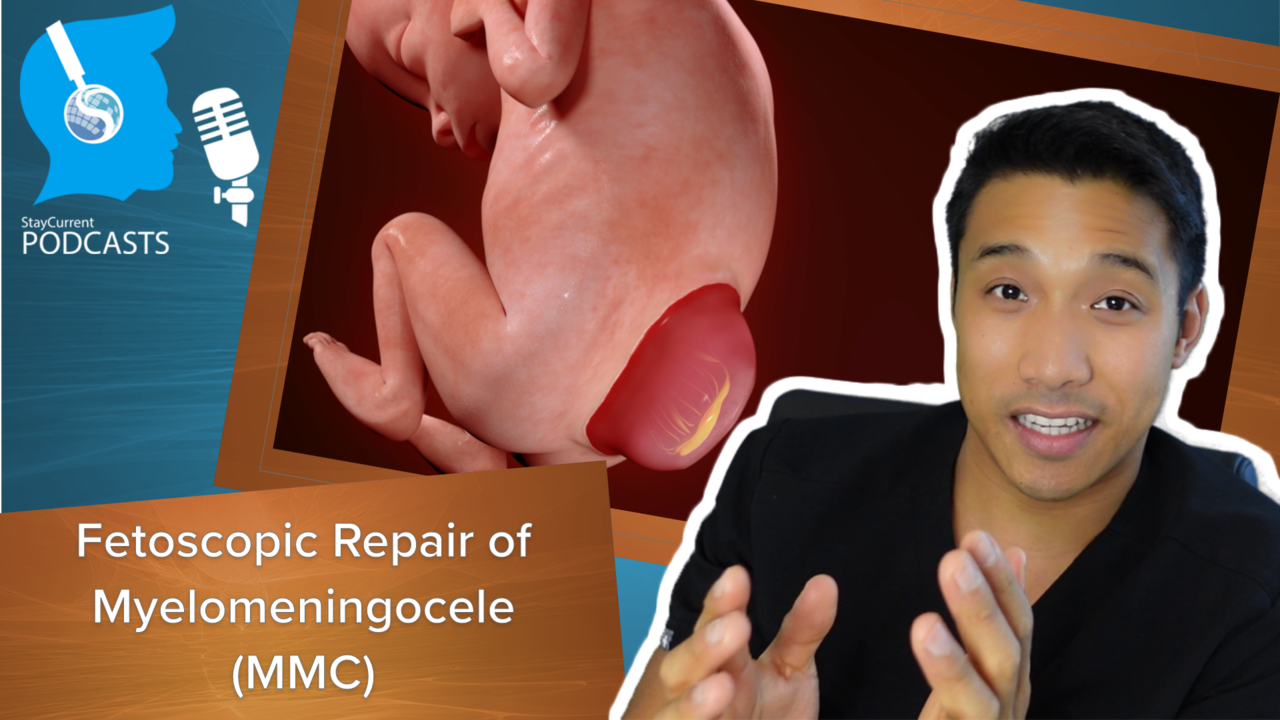 ▶
Ep 16 · 0:42
▶
Ep 16 · 0:42
host summary
Rod Gerardo summarizes what Dr. Fung Lim said: Neural tube defects are the most common congenital central nervous system anomaly.
↗
▶
Ep 16 · 0:42
host summary
Rod Gerardo summarizes what Dr. Fung Lim said: Neural tube defects are the most common congenital central nervous system anomaly.
↗
▶
Ep 16 · 0:55
host summary
Rod Gerardo summarizes what Dr. Fung Lim said: He's the director of the Fetal Care Center at Cincinnati Children's Hospital Medical Center.
↗
▶
Ep 16 · 0:55
host summary
Rod Gerardo summarizes what Dr. Fung Lim said: He's the director of the Fetal Care Center at Cincinnati Children's Hospital Medical Center.
↗
▶
Ep 16 · 1:20
host summary
Rod Gerardo summarizes what Dr. Fung Lim said: Myelomeningocele or spina bifida is the most common neural tube defect.
↗
▶
Ep 16 · 1:20
host summary
Rod Gerardo summarizes what Dr. Fung Lim said: Myelomeningocele or spina bifida is the most common neural tube defect.
↗
▶
Ep 16 · 1:25
host summary
Rod Gerardo summarizes what Dr. Fung Lim said: In myelomeningocele, the patient is born with a cleft in the vertebral column and a defect in the skin, so the meninges and the spinal cord are exposed.
↗
▶
Ep 16 · 1:25
host summary
Rod Gerardo summarizes what Dr. Fung Lim said: In myelomeningocele, the patient is born with a cleft in the vertebral column and a defect in the skin, so the meninges and the spinal cord are exposed.
↗
▶
Ep 16 · 1:33
host summary
Rod Gerardo summarizes what Dr. Fung Lim said: The patient may be left with neural defects based on the level of the spinal cord where the lesion is.
↗
▶
Ep 16 · 1:33
host summary
Rod Gerardo summarizes what Dr. Fung Lim said: The patient may be left with neural defects based on the level of the spinal cord where the lesion is.
↗
▶
Ep 16 · 2:17
host summary
Rod Gerardo summarizes what Dr. Fung Lim said: Under ultrasound guidance, the first port is placed.
↗
▶
Ep 16 · 2:17
host summary
Rod Gerardo summarizes what Dr. Fung Lim said: Under ultrasound guidance, the first port is placed.
↗
▶
Ep 16 · 2:51
host summary
Rod Gerardo summarizes what Dr. Fung Lim said: Anesthesia is induced on the baby via an intragluteal injection.
↗
▶
Ep 16 · 2:51
host summary
Rod Gerardo summarizes what Dr. Fung Lim said: Anesthesia is induced on the baby via an intragluteal injection.
↗
▶
Ep 16 · 3:08
host summary
Rod Gerardo summarizes what Dr. Fung Lim said: The first step is to open the sac, then dissect around the sac circumferentially.
↗
▶
Ep 16 · 3:08
host summary
Rod Gerardo summarizes what Dr. Fung Lim said: The first step is to open the sac, then dissect around the sac circumferentially.
↗
▶
Ep 16 · 3:27
host summary
Rod Gerardo summarizes what Dr. Fung Lim said: The placode is the open area of exposed neural tissue.
↗
▶
Ep 16 · 3:27
host summary
Rod Gerardo summarizes what Dr. Fung Lim said: The placode is the open area of exposed neural tissue.
↗
▶
Ep 16 · 3:44
host summary
Rod Gerardo summarizes what Dr. Fung Lim said: A skin flap is created to loosen up the skin, which will help form a watertight closure of the spinal defect.
↗
▶
Ep 16 · 3:44
host summary
Rod Gerardo summarizes what Dr. Fung Lim said: A skin flap is created to loosen up the skin, which will help form a watertight closure of the spinal defect.
↗
▶
Ep 16 · 5:14
host summary
Rod Gerardo summarizes what Dr. Fung Lim said: The mother and the fetus are monitored postoperatively, and if able, the baby is delivered vaginally at term.
↗
▶
Ep 16 · 5:14
host summary
Rod Gerardo summarizes what Dr. Fung Lim said: The mother and the fetus are monitored postoperatively, and if able, the baby is delivered vaginally at term.
↗
Journal of Pediatric Surgery Article Review: January 2022 APSA Issue
▶
Ep 19 · 3:58
host summary
Rod Gerardo summarizing the discussion: External federal research funding at Nationwide increased from $750,000 to $5.7 million, representing a 7.7-fold increase.
↗
Journal of Pediatric Surgery Article Highlights: April 2022
 ▶
Ep 20 · 4:37
▶
Ep 20 · 4:37
host summary
Rod Gerardo summarizing the discussion: The third article is titled 'Current Status of Sub-specialization in Pediatric Surgery, a Focus on fetal Surgery' and surveys practice patterns in fetal surgery across the country.
↗
Summaries Rod gave as host · Gastroschisis
17 summaries
Open the Gastroschisis collection →
Gastroschisis and sutureless abdominal wall closure
▶
Ep 13 · 1:44
host summary
Rod Gerardo summarizes what Dr. Jason Fraser said: In 2004, Tony Sandler published the first manuscript about suture disclosures to utilize the natural umbilical properties to closing that defect by itself.
↗
▶
Ep 13 · 1:44
host summary
Rod Gerardo summarizes what Dr. Jason Fraser said: In 2004, Tony Sandler published the first manuscript about sutureless closures utilizing the natural umbilical properties to close the gastroschisis defect by itself.
↗
▶
Ep 13 · 2:45
host summary
Rod Gerardo summarizes what Dr. Jason Fraser said: I think it's clearly been a massive change in practice. It's one of the examples of a big change that we don't actually operate on those and they can be done at the bedside. And it also is an example of something that took a while to adopt. And now most people are doing it, I think.
↗
▶
Ep 13 · 2:45
host summary
Rod Gerardo summarizes what Dr. Jason Fraser said: I didn't know about his article. I found out about it as a fellow when he taught us how to treat gastroschisis that way.
↗
▶
Ep 13 · 3:26
host summary
Rod Gerardo summarizes what Dr. Jason Fraser said: There have been so many articles in the last few years that go back and forth. I mean, one said gastro suture list is better. One said definitely don't do suture list. So my question is now, I don't know. I almost don't read these articles anymore.
↗
▶
Ep 13 · 5:29
host summary
Rod Gerardo summarizes what Dr. Jason Fraser said: I think anytime it's a Kansas City or an NWSPC, NWPSC. Anytime it's an NWPSC article, I pay attention. Anytime it's a Kansas City article, I pay attention. But other than that, I'm tired of seeing all these gastroschisis articles. I'm waiting for someone to give me something that is really meaningful.
↗
▶
Ep 13 · 6:01
host summary
Rod Gerardo summarizes what Dr. Jason Fraser said: Sutureless closure patients had less antibiotic use compared to sutured closure patients.
↗
▶
Ep 13 · 6:01
host summary
Rod Gerardo summarizes what Dr. Jason Fraser said: Patients who underwent sutureless abdominal wall closure had no difference in days on TPN, time to goal feeds, time to initial feeds, or length of stay compared to sutured closure.
↗
▶
Ep 13 · 6:01
host summary
Rod Gerardo summarizes what Dr. Jason Fraser said: The study divided patients into sutured versus sutureless abdominal wall closures and required subgroup analysis because some babies received silos and some did not.
↗
▶
Ep 13 · 6:01
host summary
Rod Gerardo summarizes what Dr. Jason Fraser said: The Midwest Pediatric Surgery Consortium study was a retrospective cohort of infants born with gastroschisis between 2013 and 2016, with a total of 315 patients.
↗
▶
Ep 13 · 6:01
host summary
Rod Gerardo summarizes what Dr. Jason Fraser said: The positive outcomes for sutureless repair were observed even when considering patients who required silo use.
↗
▶
Ep 13 · 6:01
host summary
Rod Gerardo summarizes what Dr. Jason Fraser said: Sutureless closure patients had less ventilator use compared to sutured closure patients.
↗
▶
Ep 13 · 6:01
host summary
Rod Gerardo summarizes what Dr. Jason Fraser said: Sutureless closure patients had fewer episodes of general anesthetics compared to sutured closure patients.
↗
▶
Ep 13 · 6:01
host summary
Rod Gerardo summarizes what Dr. Jason Fraser said: Sutureless closure patients had fewer surgical site and deep space infections compared to sutured closure patients.
↗
▶
Ep 13 · 11:13
host summary
Rod Gerardo summarizes what Dr. Jason Fraser said: Yeah, I think in general, I, I, you're right. I don't know how the pendulum is going to swing, but we are finding more and more. There are things that we don't have to operate on.
↗
▶
Ep 13 · 11:22
host summary
Rod Gerardo summarizes what Dr. Jason Fraser said: Gastroschisis is an abdominal wall defect that used to necessitate a trip to the OR and is now more like a safe bedside procedure.
↗
Journal of Pediatric Surgery Article Review: January 2022 APSA Issue
▶
Ep 15 · 3:58
host summary
Rod Gerardo summarizing the discussion: External federal research funding at Nationwide increased from $750,000 to $5.7 million, representing a 7.7-fold increase.
↗
Summaries Rod gave as host · Gastroschisis
21 summaries
Open the Gastroschisis collection →
Gastroschisis and sutureless abdominal wall closure
▶
Ep 14 · 1:44
host summary
Rod Gerardo summarizes what Dr. Jason Fraser said: In 2004, Tony Sandler published the first manuscript about suture disclosures to utilize the natural umbilical properties to closing that defect by itself.
↗
▶
Ep 14 · 1:44
host summary
Rod Gerardo summarizes what Dr. Jason Fraser said: In 2004, Tony Sandler published the first manuscript about sutureless closures utilizing the natural umbilical properties to close the gastroschisis defect by itself.
↗
▶
Ep 14 · 2:45
host summary
Rod Gerardo summarizes what Dr. Jason Fraser said: I didn't know about his article. I found out about it as a fellow when he taught us how to treat gastroschisis that way.
↗
▶
Ep 14 · 2:45
host summary
Rod Gerardo summarizes what Dr. Jason Fraser said: I think it's clearly been a massive change in practice. It's one of the examples of a big change that we don't actually operate on those and they can be done at the bedside. And it also is an example of something that took a while to adopt. And now most people are doing it, I think.
↗
▶
Ep 14 · 3:26
host summary
Rod Gerardo summarizes what Dr. Jason Fraser said: There have been so many articles in the last few years that go back and forth. I mean, one said gastro suture list is better. One said definitely don't do suture list. So my question is now, I don't know. I almost don't read these articles anymore.
↗
▶
Ep 14 · 5:29
host summary
Rod Gerardo summarizes what Dr. Jason Fraser said: I think anytime it's a Kansas City or an NWSPC, NWPSC. Anytime it's an NWPSC article, I pay attention. Anytime it's a Kansas City article, I pay attention. But other than that, I'm tired of seeing all these gastroschisis articles. I'm waiting for someone to give me something that is really meaningful.
↗
▶
Ep 14 · 6:01
host summary
Rod Gerardo summarizes what Dr. Jason Fraser said: The Midwest Pediatric Surgery Consortium study was a retrospective cohort of infants born with gastroschisis between 2013 and 2016, with a total of 315 patients.
↗
▶
Ep 14 · 6:01
host summary
Rod Gerardo summarizes what Dr. Jason Fraser said: The study divided patients into sutured versus sutureless abdominal wall closures and required subgroup analysis because some babies received silos and some did not.
↗
▶
Ep 14 · 6:01
host summary
Rod Gerardo summarizes what Dr. Jason Fraser said: Patients who underwent sutureless abdominal wall closure had no difference in days on TPN, time to goal feeds, time to initial feeds, or length of stay compared to sutured closure.
↗
▶
Ep 14 · 6:01
host summary
Rod Gerardo summarizes what Dr. Jason Fraser said: Sutureless closure patients had less antibiotic use compared to sutured closure patients.
↗
▶
Ep 14 · 6:01
host summary
Rod Gerardo summarizes what Dr. Jason Fraser said: Sutureless closure patients had fewer episodes of general anesthetics compared to sutured closure patients.
↗
▶
Ep 14 · 6:01
host summary
Rod Gerardo summarizes what Dr. Jason Fraser said: Sutureless closure patients had fewer surgical site and deep space infections compared to sutured closure patients.
↗
▶
Ep 14 · 6:01
host summary
Rod Gerardo summarizes what Dr. Jason Fraser said: Sutureless closure patients had less ventilator use compared to sutured closure patients.
↗
▶
Ep 14 · 6:01
host summary
Rod Gerardo summarizes what Dr. Jason Fraser said: The positive outcomes for sutureless repair were observed even when considering patients who required silo use.
↗
▶
Ep 14 · 11:13
host summary
Rod Gerardo summarizes what Dr. Jason Fraser said: Yeah, I think in general, I, I, you're right. I don't know how the pendulum is going to swing, but we are finding more and more. There are things that we don't have to operate on.
↗
▶
Ep 14 · 11:22
host summary
Rod Gerardo summarizes what Dr. Jason Fraser said: Gastroschisis is an abdominal wall defect that used to necessitate a trip to the OR and is now more like a safe bedside procedure.
↗
Journal of Pediatric Surgery Article Review: January 2022 APSA Issue
▶
Ep 16 · 3:58
host summary
Rod Gerardo summarizing the discussion: External federal research funding at Nationwide increased from $750,000 to $5.7 million, representing a 7.7-fold increase.
↗
Intestinal Rehabilitation, Episode 3: Enteral Autonomy, Part 1
 ▶
Ep 4 · 10:34
▶
Ep 4 · 10:34
host summary
Rod Gerardo summarizing the discussion: A full-term baby is born with approximately 160 centimeters of small bowel
↗
▶
Ep 4 · 12:58
host summary
Rod Gerardo summarizing the discussion: Bacterial colonization of the intestines is part of the adaptive response
↗
Quick Literature Updates Episode 6
▶
Ep 7 · 2:50
host summary
Rod Gerardo summarizing a resource: Miyata et al. used the Canadian Association of Pediatric Surgery Network to study pediatric patients with gastroschisis who underwent bedside reduction and closure.
↗
▶
Ep 7 · 2:50
host summary
Rod Gerardo summarizing a resource: There was no significant difference in the rate of successful primary closure between intubated and non-intubated neonates with gastroschisis.
↗
Summaries Rod gave as host · Gunshot Wound
2 summaries
Open the Gunshot Wound collection →
Quick Literature Updates Episode 6
▶
Ep 2 · 2:50
host summary
Rod Gerardo summarizing a resource: Miyata et al. used the Canadian Association of Pediatric Surgery Network to study pediatric patients with gastroschisis who underwent bedside reduction and closure.
↗
▶
Ep 2 · 2:50
host summary
Rod Gerardo summarizing a resource: There was no significant difference in the rate of successful primary closure between intubated and non-intubated neonates with gastroschisis.
↗
Summaries Rod gave as host · Hepatoblastoma
8 summaries
Open the Hepatoblastoma collection →
Image Guided Surgery Video Series, Episode 2 - Lung Nodule Localization &...
 ▶
Ep 7 · 5:44
▶
Ep 7 · 5:44
host summary
Rod Gerardo summarizing the discussion: Localization on CT is simple: draw line between skin surface and target on CT images; beauty of cross-sectional CT images is you can account for z-axis, giving 3D rendition or 3D space.
↗
▶
Ep 7 · 5:44
host summary
Rod Gerardo summarizing the discussion: Radiographs are a shot in time, fluoroscopy gives real-time 2D images, and latest fluoroscopic machines can do cone beam CT which performs 360-degree scan of designated 3D volume, giving cross-section images.
↗
▶
Ep 7 · 8:43
host summary
Rod Gerardo summarizing the discussion: To ensure the same respiratory effort, we ask our anesthesia colleagues to fully paralyze the patient and then disconnect the tubes from the ventilator. This way the patient can just exhale naturally and and stop at a very natural stopping point.
↗
▶
Ep 7 · 8:43
host summary
Rod Gerardo summarizing the discussion: Having no positive pressure reduces chance of pneumothorax.
↗
▶
Ep 7 · 8:43
host summary
Rod Gerardo summarizing the discussion: To ensure same respiratory effort, ask anesthesia colleagues to fully paralyze patient and disconnect tubes from ventilator so patient can exhale naturally and stop at very natural stopping point—most reproducible rather than having CPAP of 20 or 25.
↗
▶
Ep 7 · 12:27
host summary
Rod Gerardo summarizing the discussion: Display monitor shows live X-ray image with graphics and pre-op CT so can compare all images while doing procedure.
↗
▶
Ep 7 · 14:23
host summary
Rod Gerardo summarizing the discussion: 3D rendering takes time; it's a tool in the armamentarium but may not be needed for every case.
↗
▶
Ep 7 · 15:26
host summary
Rod Gerardo summarizing the discussion: Added benefit from technologist perspective: having surgeon and interventional radiologist in room helping staff physician so everyone's happy when they get in there.
↗
Summaries Rod gave as host · Hirschsprung disease
31 summaries
Open the Hirschsprung disease collection →
The Colorectal Quiz Episode 3.5: Proximal Hirschsprung Disease
▶
Ep 35 · 2:07
host summary
Rod Gerardo summarizing the discussion: If a child is sick with bilious emesis and distension, resuscitation should be the first step before diagnostic workup.
↗
The Colorectal Quiz Episode 4: Classic Hirschsprung disease - Surgical Technique
▶
Ep 36 · 17:01
host summary
Rod Gerardo summarizing the discussion: The reinforcement layer of sutures is critical for lining up the two pieces of bowel to achieve mucosa-to-mucosa edge approximation.
↗
▶
Ep 36 · 17:01
host summary
Rod Gerardo summarizing the discussion: The reinforcement layer of sutures is critical for lining up the two pieces of bowel to achieve mucosa-to-mucosa edge approximation.
↗
The Colorectal Quiz Episode 5: Proximal Hirschsprung Disease Surgical Technique
▶
Ep 37 · 5:23
host summary
Rod Gerardo summarizing the discussion: Frozen sections can rule out Hirschsprung disease but cannot definitively rule it in.
↗
▶
Ep 37 · 6:00
host summary
Rod Gerardo summarizing the discussion: For proximal disease, the key question on biopsy is whether ganglion cells are present, not whether nerves are hypertrophic.
↗
▶
Ep 37 · 10:37
host summary
Rod Gerardo summarizing the discussion: Do no harm.
↗
Update Course Rewind: 2020 Colorectal Part 1
▶
Ep 38 · 5:32
host summary
Rod Gerardo summarizing the discussion: Hirschsprung enterocolitis patients present across a spectrum from mild (slight white count elevation and concerning X-ray distention) to severe (gross distention with obvious shock), requiring different treatment approaches.
↗
▶
Ep 38 · 5:32
host summary
Rod Gerardo summarizing the discussion: Hirschsprung enterocolitis patients present across a spectrum from mild (slight white count elevation and concerning X-ray distention) to severe (gross distention with obvious shock), requiring different treatment approaches.
↗
▶
Ep 38 · 8:33
host summary
Rod Gerardo summarizing the discussion: The APSA algorithm for post-pull-through obstruction includes decision points starting with rectal exam and contrast enema, potentially moving to rectal biopsy, botulinum toxin injection, and ultimately motility workup that determines need for further colonic resection versus bowel management, stoma, or ACE.
↗
▶
Ep 38 · 8:33
host summary
Rod Gerardo summarizing the discussion: The APSA algorithm for post-pull-through obstruction includes decision points starting with rectal exam and contrast enema, potentially moving to rectal biopsy, botulinum toxin injection, and ultimately motility workup that determines need for further colonic resection versus bowel management, stoma, or ACE.
↗
▶
Ep 38 · 11:14
host summary
Rod Gerardo summarizing the discussion: The patient in Case 2 was diagnosed with pseudo-incontinence with hypermotility.
↗
▶
Ep 38 · 11:14
host summary
Rod Gerardo summarizing the discussion: The patient in Case 2 was diagnosed with pseudo-incontinence with hypermotility.
↗
▶
Ep 38 · 11:21
host summary
Rod Gerardo summarizing the discussion: Adjusting fiber intake, daily Imodium, and adding cholestyramine successfully managed the hypermotility patient, allowing return to school with other kids within about a year.
↗
▶
Ep 38 · 11:21
host summary
Rod Gerardo summarizing the discussion: Adjusting fiber intake, daily Imodium, and adding cholestyramine successfully managed the hypermotility patient, allowing return to school with other kids within about a year.
↗
The Colorectal Quiz Episode 10: Total Colonic Hirschsprung Disease Part 1
▶
Ep 42 · 0:00
host summary
Rod Gerardo summarizing the discussion: Hey there listeners, it's Rod Gerardo and Amanda Jensen from Cincinnati Children's.
↗
▶
Ep 42 · 1:17
host summary
Rod Gerardo summarizes what Dr. Jason Frischer said: That's Doctor Jason Fisher, pediatric colorectal surgeon at Cincinnati Children's Hospital.
↗
▶
Ep 42 · 4:07
host summary
Rod Gerardo summarizing the discussion: Common causes of failure to pass meconium include Hirschsprung disease, meconium plug syndrome, meconium ileus, and anorectal malformation
↗
Hirschsprung Disease Workup
▶
Ep 43 · 7:50
host summary
Rod Gerardo summarizing the discussion: Even with suggestive manometry findings, a biopsy is still required before surgical intervention; no surgeon would operate on manometry alone.
↗
▶
Ep 43 · 7:50
host summary
Rod Gerardo summarizing the discussion: Even with suggestive manometry findings, a biopsy is still required before surgical intervention; no surgeon would operate on manometry alone.
↗
▶
Ep 43 · 8:00
host summary
Rod Gerardo summarizing the discussion: nobody I know would operate on a manometry alone. So if there's a suggestive manometry, a biopsy will still be done.
↗
▶
Ep 43 · 8:00
host summary
Rod Gerardo summarizing the discussion: nobody I know would operate on a manometry alone. So if there's a suggestive manometry, a biopsy will still be done.
↗
▶
Ep 43 · 8:41
host summary
Rod Gerardo summarizing the discussion: Normal individuals without Hirschsprung disease have no ganglion cells in the very first (distal-most) part of the rectum.
↗
▶
Ep 43 · 8:41
host summary
Rod Gerardo summarizing the discussion: Normal individuals without Hirschsprung disease have no ganglion cells in the very first (distal-most) part of the rectum.
↗
▶
Ep 43 · 9:05
host summary
Rod Gerardo summarizing the discussion: In children over one year old, the suction biopsy tool cannot obtain adequate tissue depth because the tissue is thicker, necessitating surgical biopsy in the OR.
↗
▶
Ep 43 · 9:05
host summary
Rod Gerardo summarizing the discussion: In children over one year old, the suction biopsy tool cannot obtain adequate tissue depth because the tissue is thicker, necessitating surgical biopsy in the OR.
↗
▶
Ep 43 · 9:40
host summary
Rod Gerardo summarizing the discussion: Surgical rectal biopsy in older children is a simple 20-minute procedure with same-day discharge.
↗
▶
Ep 43 · 9:40
host summary
Rod Gerardo summarizing the discussion: Surgical rectal biopsy in older children is a simple 20-minute procedure with same-day discharge.
↗
Journal of Pediatric Surgery Article Review: January 2022 APSA Issue
▶
Ep 50 · 3:58
host summary
Rod Gerardo summarizing the discussion: External federal research funding at Nationwide increased from $750,000 to $5.7 million, representing a 7.7-fold increase.
↗
Quick Literature Updates Episode 7
▶
Ep 58 · 1:35
host summary
Rod Gerardo summarizing a resource: Patients with less than 50% of their colon had significantly less time on parenteral nutrition as long as they had their ileocecal valve.
↗
▶
Ep 58 · 1:35
host summary
Rod Gerardo summarizing a resource: Peters et al. retrospectively reviewed 55 pediatric patients with small bowel syndrome to examine whether presence or absence of ileocecal valve and/or colon can predict enteral autonomy.
↗
▶
Ep 58 · 1:35
host summary
Rod Gerardo summarizing a resource: Infants with an ileocecal valve had significantly shorter duration on parenteral nutrition.
↗
Summaries Rod gave as host · Hirschsprung Disease
13 summaries
Open the Hirschsprung Disease collection →
The Colorectal Quiz Episode 3.5: Proximal Hirschsprung Disease
▶
Ep 8 · 2:07
host summary
Rod Gerardo summarizing the discussion: If a child is sick with bilious emesis and distension, resuscitation should be the first step before diagnostic workup.
↗
The Colorectal Quiz Episode 4: Classic Hirschsprung disease - Surgical Technique
▶
Ep 9 · 17:01
host summary
Rod Gerardo summarizing the discussion: The reinforcement layer of sutures is critical for lining up the two pieces of bowel to achieve mucosa-to-mucosa edge approximation.
↗
The Colorectal Quiz Episode 5: Proximal Hirschsprung Disease Surgical Technique
▶
Ep 10 · 5:23
host summary
Rod Gerardo summarizing the discussion: Frozen sections can rule out Hirschsprung disease but cannot definitively rule it in.
↗
▶
Ep 10 · 6:00
host summary
Rod Gerardo summarizing the discussion: For proximal disease, the key question on biopsy is whether ganglion cells are present, not whether nerves are hypertrophic.
↗
▶
Ep 10 · 10:37
host summary
Rod Gerardo summarizing the discussion: Do no harm.
↗
The Colorectal Quiz Episode 10: Total Colonic Hirschsprung Disease Part 1
▶
Ep 11 · 0:00
host summary
Rod Gerardo summarizing the discussion: Hey there listeners, it's Rod Gerardo and Amanda Jensen from Cincinnati Children's.
↗
▶
Ep 11 · 1:17
host summary
Rod Gerardo summarizes what Dr. Jason Frischer said: That's Doctor Jason Fisher, pediatric colorectal surgeon at Cincinnati Children's Hospital.
↗
▶
Ep 11 · 4:07
host summary
Rod Gerardo summarizing the discussion: Common causes of failure to pass meconium include Hirschsprung disease, meconium plug syndrome, meconium ileus, and anorectal malformation
↗
Hirschsprung Disease Workup
▶
Ep 14 · 7:50
host summary
Rod Gerardo summarizing the discussion: Even with suggestive manometry findings, a biopsy is still required before surgical intervention; no surgeon would operate on manometry alone.
↗
▶
Ep 14 · 8:00
host summary
Rod Gerardo summarizing the discussion: nobody I know would operate on a manometry alone. So if there's a suggestive manometry, a biopsy will still be done.
↗
▶
Ep 14 · 8:41
host summary
Rod Gerardo summarizing the discussion: Normal individuals without Hirschsprung disease have no ganglion cells in the very first (distal-most) part of the rectum.
↗
▶
Ep 14 · 9:05
host summary
Rod Gerardo summarizing the discussion: In children over one year old, the suction biopsy tool cannot obtain adequate tissue depth because the tissue is thicker, necessitating surgical biopsy in the OR.
↗
▶
Ep 14 · 9:40
host summary
Rod Gerardo summarizing the discussion: Surgical rectal biopsy in older children is a simple 20-minute procedure with same-day discharge.
↗
Summaries Rod gave as host · Intestinal Failure
12 summaries
Open the Intestinal Failure collection →
Intestinal rehabilitation: What is intestinal rehab? - Episode 1
▶
Ep 8 · 2:24
host summary
Rod Gerardo summarizing the discussion: New guidelines define intestinal failure as requiring parenteral support for at least 60 days due to inadequate intestinal function.
↗
▶
Ep 8 · 3:33
host summary
Rod Gerardo summarizing the discussion: Intestinal rehabilitation requires managing comorbidities including sepsis and liver disease that challenge infant growth.
↗
▶
Ep 8 · 8:41
host summary
Rod Gerardo summarizing the discussion: Access and availability to intestinal rehabilitation programs is still very rare.
↗
▶
Ep 8 · 12:34
host summary
Rod Gerardo summarizing the discussion: Overall long-term survival in major intestinal rehabilitation programs is usually over 90%.
↗
Intestinal Rehabilitation, Episode 1: What is intestinal rehabilitation?
▶
Ep 9 · 2:24
host summary
Rod Gerardo summarizing the discussion: New guidelines define intestinal failure as inadequate intestinal function requiring parenteral support for at least 60 days.
↗
▶
Ep 9 · 3:33
host summary
Rod Gerardo summarizing the discussion: Intestinal rehabilitation requires managing comorbidities including sepsis and liver disease that challenge infant growth.
↗
▶
Ep 9 · 12:34
host summary
Rod Gerardo summarizing the discussion: Overall survival in big intestinal rehabilitation programs is usually over 90% long-term.
↗
Pediatric Vascular Access in Brief: Preoperative, Operative, and Postoperative Considerations
 ▶
Ep 15 · 0:13
▶
Ep 15 · 0:13
host summary
Rod Gerardo summarizing the discussion: In the United States, approximately 5 million central venous catheter lines are placed annually, with several thousand in pediatric surgical patients.
↗
▶
Ep 15 · 1:00
host summary
Rod Gerardo summarizing the discussion: Central venous catheters are non-tunneled, typically for temporary hospital use, and can have 1 to 3 lumens.
↗
▶
Ep 15 · 1:25
host summary
Rod Gerardo summarizing the discussion: Broviac catheters are tunneled lines with cuffs, used for months to years for chemotherapy, parenteral nutrition, or frequent blood transfusions, and can have 1 or 2 lumens.
↗
▶
Ep 15 · 4:43
host summary
Rod Gerardo summarizing the discussion: For very small neonates, many surgeons prefer a cut-down approach over percutaneous access.
↗
▶
Ep 15 · 9:21
host summary
Rod Gerardo summarizing the discussion: Long-term complications include thrombosis, catheter displacement, kinking, and eventual line degradation over extended periods.
↗
Summaries Rod gave as host · Intestinal Rehab
55 summaries
Open the Intestinal Rehab collection →
Gastroschisis and sutureless abdominal wall closure
▶
Ep 40 · 1:44
host summary
Rod Gerardo summarizes what Dr. Jason Fraser said: In 2004, Tony Sandler published the first manuscript about sutureless closures utilizing the natural umbilical properties to close the gastroschisis defect by itself.
↗
▶
Ep 40 · 1:44
host summary
Rod Gerardo summarizes what Dr. Jason Fraser said: In 2004, Tony Sandler published the first manuscript about suture disclosures to utilize the natural umbilical properties to closing that defect by itself.
↗
▶
Ep 40 · 2:45
host summary
Rod Gerardo summarizes what Dr. Jason Fraser said: I didn't know about his article. I found out about it as a fellow when he taught us how to treat gastroschisis that way.
↗
▶
Ep 40 · 2:45
host summary
Rod Gerardo summarizes what Dr. Jason Fraser said: I think it's clearly been a massive change in practice. It's one of the examples of a big change that we don't actually operate on those and they can be done at the bedside. And it also is an example of something that took a while to adopt. And now most people are doing it, I think.
↗
▶
Ep 40 · 3:26
host summary
Rod Gerardo summarizes what Dr. Jason Fraser said: There have been so many articles in the last few years that go back and forth. I mean, one said gastro suture list is better. One said definitely don't do suture list. So my question is now, I don't know. I almost don't read these articles anymore.
↗
▶
Ep 40 · 5:29
host summary
Rod Gerardo summarizes what Dr. Jason Fraser said: I think anytime it's a Kansas City or an NWSPC, NWPSC. Anytime it's an NWPSC article, I pay attention. Anytime it's a Kansas City article, I pay attention. But other than that, I'm tired of seeing all these gastroschisis articles. I'm waiting for someone to give me something that is really meaningful.
↗
▶
Ep 40 · 6:01
host summary
Rod Gerardo summarizes what Dr. Jason Fraser said: Sutureless closure patients had fewer episodes of general anesthetics compared to sutured closure patients.
↗
▶
Ep 40 · 6:01
host summary
Rod Gerardo summarizes what Dr. Jason Fraser said: Sutureless closure patients had fewer surgical site and deep space infections compared to sutured closure patients.
↗
▶
Ep 40 · 6:01
host summary
Rod Gerardo summarizes what Dr. Jason Fraser said: Sutureless closure patients had less antibiotic use compared to sutured closure patients.
↗
▶
Ep 40 · 6:01
host summary
Rod Gerardo summarizes what Dr. Jason Fraser said: Sutureless closure patients had less ventilator use compared to sutured closure patients.
↗
▶
Ep 40 · 6:01
host summary
Rod Gerardo summarizes what Dr. Jason Fraser said: Patients who underwent sutureless abdominal wall closure had no difference in days on TPN, time to goal feeds, time to initial feeds, or length of stay compared to sutured closure.
↗
▶
Ep 40 · 6:01
host summary
Rod Gerardo summarizes what Dr. Jason Fraser said: The study divided patients into sutured versus sutureless abdominal wall closures and required subgroup analysis because some babies received silos and some did not.
↗
▶
Ep 40 · 6:01
host summary
Rod Gerardo summarizes what Dr. Jason Fraser said: The Midwest Pediatric Surgery Consortium study was a retrospective cohort of infants born with gastroschisis between 2013 and 2016, with a total of 315 patients.
↗
▶
Ep 40 · 6:01
host summary
Rod Gerardo summarizes what Dr. Jason Fraser said: The positive outcomes for sutureless repair were observed even when considering patients who required silo use.
↗
▶
Ep 40 · 11:13
host summary
Rod Gerardo summarizes what Dr. Jason Fraser said: Yeah, I think in general, I, I, you're right. I don't know how the pendulum is going to swing, but we are finding more and more. There are things that we don't have to operate on.
↗
▶
Ep 40 · 11:22
host summary
Rod Gerardo summarizes what Dr. Jason Fraser said: Gastroschisis is an abdominal wall defect that used to necessitate a trip to the OR and is now more like a safe bedside procedure.
↗
Colorectal Collaboration: Neurogastroenterology/Motility Disorders
▶
Ep 43 · 6:54
host summary
Rod Gerardo summarizing the discussion: Sennosides or bisacodyl can be used to induce high-amplitude propagated contractions (HAPCs).
↗
▶
Ep 43 · 7:15
host summary
Rod Gerardo summarizing the discussion: When an HAPC occurs, the internal anal sphincter should relax (coloanal reflex) to allow stool evacuation.
↗
▶
Ep 43 · 8:06
host summary
Rod Gerardo summarizing the discussion: Fluoroscopy (C-arm) is used during manometry catheter placement to confirm exact positioning.
↗
▶
Ep 43 · 8:51
host summary
Rod Gerardo summarizing the discussion: When an HAPC reaches the sigmoid or rectum, the internal anal sphincter relaxes to allow defecation.
↗
▶
Ep 43 · 9:51
host summary
Rod Gerardo summarizing the discussion: Decisions about surgical intervention for segmental dysmotility are based not only on manometry but also on imaging (contrast enema), physical exam, and patient/family history.
↗
▶
Ep 43 · 13:56
host summary
Rod Gerardo summarizing the discussion: Performing duodenal and colonic manometry in a patient with gastroparesis is valuable because it rules out more widespread dysmotility, which is especially important in patients with anorectal malformations.
↗
Journal of Pediatric Surgery Article Review: October 2021
▶
Ep 45 · 2:50
host summary
Rod Gerardo summarizing the discussion: Complete metadata for medical education content includes title, description, summary, keywords, duration, content type, specialty area, target audience level, and language.
↗
▶
Ep 45 · 2:50
host summary
Rod Gerardo summarizing the discussion: We might congratulate ourselves for having done a good job in perhaps saving the kid and identifying the problem, but perhaps not aware that we have a responsibility uh for the long-term health and uh we have to be advocates for the children.
↗
▶
Ep 45 · 8:32
host summary
Rod Gerardo summarizing the discussion: It is obvious that we currently do not have the objective clinical markers, whether they are the uh clinical features or uh novel biomarkers to help us make an earlier decision.
↗
▶
Ep 45 · 8:32
host summary
Rod Gerardo summarizing the discussion: We currently do not have objective clinical markers, whether clinical features or novel biomarkers, to help make earlier surgical decisions in NEC.
↗
▶
Ep 45 · 17:03
host summary
Rod Gerardo summarizing the discussion: The Italian study provides sufficient evidence to convince clinicians who are not doing routine spinal cord and spine assessment in anorectal malformation patients that they should be more serious with imaging.
↗
Intestinal rehabilitation: What is intestinal rehab? - Episode 1
▶
Ep 45 · 2:24
host summary
Rod Gerardo summarizing the discussion: New guidelines define intestinal failure as requiring parenteral support for at least 60 days due to inadequate intestinal function.
↗
▶
Ep 45 · 3:33
host summary
Rod Gerardo summarizing the discussion: Intestinal rehabilitation requires managing comorbidities including sepsis and liver disease that challenge infant growth.
↗
▶
Ep 45 · 8:41
host summary
Rod Gerardo summarizing the discussion: Access and availability to intestinal rehabilitation programs is still very rare.
↗
▶
Ep 45 · 12:34
host summary
Rod Gerardo summarizing the discussion: Overall long-term survival in major intestinal rehabilitation programs is usually over 90%.
↗
Intestinal Rehabilitation, Episode 1: What is intestinal rehabilitation?
▶
Ep 46 · 2:24
host summary
Rod Gerardo summarizing the discussion: New guidelines define intestinal failure as inadequate intestinal function requiring parenteral support for at least 60 days.
↗
▶
Ep 46 · 3:33
host summary
Rod Gerardo summarizing the discussion: Intestinal rehabilitation requires managing comorbidities including sepsis and liver disease that challenge infant growth.
↗
▶
Ep 46 · 12:34
host summary
Rod Gerardo summarizing the discussion: Overall survival in big intestinal rehabilitation programs is usually over 90% long-term.
↗
Journal of Pediatric Surgery Article Review: January 2022 APSA Issue
▶
Ep 51 · 3:58
host summary
Rod Gerardo summarizing the discussion: External federal research funding at Nationwide increased from $750,000 to $5.7 million, representing a 7.7-fold increase.
↗
Stay Current Throwbacks Necrotizing Enterocolitis with Dr. Gail Besner
▶
Ep 54 · 46:18
host summary
Rod Gerardo summarizes what Dr. Gail Besner said: The NEST trial results published in fall 2021 showed no overall difference in death or neurodevelopmental impairment between laparotomy and drainage groups.
↗
▶
Ep 54 · 47:00
host summary
Rod Gerardo summarizes what Dr. Gail Besner said: In the NEST trial, neonates with a preoperative diagnosis of necrotizing enterocolitis (versus isolated intestinal perforation) had approximately 20% decrease in death rate with laparotomy compared to drainage.
↗
Neonatal Gastric Volvulus with Dr. Jason Frischer
▶
Ep 59 · 1:18
host summary
Rod Gerardo summarizing the discussion: Gastric volvulus is associated with congenital diaphragmatic hernia about 17% of the time.
↗
▶
Ep 59 · 1:18
host summary
Rod Gerardo summarizing the discussion: Gastric volvulus is associated with eventration of the diaphragm about 25% of the time.
↗
▶
Ep 59 · 2:13
host summary
Rod Gerardo summarizing the discussion: Acute gastric volvulus presentations are usually due to anatomic problems like congenital diaphragmatic hernia.
↗
▶
Ep 59 · 3:27
host summary
Rod Gerardo summarizing the discussion: Without ligamentous attachments, the stomach is kept in place only at two points: the GE junction and the pylorus, and rotations occur about these points.
↗
▶
Ep 59 · 4:58
host summary
Rod Gerardo summarizing the discussion: Gastric volvulus typically presents in children in the first year of life with non-bilious emesis, gastric distention, and issues passing an NG tube.
↗
▶
Ep 59 · 5:41
host summary
Rod Gerardo summarizing the discussion: A classic bird's beak appearance may be seen when contrast is swallowed or placed in a tube sitting in the esophagus in gastric volvulus.
↗
▶
Ep 59 · 7:34
host summary
Rod Gerardo summarizing the discussion: Gastropexy should be performed at at least one other location in addition to G-tube placement, fixing the stomach in multiple planes to reduce the chance of re-volvulization.
↗
▶
Ep 59 · 7:47
host summary
Rod Gerardo summarizing the discussion: Fundoplication is not required in pediatric gastric volvulus repair, unlike in some adult cases.
↗
Pediatric Vascular Access in Brief: Preoperative, Operative, and Postoperative Considerations
▶
Ep 62 · 0:13
host summary
Rod Gerardo summarizing the discussion: In the United States, approximately 5 million central venous catheter lines are placed annually, with several thousand in pediatric surgical patients.
↗
▶
Ep 62 · 1:00
host summary
Rod Gerardo summarizing the discussion: Central venous catheters are non-tunneled, typically for temporary hospital use, and can have 1 to 3 lumens.
↗
▶
Ep 62 · 1:25
host summary
Rod Gerardo summarizing the discussion: Broviac catheters are tunneled lines with cuffs, used for months to years for chemotherapy, parenteral nutrition, or frequent blood transfusions, and can have 1 or 2 lumens.
↗
▶
Ep 62 · 4:43
host summary
Rod Gerardo summarizing the discussion: For very small neonates, many surgeons prefer a cut-down approach over percutaneous access.
↗
▶
Ep 62 · 9:21
host summary
Rod Gerardo summarizing the discussion: Long-term complications include thrombosis, catheter displacement, kinking, and eventual line degradation over extended periods.
↗
Quick Literature Updates Episode 6
▶
Ep 70 · 2:50
host summary
Rod Gerardo summarizing a resource: Miyata et al. used the Canadian Association of Pediatric Surgery Network to study pediatric patients with gastroschisis who underwent bedside reduction and closure.
↗
▶
Ep 70 · 2:50
host summary
Rod Gerardo summarizing a resource: There was no significant difference in the rate of successful primary closure between intubated and non-intubated neonates with gastroschisis.
↗
Quick Literature Updates Episode 7
▶
Ep 71 · 1:35
host summary
Rod Gerardo summarizing a resource: Patients with less than 50% of their colon had significantly less time on parenteral nutrition as long as they had their ileocecal valve.
↗
▶
Ep 71 · 1:35
host summary
Rod Gerardo summarizing a resource: Peters et al. retrospectively reviewed 55 pediatric patients with small bowel syndrome to examine whether presence or absence of ileocecal valve and/or colon can predict enteral autonomy.
↗
▶
Ep 71 · 1:35
host summary
Rod Gerardo summarizing a resource: Infants with an ileocecal valve had significantly shorter duration on parenteral nutrition.
↗
Summaries Rod gave as host · Intussusception
9 summaries
Open the Intussusception collection →
Case-Based Journal Review- Intussusception in 2022
 ▶
Ep 7 · 2:12
▶
Ep 7 · 2:12
host summary
Rod Gerardo summarizing a resource: Point-of-care ultrasound for intussusception diagnosis achieved 95% sensitivity and 99% specificity in a 2019 American Journal of Emergency Medicine study.
↗
▶
Ep 7 · 5:08
host summary
Rod Gerardo summarizing a resource: Ultrasound-guided hydrostatic reduction had 95.8% success rate versus 93.1% for fluoroscopy-guided air reduction in a 2021 World Journal of Emergency Surgery study from China.
↗
▶
Ep 7 · 7:20
host summary
Rod Gerardo summarizing a resource: Obstructive bowel gas pattern on radiograph is associated with decreased air enema success and increased need for surgical bowel resection in a 2020 Pediatric Radiology study.
↗
▶
Ep 7 · 8:29
host summary
Rod Gerardo summarizing a resource: A 2018 Journal of Pediatric Surgery prediction model using clinical and sonographic data (free fluid, extension beyond splenic flexure, altered Doppler) identified 80% of failed saline enema reductions before the procedure.
↗
▶
Ep 7 · 10:59
host summary
Rod Gerardo summarizing a resource: S-ketamine sedation versus morphine analgesia showed non-significant differences in success rate (90% vs 70%) and recurrence (10% vs 15%) with no perforations in either group.
↗
▶
Ep 7 · 12:48
host summary
Rod Gerardo summarizing a resource: A 2019 JPS systematic review and meta-analysis of 10 studies found no significant difference in ED returns, recurrence, need for operation, or mortality between inpatient and outpatient management after successful air enema reduction.
↗
▶
Ep 7 · 14:55
host summary
Rod Gerardo summarizing a resource: A 2020 Journal of Pediatric Surgery database study of 8,289 patients found 3.7% readmission and recurrence rate after intussusception reduction.
↗
Journal of Pediatric Surgery Article Review: The Disruption Score
 ▶
Ep 8 · 9:29
▶
Ep 8 · 9:29
host summary
Rod Gerardo summarizing the discussion: The study stopped analyzing articles around 2014, introducing a lag time limitation inherent to all bibliometric scores.
↗
▶
Ep 8 · 9:52
host summary
Rod Gerardo summarizing the discussion: There is no current method to identify important papers immediately upon release; the disruption score measures whether a paper changes the game over time, not whether it goes viral.
↗
Summaries Rod gave as host · Intussusception
7 summaries
Open the Intussusception collection →
Case-Based Journal Review- Intussusception in 2022
▶
Ep 3 · 2:12
host summary
Rod Gerardo summarizing a resource: Point-of-care ultrasound for intussusception diagnosis achieved 95% sensitivity and 99% specificity in a 2019 American Journal of Emergency Medicine study.
↗
▶
Ep 3 · 5:08
host summary
Rod Gerardo summarizing a resource: Ultrasound-guided hydrostatic reduction had 95.8% success rate versus 93.1% for fluoroscopy-guided air reduction in a 2021 World Journal of Emergency Surgery study from China.
↗
▶
Ep 3 · 7:20
host summary
Rod Gerardo summarizing a resource: Obstructive bowel gas pattern on radiograph is associated with decreased air enema success and increased need for surgical bowel resection in a 2020 Pediatric Radiology study.
↗
▶
Ep 3 · 8:29
host summary
Rod Gerardo summarizing a resource: A 2018 Journal of Pediatric Surgery prediction model using clinical and sonographic data (free fluid, extension beyond splenic flexure, altered Doppler) identified 80% of failed saline enema reductions before the procedure.
↗
▶
Ep 3 · 10:59
host summary
Rod Gerardo summarizing a resource: S-ketamine sedation versus morphine analgesia showed non-significant differences in success rate (90% vs 70%) and recurrence (10% vs 15%) with no perforations in either group.
↗
▶
Ep 3 · 12:48
host summary
Rod Gerardo summarizing a resource: A 2019 JPS systematic review and meta-analysis of 10 studies found no significant difference in ED returns, recurrence, need for operation, or mortality between inpatient and outpatient management after successful air enema reduction.
↗
▶
Ep 3 · 14:55
host summary
Rod Gerardo summarizing a resource: A 2020 Journal of Pediatric Surgery database study of 8,289 patients found 3.7% readmission and recurrence rate after intussusception reduction.
↗
Summaries Rod gave as host · Laryngeal Cleft
10 summaries
Open the Laryngeal Cleft collection →
Laryngeal Clefts
▶
Ep 1 · 1:41
host summary
Rod Gerardo summarizing the discussion: Type 2 laryngeal cleft means it extends below the vocal cords.
↗
▶
Ep 1 · 1:41
host summary
Rod Gerardo summarizing the discussion: Type 3 laryngeal cleft means it extends down into the trachea.
↗
▶
Ep 1 · 1:41
host summary
Rod Gerardo summarizing the discussion: The Benjamin Inglis classification should be modified to include a type 4 long because type 4 could be proximal above the carina, at the carina, or go straight through the carina.
↗
▶
Ep 1 · 1:41
host summary
Rod Gerardo summarizing the discussion: You want raw against raw. Mucosa is a nonstick surface. Get rid of the mucosa. You want a wide strip of raw against a wide strip of raw.
↗
▶
Ep 1 · 1:41
host summary
Rod Gerardo summarizing the discussion: Flexible bronchoscopy is not adequate for diagnosing a posterior laryngeal cleft.
↗
▶
Ep 1 · 1:41
host summary
Rod Gerardo summarizing the discussion: The mass closure technique developed in Cincinnati uses the same concept as endoscopic tracheoesophageal fistula repair: you want raw against raw, with wide strips of raw tissue opposed after removing the non-stick mucosal surface.
↗
▶
Ep 1 · 1:41
host summary
Rod Gerardo summarizing the discussion: Endoscopically or endoscopically unless there's a reason to do an open approach.
↗
▶
Ep 1 · 1:41
host summary
Rod Gerardo summarizing the discussion: Flexible bronchoscopy is not adequate for diagnosing a posterior laryngeal cleft.
↗
▶
Ep 1 · 1:41
host summary
Rod Gerardo summarizing the discussion: We've been nagging Andy for years, Andy Inglis, to actually modify that classification.
↗
▶
Ep 1 · 1:41
host summary
Rod Gerardo summarizing the discussion: Type 1 laryngeal cleft means the opening is above the vocal cords.
↗
Summaries Rod gave as host · Long-gap Esophageal Atresia
7 summaries
Open the Long-gap Esophageal Atresia collection →
Treatment for Long Gap Esophageal Atresia: Esophageal Elongation and Replacement
▶
Ep 3 · 1:08
host summary
Rod Gerardo summarizes what Dr. Daniel von Allmen said: In the Foker technique, the surgeon ties sutures to either end of the esophagus through an open incision, brings them out through the chest wall, ties them together in a knot, and places spacers underneath periodically (about every day) until the ends come together for primary anastomosis.
↗
▶
Ep 3 · 2:39
host summary
Rod Gerardo summarizes what Dr. Daniel von Allmen said: The Kimura technique involves creating a spit fistula and periodically moving it down the chest wall over time to stretch the proximal pouch closer to the distal pouch, but is not used all that often anymore.
↗
▶
Ep 3 · 2:39
host summary
Rod Gerardo summarizes what Dr. Daniel von Allmen said: The van der Zee technique uses the same concept as Foker but is done thoracoscopically with no external sutures, so all tension is inside the thorax.
↗
▶
Ep 3 · 4:12
host summary
Rod Gerardo summarizes what Dr. Daniel von Allmen said: We were all taught the dictum that every effort should be made to conserve the native esophagus as no other conduit can replace its function in transporting food from the oral cavity to the stomach satisfactorily.
↗
▶
Ep 3 · 5:08
host summary
Rod Gerardo summarizes what Dr. Daniel von Allmen said: In colonic interposition, the piece of colon chosen is based on the blood supply and the diameter needed.
↗
▶
Ep 3 · 5:08
host summary
Rod Gerardo summarizes what Dr. Daniel von Allmen said: In colonic interposition, a pyloroplasty is performed to help with gastric emptying.
↗
▶
Ep 3 · 9:27
host summary
Rod Gerardo summarizes what Dr. Daniel von Allmen said: The short interval between time of traction and anastomosis (less than five days) raises the question of whether the mechanism is stretching or growth, which will impact results and likely reflects on complications.
↗
Summaries Rod gave as host · Long Gap Esophageal Atresia
9 summaries
Open the Long Gap Esophageal Atresia collection →
Treatment for Long Gap Esophageal Atresia: Esophageal Elongation and Replacement
▶
Ep 3 · 1:08
host summary
Rod Gerardo summarizes what Dr. Daniel von Allmen said: In the Foker technique, the surgeon ties sutures to either end of the esophagus through an open incision, brings them out through the chest wall, ties them together in a knot, and places spacers underneath periodically (about every day) until the ends come together for primary anastomosis.
↗
▶
Ep 3 · 2:39
host summary
Rod Gerardo summarizes what Dr. Daniel von Allmen said: The Kimura technique involves creating a spit fistula and periodically moving it down the chest wall over time to stretch the proximal pouch closer to the distal pouch, but is not used all that often anymore.
↗
▶
Ep 3 · 2:39
host summary
Rod Gerardo summarizes what Dr. Daniel von Allmen said: The van der Zee technique uses the same concept as Foker but is done thoracoscopically with no external sutures, so all tension is inside the thorax.
↗
▶
Ep 3 · 4:12
host summary
Rod Gerardo summarizes what Dr. Daniel von Allmen said: We were all taught the dictum that every effort should be made to conserve the native esophagus as no other conduit can replace its function in transporting food from the oral cavity to the stomach satisfactorily.
↗
▶
Ep 3 · 5:08
host summary
Rod Gerardo summarizes what Dr. Daniel von Allmen said: In colonic interposition, the piece of colon chosen is based on the blood supply and the diameter needed.
↗
▶
Ep 3 · 5:08
host summary
Rod Gerardo summarizes what Dr. Daniel von Allmen said: In colonic interposition, a pyloroplasty is performed to help with gastric emptying.
↗
▶
Ep 3 · 9:27
host summary
Rod Gerardo summarizes what Dr. Daniel von Allmen said: The short interval between time of traction and anastomosis (less than five days) raises the question of whether the mechanism is stretching or growth, which will impact results and likely reflects on complications.
↗
Journal of Pediatric Surgery Article Review: February 2022 - BAPS Issue
▶
Ep 8 · 9:29
host summary
Rod Gerardo summarizing the discussion: Kids Operating Room has opened 50 operating rooms in 22 different countries.
↗
▶
Ep 8 · 9:39
host summary
Rod Gerardo summarizing the discussion: Kids Operating Room supports pediatric surgery residency programs run by CSECSA (College of East, Central and Southern Africa) and WACS (West African College of Surgeons), working closely with Smile Train.
↗
Summaries Rod gave as host · Malrotation
1 summary
Open the Malrotation collection →
The Colorectal Quiz Episode 3.5: Proximal Hirschsprung Disease
▶
Ep 5 · 2:07
host summary
Rod Gerardo summarizing the discussion: If a child is sick with bilious emesis and distension, resuscitation should be the first step before diagnostic workup.
↗
Summaries Rod gave as host · Malrotation
1 summary
Open the Malrotation collection →
The Colorectal Quiz Episode 3.5: Proximal Hirschsprung Disease
▶
Ep 5 · 2:07
host summary
Rod Gerardo summarizing the discussion: If a child is sick with bilious emesis and distension, resuscitation should be the first step before diagnostic workup.
↗
Summaries Rod gave as host · Meckel's Diverticulum
7 summaries
Open the Meckel's Diverticulum collection →
Journal of Pediatric Surgery Article Review: September 2021
▶
Ep 2 · 0:44
host summary
Rod Gerardo summarizing the discussion: There was no significant difference between early and traditional feeding groups in length of stay, time to full feeds, postoperative complications, 30-day mortality, or 30-day readmissions.
↗
▶
Ep 2 · 0:44
host summary
Rod Gerardo summarizing the discussion: The early feeding group started feeds at 2 days compared to 6 days in the traditional feeding group.
↗
▶
Ep 2 · 0:44
host summary
Rod Gerardo summarizing the discussion: A Chinese randomized multi-center trial of 156 neonates who underwent surgery for gastrointestinal malformation with intestinal anastomosis compared early internal feeding versus traditional nasogastric decompression.
↗
▶
Ep 2 · 3:06
host summary
Rod Gerardo summarizing the discussion: The Meckel score could help clinicians skip the Meckel scan and go straight to laparoscopy in high-score patients, even with a negative scan.
↗
▶
Ep 2 · 3:06
host summary
Rod Gerardo summarizing the discussion: In the early feeding group, patients did not have a decompressing nasogastric tube, suggesting nasogastric decompression is not needed after neonatal intestinal anastomosis.
↗
▶
Ep 2 · 3:06
host summary
Rod Gerardo summarizing the discussion: A Utah study examined patients under age 18 who presented with hematochezia to identify which factors predict Meckel diverticulum and created a risk score.
↗
▶
Ep 2 · 10:06
host summary
Rod Gerardo summarizing the discussion: Under age 10, clinicians do not need to worry about doing a workup for Crohn disease in children with perianal symptoms; over age 10, they should.
↗
Summaries Rod gave as host · Motility / Pseudo-obstruction
13 summaries
Open the Motility / Pseudo-obstruction collection →
Colorectal Collaboration: Neurogastroenterology/Motility Disorders
▶
Ep 4 · 6:54
host summary
Rod Gerardo summarizing the discussion: Sennosides or bisacodyl can be used to induce high-amplitude propagated contractions (HAPCs).
↗
▶
Ep 4 · 7:15
host summary
Rod Gerardo summarizing the discussion: When an HAPC occurs, the internal anal sphincter should relax (coloanal reflex) to allow stool evacuation.
↗
▶
Ep 4 · 8:06
host summary
Rod Gerardo summarizing the discussion: Fluoroscopy (C-arm) is used during manometry catheter placement to confirm exact positioning.
↗
▶
Ep 4 · 8:51
host summary
Rod Gerardo summarizing the discussion: When an HAPC reaches the sigmoid or rectum, the internal anal sphincter relaxes to allow defecation.
↗
▶
Ep 4 · 9:51
host summary
Rod Gerardo summarizing the discussion: Decisions about surgical intervention for segmental dysmotility are based not only on manometry but also on imaging (contrast enema), physical exam, and patient/family history.
↗
▶
Ep 4 · 13:56
host summary
Rod Gerardo summarizing the discussion: Performing duodenal and colonic manometry in a patient with gastroparesis is valuable because it rules out more widespread dysmotility, which is especially important in patients with anorectal malformations.
↗
Intestinal rehabilitation: What is intestinal rehab? - Episode 1
▶
Ep 5 · 2:24
host summary
Rod Gerardo summarizing the discussion: New guidelines define intestinal failure as requiring parenteral support for at least 60 days due to inadequate intestinal function.
↗
▶
Ep 5 · 3:33
host summary
Rod Gerardo summarizing the discussion: Intestinal rehabilitation requires managing comorbidities including sepsis and liver disease that challenge infant growth.
↗
▶
Ep 5 · 8:41
host summary
Rod Gerardo summarizing the discussion: Access and availability to intestinal rehabilitation programs is still very rare.
↗
▶
Ep 5 · 12:34
host summary
Rod Gerardo summarizing the discussion: Overall long-term survival in major intestinal rehabilitation programs is usually over 90%.
↗
Intestinal Rehabilitation, Episode 1: What is intestinal rehabilitation?
▶
Ep 6 · 2:24
host summary
Rod Gerardo summarizing the discussion: New guidelines define intestinal failure as inadequate intestinal function requiring parenteral support for at least 60 days.
↗
▶
Ep 6 · 3:33
host summary
Rod Gerardo summarizing the discussion: Intestinal rehabilitation requires managing comorbidities including sepsis and liver disease that challenge infant growth.
↗
▶
Ep 6 · 12:34
host summary
Rod Gerardo summarizing the discussion: Overall survival in big intestinal rehabilitation programs is usually over 90% long-term.
↗
Summaries Rod gave as host · Myelomeningocele
13 summaries
Open the Myelomeningocele collection →
Fetoscopic Repair of Myelomeningocele (MMC)
▶
Ep 4 · 0:42
host summary
Rod Gerardo summarizes what Dr. Fung Lim said: Neural tube defects are the most common congenital central nervous system anomaly.
↗
▶
Ep 4 · 0:55
host summary
Rod Gerardo summarizes what Dr. Fung Lim said: He's the director of the Fetal Care Center at Cincinnati Children's Hospital Medical Center.
↗
▶
Ep 4 · 1:20
host summary
Rod Gerardo summarizes what Dr. Fung Lim said: Myelomeningocele or spina bifida is the most common neural tube defect.
↗
▶
Ep 4 · 1:25
host summary
Rod Gerardo summarizes what Dr. Fung Lim said: In myelomeningocele, the patient is born with a cleft in the vertebral column and a defect in the skin, so the meninges and the spinal cord are exposed.
↗
▶
Ep 4 · 1:33
host summary
Rod Gerardo summarizes what Dr. Fung Lim said: The patient may be left with neural defects based on the level of the spinal cord where the lesion is.
↗
▶
Ep 4 · 2:17
host summary
Rod Gerardo summarizes what Dr. Fung Lim said: Under ultrasound guidance, the first port is placed.
↗
▶
Ep 4 · 2:51
host summary
Rod Gerardo summarizes what Dr. Fung Lim said: Anesthesia is induced on the baby via an intragluteal injection.
↗
▶
Ep 4 · 3:08
host summary
Rod Gerardo summarizes what Dr. Fung Lim said: The first step is to open the sac, then dissect around the sac circumferentially.
↗
▶
Ep 4 · 3:27
host summary
Rod Gerardo summarizes what Dr. Fung Lim said: The placode is the open area of exposed neural tissue.
↗
▶
Ep 4 · 3:44
host summary
Rod Gerardo summarizes what Dr. Fung Lim said: A skin flap is created to loosen up the skin, which will help form a watertight closure of the spinal defect.
↗
▶
Ep 4 · 5:14
host summary
Rod Gerardo summarizes what Dr. Fung Lim said: The mother and the fetus are monitored postoperatively, and if able, the baby is delivered vaginally at term.
↗
Journal of Pediatric Surgery Article Review: January 2022 APSA Issue
▶
Ep 5 · 3:58
host summary
Rod Gerardo summarizing the discussion: External federal research funding at Nationwide increased from $750,000 to $5.7 million, representing a 7.7-fold increase.
↗
Journal of Pediatric Surgery Article Highlights: April 2022
▶
Ep 6 · 4:37
host summary
Rod Gerardo summarizing the discussion: The third article is titled 'Current Status of Sub-specialization in Pediatric Surgery, a Focus on fetal Surgery' and surveys practice patterns in fetal surgery across the country.
↗
Summaries Rod gave as host · Necrotizing Enterocolitis
7 summaries
Open the Necrotizing Enterocolitis collection →
Journal of Pediatric Surgery Article Review: October 2021
▶
Ep 10 · 2:50
host summary
Rod Gerardo summarizing the discussion: Complete metadata for medical education content includes title, description, summary, keywords, duration, content type, specialty area, target audience level, and language.
↗
▶
Ep 10 · 2:50
host summary
Rod Gerardo summarizing the discussion: We might congratulate ourselves for having done a good job in perhaps saving the kid and identifying the problem, but perhaps not aware that we have a responsibility uh for the long-term health and uh we have to be advocates for the children.
↗
▶
Ep 10 · 8:32
host summary
Rod Gerardo summarizing the discussion: We currently do not have objective clinical markers, whether clinical features or novel biomarkers, to help make earlier surgical decisions in NEC.
↗
▶
Ep 10 · 8:32
host summary
Rod Gerardo summarizing the discussion: It is obvious that we currently do not have the objective clinical markers, whether they are the uh clinical features or uh novel biomarkers to help us make an earlier decision.
↗
▶
Ep 10 · 17:03
host summary
Rod Gerardo summarizing the discussion: The Italian study provides sufficient evidence to convince clinicians who are not doing routine spinal cord and spine assessment in anorectal malformation patients that they should be more serious with imaging.
↗
Stay Current Throwbacks Necrotizing Enterocolitis with Dr. Gail Besner
▶
Ep 13 · 46:18
host summary
Rod Gerardo summarizes what Dr. Gail Besner said: The NEST trial results published in fall 2021 showed no overall difference in death or neurodevelopmental impairment between laparotomy and drainage groups.
↗
▶
Ep 13 · 47:00
host summary
Rod Gerardo summarizes what Dr. Gail Besner said: In the NEST trial, neonates with a preoperative diagnosis of necrotizing enterocolitis (versus isolated intestinal perforation) had approximately 20% decrease in death rate with laparotomy compared to drainage.
↗
Summaries Rod gave as host · Necrotizing Enterocolitis
7 summaries
Open the Necrotizing Enterocolitis collection →
Journal of Pediatric Surgery Article Review: October 2021
▶
Ep 10 · 2:50
host summary
Rod Gerardo summarizing the discussion: We might congratulate ourselves for having done a good job in perhaps saving the kid and identifying the problem, but perhaps not aware that we have a responsibility uh for the long-term health and uh we have to be advocates for the children.
↗
▶
Ep 10 · 2:50
host summary
Rod Gerardo summarizing the discussion: Complete metadata for medical education content includes title, description, summary, keywords, duration, content type, specialty area, target audience level, and language.
↗
▶
Ep 10 · 8:32
host summary
Rod Gerardo summarizing the discussion: It is obvious that we currently do not have the objective clinical markers, whether they are the uh clinical features or uh novel biomarkers to help us make an earlier decision.
↗
▶
Ep 10 · 8:32
host summary
Rod Gerardo summarizing the discussion: We currently do not have objective clinical markers, whether clinical features or novel biomarkers, to help make earlier surgical decisions in NEC.
↗
▶
Ep 10 · 17:03
host summary
Rod Gerardo summarizing the discussion: The Italian study provides sufficient evidence to convince clinicians who are not doing routine spinal cord and spine assessment in anorectal malformation patients that they should be more serious with imaging.
↗
Stay Current Throwbacks Necrotizing Enterocolitis with Dr. Gail Besner
▶
Ep 13 · 46:18
host summary
Rod Gerardo summarizes what Dr. Gail Besner said: The NEST trial results published in fall 2021 showed no overall difference in death or neurodevelopmental impairment between laparotomy and drainage groups.
↗
▶
Ep 13 · 47:00
host summary
Rod Gerardo summarizes what Dr. Gail Besner said: In the NEST trial, neonates with a preoperative diagnosis of necrotizing enterocolitis (versus isolated intestinal perforation) had approximately 20% decrease in death rate with laparotomy compared to drainage.
↗
Summaries Rod gave as host · Necrotizing Enterocolitis
2 summaries
Open the Necrotizing Enterocolitis collection →
Stay Current Throwbacks Necrotizing Enterocolitis with Dr. Gail Besner
▶
Ep 5 · 46:18
host summary
Rod Gerardo summarizes what Dr. Gail Besner said: The NEST trial results published in fall 2021 showed no overall difference in death or neurodevelopmental impairment between laparotomy and drainage groups.
↗
▶
Ep 5 · 47:00
host summary
Rod Gerardo summarizes what Dr. Gail Besner said: In the NEST trial, neonates with a preoperative diagnosis of necrotizing enterocolitis (versus isolated intestinal perforation) had approximately 20% decrease in death rate with laparotomy compared to drainage.
↗
Summaries Rod gave as host · Non-perforated Appendicitis
7 summaries
Open the Non-perforated Appendicitis collection →
Journal Club: Appendicitis in 2021
▶
Ep 3 · 0:05
host summary
Rod Gerardo summarizes what Dr. Jose Campos said: Hey there, listeners, this is Rod Gerardo, research resident at Cincinnati Children's Hospital.
↗
▶
Ep 3 · 4:11
host summary
Rod Gerardo summarizes what Dr. Jose Campos said: The Shira score had an area under the curve of 0.84 and a failure rate of 3%, making it the best performing model for ruling out appendicitis.
↗
▶
Ep 3 · 9:13
host summary
Rod Gerardo summarizes what Dr. Jose Campos said: Four intraoperative findings correlate with complicated postoperative course for appendicitis: visible hole, abscess, fecal material, and diffuse fibrinopurulent exudate outside the right iliac fossa or pelvis.
↗
▶
Ep 3 · 10:07
host summary
Rod Gerardo summarizes what Dr. Jose Campos said: Pus in the abdomen is a predictor of abscess in the recent study, which differs from Sean Saint Peter's study where it was not a predictor.
↗
▶
Ep 3 · 11:08
host summary
Rod Gerardo summarizes what Dr. Jose Campos said: A 6% baseline infection rate for simple appendicitis seems too high.
↗
▶
Ep 3 · 12:45
host summary
Rod Gerardo summarizes what Dr. Jose Campos said: After converting from opiates to Tylenol and/or Motrin for post-appendectomy pain, patients are fine and do not come back asking for opiates.
↗
▶
Ep 3 · 12:45
host summary
Rod Gerardo summarizes what Dr. Jose Campos said: This has been one of the hardest things for me to adjust to out of all the things you brought up today because I, I really felt like these patients need opiates. And once I started converting to Tylenol and or Motrin, They're fine. And it, it totally surprised me, and patients really do not come back asking for opiates.
↗
Summaries Rod gave as host · Osteosarcoma
3 summaries
Open the Osteosarcoma collection →
Update Course Rewind: Thoracotomy vs VATS for Lung Metastases
 ▶
Ep 2 · 1:29
▶
Ep 2 · 1:29
host summary
Rod Gerardo summarizing the discussion: About 20% of osteosarcoma patients already have lung metastases by the time of diagnosis, usually picked up on staging chest CT.
↗
▶
Ep 2 · 5:03
host summary
Rod Gerardo summarizing the discussion: With thoracotomy, surgeons can typically remove 15 to 20 nodules, but with thoracoscopy the number is more limited.
↗
▶
Ep 2 · 5:23
host summary
Rod Gerardo summarizing the discussion: A multi-institution study of 200 patients with metastatic osteosarcoma—the largest study ever done—compared outcomes between open resection and thoracoscopy.
↗
Summaries Rod gave as host · Pancreatic Tumors
1 summary
Open the Pancreatic Tumors collection →
Pancreatic Masses
 ▶
Ep 1 · 0:30
▶
Ep 1 · 0:30
host summary
Rod Gerardo summarizes what Dr. Jaimie Nathan said: We all know the three rules of surgery. Eat when you can, sleep when you can, and don't mess with the pancreas.
↗
Summaries Rod gave as host · Pediatric Oncology
17 summaries
Open the Pediatric Oncology collection →
Pancreatic Masses
▶
Ep 249 · 0:30
host summary
Rod Gerardo summarizes what Dr. Jaimie Nathan said: We all know the three rules of surgery. Eat when you can, sleep when you can, and don't mess with the pancreas.
↗
Image Guided Surgery Video Series, Episode 2 - Lung Nodule Localization &...
▶
Ep 366 · 5:44
host summary
Rod Gerardo summarizing the discussion: Radiographs are a shot in time, fluoroscopy gives real-time 2D images, and latest fluoroscopic machines can do cone beam CT which performs 360-degree scan of designated 3D volume, giving cross-section images.
↗
▶
Ep 366 · 5:44
host summary
Rod Gerardo summarizing the discussion: Localization on CT is simple: draw line between skin surface and target on CT images; beauty of cross-sectional CT images is you can account for z-axis, giving 3D rendition or 3D space.
↗
▶
Ep 366 · 8:43
host summary
Rod Gerardo summarizing the discussion: To ensure same respiratory effort, ask anesthesia colleagues to fully paralyze patient and disconnect tubes from ventilator so patient can exhale naturally and stop at very natural stopping point—most reproducible rather than having CPAP of 20 or 25.
↗
▶
Ep 366 · 8:43
host summary
Rod Gerardo summarizing the discussion: To ensure the same respiratory effort, we ask our anesthesia colleagues to fully paralyze the patient and then disconnect the tubes from the ventilator. This way the patient can just exhale naturally and and stop at a very natural stopping point.
↗
▶
Ep 366 · 8:43
host summary
Rod Gerardo summarizing the discussion: Having no positive pressure reduces chance of pneumothorax.
↗
▶
Ep 366 · 12:27
host summary
Rod Gerardo summarizing the discussion: Display monitor shows live X-ray image with graphics and pre-op CT so can compare all images while doing procedure.
↗
▶
Ep 366 · 14:23
host summary
Rod Gerardo summarizing the discussion: 3D rendering takes time; it's a tool in the armamentarium but may not be needed for every case.
↗
▶
Ep 366 · 15:26
host summary
Rod Gerardo summarizing the discussion: Added benefit from technologist perspective: having surgeon and interventional radiologist in room helping staff physician so everyone's happy when they get in there.
↗
Image Guided Surgery Video Series, Episode 2 - Lung Nodule Localization &...
 ▶
Ep 367 · 8:34
▶
Ep 367 · 8:34
host summary
Rod Gerardo summarizing the discussion: Wedge resection is performed using a thoracoscopic stapler, and tissue sealant is applied over staple lines to prevent bleeding.
↗
▶
Ep 367 · 8:34
host summary
Rod Gerardo summarizing the discussion: The surgical approach uses three ports total: one camera port and two working ports.
↗
▶
Ep 367 · 8:34
host summary
Rod Gerardo summarizing the discussion: The specimen is radiographed after removal to verify complete removal of wire or coil.
↗
▶
Ep 367 · 8:34
host summary
Rod Gerardo summarizing the discussion: The surgeon does not initially insufflate the chest, finding and retrieving the wire while the lung is inflated before working with anesthesiology to deflate the lung.
↗
Journal of Pediatric Surgery Article Highlights: April 2022
▶
Ep 370 · 4:37
host summary
Rod Gerardo summarizing the discussion: The third article is titled 'Current Status of Sub-specialization in Pediatric Surgery, a Focus on fetal Surgery' and surveys practice patterns in fetal surgery across the country.
↗
Update Course Rewind: Thoracotomy vs VATS for Lung Metastases
▶
Ep 376 · 1:29
host summary
Rod Gerardo summarizing the discussion: About 20% of osteosarcoma patients already have lung metastases by the time of diagnosis, usually picked up on staging chest CT.
↗
▶
Ep 376 · 5:03
host summary
Rod Gerardo summarizing the discussion: With thoracotomy, surgeons can typically remove 15 to 20 nodules, but with thoracoscopy the number is more limited.
↗
▶
Ep 376 · 5:23
host summary
Rod Gerardo summarizing the discussion: A multi-institution study of 200 patients with metastatic osteosarcoma—the largest study ever done—compared outcomes between open resection and thoracoscopy.
↗
Summaries Rod gave as host · Perineal Fistula
2 summaries
Open the Perineal Fistula collection →
Colorectal Quiz Episode 13: Newborn ARM Part 2
▶
Ep 7 · 13:38
host summary
Rod Gerardo summarizing the discussion: Use Hagar dilators starting low and working up for accurate anal size measurement; do not use fingers because every surgeon has different size glove
↗
▶
Ep 7 · 13:38
host summary
Rod Gerardo summarizing the discussion: Don't use your fingers because every surgeon has a different size glove.
↗
Summaries Rod gave as host · Rectal Prolapse
1 summary
Open the Rectal Prolapse collection →
Colorectal Quiz: Episode 2
▶
Ep 5 · 0:00
host summary
Rod Gerardo summarizing the discussion: After anorectal malformation repair, the first operation might be the only shot to give the patient a good outcome and proper anatomy.
↗
Summaries Rod gave as host · Sarcoma (Ewing/Rhabdo)
3 summaries
Open the Sarcoma (Ewing/Rhabdo) collection →
Update Course Rewind: Thoracotomy vs VATS for Lung Metastases
▶
Ep 8 · 1:29
host summary
Rod Gerardo summarizing the discussion: About 20% of osteosarcoma patients already have lung metastases by the time of diagnosis, usually picked up on staging chest CT.
↗
▶
Ep 8 · 5:03
host summary
Rod Gerardo summarizing the discussion: With thoracotomy, surgeons can typically remove 15 to 20 nodules, but with thoracoscopy the number is more limited.
↗
▶
Ep 8 · 5:23
host summary
Rod Gerardo summarizing the discussion: A multi-institution study of 200 patients with metastatic osteosarcoma—the largest study ever done—compared outcomes between open resection and thoracoscopy.
↗
Summaries Rod gave as host · Short Bowel Syndrome
10 summaries
Open the Short Bowel Syndrome collection →
Intestinal rehabilitation: What is intestinal rehab? - Episode 1
▶
Ep 3 · 2:24
host summary
Rod Gerardo summarizing the discussion: New guidelines define intestinal failure as requiring parenteral support for at least 60 days due to inadequate intestinal function.
↗
▶
Ep 3 · 3:33
host summary
Rod Gerardo summarizing the discussion: Intestinal rehabilitation requires managing comorbidities including sepsis and liver disease that challenge infant growth.
↗
▶
Ep 3 · 8:41
host summary
Rod Gerardo summarizing the discussion: Access and availability to intestinal rehabilitation programs is still very rare.
↗
▶
Ep 3 · 12:34
host summary
Rod Gerardo summarizing the discussion: Overall long-term survival in major intestinal rehabilitation programs is usually over 90%.
↗
Intestinal Rehabilitation, Episode 1: What is intestinal rehabilitation?
▶
Ep 4 · 2:24
host summary
Rod Gerardo summarizing the discussion: New guidelines define intestinal failure as inadequate intestinal function requiring parenteral support for at least 60 days.
↗
▶
Ep 4 · 3:33
host summary
Rod Gerardo summarizing the discussion: Intestinal rehabilitation requires managing comorbidities including sepsis and liver disease that challenge infant growth.
↗
▶
Ep 4 · 12:34
host summary
Rod Gerardo summarizing the discussion: Overall survival in big intestinal rehabilitation programs is usually over 90% long-term.
↗
Quick Literature Updates Episode 7
▶
Ep 6 · 1:35
host summary
Rod Gerardo summarizing a resource: Patients with less than 50% of their colon had significantly less time on parenteral nutrition as long as they had their ileocecal valve.
↗
▶
Ep 6 · 1:35
host summary
Rod Gerardo summarizing a resource: Infants with an ileocecal valve had significantly shorter duration on parenteral nutrition.
↗
▶
Ep 6 · 1:35
host summary
Rod Gerardo summarizing a resource: Peters et al. retrospectively reviewed 55 pediatric patients with small bowel syndrome to examine whether presence or absence of ileocecal valve and/or colon can predict enteral autonomy.
↗
Summaries Rod gave as host · Spina Bifida
11 summaries
Open the Spina Bifida collection →
Fetoscopic Repair of Myelomeningocele (MMC)
▶
Ep 6 · 0:42
host summary
Rod Gerardo summarizes what Dr. Fung Lim said: Neural tube defects are the most common congenital central nervous system anomaly.
↗
▶
Ep 6 · 0:55
host summary
Rod Gerardo summarizes what Dr. Fung Lim said: He's the director of the Fetal Care Center at Cincinnati Children's Hospital Medical Center.
↗
▶
Ep 6 · 1:20
host summary
Rod Gerardo summarizes what Dr. Fung Lim said: Myelomeningocele or spina bifida is the most common neural tube defect.
↗
▶
Ep 6 · 1:25
host summary
Rod Gerardo summarizes what Dr. Fung Lim said: In myelomeningocele, the patient is born with a cleft in the vertebral column and a defect in the skin, so the meninges and the spinal cord are exposed.
↗
▶
Ep 6 · 1:33
host summary
Rod Gerardo summarizes what Dr. Fung Lim said: The patient may be left with neural defects based on the level of the spinal cord where the lesion is.
↗
▶
Ep 6 · 2:17
host summary
Rod Gerardo summarizes what Dr. Fung Lim said: Under ultrasound guidance, the first port is placed.
↗
▶
Ep 6 · 2:51
host summary
Rod Gerardo summarizes what Dr. Fung Lim said: Anesthesia is induced on the baby via an intragluteal injection.
↗
▶
Ep 6 · 3:08
host summary
Rod Gerardo summarizes what Dr. Fung Lim said: The first step is to open the sac, then dissect around the sac circumferentially.
↗
▶
Ep 6 · 3:27
host summary
Rod Gerardo summarizes what Dr. Fung Lim said: The placode is the open area of exposed neural tissue.
↗
▶
Ep 6 · 3:44
host summary
Rod Gerardo summarizes what Dr. Fung Lim said: A skin flap is created to loosen up the skin, which will help form a watertight closure of the spinal defect.
↗
▶
Ep 6 · 5:14
host summary
Rod Gerardo summarizes what Dr. Fung Lim said: The mother and the fetus are monitored postoperatively, and if able, the baby is delivered vaginally at term.
↗
Summaries Rod gave as host · Thrombosis
5 summaries
Open the Thrombosis collection →
Pediatric Vascular Access in Brief: Preoperative, Operative, and Postoperative Considerations
▶
Ep 2 · 0:13
host summary
Rod Gerardo summarizing the discussion: In the United States, approximately 5 million central venous catheter lines are placed annually, with several thousand in pediatric surgical patients.
↗
▶
Ep 2 · 1:00
host summary
Rod Gerardo summarizing the discussion: Central venous catheters are non-tunneled, typically for temporary hospital use, and can have 1 to 3 lumens.
↗
▶
Ep 2 · 1:25
host summary
Rod Gerardo summarizing the discussion: Broviac catheters are tunneled lines with cuffs, used for months to years for chemotherapy, parenteral nutrition, or frequent blood transfusions, and can have 1 or 2 lumens.
↗
▶
Ep 2 · 4:43
host summary
Rod Gerardo summarizing the discussion: For very small neonates, many surgeons prefer a cut-down approach over percutaneous access.
↗
▶
Ep 2 · 9:21
host summary
Rod Gerardo summarizing the discussion: Long-term complications include thrombosis, catheter displacement, kinking, and eventual line degradation over extended periods.
↗
Summaries Rod gave as host · Total Colonic Aganglionosis
3 summaries
Open the Total Colonic Aganglionosis collection →
The Colorectal Quiz Episode 10: Total Colonic Hirschsprung Disease Part 1
▶
Ep 8 · 0:00
host summary
Rod Gerardo summarizing the discussion: Hey there listeners, it's Rod Gerardo and Amanda Jensen from Cincinnati Children's.
↗
▶
Ep 8 · 1:17
host summary
Rod Gerardo summarizes what Dr. Jason Frischer said: That's Doctor Jason Fisher, pediatric colorectal surgeon at Cincinnati Children's Hospital.
↗
▶
Ep 8 · 4:07
host summary
Rod Gerardo summarizing the discussion: Common causes of failure to pass meconium include Hirschsprung disease, meconium plug syndrome, meconium ileus, and anorectal malformation
↗
Summaries Rod gave as host · Tracheoesophageal Fistula
7 summaries
Open the Tracheoesophageal Fistula collection →
Treatment for Long Gap Esophageal Atresia: Esophageal Elongation and Replacement
▶
Ep 17 · 1:08
host summary
Rod Gerardo summarizes what Dr. Daniel von Allmen said: In the Foker technique, the surgeon ties sutures to either end of the esophagus through an open incision, brings them out through the chest wall, ties them together in a knot, and places spacers underneath periodically (about every day) until the ends come together for primary anastomosis.
↗
▶
Ep 17 · 2:39
host summary
Rod Gerardo summarizes what Dr. Daniel von Allmen said: The Kimura technique involves creating a spit fistula and periodically moving it down the chest wall over time to stretch the proximal pouch closer to the distal pouch, but is not used all that often anymore.
↗
▶
Ep 17 · 2:39
host summary
Rod Gerardo summarizes what Dr. Daniel von Allmen said: The van der Zee technique uses the same concept as Foker but is done thoracoscopically with no external sutures, so all tension is inside the thorax.
↗
▶
Ep 17 · 4:12
host summary
Rod Gerardo summarizes what Dr. Daniel von Allmen said: We were all taught the dictum that every effort should be made to conserve the native esophagus as no other conduit can replace its function in transporting food from the oral cavity to the stomach satisfactorily.
↗
▶
Ep 17 · 5:08
host summary
Rod Gerardo summarizes what Dr. Daniel von Allmen said: In colonic interposition, the piece of colon chosen is based on the blood supply and the diameter needed.
↗
▶
Ep 17 · 5:08
host summary
Rod Gerardo summarizes what Dr. Daniel von Allmen said: In colonic interposition, a pyloroplasty is performed to help with gastric emptying.
↗
▶
Ep 17 · 9:27
host summary
Rod Gerardo summarizes what Dr. Daniel von Allmen said: The short interval between time of traction and anastomosis (less than five days) raises the question of whether the mechanism is stretching or growth, which will impact results and likely reflects on complications.
↗
Summaries Rod gave as host · Tracheoesophageal Fistula
7 summaries
Open the Tracheoesophageal Fistula collection →
Treatment for Long Gap Esophageal Atresia: Esophageal Elongation and Replacement
▶
Ep 18 · 1:08
host summary
Rod Gerardo summarizes what Dr. Daniel von Allmen said: In the Foker technique, the surgeon ties sutures to either end of the esophagus through an open incision, brings them out through the chest wall, ties them together in a knot, and places spacers underneath periodically (about every day) until the ends come together for primary anastomosis.
↗
▶
Ep 18 · 2:39
host summary
Rod Gerardo summarizes what Dr. Daniel von Allmen said: The Kimura technique involves creating a spit fistula and periodically moving it down the chest wall over time to stretch the proximal pouch closer to the distal pouch, but is not used all that often anymore.
↗
▶
Ep 18 · 2:39
host summary
Rod Gerardo summarizes what Dr. Daniel von Allmen said: The van der Zee technique uses the same concept as Foker but is done thoracoscopically with no external sutures, so all tension is inside the thorax.
↗
▶
Ep 18 · 4:12
host summary
Rod Gerardo summarizes what Dr. Daniel von Allmen said: We were all taught the dictum that every effort should be made to conserve the native esophagus as no other conduit can replace its function in transporting food from the oral cavity to the stomach satisfactorily.
↗
▶
Ep 18 · 5:08
host summary
Rod Gerardo summarizes what Dr. Daniel von Allmen said: In colonic interposition, a pyloroplasty is performed to help with gastric emptying.
↗
▶
Ep 18 · 5:08
host summary
Rod Gerardo summarizes what Dr. Daniel von Allmen said: In colonic interposition, the piece of colon chosen is based on the blood supply and the diameter needed.
↗
▶
Ep 18 · 9:27
host summary
Rod Gerardo summarizes what Dr. Daniel von Allmen said: The short interval between time of traction and anastomosis (less than five days) raises the question of whether the mechanism is stretching or growth, which will impact results and likely reflects on complications.
↗
Summaries Rod gave as host · Trauma
11 summaries
Open the Trauma collection →
ATLS 2021 Pediatric Surgery Update
▶
Ep 7 · 0:08
host summary
Rod Gerardo summarizes what Dr. Rich Falcone said: Trauma and trauma-related injuries are still the number one killer of pediatric patients.
↗
▶
Ep 7 · 0:08
host summary
Rod Gerardo summarizes what Dr. Rich Falcone said: Trauma and trauma-related injuries are still the number one killer of pediatric patients
↗
▶
Ep 7 · 6:57
host summary
Rod Gerardo summarizes what Dr. Rich Falcone said: A cricothyroidotomy is not a definitive airway but buys time to get to the OR to do a formal tracheostomy
↗
▶
Ep 7 · 8:14
host summary
Rod Gerardo summarizes what Dr. Rich Falcone said: When peripheral IV access cannot be obtained, the next step is intraosseous (IO) access
↗
▶
Ep 7 · 11:56
host summary
Rod Gerardo summarizes what Dr. Rich Falcone said: Over 75% of pediatric trauma deaths are due to head injuries
↗
▶
Ep 7 · 13:27
host summary
Rod Gerardo summarizes what Dr. Rich Falcone said: Approximately 35% of blunt abdominal trauma patients meet low-risk criteria (all negative findings), and 0.0% of those required intraabdominal injury intervention
↗
▶
Ep 7 · 13:27
host summary
Rod Gerardo summarizes what Dr. Rich Falcone said: For blunt abdominal trauma, a multi-institutional algorithm identifies patients at very low risk (0.6%) of intraabdominal injury if they answer no to: abdominal pain, abdominal wall trauma/tenderness/distension, abnormal chest X-ray, AST greater than 200, or abnormal pancreatic enzymes
↗
▶
Ep 7 · 13:27
host summary
Rod Gerardo summarizes what Dr. Rich Falcone said: There are validated clinical decision rules for when not to obtain head CT in pediatric trauma patients, with different criteria for children less than 2 years versus older than 2 years
↗
ATLS 2021 Pediatric Surgery Update
 ▶
Ep 10 · 0:30
▶
Ep 10 · 0:30
host summary
Rod Gerardo summarizes what Dr. Rich Falcone said: Trauma and trauma-related injuries are still the number one killer of pediatric patients.
↗
▶
Ep 10 · 10:30
host summary
Rod Gerardo summarizes what Dr. Rich Falcone said: A 12 kg child's entire blood volume is approximately 1 liter; a 25 kg child has approximately 2 liters.
↗
▶
Ep 10 · 13:41
host summary
Rod Gerardo summarizes what Dr. Rich Falcone said: Clinical decision rules exist for determining when head CT can be safely avoided in pediatric trauma, with different criteria for children under 2 versus over 2 years old.
↗
Summaries Rod gave as host · Trisomy 21
7 summaries
Open the Trisomy 21 collection →
The Colorectal Quiz Episode 1: ARM - Low Bulbar Fistula
▶
Ep 6 · 0:25
host summary
Rod Gerardo summarizing the discussion: I mean, just me mentioning this, I bet there's a case that popped up in your mind that was a real head scratcher that you've never seen before.
↗
The Colorectal Quiz: Episode 1
 ▶
Ep 12 · 0:00
▶
Ep 12 · 0:00
host summary
Rod Gerardo summarizing the discussion: Pediatric colorectal surgery. It just sounds really complex, right? These patients can come with anatomic variances, really rare anomalies. Their care can be complex, dynamic, multidisciplinary, and pose a lot of clinical challenges to your everyday pediatric surgeon.
↗
▶
Ep 12 · 6:01
host summary
Rod Gerardo summarizing the discussion: For cross-table lateral, the baby is positioned prone with a bump under the buttocks to make the buttock the highest point where air will rise
↗
▶
Ep 12 · 12:16
host summary
Rod Gerardo summarizing the discussion: In patients with low rectum, dissecting a little bit of the anterior wall and carefully lifting it off the urinary tract will usually rule out fistula
↗
The Colorectal Quiz: Episode 1
 ▶
Ep 13 · 0:00
▶
Ep 13 · 0:00
host summary
Rod Gerardo summarizing the discussion: Pediatric colorectal surgery. It just sounds really complex, right? These patients can come with anatomic variances, really rare anomalies. Their care can be complex, dynamic, multidisciplinary, and pose a lot of clinical challenges to your everyday pediatric surgeon.
↗
▶
Ep 13 · 6:01
host summary
Rod Gerardo summarizing the discussion: Cross-table lateral can be obtained at bedside in neonatal unit by placing baby on bump under buttocks
↗
▶
Ep 13 · 6:01
host summary
Rod Gerardo summarizing the discussion: For cross-table lateral, baby is positioned prone with buttock at highest point where air will rise to
↗
Summaries Rod gave as host · Umbilical Hernia
16 summaries
Open the Umbilical Hernia collection →
Gastroschisis and sutureless abdominal wall closure
▶
Ep 4 · 1:44
host summary
Rod Gerardo summarizes what Dr. Jason Fraser said: In 2004, Tony Sandler published the first manuscript about suture disclosures to utilize the natural umbilical properties to closing that defect by itself.
↗
▶
Ep 4 · 1:44
host summary
Rod Gerardo summarizes what Dr. Jason Fraser said: In 2004, Tony Sandler published the first manuscript about sutureless closures utilizing the natural umbilical properties to close the gastroschisis defect by itself.
↗
▶
Ep 4 · 2:45
host summary
Rod Gerardo summarizes what Dr. Jason Fraser said: I think it's clearly been a massive change in practice. It's one of the examples of a big change that we don't actually operate on those and they can be done at the bedside. And it also is an example of something that took a while to adopt. And now most people are doing it, I think.
↗
▶
Ep 4 · 2:45
host summary
Rod Gerardo summarizes what Dr. Jason Fraser said: I didn't know about his article. I found out about it as a fellow when he taught us how to treat gastroschisis that way.
↗
▶
Ep 4 · 3:26
host summary
Rod Gerardo summarizes what Dr. Jason Fraser said: There have been so many articles in the last few years that go back and forth. I mean, one said gastro suture list is better. One said definitely don't do suture list. So my question is now, I don't know. I almost don't read these articles anymore.
↗
▶
Ep 4 · 5:29
host summary
Rod Gerardo summarizes what Dr. Jason Fraser said: I think anytime it's a Kansas City or an NWSPC, NWPSC. Anytime it's an NWPSC article, I pay attention. Anytime it's a Kansas City article, I pay attention. But other than that, I'm tired of seeing all these gastroschisis articles. I'm waiting for someone to give me something that is really meaningful.
↗
▶
Ep 4 · 6:01
host summary
Rod Gerardo summarizes what Dr. Jason Fraser said: The positive outcomes for sutureless repair were observed even when considering patients who required silo use.
↗
▶
Ep 4 · 6:01
host summary
Rod Gerardo summarizes what Dr. Jason Fraser said: The study divided patients into sutured versus sutureless abdominal wall closures and required subgroup analysis because some babies received silos and some did not.
↗
▶
Ep 4 · 6:01
host summary
Rod Gerardo summarizes what Dr. Jason Fraser said: Sutureless closure patients had fewer episodes of general anesthetics compared to sutured closure patients.
↗
▶
Ep 4 · 6:01
host summary
Rod Gerardo summarizes what Dr. Jason Fraser said: Sutureless closure patients had less ventilator use compared to sutured closure patients.
↗
▶
Ep 4 · 6:01
host summary
Rod Gerardo summarizes what Dr. Jason Fraser said: The Midwest Pediatric Surgery Consortium study was a retrospective cohort of infants born with gastroschisis between 2013 and 2016, with a total of 315 patients.
↗
▶
Ep 4 · 6:01
host summary
Rod Gerardo summarizes what Dr. Jason Fraser said: Patients who underwent sutureless abdominal wall closure had no difference in days on TPN, time to goal feeds, time to initial feeds, or length of stay compared to sutured closure.
↗
▶
Ep 4 · 6:01
host summary
Rod Gerardo summarizes what Dr. Jason Fraser said: Sutureless closure patients had less antibiotic use compared to sutured closure patients.
↗
▶
Ep 4 · 6:01
host summary
Rod Gerardo summarizes what Dr. Jason Fraser said: Sutureless closure patients had fewer surgical site and deep space infections compared to sutured closure patients.
↗
▶
Ep 4 · 11:13
host summary
Rod Gerardo summarizes what Dr. Jason Fraser said: Yeah, I think in general, I, I, you're right. I don't know how the pendulum is going to swing, but we are finding more and more. There are things that we don't have to operate on.
↗
▶
Ep 4 · 11:22
host summary
Rod Gerardo summarizes what Dr. Jason Fraser said: Gastroschisis is an abdominal wall defect that used to necessitate a trip to the OR and is now more like a safe bedside procedure.
↗
Summaries Rod gave as host · Umbilical Hernia
17 summaries
Open the Umbilical Hernia collection →
Gastroschisis and sutureless abdominal wall closure
▶
Ep 6 · 1:44
host summary
Rod Gerardo summarizes what Dr. Jason Fraser said: In 2004, Tony Sandler published the first manuscript about suture disclosures to utilize the natural umbilical properties to closing that defect by itself.
↗
▶
Ep 6 · 1:44
host summary
Rod Gerardo summarizes what Dr. Jason Fraser said: In 2004, Tony Sandler published the first manuscript about sutureless closures utilizing the natural umbilical properties to close the gastroschisis defect by itself.
↗
▶
Ep 6 · 2:45
host summary
Rod Gerardo summarizes what Dr. Jason Fraser said: I didn't know about his article. I found out about it as a fellow when he taught us how to treat gastroschisis that way.
↗
▶
Ep 6 · 2:45
host summary
Rod Gerardo summarizes what Dr. Jason Fraser said: I think it's clearly been a massive change in practice. It's one of the examples of a big change that we don't actually operate on those and they can be done at the bedside. And it also is an example of something that took a while to adopt. And now most people are doing it, I think.
↗
▶
Ep 6 · 3:26
host summary
Rod Gerardo summarizes what Dr. Jason Fraser said: There have been so many articles in the last few years that go back and forth. I mean, one said gastro suture list is better. One said definitely don't do suture list. So my question is now, I don't know. I almost don't read these articles anymore.
↗
▶
Ep 6 · 5:29
host summary
Rod Gerardo summarizes what Dr. Jason Fraser said: I think anytime it's a Kansas City or an NWSPC, NWPSC. Anytime it's an NWPSC article, I pay attention. Anytime it's a Kansas City article, I pay attention. But other than that, I'm tired of seeing all these gastroschisis articles. I'm waiting for someone to give me something that is really meaningful.
↗
▶
Ep 6 · 6:01
host summary
Rod Gerardo summarizes what Dr. Jason Fraser said: The positive outcomes for sutureless repair were observed even when considering patients who required silo use.
↗
▶
Ep 6 · 6:01
host summary
Rod Gerardo summarizes what Dr. Jason Fraser said: Sutureless closure patients had less ventilator use compared to sutured closure patients.
↗
▶
Ep 6 · 6:01
host summary
Rod Gerardo summarizes what Dr. Jason Fraser said: The Midwest Pediatric Surgery Consortium study was a retrospective cohort of infants born with gastroschisis between 2013 and 2016, with a total of 315 patients.
↗
▶
Ep 6 · 6:01
host summary
Rod Gerardo summarizes what Dr. Jason Fraser said: The study divided patients into sutured versus sutureless abdominal wall closures and required subgroup analysis because some babies received silos and some did not.
↗
▶
Ep 6 · 6:01
host summary
Rod Gerardo summarizes what Dr. Jason Fraser said: Patients who underwent sutureless abdominal wall closure had no difference in days on TPN, time to goal feeds, time to initial feeds, or length of stay compared to sutured closure.
↗
▶
Ep 6 · 6:01
host summary
Rod Gerardo summarizes what Dr. Jason Fraser said: Sutureless closure patients had less antibiotic use compared to sutured closure patients.
↗
▶
Ep 6 · 6:01
host summary
Rod Gerardo summarizes what Dr. Jason Fraser said: Sutureless closure patients had fewer surgical site and deep space infections compared to sutured closure patients.
↗
▶
Ep 6 · 6:01
host summary
Rod Gerardo summarizes what Dr. Jason Fraser said: Sutureless closure patients had fewer episodes of general anesthetics compared to sutured closure patients.
↗
▶
Ep 6 · 11:13
host summary
Rod Gerardo summarizes what Dr. Jason Fraser said: Yeah, I think in general, I, I, you're right. I don't know how the pendulum is going to swing, but we are finding more and more. There are things that we don't have to operate on.
↗
▶
Ep 6 · 11:22
host summary
Rod Gerardo summarizes what Dr. Jason Fraser said: Gastroschisis is an abdominal wall defect that used to necessitate a trip to the OR and is now more like a safe bedside procedure.
↗
Umbilical Pathologies Bonus Episode
 ▶
Ep 7 · 2:56
▶
Ep 7 · 2:56
host summary
Rod Gerardo summarizes what Dr. Mira Kotigal said: For umbilical hernias, clinicians generally wait until the patient is at least 4 years of age before surgical repair.
↗
Summaries Rod gave as host · Vascular Access
5 summaries
Open the Vascular Access collection →
Pediatric Vascular Access in Brief: Preoperative, Operative, and Postoperative Considerations
▶
Ep 3 · 0:13
host summary
Rod Gerardo summarizing the discussion: In the United States, approximately 5 million central venous catheter lines are placed annually, with several thousand in pediatric surgical patients.
↗
▶
Ep 3 · 1:00
host summary
Rod Gerardo summarizing the discussion: Central venous catheters are non-tunneled, typically for temporary hospital use, and can have 1 to 3 lumens.
↗
▶
Ep 3 · 1:25
host summary
Rod Gerardo summarizing the discussion: Broviac catheters are tunneled lines with cuffs, used for months to years for chemotherapy, parenteral nutrition, or frequent blood transfusions, and can have 1 or 2 lumens.
↗
▶
Ep 3 · 4:43
host summary
Rod Gerardo summarizing the discussion: For very small neonates, many surgeons prefer a cut-down approach over percutaneous access.
↗
▶
Ep 3 · 9:21
host summary
Rod Gerardo summarizing the discussion: Long-term complications include thrombosis, catheter displacement, kinking, and eventual line degradation over extended periods.
↗
Summaries Rod gave as host · Wilms Tumor
1 summary
Open the Wilms Tumor collection →
Journal of Pediatric Surgery Article Highlights: April 2022
▶
Ep 12 · 4:37
host summary
Rod Gerardo summarizing the discussion: The third article is titled 'Current Status of Sub-specialization in Pediatric Surgery, a Focus on fetal Surgery' and surveys practice patterns in fetal surgery across the country.
↗

