


From
StayCurrentMD
Updated APSA Guidelines for the Management of Blunt Liver and Spleen Injuries
Part of
Blunt Liver Injury 3 items
Chapter 1 of 1 · Evidence & Research
Guideline update
APSA Blunt Liver and Spleen Injury Guideline Update
Expert statements on this page
No expert statements were drawn from this page.
Host summaries · secondary, not cited in answers
Educational content from recorded physician discussions — not medical advice. Talk to your (or your child's) care team about your situation.
Only a few other public items share this diagnosis — go deeper there →
Video
Intestinal Atresia Types Explained: Grossfeld Classification for Pediatric Surgery
1 min · Published Sep 2026
Video
Derivation and validation of the Pediatric Community-Acquired Pneumonia Severity (PedCAPS) score: A prospective cohort study
50 s · Published Sep 2026
Video
FETO for Late-Diagnosed Severe Congenital Diaphragmatic Hernia (CDH) at Cincinnati Children's with Dr. Beth Rymeski
4 min · Published Sep 2026
Video
Severe Congenital Diaphragmatic Hernia (CDH) Case: FETO Management & Unexpected Findings with Dr. Beth Rymeski
3 min · Published Sep 2026
Video
Fetoscopic Endoluminal Tracheal Occlusion (FETO) Procedure: Step-by-Step Guide with Dr. Beth Rymeski
4 min · Published Sep 2026
Video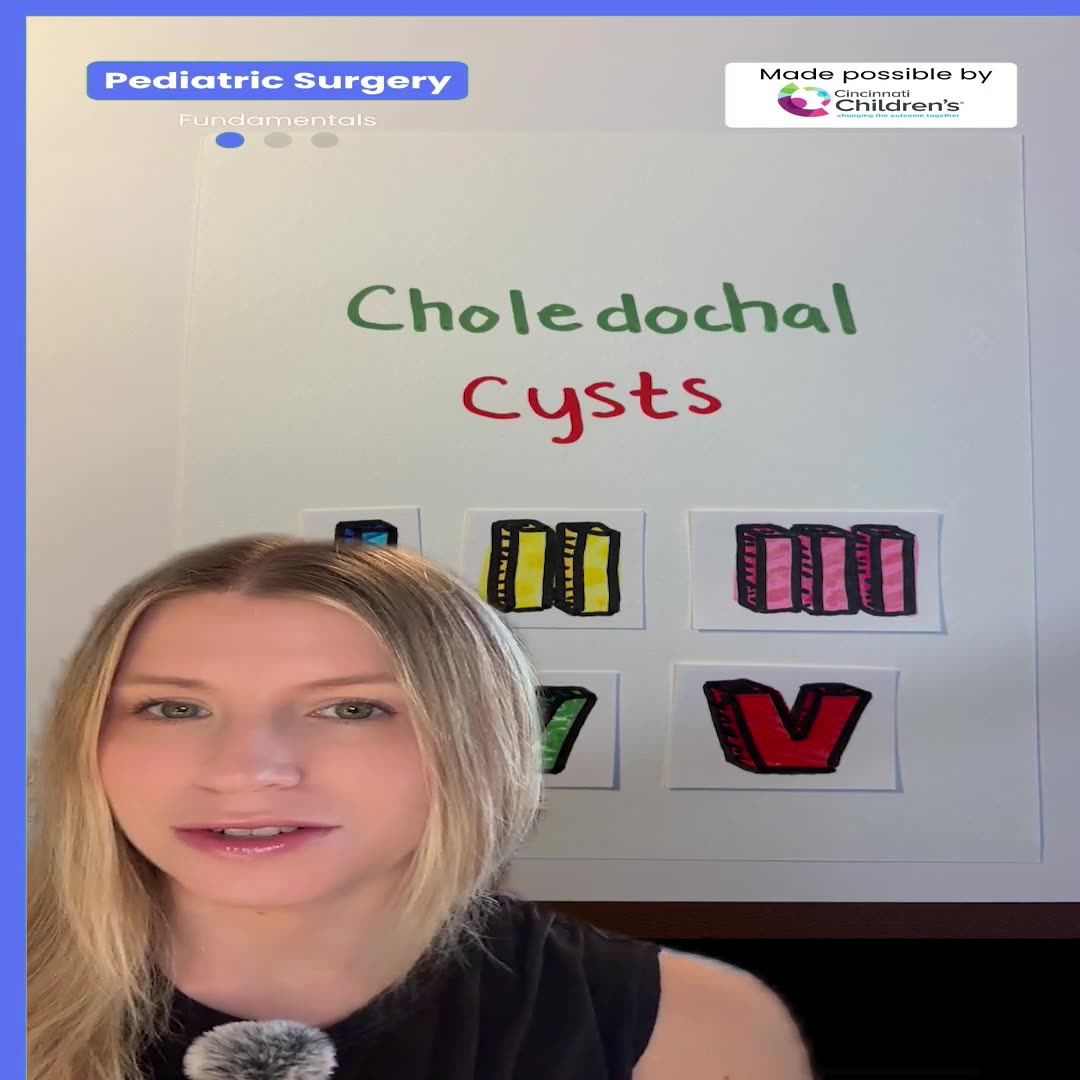
Choledochal Cyst Types Explained: Pediatric Surgery Fundamentals
1 min · Published Sep 2026
What the experts said
The APSA Outcomes Committee and Trauma Committee conducted a retrospective review to update guidelines on liver and spleen blunt trauma.
The updated guidelines divide treatment into four stages using the acronym APSA: A for admission, P for procedures, S for set free or discharge, and A for aftercare.
The main change in the updated guidelines is that treatment is based on clinical signs and symptoms instead of grade of injury.