


From
Live Event Content
Stephanie Walsh, MD - 2024 Pediatric Bariatric Surgery Update Course
With Dr. Stephanie Walsh
Chapter 1 of 5 · Fundamentals
Adequate weight loss
Introduction and defining adequate weight loss
Expert statements on this page
No expert statements were drawn from this page.
Host summaries · secondary, not cited in answers
Educational content from recorded physician discussions — not medical advice. Talk to your (or your child's) care team about your situation.
Video
Justin Ryder, MD- 2024 Pediatric Bariatric Surgery Update Course
12 min · Published Feb 2024
Video
Marc Michalsky, MD - 2024 Pediatric Bariatric Surgery Update Course
14 min · Published Feb 2024
Video
AAP Policy for Adolescent Bariatric Surgery: Pediatric Obesity 2017
27 min · Published Feb 2018
Video
Wrap Up Discussions - 2024 Pediatric Bariatric Surgery Update Course
13 min · Published Feb 2024
Video
Traci Williams, MD - 2024 Pediatric Bariatric Surgery Update Course
19 min · Published Feb 2024
Video
Evan Nadler, MD - 2024 Pediatric Bariatric Surgery Update Course
29 min · Published Feb 2024
Video
Clinical & Research Update: Renal Tumors with Drs. Ethan Smith, Lindsay Haacker, Michael Daugherty, and Meera Kotagal
71 min · Published Sep 2026
Video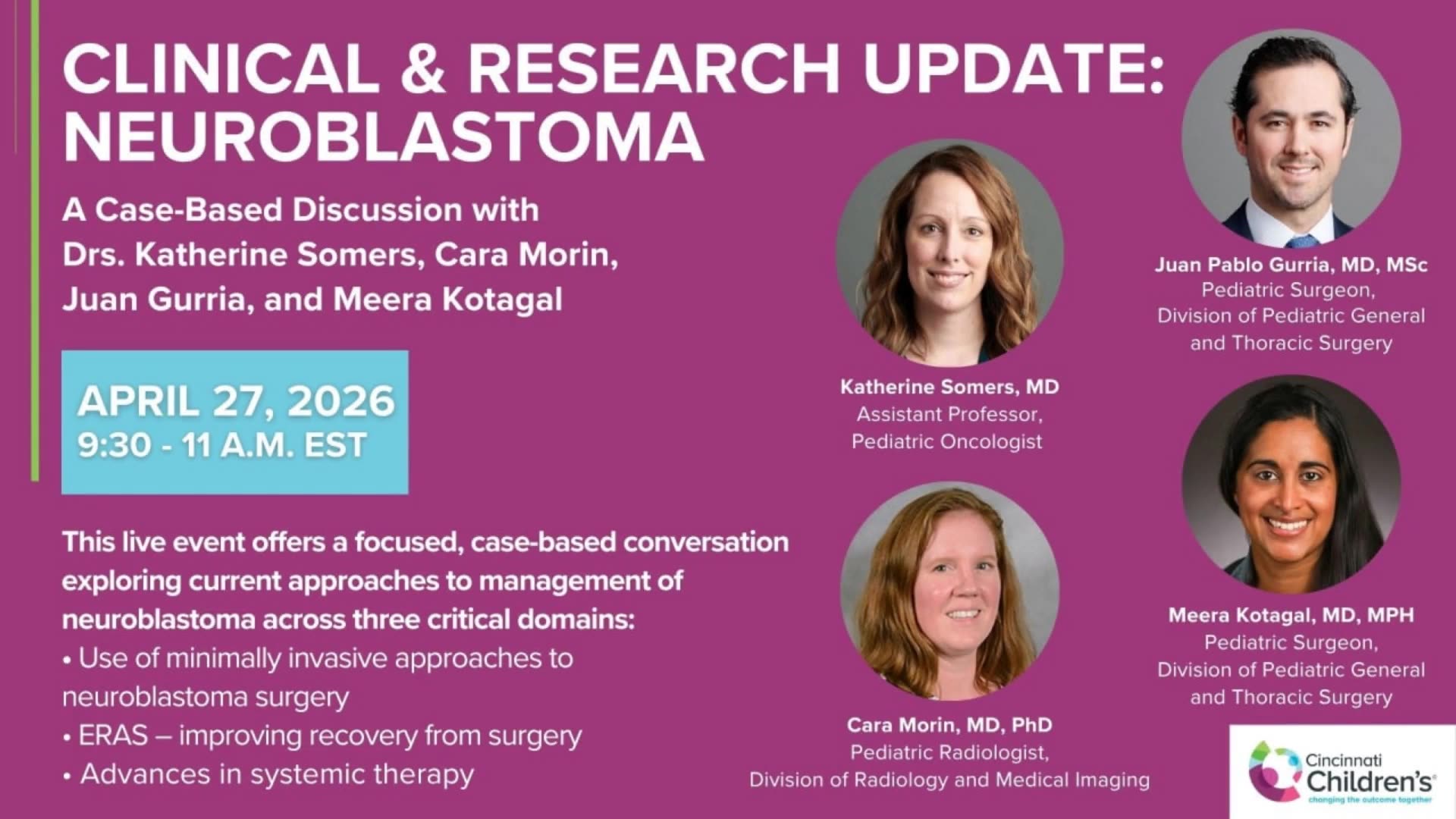
Clinical & Research Update: Neuroblastoma with Drs. Katherine Somers, Cara Morin, Juan Gurria, and Meera Kotagal
67 min · Published Sep 2026
Video
Clinical & Research Update: Sarcoma w/ Drs. Roshni Dasgupta, Joseph Pressey, Arthur Meyer, Luke Pater
66 min · Published Sep 2026
Video
2026 Laparoscopic Pediatric Hernia Repair
123 min · Published Jun 2026
Video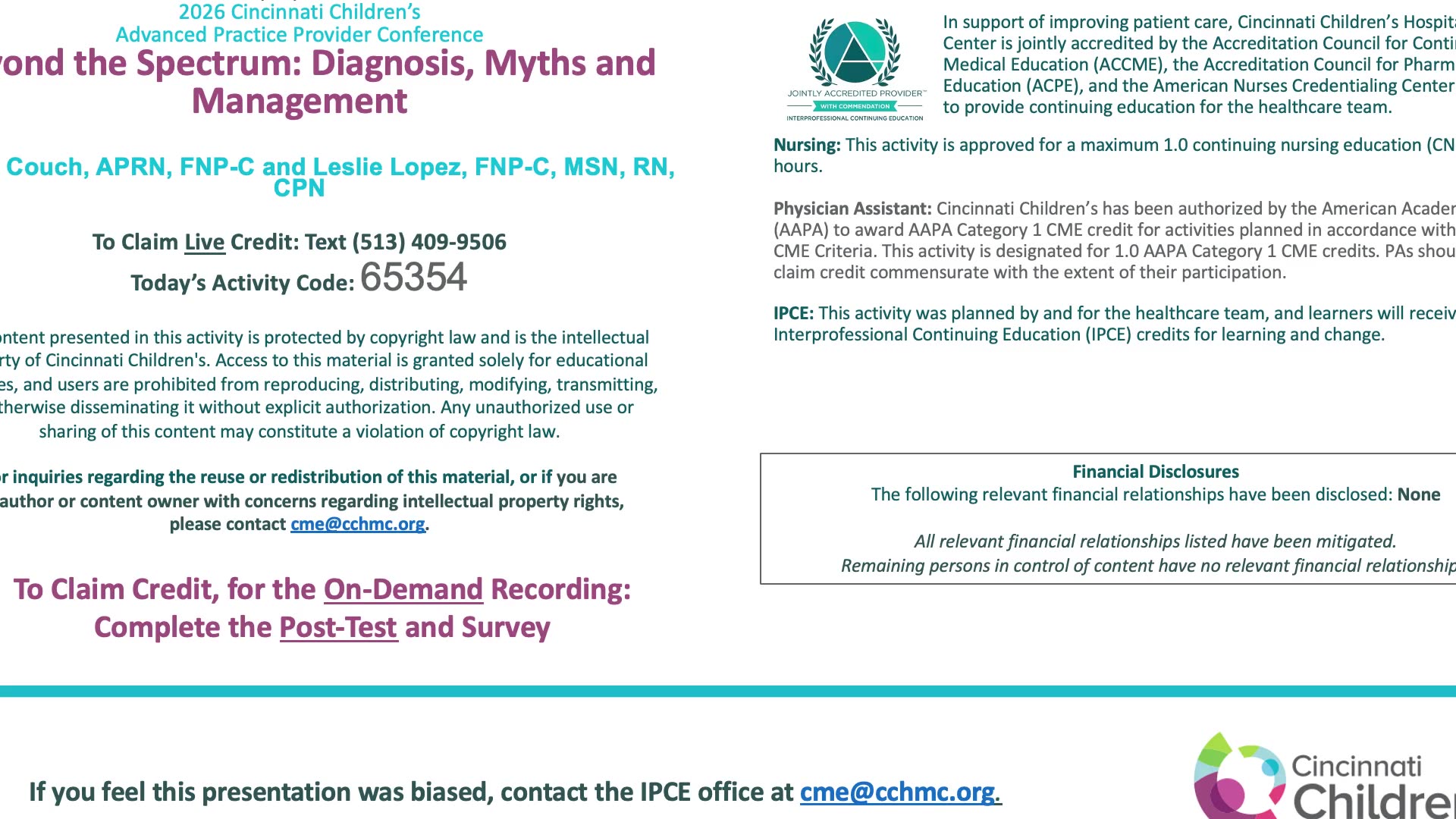
Beyond the Spectrum: Diagnosis, Myths & Management - Caitlin Couch & Leslie Lopez - APP Conference 2026
50 min · Published May 2026
Video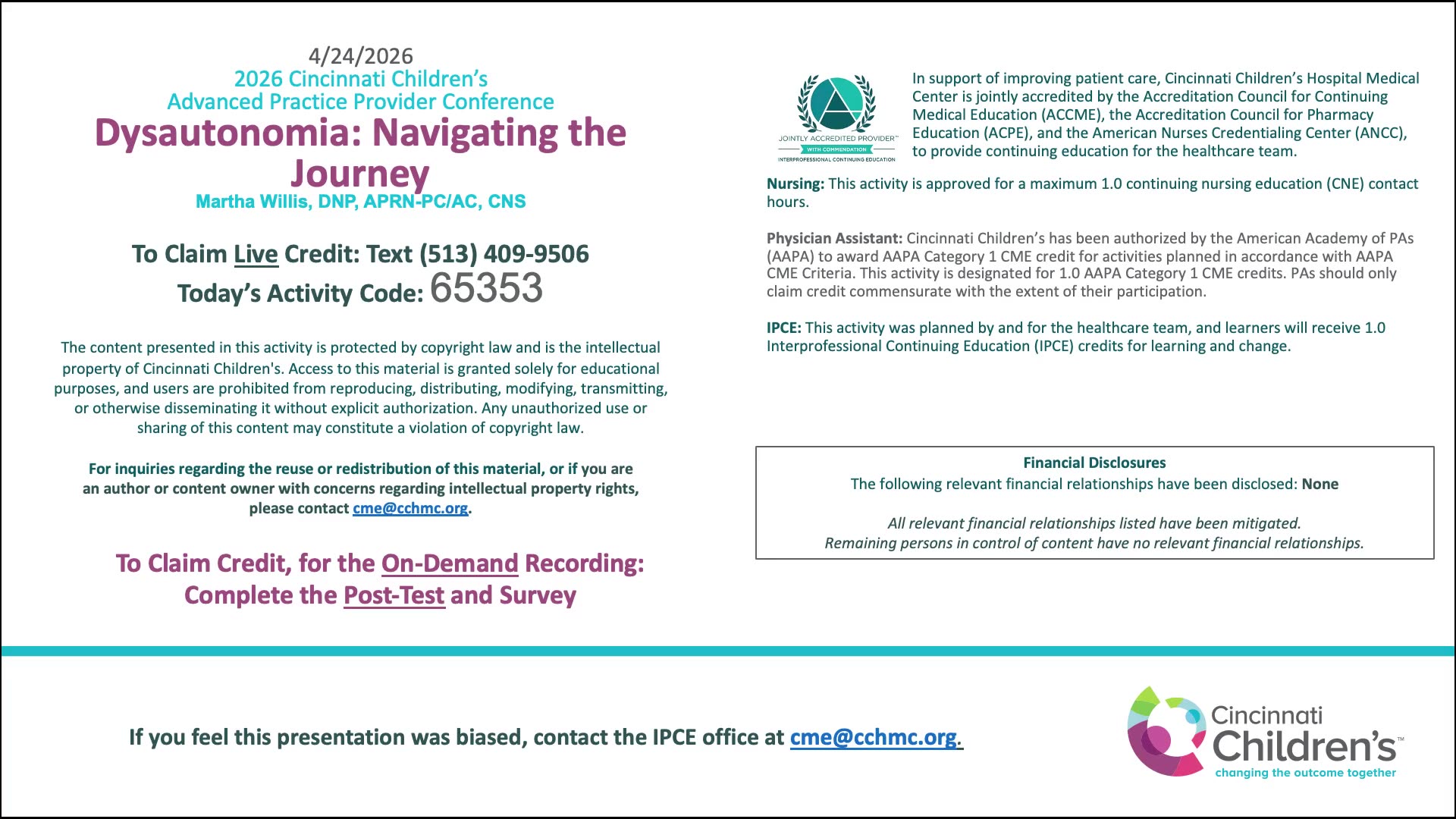
Dysautonomia: Navigating the Journey - Martha Willis - APP Conference 2026
55 min · Published May 2026
What the experts said
Physical activity for girls is always lower than boys, and physical activity for kids is predominantly influenced by their moms.
Physical activity impacts mental health.
Bupropion post-op helps with mood and gives patients extra support toward weight loss, though patients are supposed to be 18.
In Atlanta, phentermine is only available in 15 mg capsule form, which cannot be broken in half.
There is significant medication hesitancy among families in Atlanta.
Novo Nordisk is sending out the 1.7 and 2.4 mg doses but very little of the lower doses, prioritizing people already on maintenance.
Some patients do really well at 1.7 mg GLP-1 but not necessarily as well at 2.4 mg.
As of last year, 1.7 mg is considered a maintenance dose, so there should be less issue with insurers covering it.
The lowest effective and tolerable dose should be used for each patient, and ramp-up should be individualized.
Medications are offered at 3 months for less than 10% total body weight loss and at 6 months for less than 15%.
These thresholds (10% at 3 months, 15% at 6 months) are very conservative given the Teen-LABS data.
In a cohort of 750 patients, modeling shows that if a patient is off the weight loss curve at 3 months, they never get back on that curve.
A cohort of patients did not get satiety from their sleeve despite the same amount of resection each time.
Patients without satiety are started on Vyvanse at 2 weeks post-op.
Studies looking at 6 months or later time points for medication initiation are way too late; the data strongly suggest starting earlier and being more aggressive.
With type 2 diabetes, there is no reason to wait for a BMI of 35 arbitrarily because diabetes is not going to get better at a BMI of 32.
The longer patients are on insulin, the less likely you are to help their diabetes.
The top group of patients at 10 years post-op is doing much worse, while another group is only down 12% weight loss.
Tom's unpublished study on phentermine and topiramate post-op included approximately 12 kids and showed improvement.
Evan's unpublished study shows kids who lose weight lose weight with meds as well, with improvements across groups.