


From
StayCurrentMD
Stay Current Journal Club: Episode 1 - Ventricular Dysfunction in CDH and...
With Dr. Joe L'Huillier & Dr. Todd Ponsky
Chapter 1 of 7 · Fundamentals
Introduction
Introduction and app promotion
Expert statements on this page
No expert statements were drawn from this page.
Host summaries · secondary, not cited in answers
Educational content from recorded physician discussions — not medical advice. Talk to your (or your child's) care team about your situation.
Video
Improving Outcomes for Congenital Diaphragmatic Hernia (CDH): Protocol Changes at Cincinnati Children's
5 min · Published Jun 2026
Video
BOB Ped Surg 2023 - Shelby Sferra, AAP - Presentation
5 min · Published Feb 2023
Video
BOB in Ped Surg 2023 - AAP Winner - Shelby Sferra, MD
11 min · Published Feb 2023
Video
BOB Winner Presentation - Dr. Rebeca Figueira - EUPSA
Published Feb 2023
Video
BOB in Ped Surg 2023 - EUPSA Winner - Dr. Rebeca Figueira
Published Feb 2023
Video
Dr. Adriana Dekirmendjian - Best of the Best in Pediatric Surgery 2025
Dr. Todd Ponsky · 9 min · Published Mar 2025
Video
Quick Literature Updates Ep 24
4 min · Published Nov 2025
Video
Update Course Rewind: Part 2 Non-Pectus Uses of Cryoanalgesia 2024
Lurie Children's Hospital · 4 min · Published Jun 2025
Video
Update Course Rewind: Part 1 Non-Pectus Uses of Cryoanalgesia 2024
4 min · Published Jun 2025
Video
Update Course Rewind: 2024 Top Ten Key Takeaways
Dr. Todd Ponsky · 18 min · Published Jun 2025
Podcast
Journal of Pediatric Surgery Article Review: 1st Quarter (Jan-Mar) 2025
16 min · Published May 2025
Video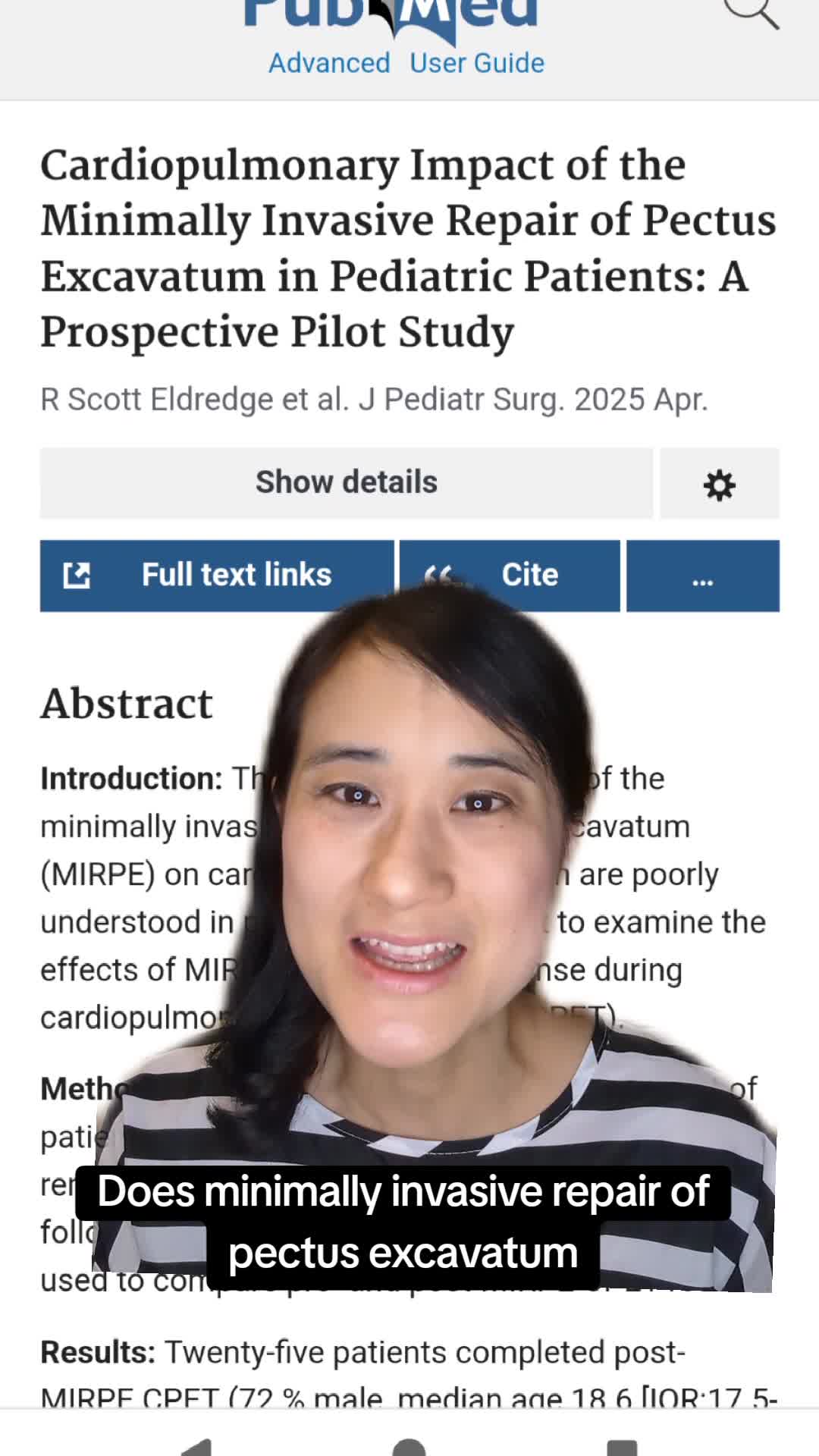
Cardiopulmonary Impact of the Minimally Invasive Repair of Pectus Excavatum in Pediatric Patients: A Prospective Pilot Study
55 s · Published Apr 2025
Only a few other public items share this expert — go deeper there →
Video
Intestinal Atresia Types Explained: Grossfeld Classification for Pediatric Surgery
1 min · Published Sep 2026
Video
Derivation and validation of the Pediatric Community-Acquired Pneumonia Severity (PedCAPS) score: A prospective cohort study
50 s · Published Sep 2026
Video
FETO for Late-Diagnosed Severe Congenital Diaphragmatic Hernia (CDH) at Cincinnati Children's with Dr. Beth Rymeski
4 min · Published Sep 2026
Video
Severe Congenital Diaphragmatic Hernia (CDH) Case: FETO Management & Unexpected Findings with Dr. Beth Rymeski
3 min · Published Sep 2026
Video
Fetoscopic Endoluminal Tracheal Occlusion (FETO) Procedure: Step-by-Step Guide with Dr. Beth Rymeski
4 min · Published Sep 2026
Video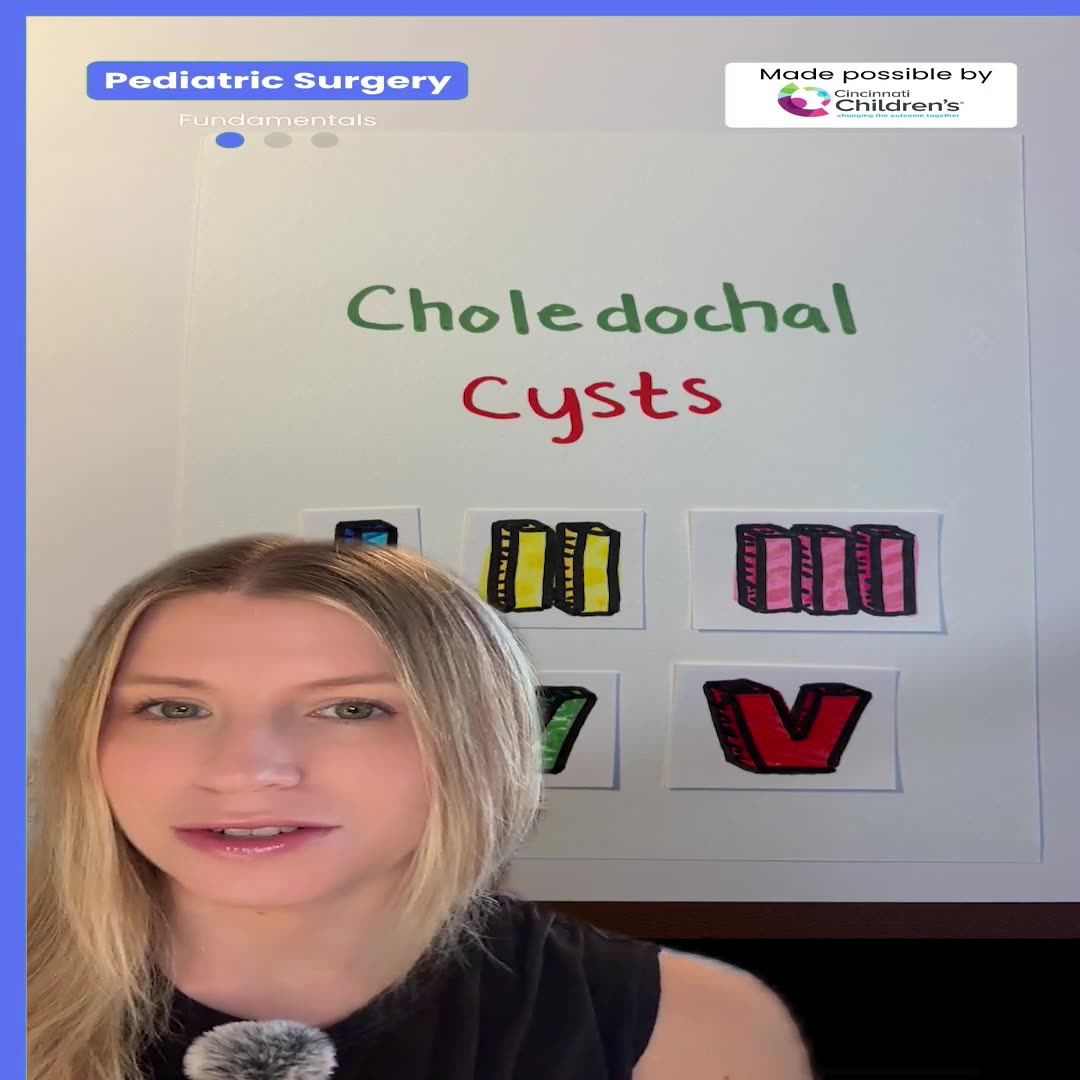
Choledochal Cyst Types Explained: Pediatric Surgery Fundamentals
1 min · Published Sep 2026
What the experts said
The CDH study group does not prescribe standardized management protocols; they allow institutions to report cardiac dysfunction as yes/no and specify whether it is systolic or diastolic.
Pulmonary hypertension is a predictor of mortality for CDH infants.
In CDH with pulmonary hypertension, you can see decreased right ventricular ejection, which can lead to bowing of the septum into the left ventricle, resulting in decreased ventricular volumes and decreased ejection.
Cryotherapy is gaining traction in pectus repair, with Kansas City publishing multiple studies showing good results.
Protocolizing care leads to improved outcomes, as demonstrated by the pectus repair standardization study.
The CDH study group collected patient data from 2015 to 2018 in a retrospective review of prospectively collected data examining cardiac dysfunction within the first 48 hours of life.
Among all CDH patients in the study period, 39% had some evidence of cardiac dysfunction on their first echocardiogram in the first 48 hours of life.
Patients with normal cardiac function had a survival of over 80% on adjusted analysis.
Patients with right ventricular dysfunction only had a survival of 74%.
Patients with left ventricular dysfunction had a survival of 57%.
Patients with biventricular dysfunction had a survival of 50%, the worst risk profile.
Even when adjusting for liver position, defect size, and other important variables, cardiac dysfunction was still a significant driver of mortality in CDH.
The standardized post-operative protocol for Nuss pectus repair included scheduled anti-emetics, epidural pain control discontinued on post-op day 2, early Foley removal, and encouraged ambulation.
The standardized protocol decreased length of stay following Nuss pectus repair from 4.4 days to 3.4 days.
There were zero readmissions out of 164 patients in the Nuss pectus repair standardization study.
The Cincinnati Children's pectus protocol did not use cryotherapy for pain control in any patients.
The Cincinnati authors acknowledged studies showing cryo versus epidurals showed no difference in pain control but decreased length of stay with cryotherapy, yet expressed reservations due to lack of long-term outcomes data.