


From
StayCurrentMD
Quick Literature Updates Episode 8
hosted by Dr. Em Gootee
Part of
Aerodigestive / ENT 27 items
Chapter 1 of 4 · Evidence & Research
Nodule localization
Pulmonary Nodule Localization Techniques in Pediatric Oncology
Expert statements on this page
No expert statements were drawn from this page.
Host summaries · secondary, not cited in answers
Educational content from recorded physician discussions — not medical advice. Talk to your (or your child's) care team about your situation.
Video
Criteria for Pectus Repair: Update Course 2015
55 s · Published Nov 2015
Video
Vacuum Bell Therapy for Pectus Excavatum: Long-term Experience at a Single Center
58 s · Published Apr 2025
Video
Novel index to estimate the cephalocaudal extent of the excavation in pectus excavatum - JPS article
1 min · Published May 2023
Video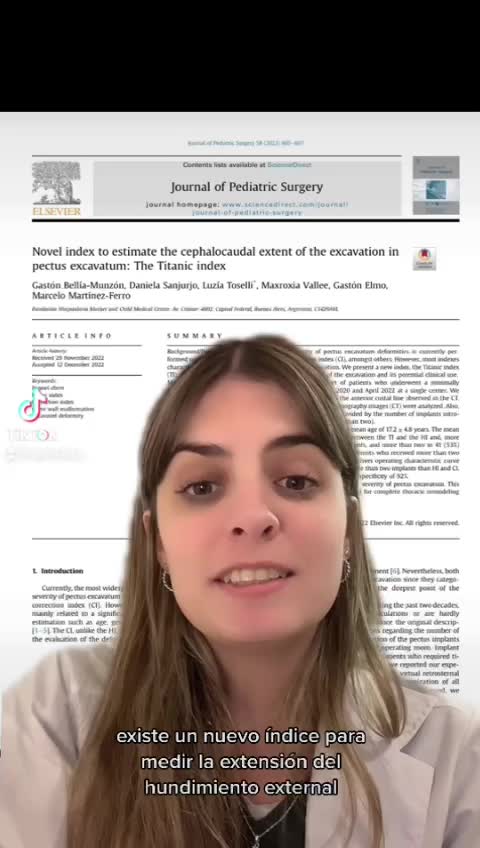
Novedoso indice para estimar la extensión cefalocaudal del hundimiento esternal en el pectus excavatum: El Índice Titanic
Published May 2023
Video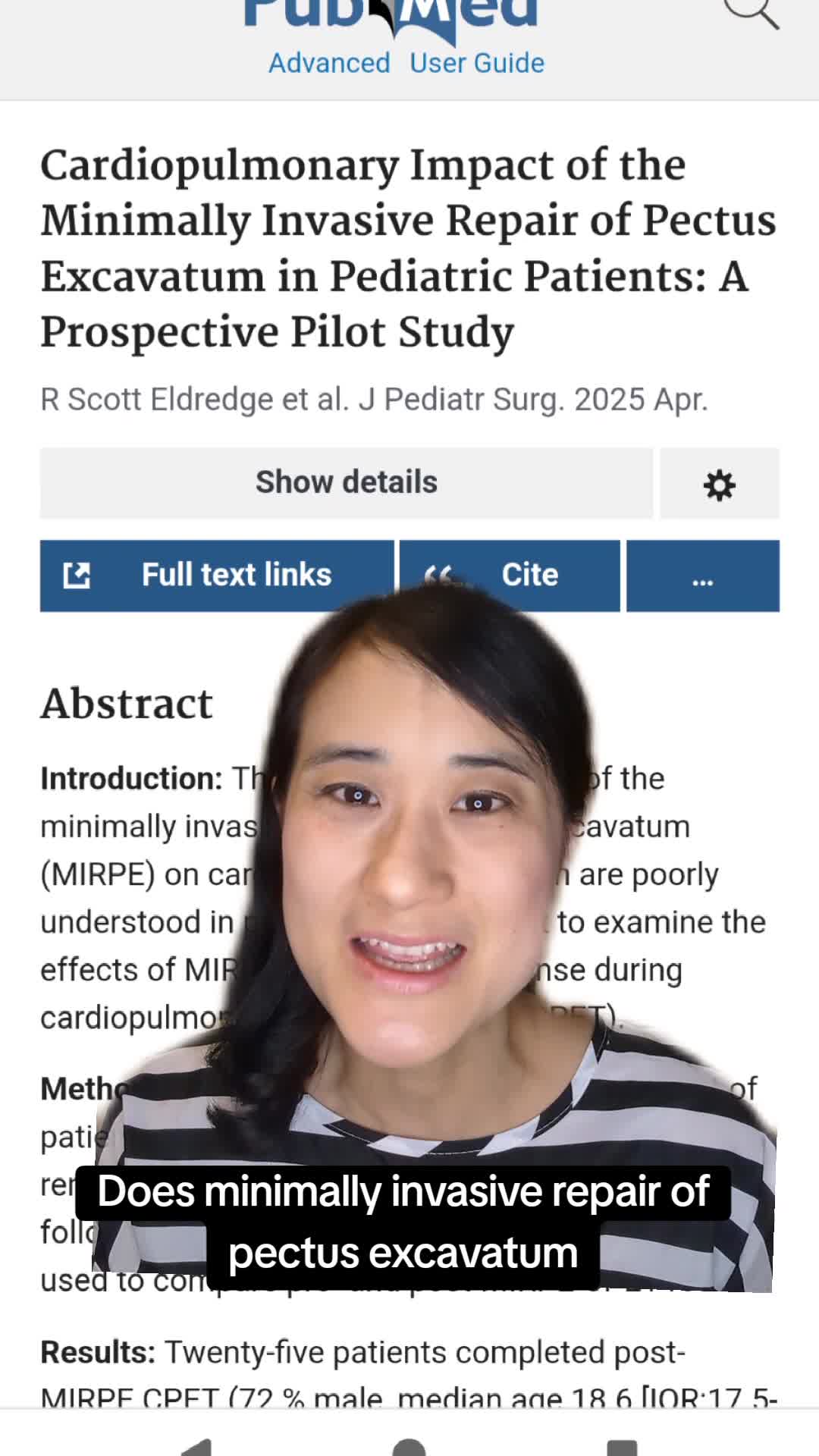
Cardiopulmonary Impact of the Minimally Invasive Repair of Pectus Excavatum in Pediatric Patients: A Prospective Pilot Study
55 s · Published Apr 2025
Video
Cryoablation in 350 Nuss procedures
56 s · Published Oct 2023
Video
Surgeon annual volume impacts recurrence rates of pediatric inguinal hernia repairs: A multi-institutional study
54 s · Published Feb 2026
Podcast
Journal of Pediatric Surgery Article Review: 2nd Quarter (Apr-Jun) 2025
16 min · Published Aug 2025
Video
Tracheobronchopexy to Avoid Tracheostomy in Esophageal Atresia Patients With Severe Life-Threatening Tracheobronchomalacia
50 s · Published Apr 2025
Video
QUAD #27 - Multidisciplinary - How Do Teams Enhance Outcomes by the CCHMC ADEC Team
CCHMC Pediatric Surgery · 10 min · Published Apr 2025
Video
QUAD #25: Medical Management of Minor Laryngeal Clefts with Dr. Greg Burg
CCHMC Pediatric Surgery · 7 min · Published Feb 2025
Video
QUAD #22: What is CHARGE syndrome? with Dr. Catherine Hart
CCHMC Pediatric Surgery · 59 s · Published Dec 2024
Video
Intestinal Atresia Types Explained: Grossfeld Classification for Pediatric Surgery
1 min · Published Sep 2026
Video
Derivation and validation of the Pediatric Community-Acquired Pneumonia Severity (PedCAPS) score: A prospective cohort study
50 s · Published Sep 2026
Video
FETO for Late-Diagnosed Severe Congenital Diaphragmatic Hernia (CDH) at Cincinnati Children's with Dr. Beth Rymeski
4 min · Published Sep 2026
Video
Severe Congenital Diaphragmatic Hernia (CDH) Case: FETO Management & Unexpected Findings with Dr. Beth Rymeski
3 min · Published Sep 2026
Video
Fetoscopic Endoluminal Tracheal Occlusion (FETO) Procedure: Step-by-Step Guide with Dr. Beth Rymeski
4 min · Published Sep 2026
Video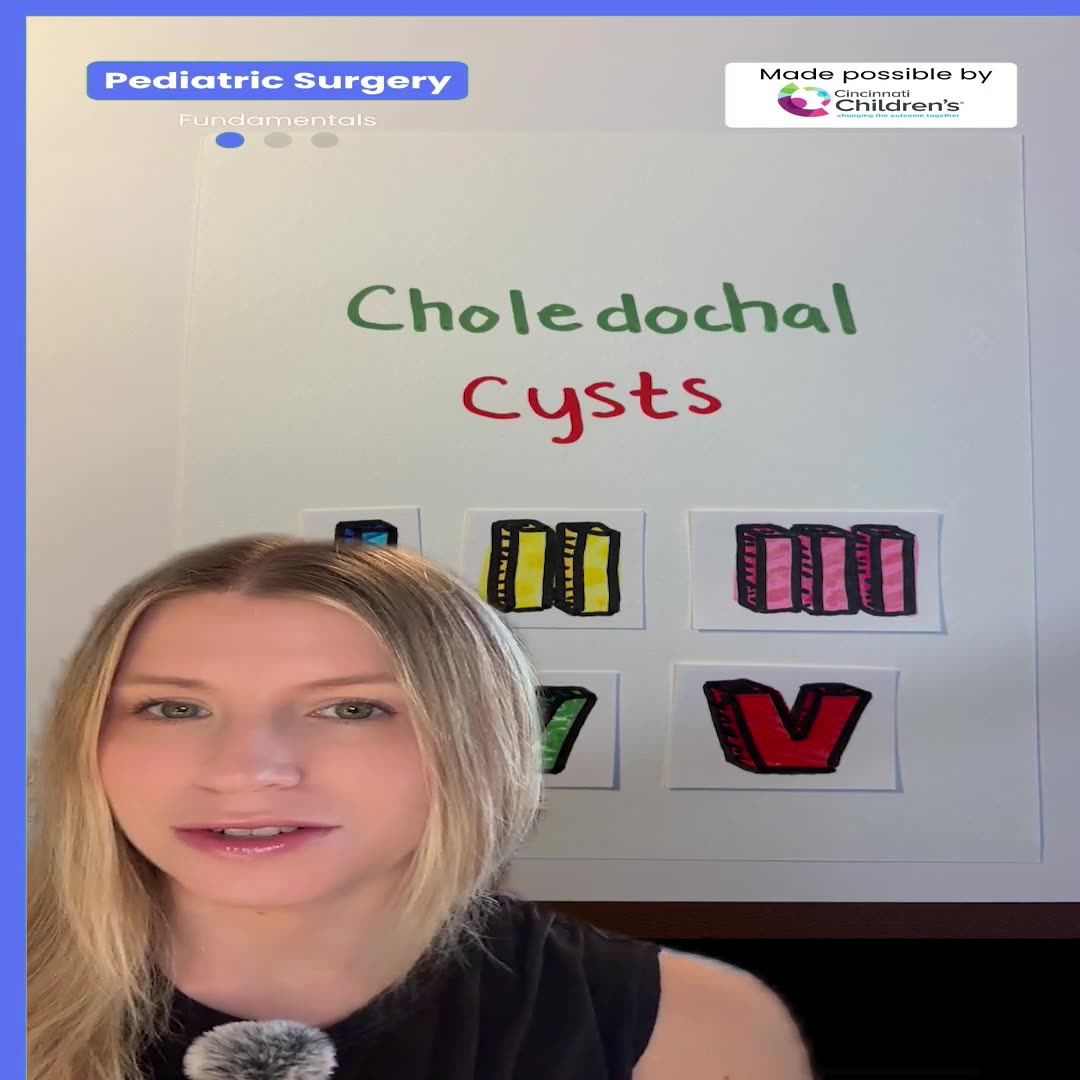
Choledochal Cyst Types Explained: Pediatric Surgery Fundamentals
1 min · Published Sep 2026
What the experts said
The Pediatric Surgical Oncology Research Collaborative study reviewed 15 hospitals to examine how different institutions localize small pulmonary nodules in children.
Different institutions use wires, methylene blue dye, indocyanine green, micro coils, and technetium 99 in different combinations for pulmonary nodule localization.
There was no significant difference in the success of localization between all of the different pulmonary nodule localization techniques.
The only significant differences in pulmonary nodule localization were in which institution performed each technique, and in IR, OR, and anesthesia times.
In a single institution prospective study of around 40 pediatric patients who received Nuss bar repair for pectus excavatum with perioperative ERAS pain protocol, 92% of patients were discharged on post-operative day one.
Patients receiving Nuss repair with ERAS protocol had a reduction in the total number of morphine equivalent doses received without any difference in their pain scores at the time of discharge.
In a preclinical study of transamniotic stem cell therapy for intrauterine growth restriction, subjects were divided into four groups: untreated, saline only, MSC therapy, and MSC with primer.
Overall survival in the intrauterine growth restriction stem cell study was 75%.
Gross brain weight was significantly lower in IUGR subjects with no treatment or just saline, and significantly higher in those treated with MSC.
The primed MSC group revealed significantly lowered levels of TNF alpha and interleukin beta in their brain.
Primed MSC appears to reverse some of the central nervous system effects of intrauterine growth restriction.
The National Trauma Data Bank analysis included over 40,000 adolescent trauma victims who were intubated for more than 24 hours and survived until discharge.
At three days post-intubation, there was no difference in overall hospital length of stay for adolescent trauma victims receiving tracheostomy.
In adolescent trauma victims without TBI, tracheostomy before three days decreased ICU length of stay by about 16 days compared to later tracheostomy.
Similar trends of decreased ICU length of stay were seen for all children, regardless of TBI or non-TBI status, if they received a tracheostomy before 7 days of intubation.