


Chapter 1 of 12 · Fundamentals
Series intro
Introduction and series overview
Expert statements on this page
No expert statements were drawn from this page.
Host summaries · secondary, not cited in answers
Educational content from recorded physician discussions — not medical advice. Talk to your (or your child's) care team about your situation.
Video
How do we manage thrombogenicity and thrombosis in the Fontan? New Horizons...
CCHMC Pediatric Surgery · 16 min · Published Jul 2017
Video
Dr. Elsa Mariana Zúñiga Lara - Best of the Best in Pediatric Surgery 2025
Dr. Todd Ponsky · Published Mar 2025
Video
Pediatric Vascular Access in Brief: Preoperative, Operative, and Postoperative Considerations
CCHMC Pediatric Surgery · 13 min · Published Sep 2022
Video
Retained Central Venous Catheters
3 min · Published Oct 2018
Video
Management of Retained Central Venous Catheters
Dr. Todd Ponsky · 3 min · Published Apr 2019
Video
Central Lines...WHAT? - Richelle Guinigundo - APP Conference 2026
26 min · Published May 2026
Video
Laparoscopic Pediatric Hernia Repair 2025
140 min · Published Jun 2025
Video
Guillermo Ares, MD and Mark Wulkan, MD - 2024 Pediatric Bariatric Surgery Update Course
16 min · Published Feb 2024
Podcast
Journal of pediatric surgery Article Review: April 2023, IPEG issue
13 min · Published Jul 2023
Video
Complications and Beyond
66 min · Published Sep 2020
Video
7th Annual Pediatric Surgery Update Course 2019 - FULL SHOW
285 min · Published Jul 2020
Video
APSA 2018 Practice Gaps
Published Mar 2020
Video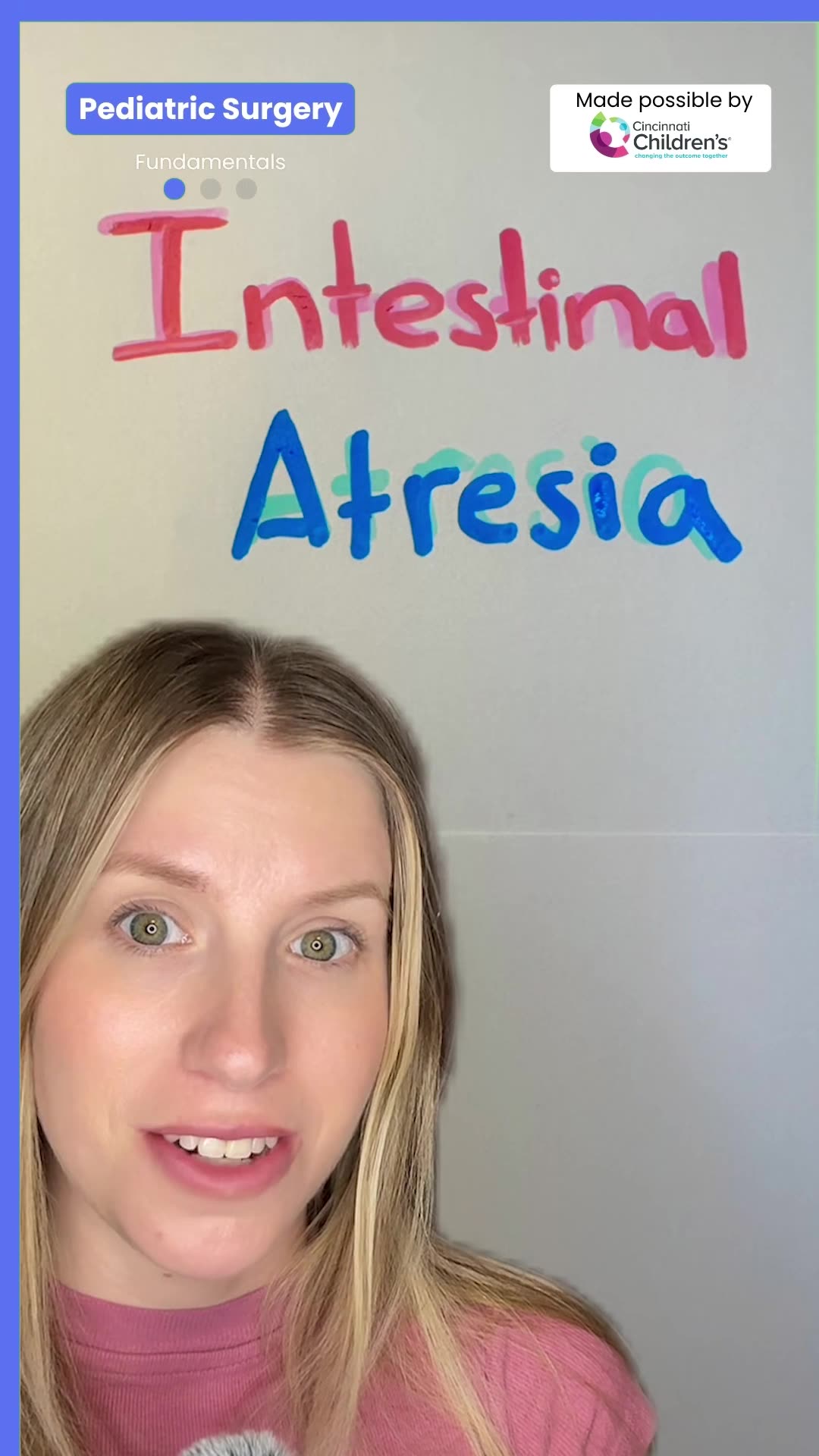
Intestinal Atresia Types Explained: Grossfeld Classification for Pediatric Surgery
1 min · Published Sep 2026
Video
Derivation and validation of the Pediatric Community-Acquired Pneumonia Severity (PedCAPS) score: A prospective cohort study
50 s · Published Sep 2026
Video
FETO for Late-Diagnosed Severe Congenital Diaphragmatic Hernia (CDH) at Cincinnati Children's with Dr. Beth Rymeski
4 min · Published Sep 2026
Video
Severe Congenital Diaphragmatic Hernia (CDH) Case: FETO Management & Unexpected Findings with Dr. Beth Rymeski
3 min · Published Sep 2026
Video
Fetoscopic Endoluminal Tracheal Occlusion (FETO) Procedure: Step-by-Step Guide with Dr. Beth Rymeski
4 min · Published Sep 2026
Video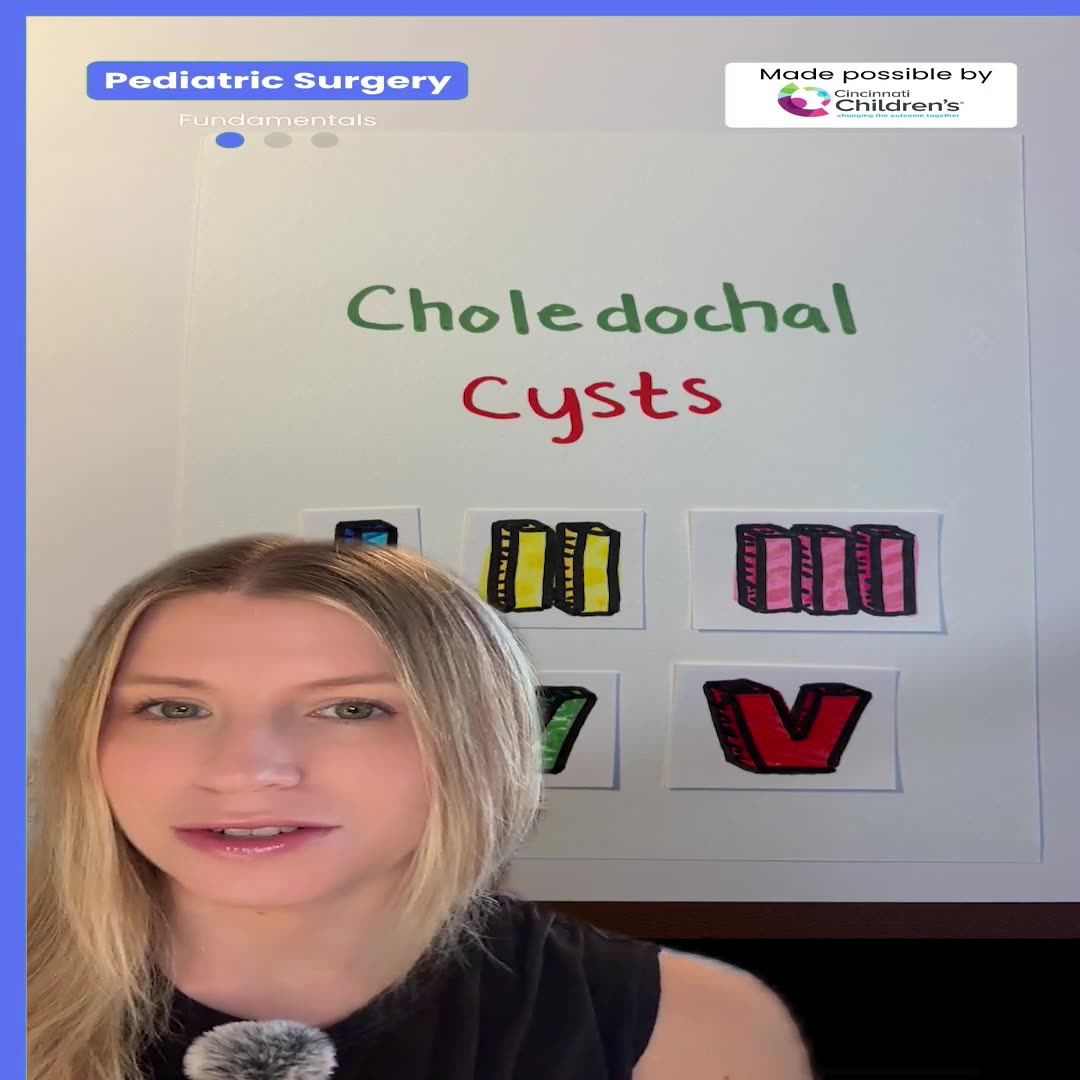
Choledochal Cyst Types Explained: Pediatric Surgery Fundamentals
1 min · Published Sep 2026
What the experts said
In micro-preemies (1000g to 2kg), a 3-French soft silastic catheter is preferred because larger catheters as big as the vessel can cause vessel thrombosis.
Needle-hole venotomy technique: isolate the internal jugular vein, make a needle hole with the kit needle, and slide the pre-tunneled catheter into that hole without ligating the vein, preserving it for future access.
Beveling the catheter end is associated with slightly more catheter thrombosis than cutting straight across, but may be worth it to preserve the vein in micro-preemies.
Subcutaneous ports (port-a-cath, meta-port) are used for most intermittent chemotherapy; cuffed lines (Broviac) are used for highly toxic agents like Adriamycin that cause tissue necrosis if infiltrated.
Bone marrow transplant patients often require three lumens: a double-lumen perm-cath plus a single-lumen line.
The smallest mini-port available is 5-French and can be placed in a 7-8 kg infant, though it requires special order.
MRV is the gold standard for pre-operative vascular imaging in patients with multiple prior lines or history of DVT.
A glide wire can sometimes pass through venous thrombosis when a standard wire cannot, finding a channel through the clot.
Femoral lines in babies often result in leg swelling and DVT, so they are avoided in that population.
Institutional heparin lock protocol: 10 units/mL for accessed lines (ports or cuffed lines), 100 units/mL for buried ports, and 1000 units/mL for dialysis catheters (which is withdrawn before use).
Ethanol lock therapy has substantially decreased line removal rates and has very high success rates for treating line infections.
For gram-positive line infections, ethanol lock plus antibiotics through the catheter can clear the infection; for gram-negative infections, success rate is approximately 50%; for fungal infections (Candida), the line must be removed.
Antibiotic-coated and heparin-coated temporary catheters have been shown to decrease catheter-associated bloodstream infection rates.
Thoracoscopic-guided trans-mediastinal puncture technique: advance a needle through the thrombosed IJ track into the superior vena cava under thoracoscopic visualization; the SVC almost always recanalizes where the azygous vein enters.
For thoracoscopic salvage access in larger patients (17-year-old mentioned), the standard kit needle may not be long enough and an extra-long spinal needle is required.
There is speculation (without definitive evidence) that betadine exposure causes silicone catheter deterioration, making old lines chalky and difficult to remove.
Broviac cuffs placed far from the exit site are designed to break away with slow, steady traction, allowing bedside removal without cuff excision.
In 17-18 years of practice, only one retained cuff developed infection requiring incision and drainage.
The atrial-caval junction is actually much deeper on chest X-ray than most surgeons think, not at the visible indentation where the silhouette widens.
A 2013 JACS study by Sanj Dutta, Sean St. Peter and others showed ultrasound guidance achieved first-stick success in 65% of patients versus 45% with landmark technique, and 95% success by three attempts versus 74%.
In the adult literature, the number of needle sticks is a good proxy marker for the risk of complications.
The APSA Outcomes Committee meta-analysis in 2011 found Class A or B evidence that chlorhexidine-alcohol prep decreases line infections compared to betadine.