


From
Live Event Content
Matthew Urichuk, PhD - Best of the Best in Pediatric Surgery 2024
With Dr. Matthew Urichuk
Chapter 1 of 7 · Evidence & Research
Introduction
Introduction to presentation
Expert statements on this page
No expert statements were drawn from this page.
Host summaries · secondary, not cited in answers
Educational content from recorded physician discussions — not medical advice. Talk to your (or your child's) care team about your situation.
Video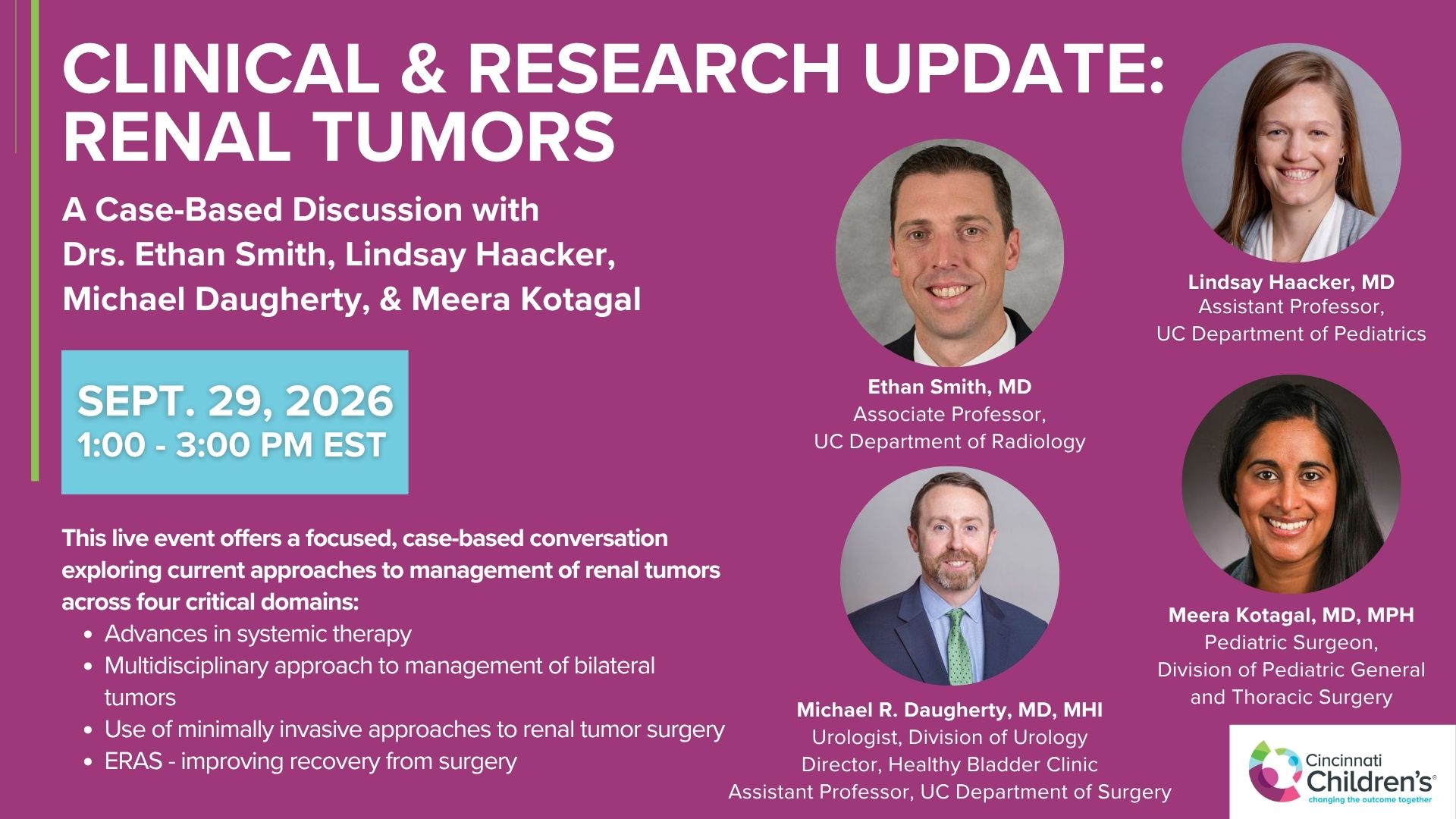
Clinical & Research Update: Renal Tumors with Drs. Ethan Smith, Lindsay Haacker, Michael Daugherty, and Meera Kotagal
71 min · Published Sep 2026
Video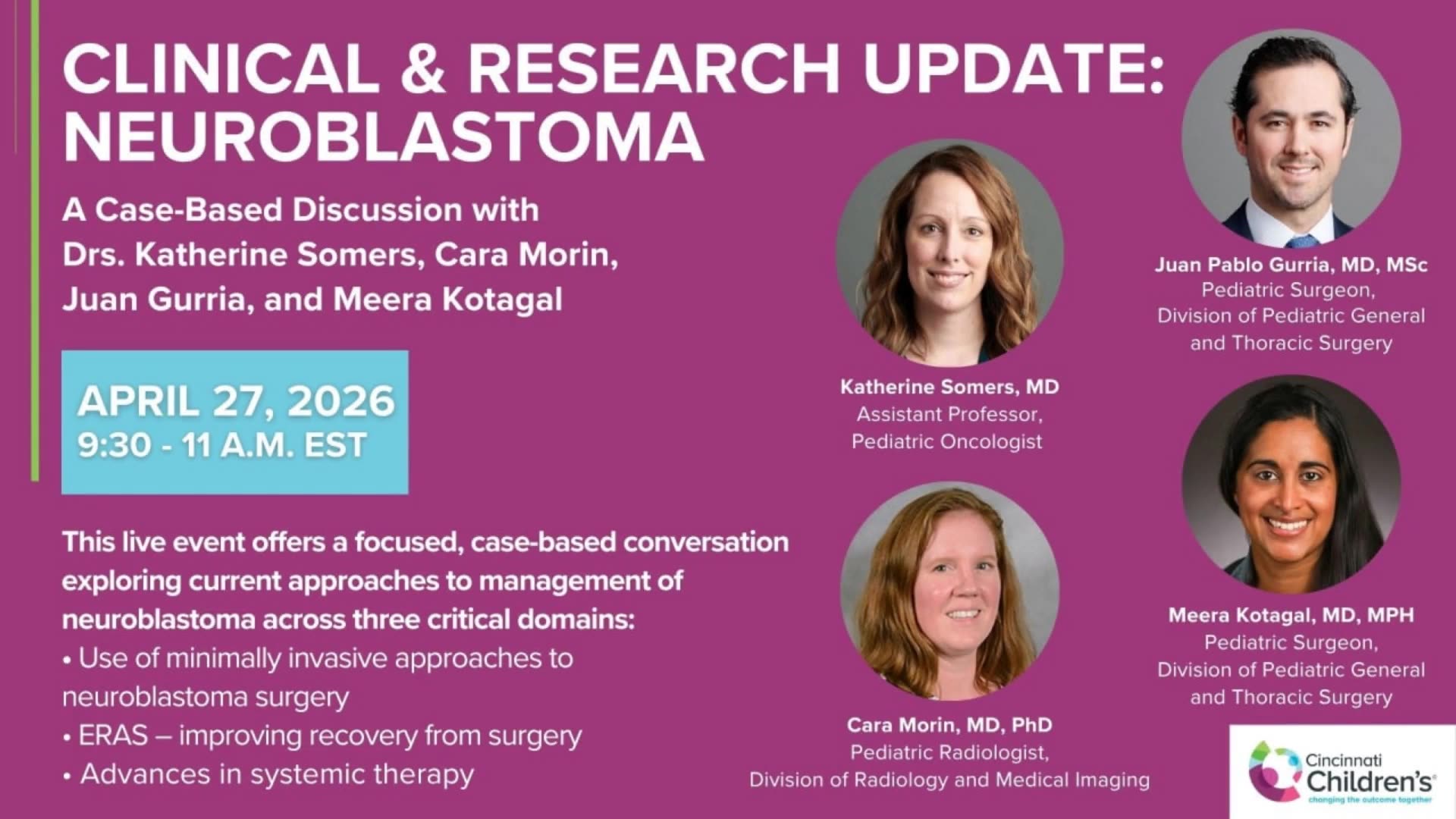
Clinical & Research Update: Neuroblastoma with Drs. Katherine Somers, Cara Morin, Juan Gurria, and Meera Kotagal
67 min · Published Sep 2026
Video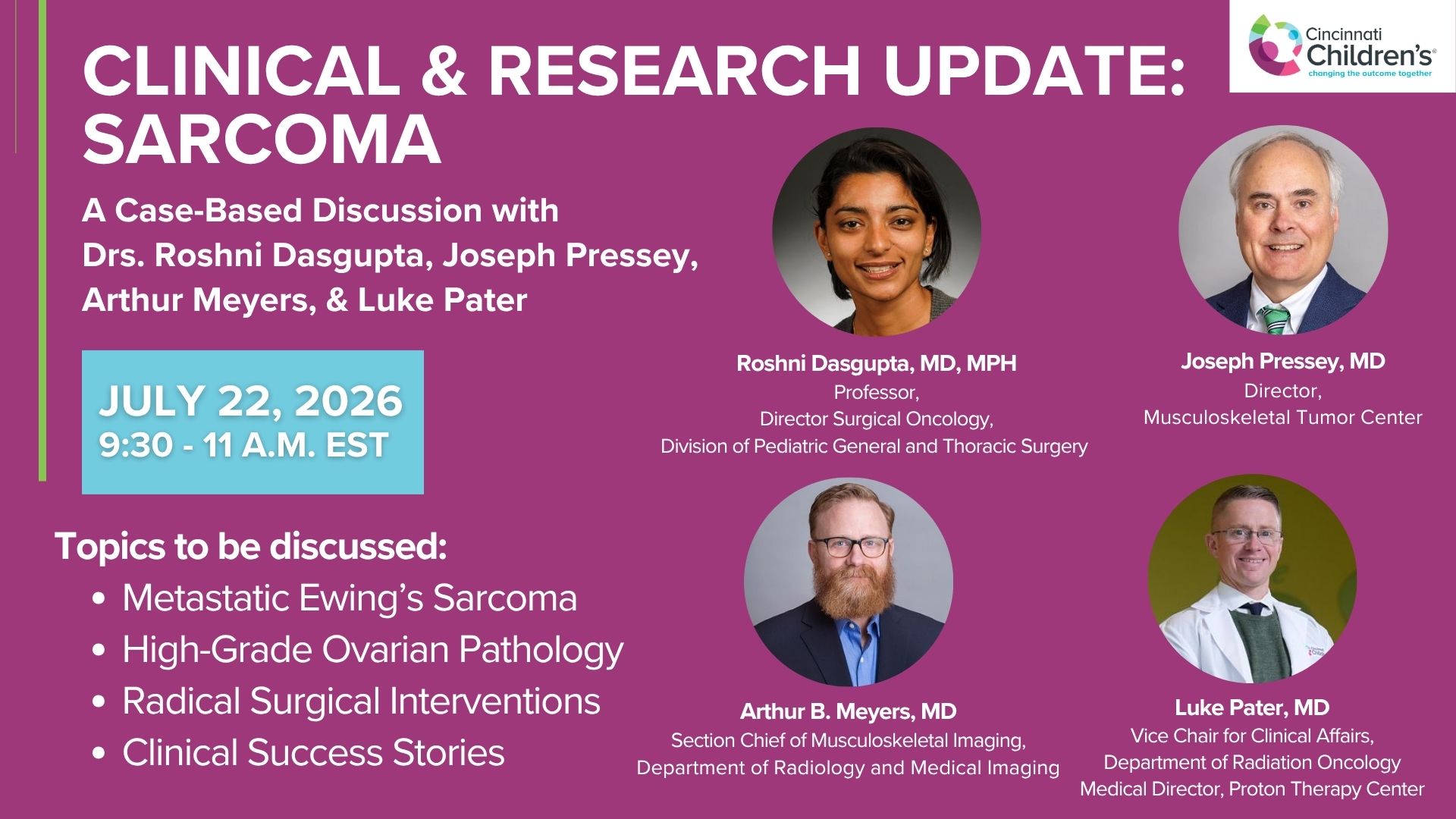
Clinical & Research Update: Sarcoma w/ Drs. Roshni Dasgupta, Joseph Pressey, Arthur Meyer, Luke Pater
66 min · Published Sep 2026
Video
2026 Laparoscopic Pediatric Hernia Repair
123 min · Published Jun 2026
Video
Beyond the Spectrum: Diagnosis, Myths & Management - Caitlin Couch & Leslie Lopez - APP Conference 2026
50 min · Published May 2026
Video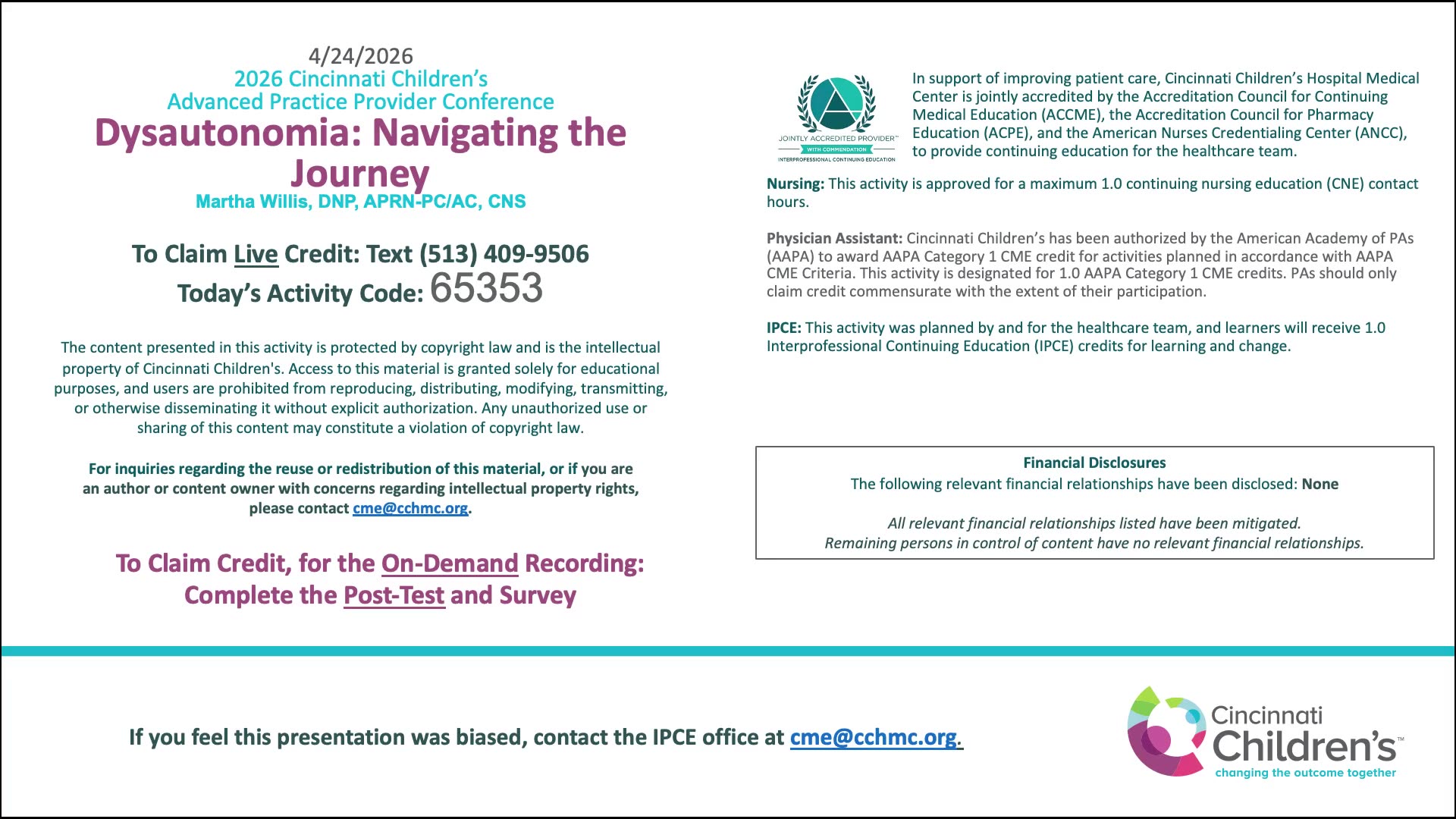
Dysautonomia: Navigating the Journey - Martha Willis - APP Conference 2026
55 min · Published May 2026
What the experts said
Congenital surgical anomalies are major anomalies requiring neonatal surgical correction for survival, requiring prolonged hospital stays, exposure to general anesthetic, and increased exposure to the healthcare system throughout childhood.
There is substantial research on early clinical course of children with congenital surgical anomalies, but substantially less on their long-term mental health outcomes.
The study collected data on every child born with a congenital surgical anomaly in Manitoba, Canada between 1991 and 2022, with 10 date-of-birth matched controls for each case.
The study analyzed 818 children born with congenital surgical anomalies and nearly 8,200 controls.
Hazard ratios were controlled for the child's sex and their socioeconomic status.
Pooled analyses indicated a descriptive but non-significant increase in mental health disorders in individuals with congenital surgical anomalies.
In anomaly-specific analyses, only anorectal malformation showed an increased risk, being about twice as likely to be diagnosed with a mental health disorder.
There is no significant increase in anxiety and mood disorders in children with congenital surgical anomalies overall.
Patients with anorectal malformation were found to be about twice as likely to be diagnosed with anxiety disorders.
Patients with anorectal malformation were not significantly more likely to be diagnosed with mood disorders.
Pooled analyses indicated a significant 86% increase in diagnoses of substance use disorders across all congenital surgical anomalies.
The increased risk of substance use disorders was largely driven by patients with anorectal malformation and esophageal atresia, who are 4 times as likely to be diagnosed with substance use disorder.
This is to date the largest study completed on mental health in the population of children with congenital surgical anomalies.
The median age of the cohort was 11.5 years old for both cases and controls.
It is expected that more mental health disorders will manifest as these patients age.
Children with congenital surgical anomalies are likely not at an increased risk of mental health disorders, including anxiety or mood disorders.
The study analyzed any mental health diagnosis made by any medical professional, not necessarily a psychiatrist at a quaternary center, but also community family doctors and community psychiatrists.
Individuals with congenital surgical anomalies are at an increased risk of substance use disorders as they grow up.
Children with anorectal malformation specifically are at an increased risk of mental health disorders, anxiety disorders, and substance use disorders.