


From
Live Event Content
Kanika Bowen-Jallow, MD and Faisal Qureshi, MD - 2024 Pediatric Bariatric Surgery Update Course
With Dr. Kanika Bowen-Jallow & Dr. Faisal Qureshi
Part of
Diabetes 4 items
Chapter 1 of 3 · Surgical Management
ERAS protocol
Preoperative and Intraoperative ERAS Protocol
Expert statements on this page
No expert statements were drawn from this page.
Host summaries · secondary, not cited in answers
Educational content from recorded physician discussions — not medical advice. Talk to your (or your child's) care team about your situation.
Only a few other public items share this expert — go deeper there →
Video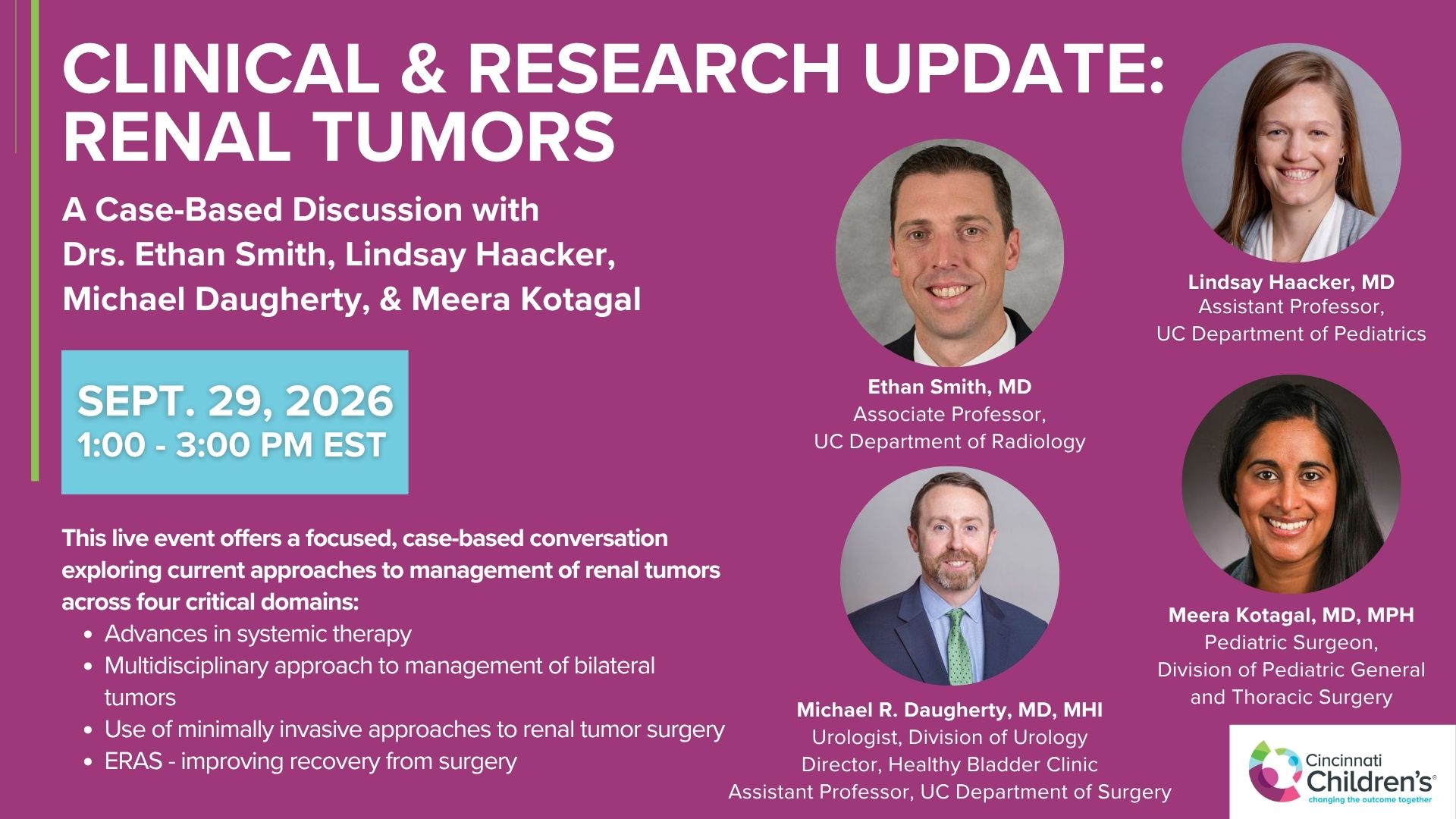
Clinical & Research Update: Renal Tumors with Drs. Ethan Smith, Lindsay Haacker, Michael Daugherty, and Meera Kotagal
71 min · Published Sep 2026
Video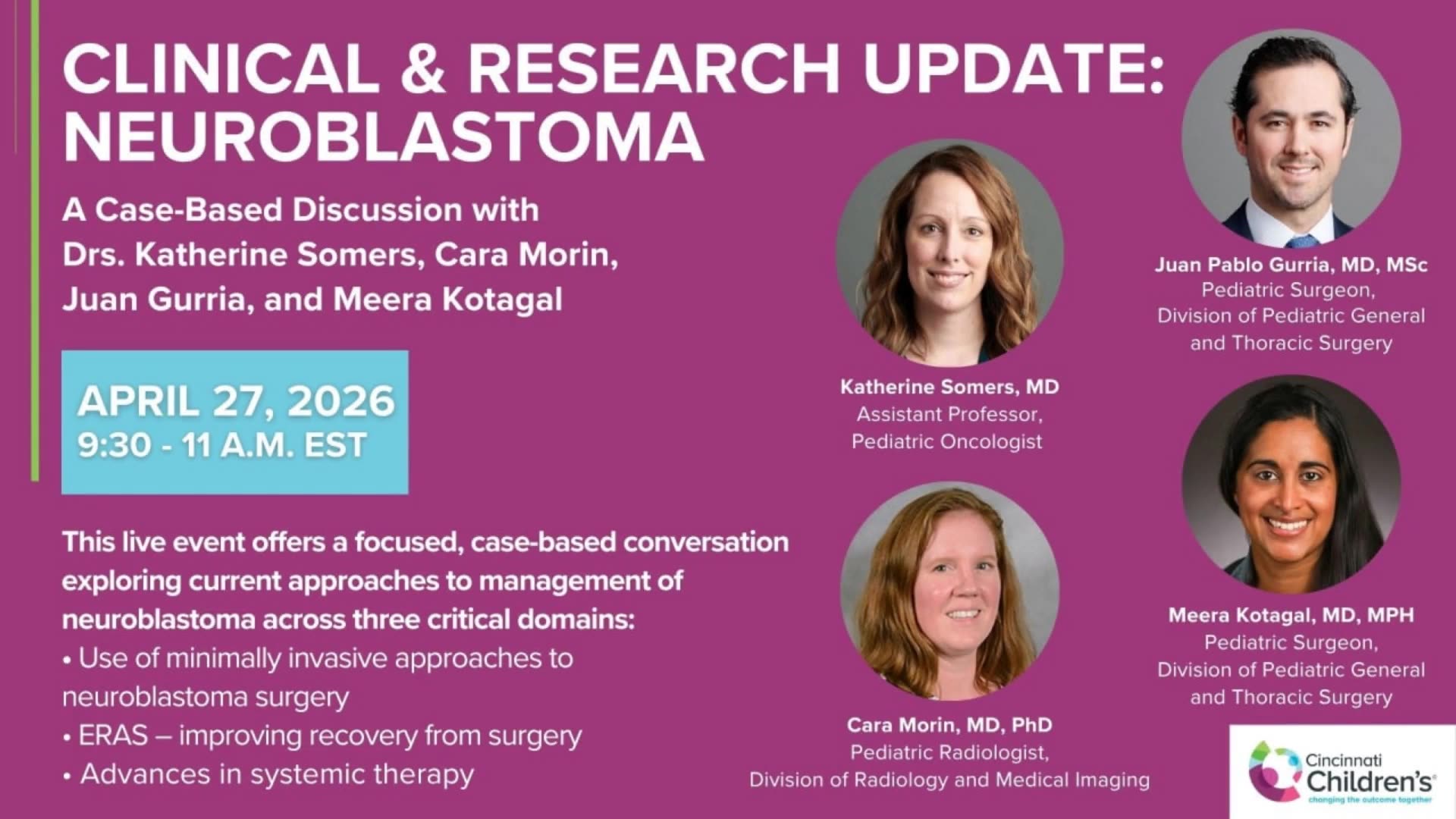
Clinical & Research Update: Neuroblastoma with Drs. Katherine Somers, Cara Morin, Juan Gurria, and Meera Kotagal
67 min · Published Sep 2026
Video
Clinical & Research Update: Sarcoma w/ Drs. Roshni Dasgupta, Joseph Pressey, Arthur Meyer, Luke Pater
66 min · Published Sep 2026
Video
2026 Laparoscopic Pediatric Hernia Repair
123 min · Published Jun 2026
Video
Beyond the Spectrum: Diagnosis, Myths & Management - Caitlin Couch & Leslie Lopez - APP Conference 2026
50 min · Published May 2026
Video
Dysautonomia: Navigating the Journey - Martha Willis - APP Conference 2026
55 min · Published May 2026
What the experts said
Aprepitant is given in pre-op 1-2 hours prior to surgery and has become standard in patients with high risk for post-operative nausea
Multiple preoperative pills given in pre-op area have not been observed in the stomach during intraoperative scoping
DVT prophylaxis with Lovenox or subcutaneous heparin is administered at the start of the case, though practices vary greatly among surgeons
Minimizing narcotics helps prevent postoperative nausea, achieved by running medications like propofol at low baseline during anesthesia
Ondansetron is used in the OR prior to extubation, while aprepitant is given preoperatively in holding to achieve synergistic anti-emetic effect
The number one concern after sleeve gastrectomy is nausea, retching, and vomiting
Haloperidol is not used due to sedative effects that interfere with waking patients in the PACU
Total daily acetaminophen dose should not exceed 4000 mg per day when combining IV and oral administration
Oxycodone is not routinely needed and patients are not discharged home on narcotics
80% of pediatric bariatric patients spend one night in the hospital
Expected postoperative pain level is 3 out of 5
TAP blocks have improved pain control and reduced nausea compared to non-exparel or exparel local anesthetic at port sites, with most patients going home the next day
Pure exparel diluted with normal saline is used for TAP blocks, performed immediately after camera insertion and epigastric port placement, adding only 3-5 minutes to the case
Ice chips are started within 4-6 hours postoperatively
Hematocrit is checked approximately 6 hours postoperatively
Sequential compression devices and Lovenox are used for DVT prophylaxis
Clear liquids are started on postoperative day one, with patients circling 1 ounce of liquids every 15 minutes with clear proteins and water for 3-4 hours before discharge
Patients are discharged home without narcotics if they tolerate liquids without nausea or significant pain, with TAP block providing analgesia for 2-3 days
NSAIDs are not generally given at home and no pills are allowed for 6 weeks, though chewables are acceptable
The rationale for avoiding straws is to prevent rapid drinking rather than air ingestion, though this may be surgical myth
Patients return to school within 5 days to 1 week postoperatively
Small pills are well-tolerated postoperatively because the esophagus is much bigger than any pill
Week 1 diet consists of 1 ounce of fluid every 15 minutes with goal of 40 ounces of liquids and 40 grams of protein
Week 2 diet advances to blended soups consistency with no lumps, bumps, or chunks, targeting 60 grams of protein and 60 ounces of fluids
Weeks 3-6 consist of soft diet with applesauce or mashed potatoes consistency, 60 grams of protein, 64 ounces of water, 600-800 calories, and initiation of exercise
Week 4 onwards maintains 60 grams of protein, 64 ounces of water, 600-800 calories, and 60 minutes of exercise daily
After week 6, patients advance to regular diet with small portions, moist cooking methods, and 1/4 to 1/2 cup portion sizes
Levsin (hyoscyamine) is effective for patients struggling with fluid intake or swallowing difficulty in the first few days after surgery
Stryker or Storz insufflators in pediatric mode check pressure more frequently, allowing better pressure control
90% of adolescent bariatric procedures performed are sleeve gastrectomies
ERAS recommendations for bariatric surgery include carbohydrate drink the night before surgery and clear liquids up to 2 hours prior to surgery
ASMBS recommends DVT prophylaxis intraoperatively and postoperatively before discharge, but most patients do not go home on DVT prophylaxis unless there is a specific indication such as family history
New literature demonstrates laparoscopic TAP block is not superior to local infiltration of incisions for pain control
Pure oxycodone immediate-release is the ERAS recommendation for narcotic use if needed because it does not contain acetaminophen
Adult bariatric surgeons use Air Seal insufflation system to maintain stable low pressures (10 mmHg) by regulating pressure second-to-second rather than every 20-30 seconds like standard insufflators
Operating at lower insufflation pressures results in less TNF-alpha production and decreased postoperative pain