


From
StayCurrentMD
Journal of Pediatric Surgery Article Review: September 2023
With Dr. Sahab Delaville & Dr. Whit Holcomb & Dr. Jason Smithers · hosted by Dr. Cecilia Gigena & Dr. Em Gootee
Chapter 1 of 4 · Evidence & Research
Pectus arcuatum
Introduction and Pectus Arcuatum Overview
Expert statements on this page
No expert statements were drawn from this page.
Host summaries · secondary, not cited in answers
Educational content from recorded physician discussions — not medical advice. Talk to your (or your child's) care team about your situation.
Video
Validation of an anorectal malformation trainer - Can a high-fidelity model simulate real life?
1 min · Published Jun 2026
Video
Complications and Long-Term Outcomes of Patients With Cloacal Malformation After Bowel Neovagina...
1 min · Published Jun 2026
Video
Safety and utility of long-acting steroid injection for management of post-operative stricture...
1 min · Published Jun 2026
Video
Association Between Social Determinants of Health and Choice of Urinary Reconstruction in Children
1 min · Published Jun 2026
Video
The Perineal Body Preserving PSARP (PPP)
11 min · Published Jun 2026
Video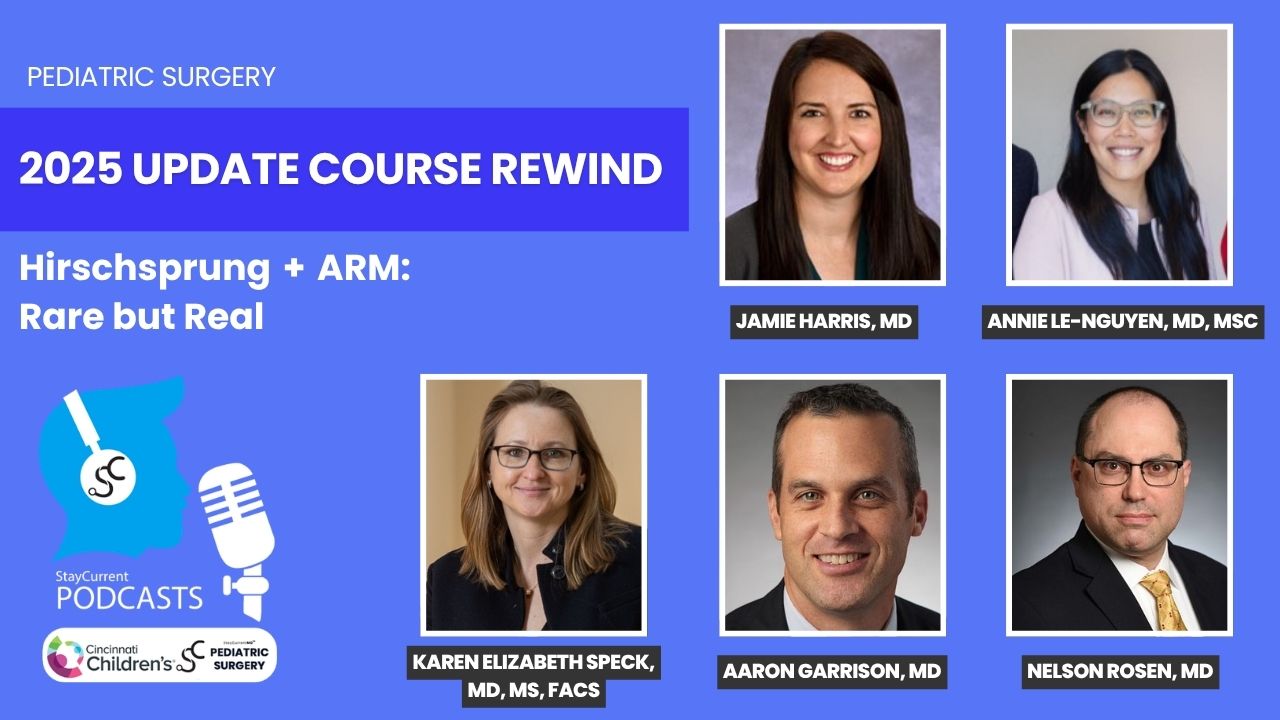
Update Course Rewind 2025: Hirschsprung + ARM: Rare but Real
1 min · Published May 2026
Only a few other public items share this expert — go deeper there →
Video
Intestinal Atresia Types Explained: Grossfeld Classification for Pediatric Surgery
1 min · Published Sep 2026
Video
Derivation and validation of the Pediatric Community-Acquired Pneumonia Severity (PedCAPS) score: A prospective cohort study
50 s · Published Sep 2026
Video
FETO for Late-Diagnosed Severe Congenital Diaphragmatic Hernia (CDH) at Cincinnati Children's with Dr. Beth Rymeski
4 min · Published Sep 2026
Video
Severe Congenital Diaphragmatic Hernia (CDH) Case: FETO Management & Unexpected Findings with Dr. Beth Rymeski
3 min · Published Sep 2026
Video
Fetoscopic Endoluminal Tracheal Occlusion (FETO) Procedure: Step-by-Step Guide with Dr. Beth Rymeski
4 min · Published Sep 2026
Video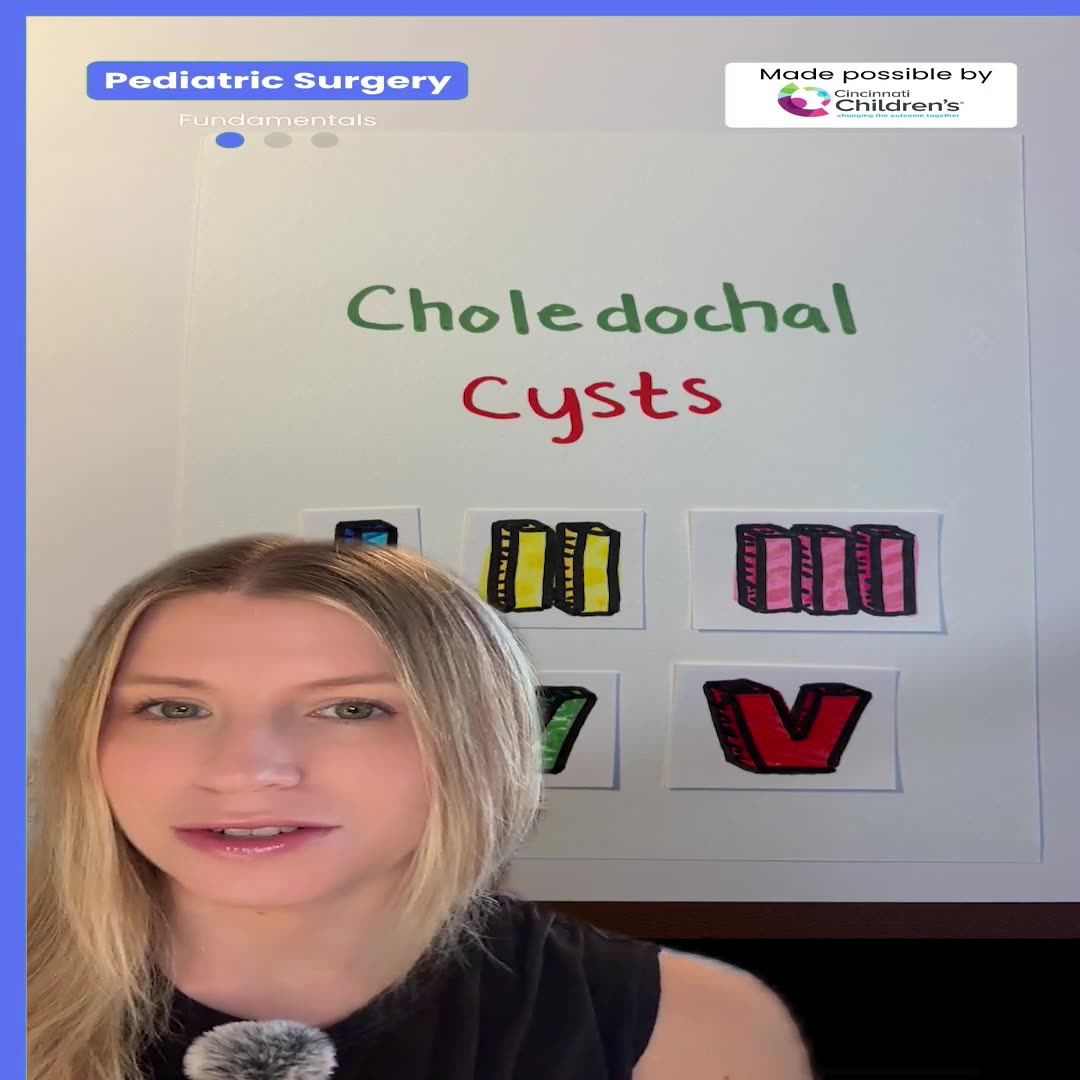
Choledochal Cyst Types Explained: Pediatric Surgery Fundamentals
1 min · Published Sep 2026
What the experts said
Pectus arcuatum is a bony deformity caused by a premature obliteration of the sternal sutures, resulting in a short sternum bent on itself.
35% of pectus arcuatum cases had associated malformations like Noonan syndrome, scoliosis, or cardiopathy.
25% of pectus arcuatum patients had a skeletal malformation in their family.
For pectus arcuatum treatment, bracing does not work and surgery requiring sternotomy is necessary.
Patients diagnosed with pectus arcuatum should be evaluated for cardiac malformation with ultrasound and assessed for scoliosis.
Surgical bleeding risk for CDH repair on ECMO was approximately 1% if operated in less than 24 hours, 5-6% at 48 hours, and jumped to maybe 15% after 48 hours.
Some pediatric surgeons perform CDH repair after the patient gets off ECMO rather than while on ECMO.
If CDH repair is only performed off ECMO, a certain number of patients die because they never came off ECMO.
One key to CDH management is to promote lung growth after repair, optimizing contralateral lung growth rather than ipsilateral lung growth.
Every surgeon will have adversity in practice with patients where despite best efforts there is not a good result.
Support systems are available to help physicians through difficult situations and adversity.
Physician mental health is discussed more openly now versus 10 years ago, but should still be discussed more openly.
In the pectus arcuatum study, 34 patients were reviewed with a mean age of 10 years, and 47% required X-ray or CT scan for diagnosis.
The Boston CDH study reviewed 146 infants who underwent CDH repair while on ECMO support from 1995 to 2021.
Early CDH repair was defined as during the first 48 hours after ECMO cannulation, and delayed repair was anything after that time.
Duration of ECMO support was shorter in the early CDH repair group.
Survival was not statistically different between early and delayed CDH repair groups.
The Boston center historically preferred early CDH repair for patients on ECMO, so patients who had delayed repair may have had clinical differences.
The ERAS meta-analysis examined 10 studies involving 1300 patients from databases including PubMed, Embase, and Cochrane Library.
ERAS protocols significantly reduce intraoperative fluids needed and postoperative opiate use in pediatric colorectal surgery.
Time to first oral intake and time for complete nutrition was less in patients managed with ERAS protocols.
ERAS protocols have a beneficial role in accelerating rehabilitation and shortening length of hospitalization.
Physician suicide rates are tragically high among doctors compared to the general population.
Factors contributing to physician suicide include high levels of stress, emotional and physical burnout, demanding work schedules, and pressure to maintain a successful career.
Stigma associated with mental health issues within the medical profession discourages physicians from seeking help, leading to untreated depression, anxiety, and other mental health disorders.