


From
StayCurrentMD
Journal of Pediatric Surgery Article Review: January 2022 - APSA Issue
With Dr. Casey Kelleher & Dr. Gail Besner & Dr. Shahzad Jaharifar · hosted by Dr. Rod Gerardo & Dr. Todd Ponsky
Chapter 1 of 3 · Evidence & Research
Academic RVUs
Academic RVU System for Pediatric Surgical Productivity
Expert statements on this page
No expert statements were drawn from this page.
Host summaries · secondary, not cited in answers
Educational content from recorded physician discussions — not medical advice. Talk to your (or your child's) care team about your situation.
Podcast
Journal of Pediatric Surgery Article Review: 3rd Quarter (Jul-Sep) 2024
19 min · Published Oct 2024
Video
Dr. Adriana Dekirmendjian - Best of the Best in Pediatric Surgery 2025
Dr. Todd Ponsky · 9 min · Published Mar 2025
Video
Quick Literature Updates Episode 11
Published Jul 2023
Podcast
Gastroschisis and sutureless abdominal wall closure
12 min · Published Jan 2021
Video
Gastroschisis - Clinical Practice Updates
Published Sep 2020
Video
Quick Literature Updates Ep 22
4 min · Published Oct 2025
Only a few other public items share this expert — go deeper there →
Video
Intestinal Atresia Types Explained: Grossfeld Classification for Pediatric Surgery
1 min · Published Sep 2026
Video
Derivation and validation of the Pediatric Community-Acquired Pneumonia Severity (PedCAPS) score: A prospective cohort study
50 s · Published Sep 2026
Video
FETO for Late-Diagnosed Severe Congenital Diaphragmatic Hernia (CDH) at Cincinnati Children's with Dr. Beth Rymeski
4 min · Published Sep 2026
Video
Severe Congenital Diaphragmatic Hernia (CDH) Case: FETO Management & Unexpected Findings with Dr. Beth Rymeski
3 min · Published Sep 2026
Video
Fetoscopic Endoluminal Tracheal Occlusion (FETO) Procedure: Step-by-Step Guide with Dr. Beth Rymeski
4 min · Published Sep 2026
Video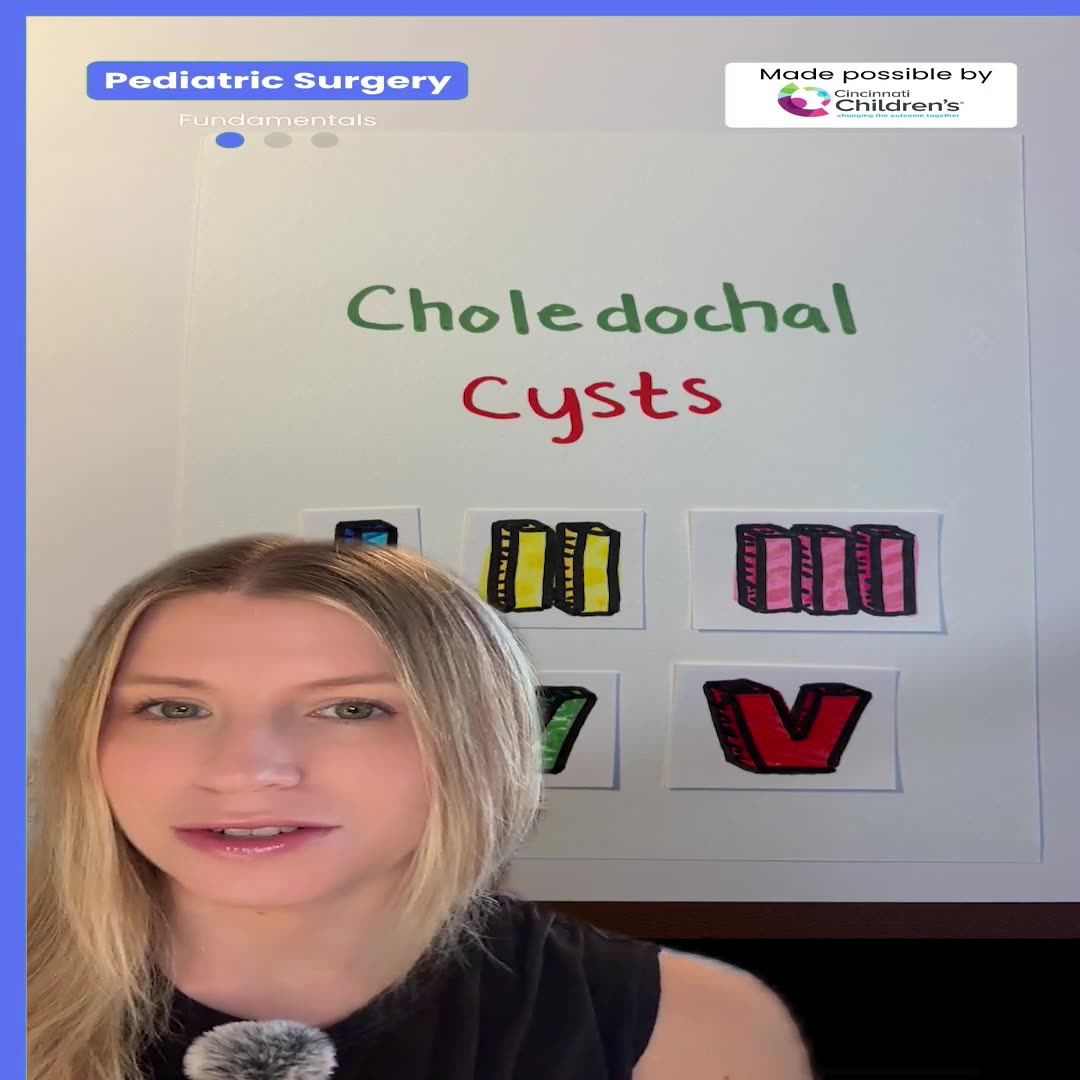
Choledochal Cyst Types Explained: Pediatric Surgery Fundamentals
1 min · Published Sep 2026
What the experts said
Casey Kelleher is a pediatric surgeon at Mass General for Children in Boston and chair of the APSA Publications Committee
Surgeons have historically been incentivized based on work RVUs, which is important for clinical productivity but does not take advantage of other strengths surgeons have
The concept of academic RVUs was first described approximately 12-13 years ago but did not include how to incentivize people for academic work
Nationwide Children's Hospital implemented a point-based academic RVU system where people accumulate points based on number of publications, presentations, and other academic pursuits
At Akron Children's Hospital under Bob Perry, the bonus structure required the entire group to reach a certain RVU threshold (not individual surgeons) to receive 50% of bonus, with the remaining bonus based on individual project performance
Shahzad Jaharifar is a pediatric surgeon and assistant clinical professor of surgery at BC Children's Hospital in Vancouver, Canada
At Saint Justine Hospital, gastroschisis treatment differed from other institutions by having very low silo use, with pretty much every patient having an attempt at immediate bedside sutureless closure
Before and after protocol implementation at BC Children's, approximately 75% of gastroschisis babies can be closed immediately, whether in the OR pre-implementation with fascial closure or at bedside post-implementation
With silo management, parents look at their newborn's intestines through a silo for 5-6 days and cannot hold their baby until the silo is completely reduced
With immediate gastroschisis closure, if babies are extubated within 48 hours, parents can hold them within 48 hours; if managed without intubation, parents can hold them immediately
After implementing the academic RVU system, Nationwide had an increase in presentations and peer-reviewed publications, and external federal research funding increased from $750,000 to $5.7 million (a 7.7-fold increase)
The BC Children's Hospital gastroschisis study was a retrospective review of patients between 2008 and 2019, comparing outcomes before and after protocol implementation in 2012
Sarah Stokes is a PGY-6 general surgery resident at University of California, Davis
Prior studies on placental mesenchymal stem cells for in utero myelomeningocele repair involved two separate surgeries in lambs: one to create the defect and one to repair it
In the current study, a single operation was performed at approximately 100 days gestational age where myelomeningocele defects were created and repaired simultaneously with PMSCs placed directly onto the spinal cord
The study found that PMSCs did not persist in placentas, uteri, or lambs at 3 months, and there was no histological evidence of abnormal growth or tumor development
Human trials using placental mesenchymal stromal cells for myelomeningocele repair have been initiated with the first two patients enrolled