


From
StayCurrentMD
Intestinal Rehabilitation, Episode 3: Enteral Autonomy, Part 2
With Dr. Paul Wales
Chapter 1 of 7 · Fundamentals
Nutritional principles
Introduction and nutritional principles for enteral autonomy
Expert statements on this page
No expert statements were drawn from this page.
Host summaries · secondary, not cited in answers
Educational content from recorded physician discussions — not medical advice. Talk to your (or your child's) care team about your situation.
Video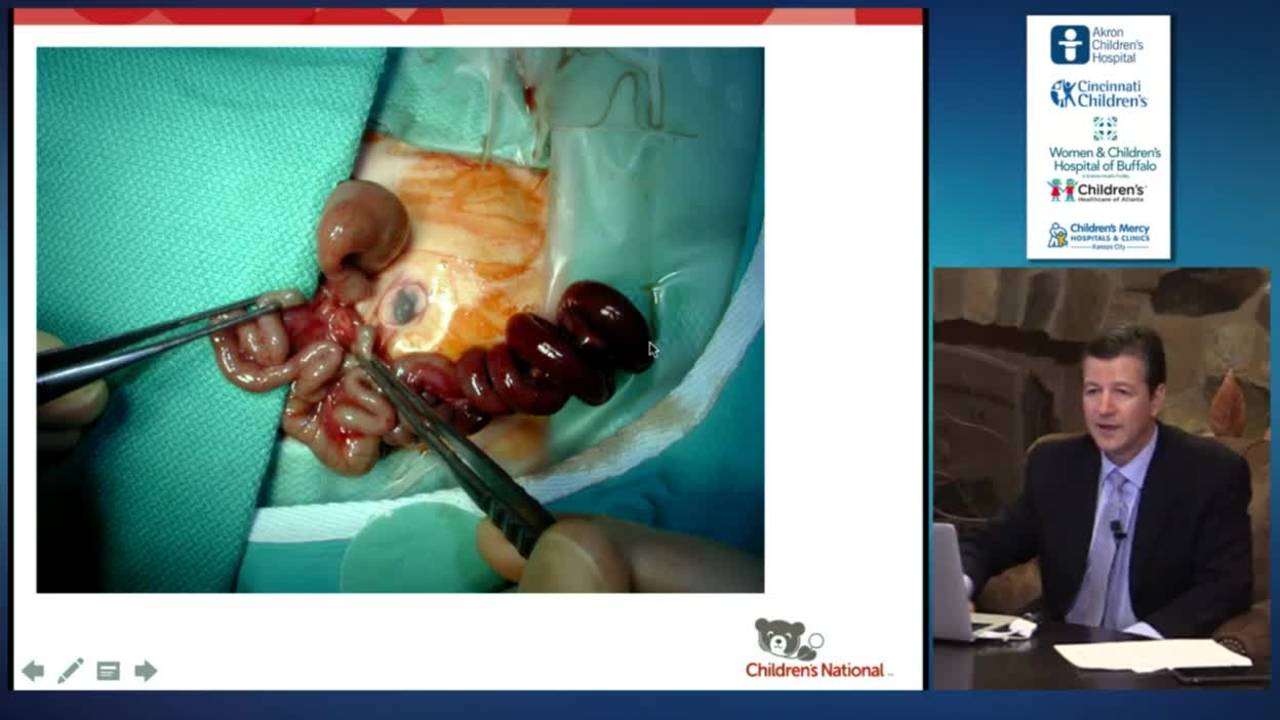
Ileal Atresia Rapid Fire: Update Course 2015
5 min · Published Nov 2015
Video
Practical Approach: Intestinal Failure Innovations
116 min · Published Dec 2014
Podcast
Intestinal Rehabilitation, Episode 2: Overwhelming intestinal damage, Part 2
17 min · Published Feb 2022
Podcast
Intestinal Failure with Dr. Brad Warner
52 min · Published May 2017
Podcast
Intestinal Rehabilitation, Episode 2: Overwhelming intestinal damage, Part 1
13 min · Published Feb 2022
Video
Outcomes of Children With Short Bowel Syndrome: Experiences in a Multidisciplinary Intestinal Rehabilitation Unit Over Two Decades
45 s · Published Mar 2025
Video
Impact of social determinants of health on outcomes in pediatric short bowel syndrome...
43 s · Published Aug 2026
Podcast
Update Course Rewind: Omphalocele & Gastroschisis 2020
Miguel Guelfand · 15 min · Published Jul 2026
Video
Update Course Rewind 2025: Updates in NEC Management
11 min · Published Jul 2026
Video
Availability, utilization, and barriers to bowel ultrasound for necrotizing enterocolitis...
55 s · Published Jul 2026
Video
Malrotation and Volvulus with Trinity
Dr. Steve Rothenberg · 8 min · Published May 2026
Video
Malrotation Infant
Dr. Steve Rothenberg · 9 min · Published May 2026
Video
Advancements in Pediatric Intestinal Failure: Innovative Therapies and Improved Outcomes
17 min · Published Aug 2026
Podcast
Intestinal Rehabilitation Episode 8: Refeeding of an Older Patient
12 min · Published Oct 2023
Podcast
Intestinal Rehabilitation, Episode 7: Refeeding in a neonatal patient
16 min · Published Sep 2023
Podcast
Intestinal Rehabilitation, Episode 6: Cholestasis
15 min · Published Jun 2023
Podcast
Intestinal Rehabilitation, Episode 4: Surgical Management, Part 2
12 min · Published Oct 2022
Podcast
Intestinal Rehabilitation, Episode 4: Surgical Management, Part 1
19 min · Published Oct 2022
Video
Intestinal Atresia Types Explained: Grossfeld Classification for Pediatric Surgery
1 min · Published Sep 2026
Video
Derivation and validation of the Pediatric Community-Acquired Pneumonia Severity (PedCAPS) score: A prospective cohort study
50 s · Published Sep 2026
Video
FETO for Late-Diagnosed Severe Congenital Diaphragmatic Hernia (CDH) at Cincinnati Children's with Dr. Beth Rymeski
4 min · Published Sep 2026
Video
Severe Congenital Diaphragmatic Hernia (CDH) Case: FETO Management & Unexpected Findings with Dr. Beth Rymeski
3 min · Published Sep 2026
Video
Fetoscopic Endoluminal Tracheal Occlusion (FETO) Procedure: Step-by-Step Guide with Dr. Beth Rymeski
4 min · Published Sep 2026
Video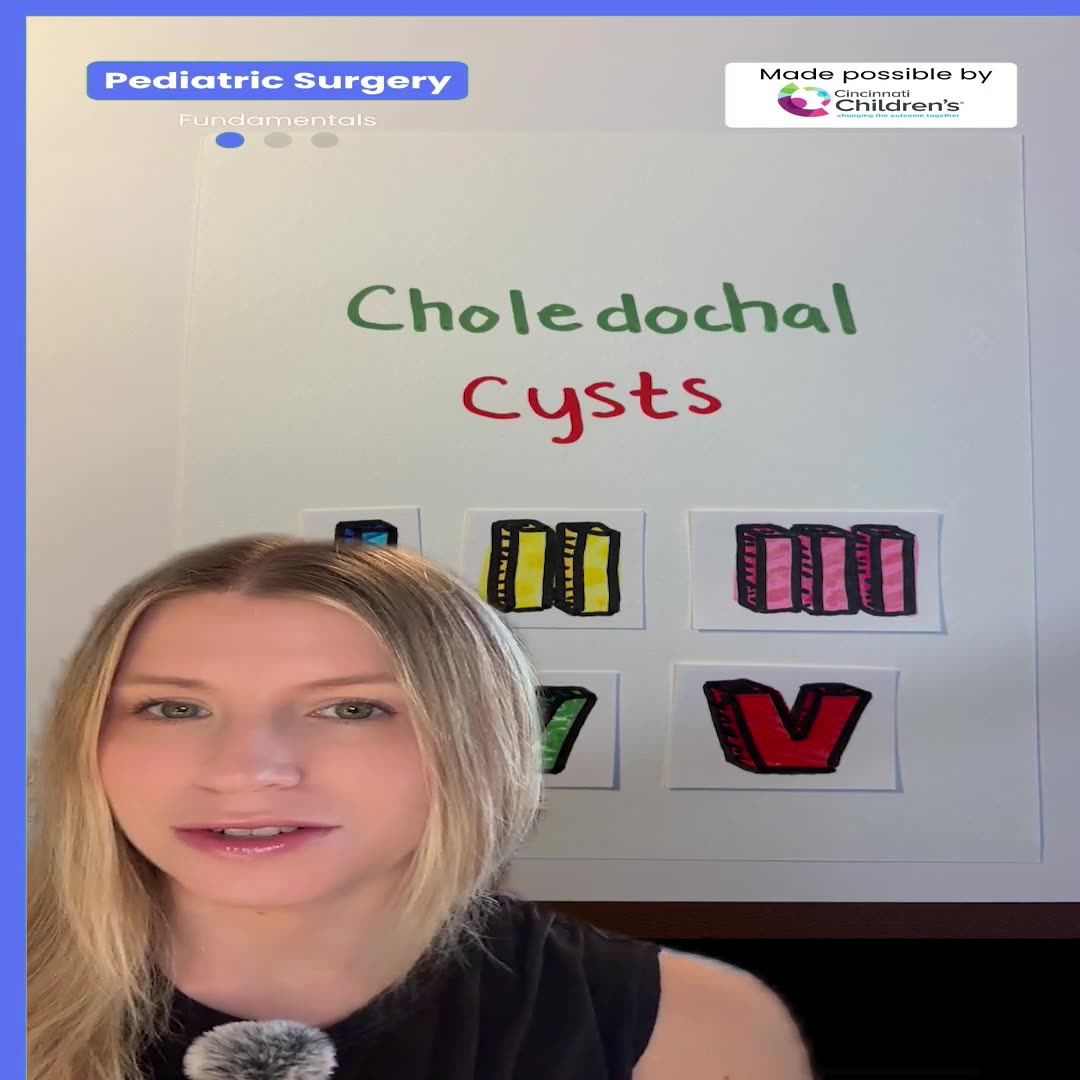
Choledochal Cyst Types Explained: Pediatric Surgery Fundamentals
1 min · Published Sep 2026
What the experts said
Nutritional choices including elemental versus semi-elemental versus intact macronutrient diet selection are guided by residual anatomy and functional status
Inadequate caloric support results in poor growth, impaired healing, and diminished adaptive response
Bowel heals with adhesions which bring blood supply to the bowel and help it heal
Placing a tube beyond the pylorus at time of surgery while allowing NG decompression of the stomach, later changed to gastrostomy tube, has been beneficial at Cincinnati Children's
Refeeding through a tube is done best and allows standardized nursing feeding practices
High ostomy outputs without feeding are an indication to feed, as long as the child can be hydrated, though this presents a clinical challenge
After massive bowel resection, patients can be hypergastrinemic with elevated acid secretion for 6 to 12 months due to loss of distal bowel and hormonal feedback
Acid blockade (H2 blocker or PPI) can decrease gastric volume in the short term
Acid blockade carries risk of bacterial overgrowth by losing the acid barrier
Prokinetic therapy options include intravenous agents (metoclopramide, erythromycin) or enteral agents (domperidone, cisapride) to improve gastric emptying and motility
Increased secretions result from thick, leaky mucosa which requires delivery of luminal nutrients to heal
Serum bicarbonate above 20 indicates feeding is generally safe even with high ostomy outputs (40-60 cc/kg), and acetate can be added to TPN for hydration support
Enteral antibiotics are often cycled for bacterial overgrowth treatment in an empiric and ad hoc manner
Anti-secretory or anti-diarrheal medications to decrease losses include octreotide, clonidine, and loperamide
Antibiotic treatment should have defined endpoints and duration rather than empiric two-week courses when the child is not showing clinical signs of illness
Surgical procedures to promote adaptation fall into three categories: restoring continuity, affecting motility, and lengthening the bowel
Closing a stoma immediately recruits more bowel
As bowel becomes increasingly dilated, its motility becomes impaired
Restoring bowel caliber to normal improves motility, clearance, decreases bacterial overgrowth, allows mucosal healing, and improves absorption
Bowel tapering can be performed on the anti-mesenteric side or the dilated segment can be resected if the patient has adequate length
Bowel lengthening procedures include the Bianchi procedure (longitudinal intestinal lengthening, available since 1980) and the serial transverse enteroplasty (STEP)
The most important factor for efficacy of both Bianchi and STEP procedures is that they taper the bowel
STEP differs from anti-mesenteric tapering or resection by preserving all available mucosa without removing any
In patients who are shorter with dilated bowel segments where resection is undesirable, STEP or Bianchi become options to preserve all mucosa while addressing dilatation
Bowel lengthening procedures redistribute rather than increase surface area; ongoing dilatation and bowel growth in infants and young children eventually result in more surface area through downstream adaptive responses
It takes approximately 6 months to see changes in absorption after bowel lengthening procedures, as demonstrated in published absorption studies measuring fecal fat, alpha-1 antitrypsin clearance, xylose, and citrulline
An upper GI study can rule in a problem but does not rule out a problem; a normal upper GI does not exclude an anatomical problem
Implementation of a feeding protocol is associated with achieving full enteral autonomy in a shorter time period, based on literature from Chris Duggan's group at Boston
Dilated bowel with impaired motility leads to stool stasis, mucosal inflammation, barrier damage allowing bacterial translocation, potential sepsis, and malabsorption
The new ASPEN guidelines define enteral autonomy as independence from parenteral support for 12 weeks