


From
StayCurrentMD
Hirschprung's Disease - Daniel von Allmen
hosted by Dr. Daniel von Allmen
Part of
Enterocolitis 26 items
Chapter 1 of 6 · Case-Based Learning
Newborn workup
Introduction and Case 1: Newborn Distal Bowel Obstruction Workup
Expert statements on this page
No expert statements were drawn from this page.
Host summaries · secondary, not cited in answers
Educational content from recorded physician discussions — not medical advice. Talk to your (or your child's) care team about your situation.
Video
Hirschsprung Disease: Update Course 2013
38 min · Published Sep 2013
Video
Hirschsprung Disease: Radiology Aspect
CCHMC Pediatric Surgery · 43 min · Published Feb 2015
Video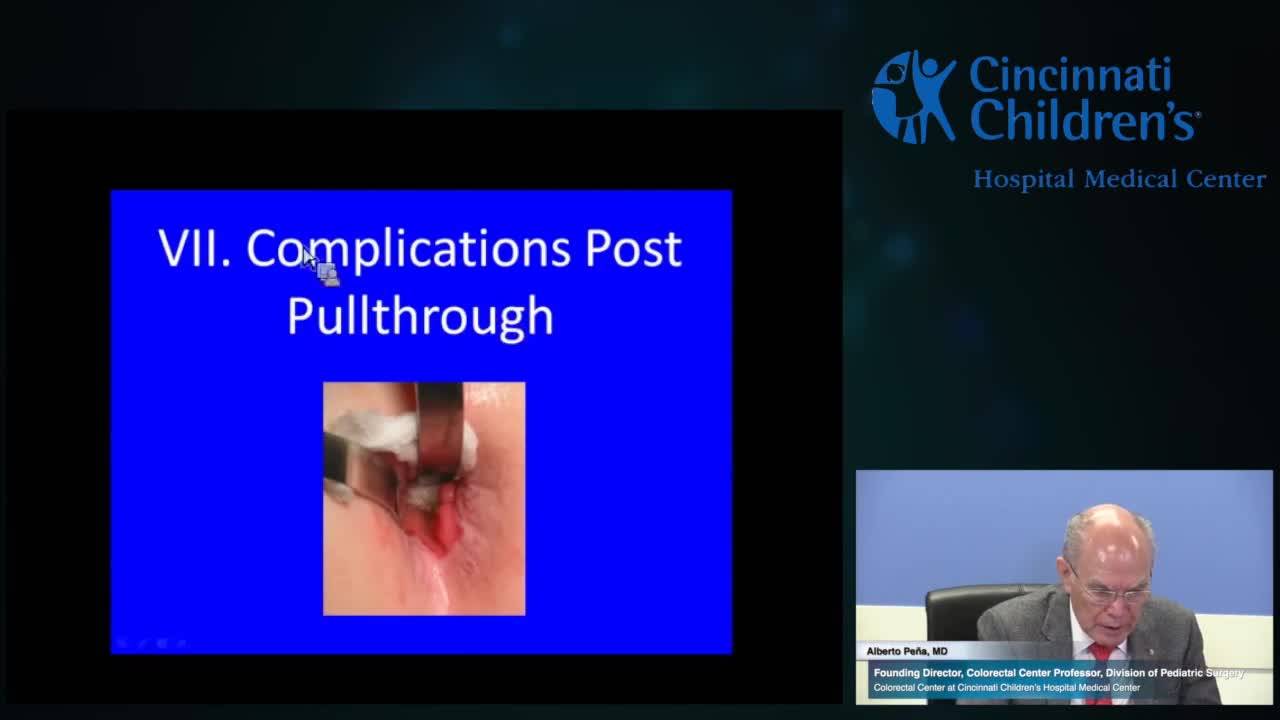
Outcomes and Complications in Hirschsprung Disease
105 min · Published Nov 2018
Video
Hirschsprung Disease: Update Course 2015
CCHMC Pediatric Surgery · 7 min · Published Nov 2015
Video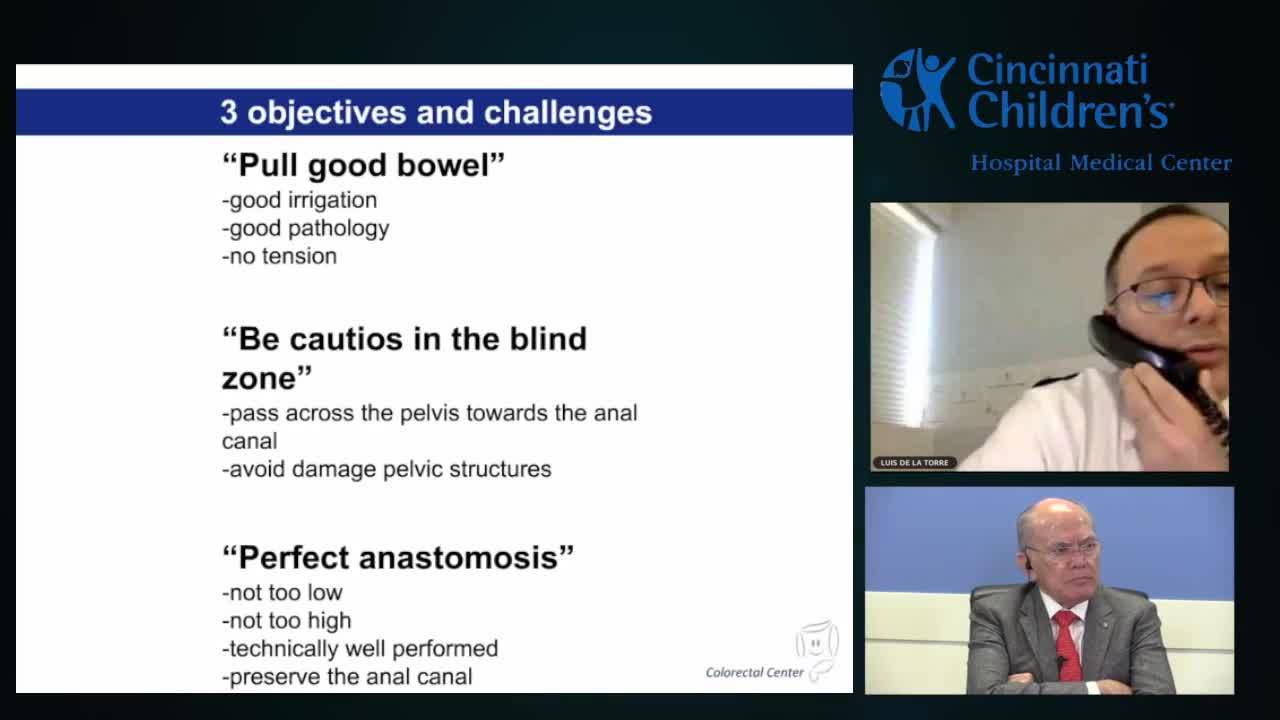
Surgical Procedures for Hirschsprung Disease
128 min · Published Nov 2018
Video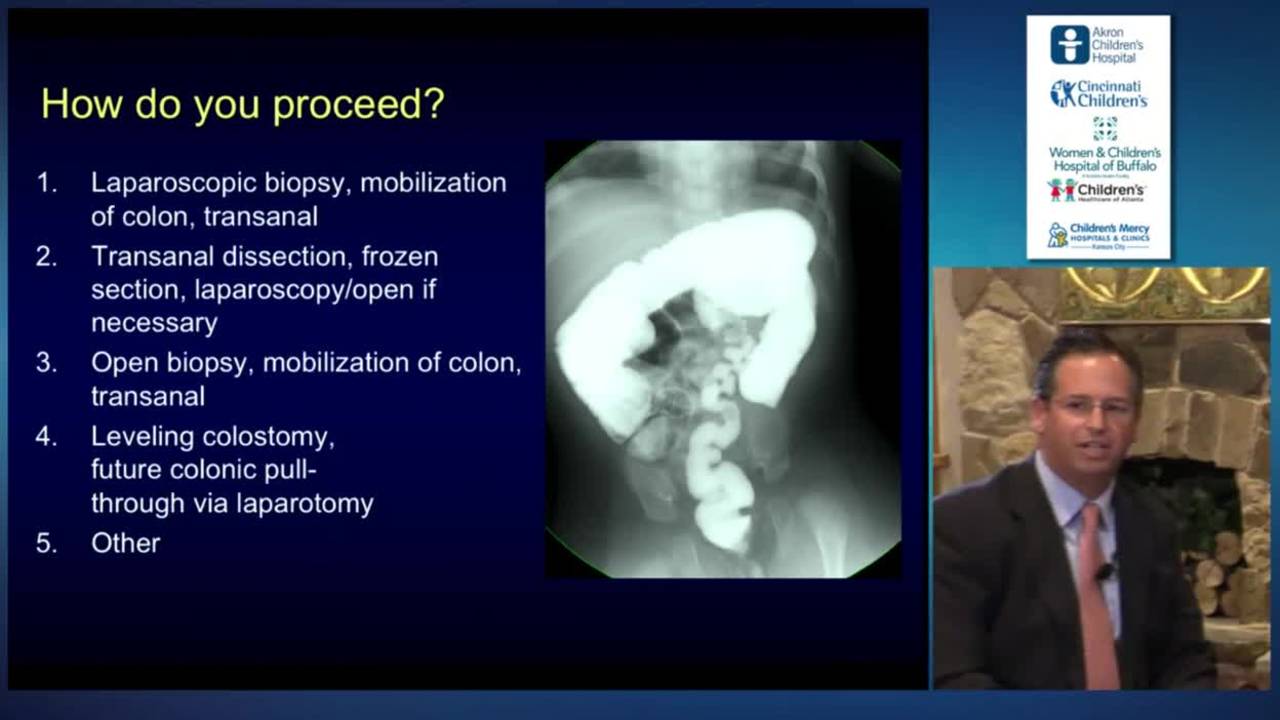
Hirschsprung Disease Rapid Fire: Update Course 2015
CCHMC Pediatric Surgery · 12 min · Published Nov 2015
Video
Intestinal Atresia Types Explained: Grossfeld Classification for Pediatric Surgery
1 min · Published Sep 2026
Video
Derivation and validation of the Pediatric Community-Acquired Pneumonia Severity (PedCAPS) score: A prospective cohort study
50 s · Published Sep 2026
Video
FETO for Late-Diagnosed Severe Congenital Diaphragmatic Hernia (CDH) at Cincinnati Children's with Dr. Beth Rymeski
4 min · Published Sep 2026
Video
Severe Congenital Diaphragmatic Hernia (CDH) Case: FETO Management & Unexpected Findings with Dr. Beth Rymeski
3 min · Published Sep 2026
Video
Fetoscopic Endoluminal Tracheal Occlusion (FETO) Procedure: Step-by-Step Guide with Dr. Beth Rymeski
4 min · Published Sep 2026
Video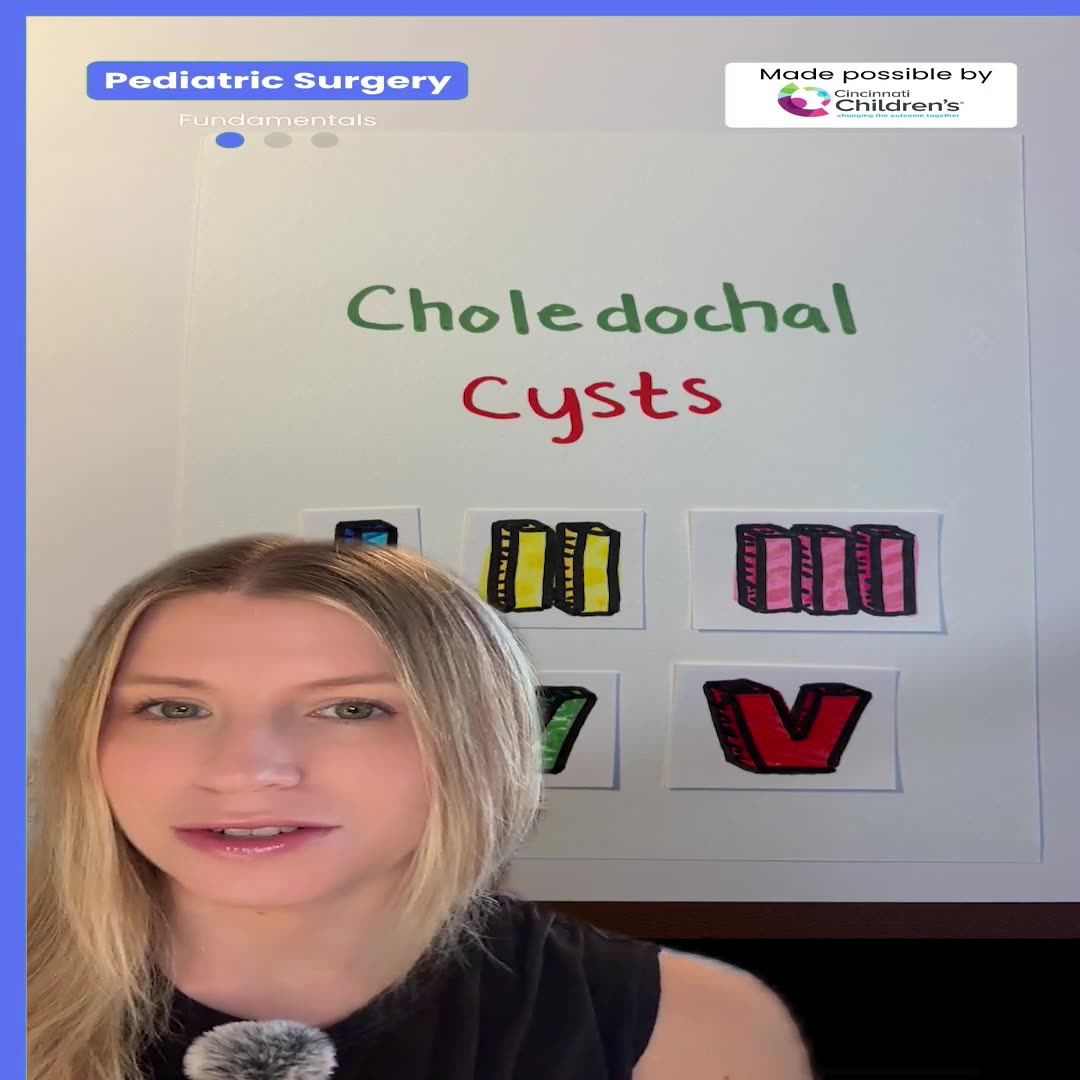
Choledochal Cyst Types Explained: Pediatric Surgery Fundamentals
1 min · Published Sep 2026
What the experts said
Contrast enema plus suction rectal biopsy is the standard initial workup for newborn distal bowel obstruction suspected to be Hirschsprung disease, not upper GI series.
Laparoscopic-assisted pull-through is preferred over purely transanal approach because contrast enema underestimates transition zone level in approximately 8% of cases (Manu Proctor's data).
Female patients may have higher incidence of long-segment Hirschsprung (50-50 ratio for total colonic aganglionosis in girls) compared to males.
Tissue diagnosis is mandatory before operating for Hirschsprung disease; contrast enema alone is insufficient due to false-positive transition zones in newborns.
In sick patients with enterocolitis, diversion may be necessary before obtaining tissue diagnosis if pathology results will be delayed several days.
Ultra-short segment Hirschsprung has two definitions: (1) aganglionosis less than 5cm from dentate line, or (2) absent recto-anal inhibitory reflex with normal ganglion cells (internal sphincter achalasia). The latter is not true Hirschsprung disease.
Manometry showing normal recto-anal inhibitory reflex rules out Hirschsprung disease in older cooperative children (age 5-6+); if reflex is absent, biopsy is still required due to false-negative manometry.
Hypertrophic nerves on biopsy indicate Hirschsprung disease; they should not be present in normal anal canal biopsies even though ganglion cells are normally absent in the anal canal.
The anal canal in adults is 3-4 centimeters long (versus 1cm in infants), so biopsies at 3cm in a 16-year-old may actually be sampling anal canal rather than rectum.
Cecal perforation in Hirschsprung disease usually occurs with shorter-segment disease (not total colonic aganglionosis) because the cecum becomes most distended, similar to rectal cancer causing cecal perforation.
For cecal perforation from Hirschsprung: close the perforation, create loop ileostomy, and perform serial colonic biopsies if patient is stable to identify transition zone level.
Long-segment Hirschsprung patients should wait 6-12 months after diversion before definitive pull-through to allow stoma output to thicken and prevent severe perianal excoriation.
When transition zone is in the cecum or ascending colon, pulling down the cecum as a pouch leads to stasis and enterocolitis; ileal Duhamel (sacrificing the cecum) may have better outcomes.
If transition zone is at hepatic flexure or beyond, preserve the colon; if only cecum is ganglionic, consider ileal Duhamel instead.
Suction rectal biopsy should not be performed in children older than approximately 15-18 months due to patient cooperation issues; open rectal biopsy under general anesthesia is preferred.
In older children (age 3+) with severely dilated colon from Hirschsprung, primary pull-through without diversion risks anastomotic complications; leveling colostomy with resection of dilated segment is preferred.
Massively dilated colon in older Hirschsprung patients may shrink after 6-8 months of diversion in younger children (age 3) but is less likely to shrink in adolescents (age 17).
Colonoscopic biopsies for Hirschsprung diagnosis in older children can be unreliable and miss the diagnosis; full-thickness rectal biopsy is more reliable.
Initial management of Hirschsprung-associated enterocolitis: IV broad-spectrum antibiotics and saline rectal irrigations. Consider diversion only if patient has peritonitis, sepsis, or SIRS.
Chronic oral metronidazole is used liberally for recurrent Hirschsprung-associated enterocolitis, sometimes for months; symptoms may recur when medication is stopped.
Botox injection decreases the number of hospitalizations for enterocolitis in post-pull-through Hirschsprung patients, though it does not work in all cases.
Incidence of enterocolitis is significantly higher (approximately double) in children with trisomy 21 compared to genetically normal children with Hirschsprung disease.
For recurrent enterocolitis post-pull-through: perform exam under anesthesia with biopsies to rule out residual aganglionosis or distal obstruction before treating the enterocolitis itself.