


From
StayCurrentMD
Gastrografin Protocol for Adhesive Small Bowel Obstruction (SBO)
With Dr. Mira Kodgali
Chapter 1 of 6 · Fundamentals
Gastrografin background
Introduction and Background on Gastrografin for Adhesive SBO
Expert statements on this page
No expert statements were drawn from this page.
Host summaries · secondary, not cited in answers
Educational content from recorded physician discussions — not medical advice. Talk to your (or your child's) care team about your situation.
Podcast
Journal of Pediatric Surgery Article Review: November 2023
12 min · Published May 2024
Video
Best of the Best APSA Winner
9 min · Published Apr 2022
Video
APSA - A contrast challenge is safe in children with adhesive small bowel obstruction- a multi-institutional review - Nathan Rubalcava
8 min · Published May 2022
Podcast
Malrotation with Dr. Meera Kotagal
13 min · Published May 2023
Video
New Concepts in Radiology: Update Course 2017
40 min · Published Aug 2017
Video
Colorectal - Clinical Practice Updates
52 min · Published Sep 2020
Video
Intestinal Atresia Types Explained: Grossfeld Classification for Pediatric Surgery
1 min · Published Sep 2026
Video
Derivation and validation of the Pediatric Community-Acquired Pneumonia Severity (PedCAPS) score: A prospective cohort study
50 s · Published Sep 2026
Video
FETO for Late-Diagnosed Severe Congenital Diaphragmatic Hernia (CDH) at Cincinnati Children's with Dr. Beth Rymeski
4 min · Published Sep 2026
Video
Severe Congenital Diaphragmatic Hernia (CDH) Case: FETO Management & Unexpected Findings with Dr. Beth Rymeski
3 min · Published Sep 2026
Video
Fetoscopic Endoluminal Tracheal Occlusion (FETO) Procedure: Step-by-Step Guide with Dr. Beth Rymeski
4 min · Published Sep 2026
Video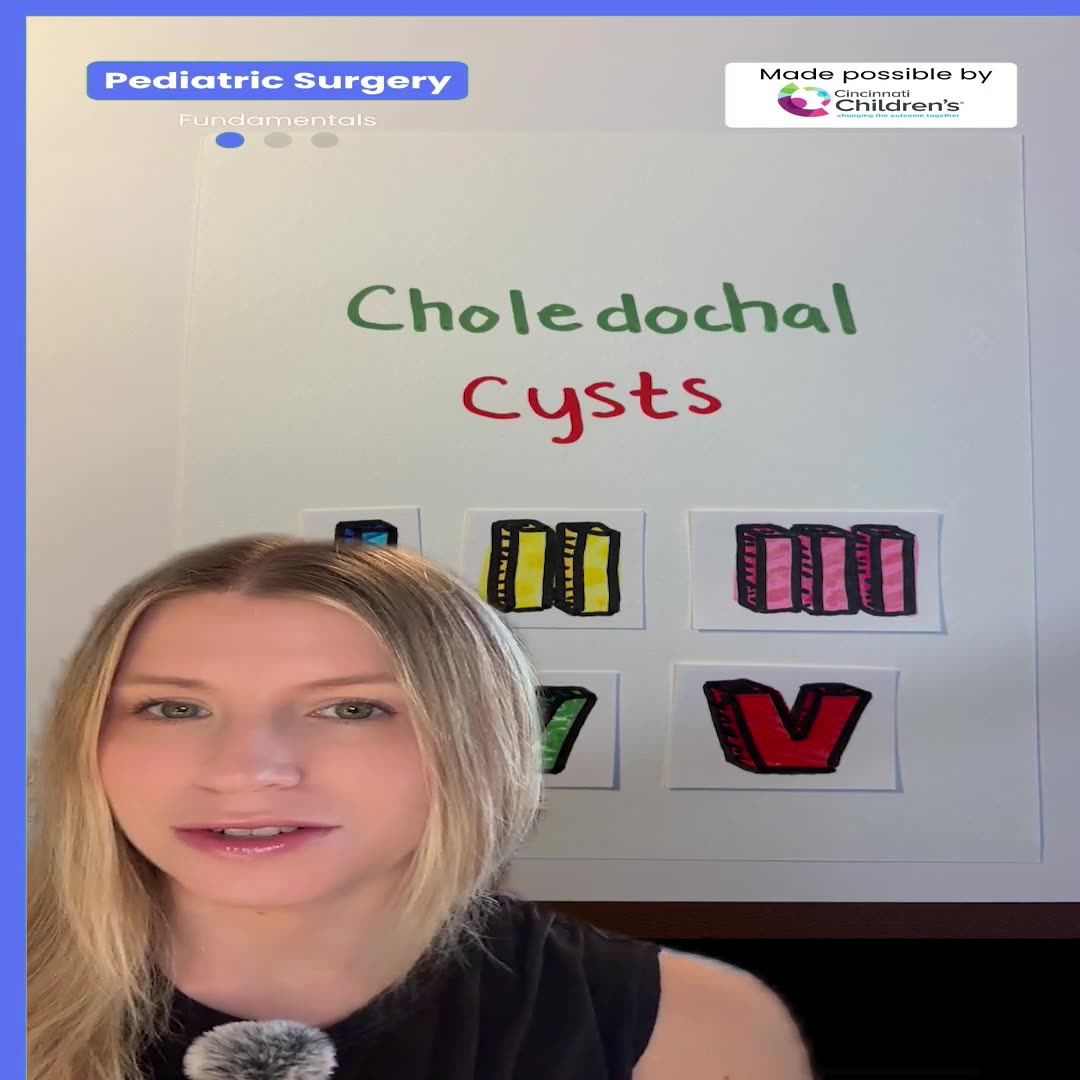
Choledochal Cyst Types Explained: Pediatric Surgery Fundamentals
1 min · Published Sep 2026
What the experts said
Gastrografin use for adhesive small bowel obstruction began in the adult population approximately 10 years ago.
Gastrografin is both diagnostic (visible on X-rays to track bowel transit) and therapeutic (hyperosmolar agent draws water from bowel edema into lumen).
Gastrografin should only be used for adhesive small bowel obstructions, not in patients who have never had an operation.
Gastrografin is not appropriate for patients with concern for strangulation or peritonitis, who should be considered for immediate operative intervention.
Patients with active malignancy are excluded from the Cincinnati Children's Gastrografin protocol.
Imaging confirmation of small bowel obstruction is performed with two-view abdominal X-ray or CT.
Nasogastric decompression should be performed for at least one hour, or longer if the NG continues to drain bilious fluid.
Gastrografin dosing is age-based and diluted in water to a 50% solution.
The NG tube is clamped for 8 to 10 hours after Gastrografin administration, but can be unclamped at any time if the patient is nauseated or vomiting.
A portable plain film is obtained at 10 hours; if contrast is in or past the cecum, the NG tube is removed and diet can be advanced.
If contrast has not reached the cecum at 10 hours, another X-ray is obtained at 24 hours.
If contrast has not reached the cecum by 24 hours, strong consideration is given to operative exploration.
Serial abdominal exams every four hours are required throughout the protocol to ensure the patient has not progressed to peritonitis or developed an indication for urgent operative intervention.
Cincinnati Children's has had great success using Gastrografin for management of adhesive small bowel obstructions in children.