


From
Colorectal Channel
Colorectal Quiz Episode 38: Transitional Care in Colorectal Surgery
With Dr. Stuart Hosie & Dr. Mark Malota & Dr. Marc Levitt & Dr. Jason Frischer · hosted by Dr. Ray Hankey
Chapter 1 of 7 · Case-Based Learning
Case presentation
Case Presentation: 27-Year-Old with Lifelong Incontinence After ARM Repair
Expert statements on this page
No expert statements were drawn from this page.
Host summaries · secondary, not cited in answers
Educational content from recorded physician discussions — not medical advice. Talk to your (or your child's) care team about your situation.
Video
Rectal Prolapse Repair Following a Posterior Sagittal Anorectoplasty
4 min · Published Jan 2025
Podcast
Colorectal Quiz Episode 2: When to redo a PSARP
18 min · Published Jan 2021
Podcast
Colorectal Quiz: Episode 2
Marc Levitt · 18 min · Published Jan 2021
Video
Episode 19 - Interview with Dr Marc Levitt, Chief of Colorectal & Pelvic Reconstruction, Children‘s
Marc Levitt · 54 min · Published Oct 2021
Podcast
Colorectal Quiz: Episode 47
Marc Levitt · 22 min · Published May 2025
Video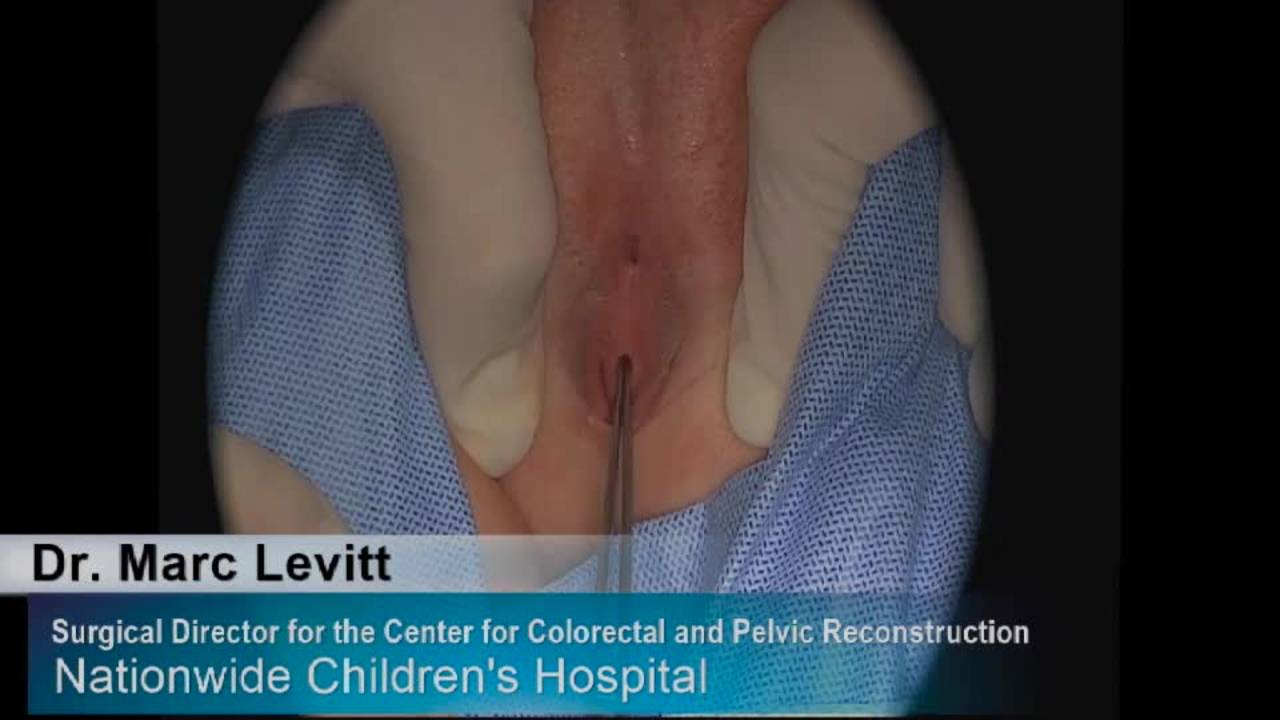
Posterior Sagittal Anorectaplasty-Female Part I: Pediatric Colorectal...
28 min · Published Apr 2012
Video
Validation of an anorectal malformation trainer - Can a high-fidelity model simulate real life?
1 min · Published Jun 2026
Video
Complications and Long-Term Outcomes of Patients With Cloacal Malformation After Bowel Neovagina...
1 min · Published Jun 2026
Video
Safety and utility of long-acting steroid injection for management of post-operative stricture...
1 min · Published Jun 2026
Video
Association Between Social Determinants of Health and Choice of Urinary Reconstruction in Children
1 min · Published Jun 2026
Video
The Perineal Body Preserving PSARP (PPP)
11 min · Published Jun 2026
Video
Update Course Rewind 2025: Hirschsprung + ARM: Rare but Real
1 min · Published May 2026
Only a few other public items share this expert — go deeper there →
Podcast
Long-term obstetric and gynecologic care for patients with anorectal malformations
21 min · Published Sep 2026
Podcast
Post-pubertal gynecologic evaluation and management of patients with anorectal malformations
22 min · Published Sep 2026
Podcast
Pre-pubertal gynecologic evaluation and management of patients with anorectal malformations
23 min · Published Sep 2026
Podcast
Methods of gynecologic evaluation for patients with anorectal malformations
21 min · Published Sep 2026
Podcast
Gynecologic care in patients with anorectal malformations: A primer and call to action
18 min · Published Sep 2026
Podcast
Evaluation and Management of Postsurgical Patient With Hirschsprung Disease Neurogastroenterology & Motility Committee: Position Paper of North American Society of Pediatric Gastroenterology, Hepatology, and Nutrition (NASPGHAN)
17 min · Published Sep 2026
What the experts said
A 27-year-old female presented with lifelong fecal incontinence following newborn repair of rectal vestibular fistula; she had been told her incontinence was normal and unavoidable until puberty when daily irrigations were introduced, which restored her social life.
The patient had rectal prolapse 2–3 years prior to presentation, which was repaired by an adult colorectal surgeon.
Original operation reports from the early 1990s were incomplete, making it difficult to evaluate the initial surgical situation.
Examination under anesthesia is a valuable maneuver for ARM patients with previous surgery, allowing assessment of anoplasty prolapse, stricture, and proper location via electrical stimulation.
MRI with specific protocols and endorectal ultrasound can help determine whether the anoplasty is within the muscle complex.
In males, cystoscopy is added to evaluation to rule out remnant fistula and assess bladder mucosa and emptying; in females, cystoscopy can identify inappropriate fistulas.
The patient's anus was too ventrally located; a dimple posterior to the current anus marked where the anus should be, and electrical stimulation of the external sphincter showed the proper limits.
The functional problem is absence of sphincter anterior to the anoplasty: when the patient squeezes, the sphincter cannot close the anterior aspect and stool slips out, whereas proper concentric sphincter placement would successfully close the hole.
The most common problem in females requiring redo surgery is absence of a circular sphincter (an O), either from improper initial placement or dehiscence of the perineal body leaving a C-shaped sphincter; the surgical goal is to get muscle in front of the anus.
Examination under anesthesia with electrical stimulation and anal ultrasound confirmed a C-shaped sphincter with the anterior part not surrounded by sphincter muscle.
The rectal prolapse treated by the adult surgeon (mucosal plication) was interpreted as a late sign of the missing sphincter complex.
The patient learned to manage daily life despite significant incontinence and felt her quality of life was not bad, though she recognized not everything was fine and improvement was possible.
Redo PSARP was performed with formal colon prep, preoperative antibiotics continued for a few days, and no diversion.
The redo PSARP was performed collaboratively with adult general surgeons who had never seen such a procedure, providing an opportunity to show them pediatric ARM surgery techniques.
Postoperatively, the patient was kept NPO for 5 days then started feeding; everything healed well.
The strategy of non-diversion with postoperative clear liquids (not NPO/TPN) produces soft watery stool that does not harm the perineal repair, whereas real food produces harder stool that can disrupt the repair; patients and families are much happier avoiding PICC lines and TPN.
At 5 days, if perineal healing looks good, diet is advanced with laxatives to keep stool liquidy; the problem is hard stool going through the repair, not stool itself, as long as the wound is kept clean.
In Germany, pediatric surgeons are not allowed to treat patients over age 18, necessitating transition to adult care.
The German transition model begins at age 12 by informing parents that the patient cannot stay in pediatric surgery forever; a network is built with adult colorectal surgeons interested in pediatric procedures, and connections are made to adult physiotherapists, urologists, and gynecologists.
During annual visits, the adult surgeon is present so both patient and surgeon get to know each other; the adult surgeon learns the patient's past medical history and the pediatric surgeon explains procedures. This 'soft transition' lasts 3–4 years with the goal that the patient eventually sees only the adult colorectal surgeon.
The transition model includes joint clinic visits and collaborative operating, which is key to successful handoff.
The German hospital is a general hospital with both adult and pediatric departments and separate operating theaters; this 27-year-old patient was operated on in the adult OR with adult surgeons and stayed in the adult surgical ward.
Freestanding children's hospitals face greater challenges than integrated hospitals because they are completely separate entities both physically and financially.
In Cincinnati, ARM patients still come to the colorectal center at the children's hospital whether they are 12 or 40 years old, partnering with an adult colorectal surgeon; collaborative operating occurs at the University of Cincinnati with adult colorectal surgeons, adult neurologists for urology, and pediatric urologists who have privileges at the university.
The ideal transition model begins psychologic discussion in early teenage years, engages friendly adult colleagues, and involves joint clinic visits and collaborative operating; most pediatric surgeons understand this because they have received calls from adult surgeons encountering unfamiliar pediatric conditions like malrotation.
Not all pediatric colorectal surgeons need to physically operate in the adult setting if there are interested adult colleagues; in Jason Frischer's model, he has privileges at the adult hospital but functions primarily as an assistant while the adult surgeon (Ian Piquette) provides adult care expertise.
In the United States, the age line for pediatric vs. adult care is very blurry, which is problematic; patients over age 21 (or possibly 18) at children's hospitals face credentialing issues where pediatric nurse practitioners cannot write orders due to licensing restrictions.
If a 40-year-old at a children's hospital needs ICU care, the intensivists are pediatric-trained, not adult-trained, creating a safety concern.
Adult hospitals are much more adept and skilled at managing perioperative complications like pulmonary embolism or myocardial infarction; such events in a children's hospital lead to many meetings and potential for poor outcomes.
Physicians and surgeons are making progress on transition, but the greater struggle is providing intensive bowel management training for 35-year-old patients; pediatric centers are adept at bowel management for patients of any age, but currently adult patients requiring intensive outpatient bowel management are still being seen at children's hospitals.
Bowel management expertise needs to be passed not just doctor-to-doctor but also nurse-to-nurse and advanced practice provider (NP/PA) to advanced practice provider.
Adult colleagues should be introduced to the Malone appendicostomy (which many have never heard of) and the use of Peristeen for self-controlled enemas in adults; these are tricks learned in the pediatric population.
In the United States, financial pressures favor operations, but many ARM patients do not require operations—they just need medical management that can change their life positively; one week of bowel management can achieve continence in a patient who has been soiling for decades.
The presented case converted a patient with 27 years of fecal incontinence to normal bowel control by changing anatomy, but this is not always an option; medical management is important, and transition will require devoted colleagues not solely motivated by procedures.
Mark Malota has seen over 100 adult patients with ARM-related problems in his outpatient clinic, which represents a failure of transition—these are adults who discover problems after many years and seek help; structured transition from childhood into adulthood would solve most problems before they appear.
Patient and parent associations are important; Germany has a very active association, as do the US, France, and Italy. Together with interested surgeons, they created a booklet for patients and families documenting all information from the newborn period: surgeries performed, malformations, examinations, and follow-up exams.
Structured follow-up is important even though surgeons do not like doing it; if families and patients have all information documented, transition will be much easier.
A patient-held 'passport' template documenting all previous surgical procedures, dates, and medical history should be created and distributed to parent organizations so each family is responsible for maintaining their own record to hand to any new care provider.
Transitional care is being done well in several places worldwide, including Paris where pediatric and adult surgeons join each other's clinics for the first couple of visits.