


From
StayCurrentMD
Case Based Journal Review - CPAM in 2022
With Dr. Jose Campos · hosted by Dr. Rod Gerardo & Dr. Ellen Encisco
Chapter 1 of 4 · Case-Based Learning
Symptom risk
Introduction and Risk of Becoming Symptomatic
Expert statements on this page
No expert statements were drawn from this page.
Host summaries · secondary, not cited in answers
Educational content from recorded physician discussions — not medical advice. Talk to your (or your child's) care team about your situation.
Video
Should We Resect Asymptomatic CPAM Flake vs Langer
Dr. Steve Rothenberg · 14 min · Published May 2019
Video
Clinical Symptoms Affect Treatment and Prognosis in Pediatric Patients with Congenital Pulmonary Airway Malformation
55 s · Published Dec 2023
Video
Postnatal Management of Lung Lesions Part II: Pediatric Thoracic Surgery...
Dr. Todd Ponsky · 25 min · Published Aug 2017
Video
Thoracoscopic Right Lower Lobe Cystic Lesion Excision: Update Course 2014
Dr. Steve Rothenberg · 11 min · Published Sep 2014
Video
Congenital Lung Malformations: CPAM, BPS, CLE, and Bronchogenic Cyst Explained
3 min · Published Oct 2026
Video
Quick Literature Updates Episode 18
4 min · Published Mar 2025
Podcast
Journal of Pediatric Surgery Article Review: October 2023
12 min · Published Apr 2024
Video
Update Course Rewind: Congenital Lung Lesions 2022
4 min · Published Aug 2023
Video
Update Course 2022 - APSA PDC UPDATES - Mary Edwards, Paul Jeziorczak, Craig Lillehei, and Charles Snyder,
64 min · Published Sep 2022
Podcast
Journal of Pediatric Surgery Article Review: November 2021
11 min · Published Dec 2021
Podcast
The Full Story on CPAMs
56 min · Published Sep 2021
Video
Complications and Beyond
66 min · Published Sep 2020
Video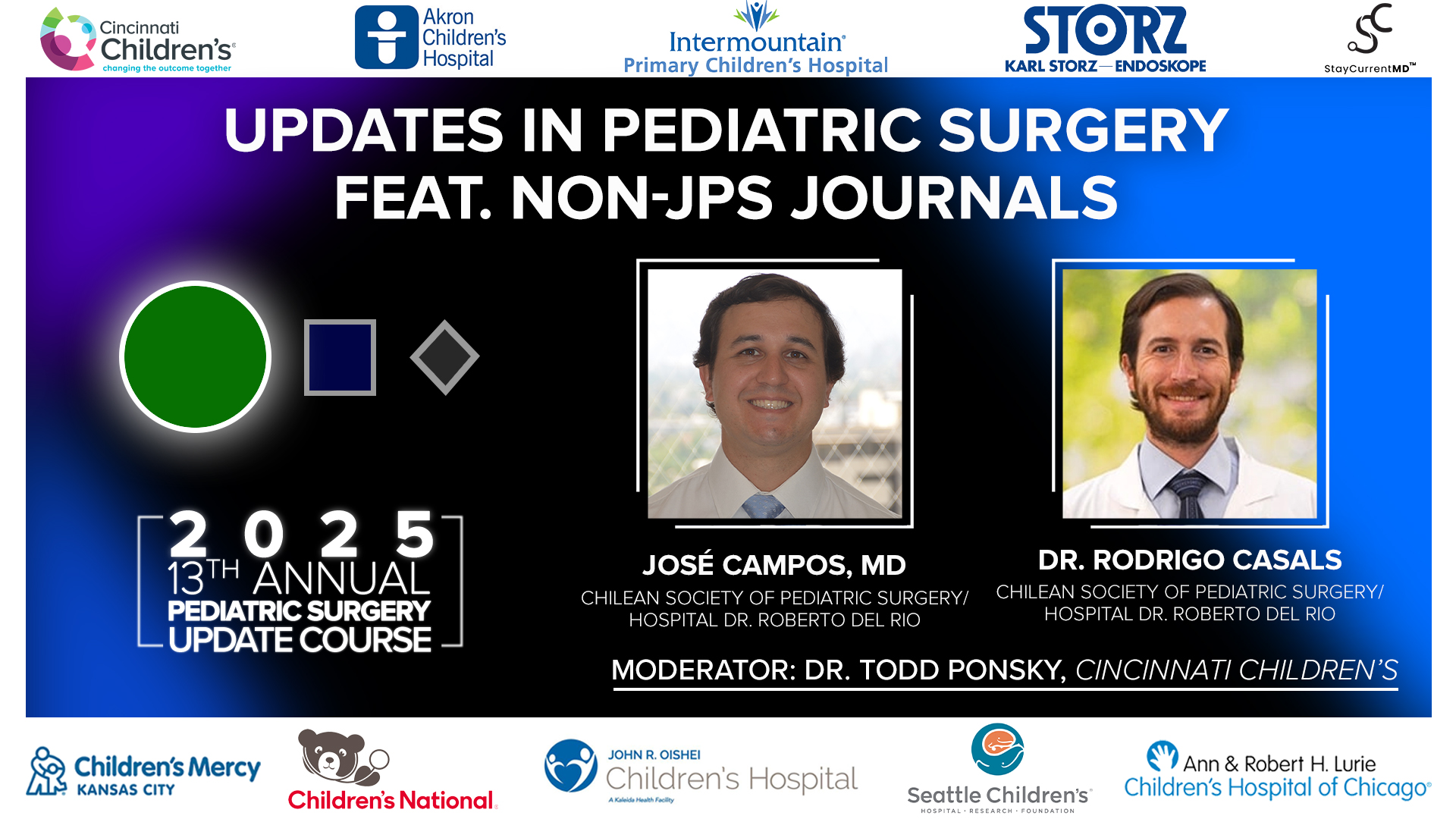
2025 Pediatric Surgery Update Course - Updates in Pediatric Surgery feat. non-JPS Journals
Dr. Todd Ponsky · 22 min · Published Aug 2025
Podcast
Case-Based Journal Review: Inguinal Hernia 2025
19 min · Published Apr 2025
Podcast
Case-Based Journal Review: Cholelithiasis 2024
18 min · Published Jul 2024
Podcast
Case-Based Journal Review: G-Tube & Fundoplication for GERD 2023
18 min · Published Sep 2023
Video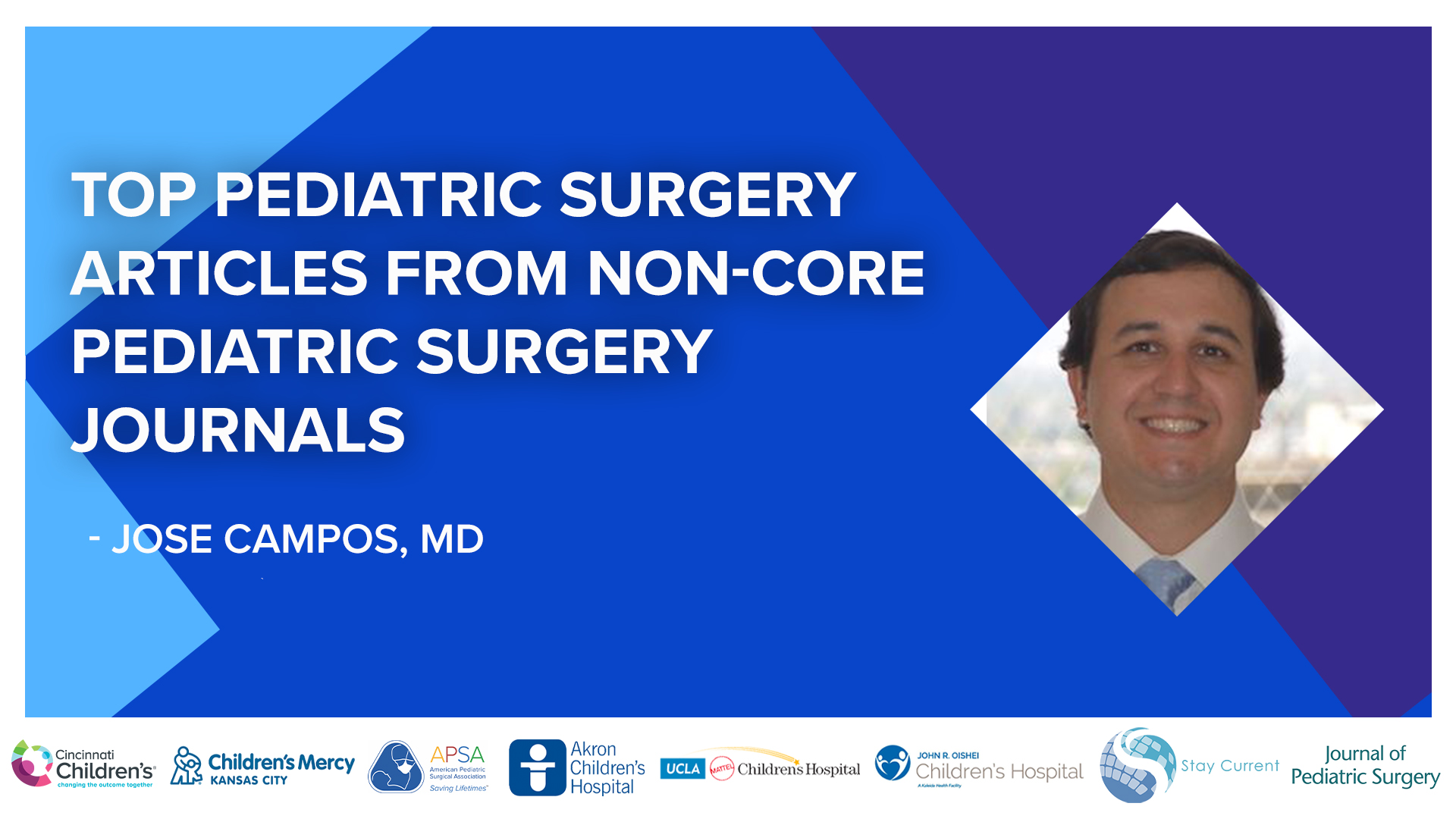
Update Course 2022 - TOP PUBLICATIONS IN NON- PED SURG JOURNALS - Jose Campos
27 min · Published Sep 2022
Podcast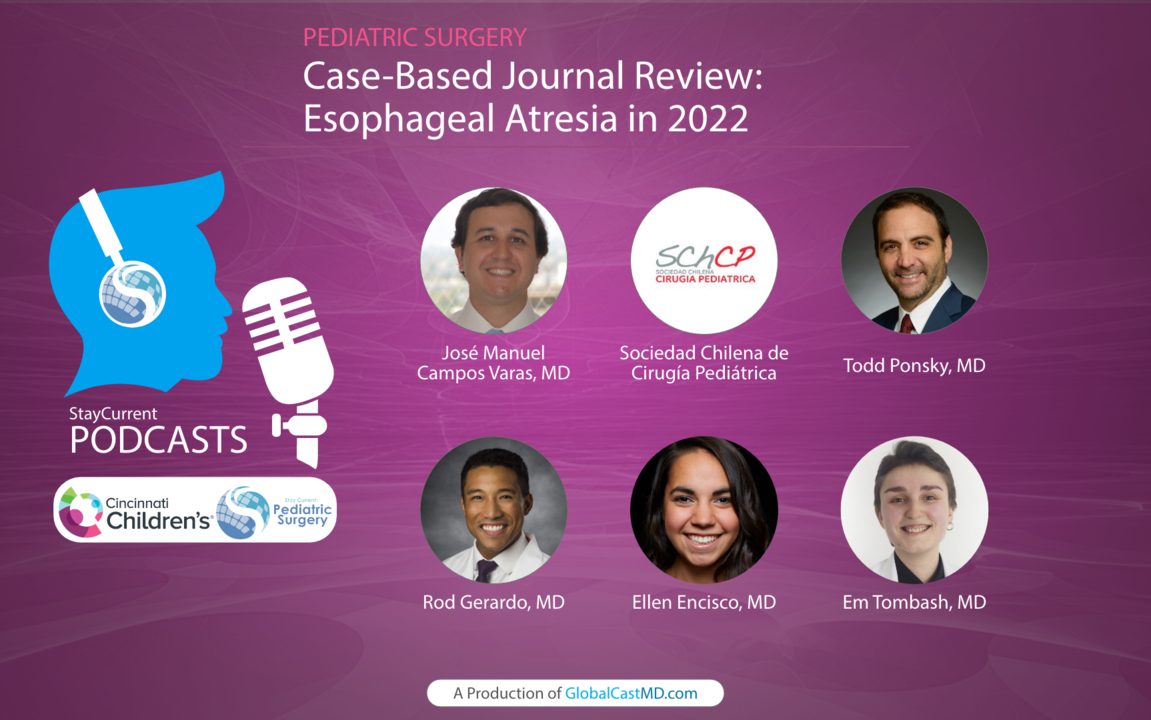
Case Based Journal Review: Esophageal Atresia in 2022
17 min · Published Aug 2022
Video
Intestinal Atresia Types Explained: Grossfeld Classification for Pediatric Surgery
1 min · Published Sep 2026
Video
Derivation and validation of the Pediatric Community-Acquired Pneumonia Severity (PedCAPS) score: A prospective cohort study
50 s · Published Sep 2026
Video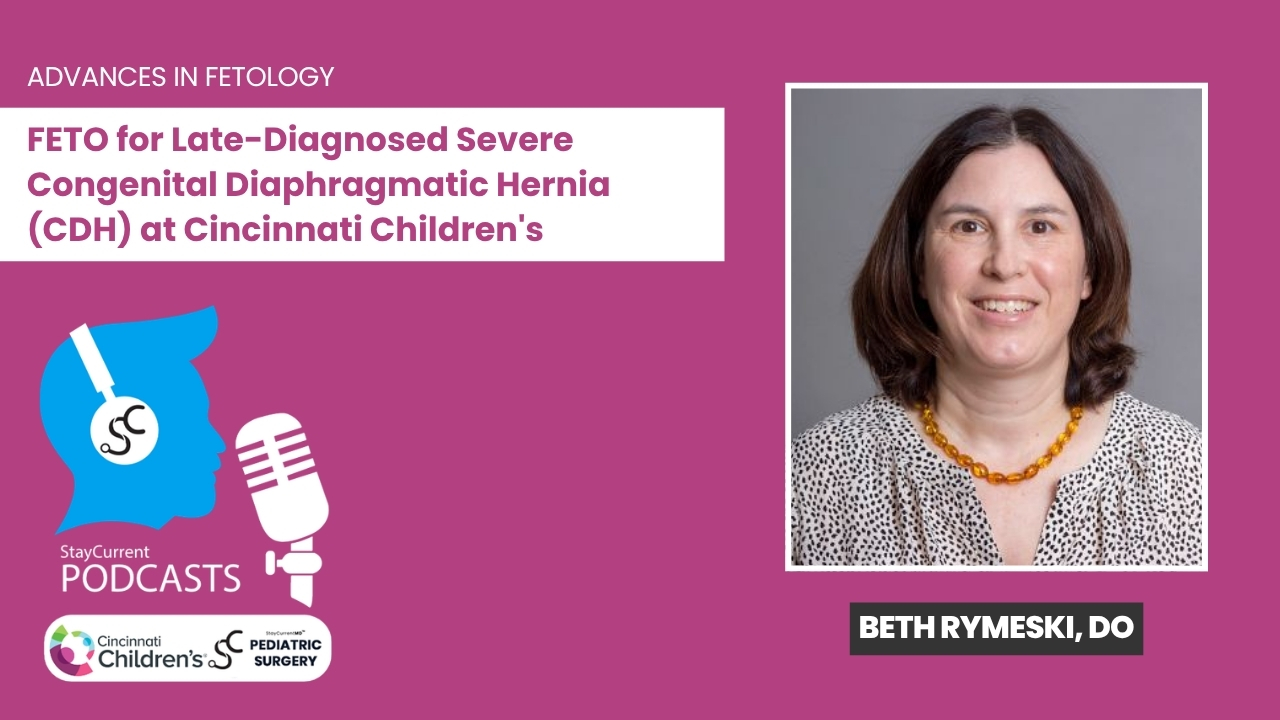
FETO for Late-Diagnosed Severe Congenital Diaphragmatic Hernia (CDH) at Cincinnati Children's with Dr. Beth Rymeski
4 min · Published Sep 2026
Video
Severe Congenital Diaphragmatic Hernia (CDH) Case: FETO Management & Unexpected Findings with Dr. Beth Rymeski
3 min · Published Sep 2026
Video
Fetoscopic Endoluminal Tracheal Occlusion (FETO) Procedure: Step-by-Step Guide with Dr. Beth Rymeski
4 min · Published Sep 2026
Video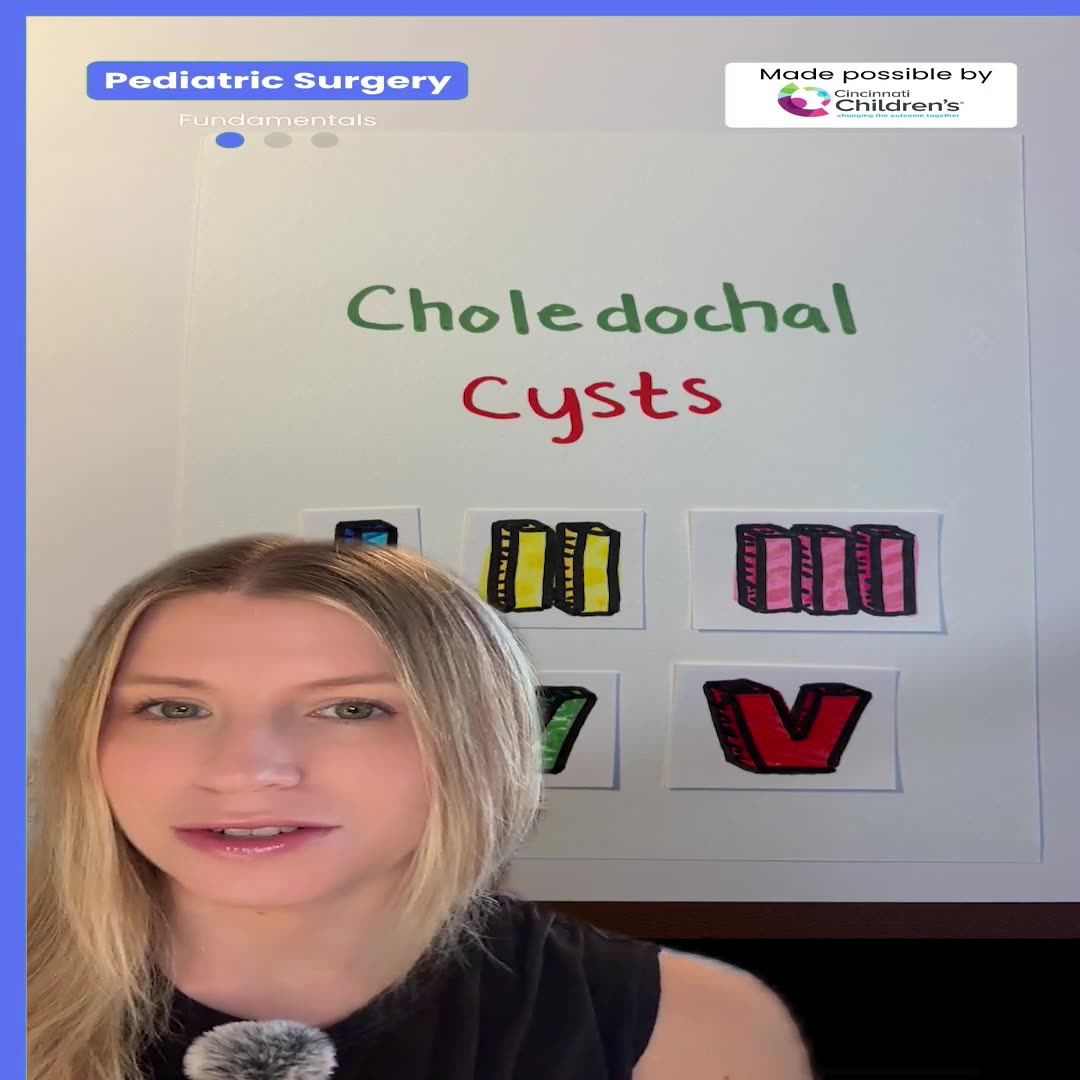
Choledochal Cyst Types Explained: Pediatric Surgery Fundamentals
1 min · Published Sep 2026
What the experts said
Most children with prenatally diagnosed CPAM are born asymptomatic
Respiratory compromise at birth in CPAM is very unusual; the speaker has not seen it in 20 years
The 2017 study is the only completely prospective study on CPAM natural history and the only one dealing with long-term follow-up
For prenatally diagnosed asymptomatic CPAM, Dr. Campos would find it very difficult to recommend operation; for postnatally diagnosed lesions, very difficult not to operate
Prenatal CPAM (0% malignancy) and postnatal CPAM (10% malignancy) represent two different populations or diseases
Common practice in Chile is to resect prenatally diagnosed CPAMs, but after reviewing the literature, the academic discussion at Dr. Campos's hospital now leans toward not operating
The number of patients who will have an infection is so low that the benefit of lesser conversion rate does not justify preemptive surgery in all cases
If you only operate on lesions that get infected, you will miss those that develop pleuropulmonary blastoma without a pre-existing infection
Screening everyone and removing every lung lesion results in many unnecessary lobectomies in a group with very low rate of problems
The 1-3 month group had a 40% thoracotomy rate, suggesting the outcome depends on surgeon expertise in performing safe thoracoscopy
Even if complication rates are the same, surgeons generally prefer to do cases that are easier and less stressful
Elective preventive resection should be easy and have nearly zero complications; prophylactic operations should be close to zero complications
A 2017 prospective study in Archives of Disease in Childhood followed 119 prenatally diagnosed congenital cystic lung lesions for a median of 10 years
57% (68 patients) of the 119 cases were managed conservatively, and none of those who could be followed up became symptomatic
Retrospective studies show a huge range of 3-85% for risk of becoming symptomatic, but systematic reviews narrow this to 3.2% in one review and 25% in another
A 2021 Pediatrics study by the Midwest Pediatric Surgery Consortium retrospectively examined histology of 521 lung lesions resected across 11 children's hospitals
Out of 344 prenatally diagnosed lesions, none had malignant pathology when resected
Of 177 children with postnatal diagnosis of CPAM, 15 (8.7%) were classified as having a malignant tumor
The risk of malignancy approached 10% for lung masses diagnosed postnatally
The International Pleuropulmonary Blastoma Registry has 350 cases reported worldwide and has found only 9 cases of prenatally diagnosed lesions that turned out to be pleuropulmonary blastoma
A 2021 Journal of Pediatric Surgery study examined whether previous infection matters for thoracoscopic surgery outcomes in congenital lung malformations
The study was retrospective and looked at about 90 patients undergoing thoracoscopic lung resections
Patients without prior pulmonary infection had shorter operative time, fewer postoperative fevers, less need for postoperative antibiotics, but no significant difference in postoperative complications or conversion rates
After infection, there is a higher rate of conversion from thoracoscopy to open surgery
A 2018 Journal of Pediatric Surgery study examined optimal timing for elective resection of asymptomatic CPAM, dividing patients under 1 year into three groups: 1-3 months, 4-6 months, and 6-12 months
Operative time increased with each increase in age; at younger ages the tissue planes are easier to dissect
The 1-3 month group had the shortest operative time at 115 minutes compared to 163 minutes in the 6-12 month group
There were no differences in major complications, conversion rates, or readmissions between the three age groups
Kansas City showed that complication rate of operating on perforated appendix with abscess is the same as interval appendectomy, analogous to the CPAM timing question