


From
StayCurrentMD
Bowel Management - Bowel Management In Communities With Limited Resources
Chapter 1 of 5 · Fundamentals
Introduction
Introduction and institutional context
Expert statements on this page
No expert statements were drawn from this page.
Host summaries · secondary, not cited in answers
Educational content from recorded physician discussions — not medical advice. Talk to your (or your child's) care team about your situation.
Video
Error Traps and Culture of Safety in Hirschsprung Disease
CCHMC Pediatric Surgery · Published Oct 2019
Video
Fecal Incontinence Bowel Management: Pediatric Bowel Management 2013
Dr. Todd Ponsky · 85 min · Published May 2013
Podcast
Colorectal Quiz: Episode 46
Marc Levitt · 29 min · Published Apr 2025
Video
Colorectal Quiz: Episode 46 - Hirschsprung's Disease
Marc Levitt · 29 min · Published Apr 2025
Video
Hirschsprung Disease: Update Course 2015
CCHMC Pediatric Surgery · 7 min · Published Nov 2015
Podcast
Hirschsprung Disease â PediaCast 287
Marc Levitt · 38 min · Published May 2014
Video
Intestinal Atresia Types Explained: Grossfeld Classification for Pediatric Surgery
1 min · Published Sep 2026
Video
Derivation and validation of the Pediatric Community-Acquired Pneumonia Severity (PedCAPS) score: A prospective cohort study
50 s · Published Sep 2026
Video
FETO for Late-Diagnosed Severe Congenital Diaphragmatic Hernia (CDH) at Cincinnati Children's with Dr. Beth Rymeski
4 min · Published Sep 2026
Video
Severe Congenital Diaphragmatic Hernia (CDH) Case: FETO Management & Unexpected Findings with Dr. Beth Rymeski
3 min · Published Sep 2026
Video
Fetoscopic Endoluminal Tracheal Occlusion (FETO) Procedure: Step-by-Step Guide with Dr. Beth Rymeski
4 min · Published Sep 2026
Video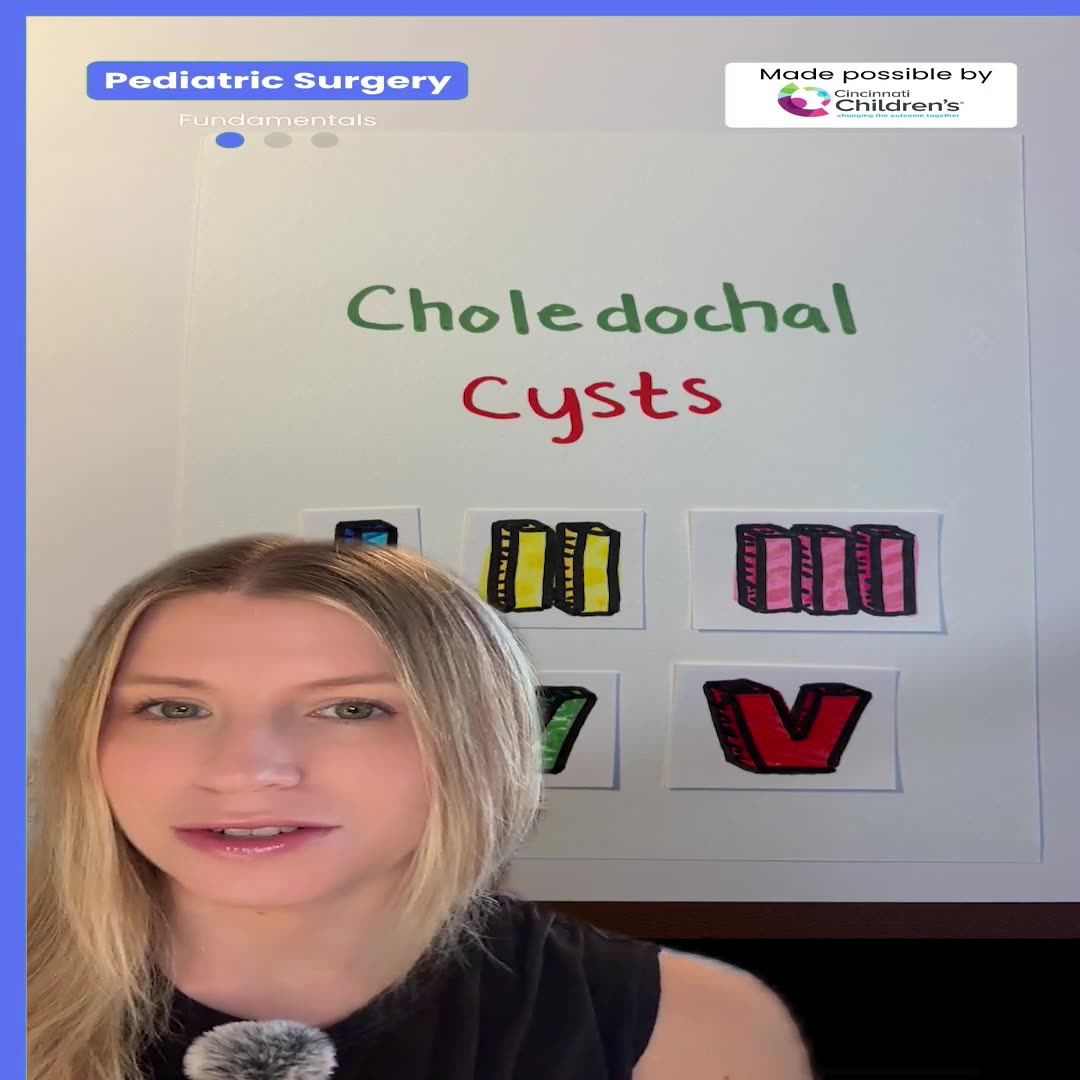
Choledochal Cyst Types Explained: Pediatric Surgery Fundamentals
1 min · Published Sep 2026
What the experts said
The speaker's team visited the Cincinnati Colorectal Center for Children 3 years ago for a 1-week bowel management training.
The hospital is a public children's and maternity hospital in Brasília, Brazil's capital, serving as a reference center for neonatal surgery.
Patients are referred for fecal incontinence or constipation, including anorectal malformation patients previously operated on at the hospital.
Initial evaluation includes office appointment with doctor and nurse (last Friday of the month, average 8 patients), complete history and physical exam, contrast enema with hydrosoluble contrast to assess colon dilation, and sacral ratio calculation.
The program uses an inpatient model (one patient at a time for one-week admission) because patients have poor economic conditions and live far from the hospital, making daily outpatient visits impractical.
On admission, an abdominal x-ray is obtained to check for fecal impaction; if impacted, enemas are given until disimpaction is confirmed by x-ray before starting bowel management.
Senna laxatives are used for patients with constipation and overflow pseudo-incontinence.
Enemas are used for patients with true fecal incontinence.
Nurses teach parents hands-on how to administer enemas until parents feel confident.
The program preferentially uses ready-made glycerin enemas, with saline as an alternative and phosphates added if a more irritating solution is needed.
Patients are discharged when the correct enema regimen is found that cleans the colon, and they receive all materials needed for the first month of management.
Patients are seen in clinic every 6 months for follow-up.
The medical team must provide social assistance, including writing medical reports for patients to obtain materials and laxatives from government and health entities or local hospitals.
Laxatives are very expensive in Brazil, requiring patients to seek government assistance to afford them.
Failures and recurrences occur mainly due to noncompliance related to social and economic reasons, including patients stopping laxatives, leading to constipation recurrence and requiring readmission for disimpaction.
Parents sometimes switch to less expensive laxatives without medical guidance, causing management problems.
The program has treated 50 children for fecal incontinence: 12 with true fecal incontinence (11 anorectal malformations, 1 Hirschsprung disease) achieving 90% success with enemas.
The program has treated 38 patients with overflow pseudo-incontinence (21 idiopathic constipation, 9 anorectal malformations, 8 Hirschsprung disease) achieving 95% success rate.
The overflow pseudo-incontinence group has many recurrences due to the high cost of laxatives.