


From
StayCurrentMD
#APSA50: Artificial Intelligence
With Dr. Michael Muelly · hosted by Dr. Alexander Gibbons
Part of
Sepsis 6 items
Chapter 1 of 10 · Fundamentals
Introduction
Introduction and Background
Expert statements on this page
No expert statements were drawn from this page.
Host summaries · secondary, not cited in answers
Educational content from recorded physician discussions — not medical advice. Talk to your (or your child's) care team about your situation.
Video
Dr. Colleen Nofi - Best of the Best in Pediatric Surgery 2025
Dr. Todd Ponsky · 8 min · Published Mar 2025
Video
Artificial Intelligence Applications in Healthcare - Transforming Healthcare, Episode 7, Part 2
Published Sep 2022
Video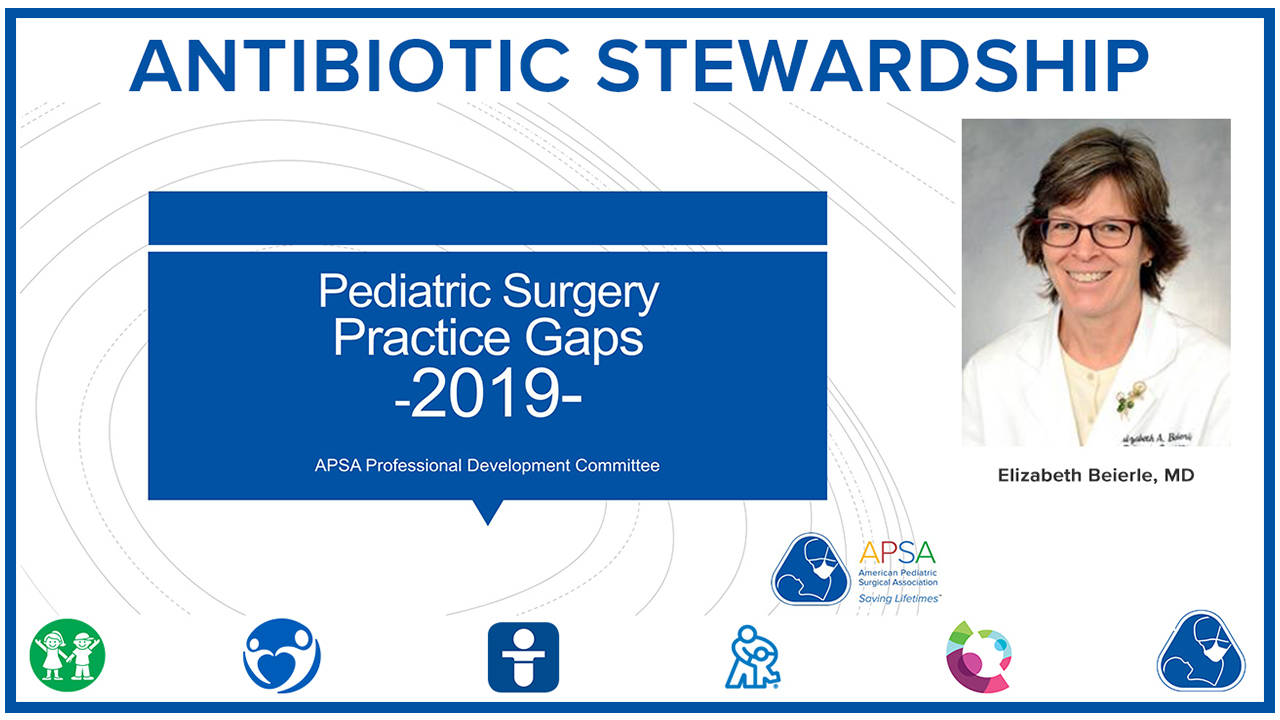
Antibiotic Stewardship - APSA Practice Gaps 2019
Published Mar 2020
Video
2022 Pediatric Surgery Update Course - Top disruptive technologies in medicine
Ramy Shaaban · 26 min · Published Nov 2022
Podcast
Disruptive technologies in medical education: escape rooms, virtual reality, and gamification
Ramy Shaaban · 12 min · Published Feb 2023
Video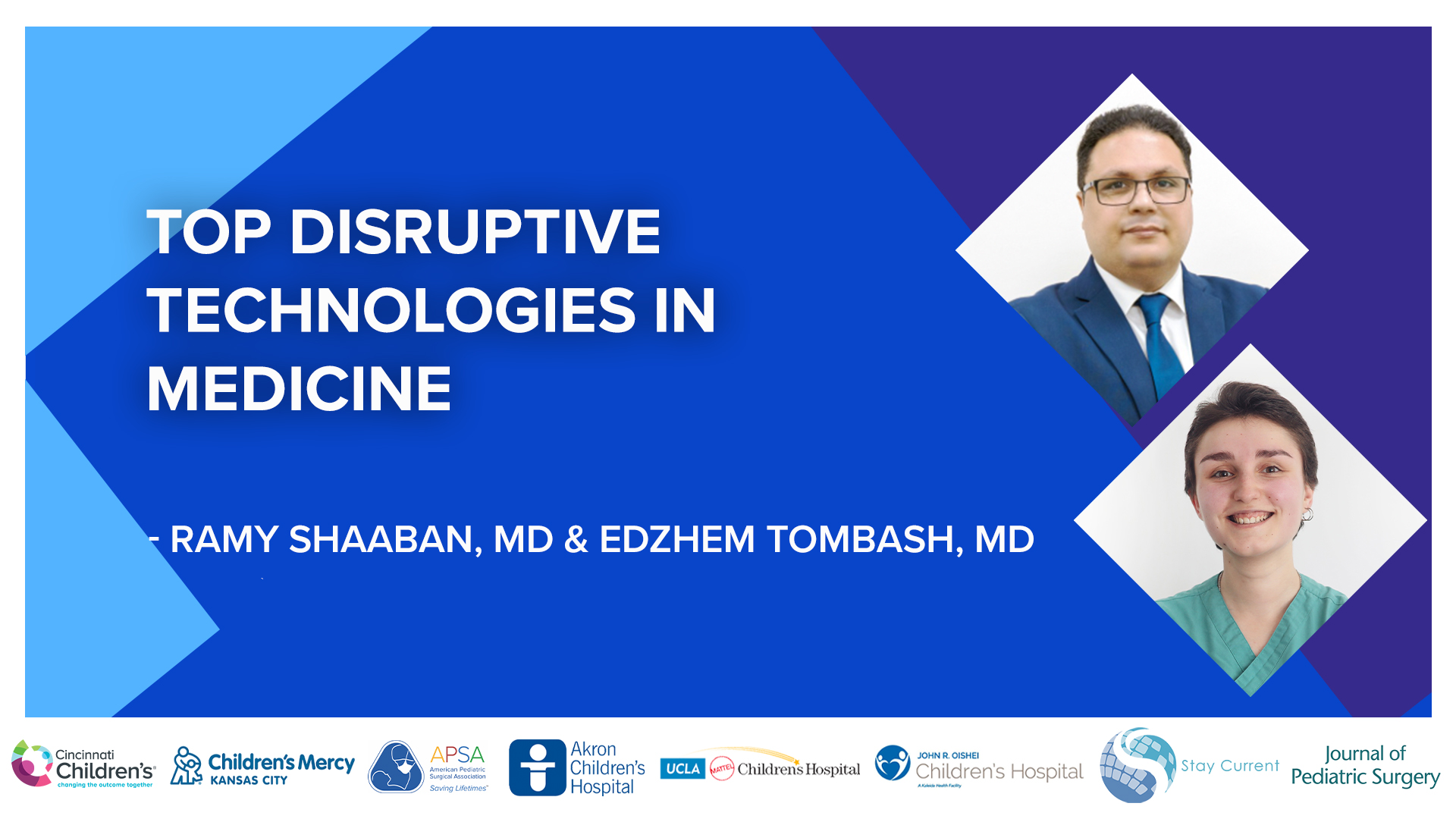
Disruptive technologies in medical education: escape rooms, gamification, and immersive learning
26 min · Published Sep 2022
Only a few other public items share this expert — go deeper there →
Video
Intestinal Atresia Types Explained: Grossfeld Classification for Pediatric Surgery
1 min · Published Sep 2026
Video
Derivation and validation of the Pediatric Community-Acquired Pneumonia Severity (PedCAPS) score: A prospective cohort study
50 s · Published Sep 2026
Video
FETO for Late-Diagnosed Severe Congenital Diaphragmatic Hernia (CDH) at Cincinnati Children's with Dr. Beth Rymeski
4 min · Published Sep 2026
Video
Severe Congenital Diaphragmatic Hernia (CDH) Case: FETO Management & Unexpected Findings with Dr. Beth Rymeski
3 min · Published Sep 2026
Video
Fetoscopic Endoluminal Tracheal Occlusion (FETO) Procedure: Step-by-Step Guide with Dr. Beth Rymeski
4 min · Published Sep 2026
Video
Choledochal Cyst Types Explained: Pediatric Surgery Fundamentals
1 min · Published Sep 2026
What the experts said
At the Radiological Society of North America annual meeting, there are about 100 to 150 AI startups presenting in the machine learning showcase, with some products available for purchase and deployed at healthcare systems.
Yale has deployed AI for prioritization of head CTs with bleeds, cutting down the time until a radiologist reviews the study.
Most current AI applications in radiology are in the operational realm, augmenting workflow rather than making diagnostic decisions.
Radiology jobs are here to stay despite AI advances.
AI applications in healthcare offer tremendous opportunity to achieve a truly evidence-based medical system.
What surgeons are taught during surgical training is what they will do in practice, and most of the time there is no evidence behind it, or the evidence is very weak.
Laparoscopic surgery offers a natural opportunity for AI because it captures data digitally with video.
Surgical robots are not currently using AI tools primarily for regulatory reasons, but will start to incorporate them once that hurdle is overcome.
Trauma triaging is currently done based on very simple rules and is not very data driven.
AI impact on the actual operating room (outside of operational tasks) will take a lot longer, if it happens at all.
A simple sepsis alert system based on four criteria (elevated or low white count, temperature, heart rate) was rolled out at Penn State but failed because it was a simple rule set that went off all the time.
With deep learning, sepsis alerts can be much more sophisticated, and some places like Emory have sepsis alerts deployed into the workflow.
Deep learning requires very large datasets because the neural networks learn just by example and need many examples with good variety of the data space.
In radiology, whether a GE or Siemens device is used may affect what the algorithm learns.
The current limitation for AI in healthcare is access to very large datasets, especially compared to other domains where billions of data points are available daily.
The more specific the disease or patient population (such as pediatric surgery), the harder it becomes to collect large, high-quality labeled datasets.
Tesla has 100,000 to 200,000 cars driving around every day collecting data for training self-driving capability.
Waymo has collected about 10 million miles of driving experience for self-driving cars.
It is very difficult to generate large datasets in healthcare because data collection must fit into clinical workflow, cannot be easily simulated, and faces technical, organizational, and regulatory barriers.
Deep learning models are very good at learning associations from images if given enough data, but they learn whatever association is present, including spurious ones.
On CT scans, markers that exist outside the patient may tip the algorithm that the scan is from a particular hospital with different disease prevalence.
Cloud-based data infrastructure is the way data centers in general and healthcare specifically will operate in the future, opening opportunities for access to larger datasets.
Once data is centralized in the cloud, it becomes much easier to create frameworks that allow data sharing between institutions for research purposes, while still maintaining access controls.
A model trained on data in the US may not work anywhere else due to differences in patient populations.
If there is any racial or ethnic bias in training data, the AI model will have that bias as well.
Training a machine learning model is actually a very small part of what needs to be done to deploy AI in healthcare.
How the FDA will decide what is a safe medical device for AI applications remains an unsolved question.
Even if AI models are not better than humans, they are much more consistent, which is their great promise.
There is huge variance between how different radiologists read studies, sometimes incorrectly and sometimes due to differences of opinion.
Similar variance exists among ophthalmologists and applies anywhere humans make decisions, including pediatric surgery.
The great opportunity for AI is reducing variance and providing consistent care according to current knowledge.
In melanoma image recognition, AI learned that the presence of a ruler in the picture was associated with malignancy.