


From
StayCurrentMD
Enhanced Recovery After Surgery (ERAS) Program: Update Course 2016
With Dr. Matt Kurt
Chapter 1 of 5 · Fundamentals
ERAS origins
Introduction to ERAS Concept and Historical Context
Expert statements on this page
No expert statements were drawn from this page.
Host summaries · secondary, not cited in answers
Educational content from recorded physician discussions — not medical advice. Talk to your (or your child's) care team about your situation.
Video
What's New in Pediatric Surgery 2020 - FULL SHOW
CCHMC Pediatric Surgery · 57 min · Published Oct 2020
Video
Best of the Best Gen Surg - Therapeutic Effect of Oridonin against Inflammatory Bowel Disease Involves Inhibition of Intestinal Fibrosis via NF-kB and p38STAT1 Pathways - Dr. Mao
11 min · Published Sep 2022
Video
Todd Ponsky: What is new in Pediatric Surgery? Teaser
Todd Ponsky · 65 min · Published Jul 2026
Video
Ulcerative Colitis and Familial Adenomatous Polyposis: Update Course 2016
46 min · Published Aug 2017
Video
Inflammatory Bowel Disease: Update Course 2015
13 min · Published Nov 2015
Video
El papel de la ostomía durante la creación del Pouch ileal coon anastomosis anal (IPAA) en la colitis ulcerosa pediátrica - JPS
Published Feb 2024
Only a few other public items share this expert — go deeper there →
Video
Intestinal Atresia Types Explained: Grossfeld Classification for Pediatric Surgery
1 min · Published Sep 2026
Video
Derivation and validation of the Pediatric Community-Acquired Pneumonia Severity (PedCAPS) score: A prospective cohort study
50 s · Published Sep 2026
Video
FETO for Late-Diagnosed Severe Congenital Diaphragmatic Hernia (CDH) at Cincinnati Children's with Dr. Beth Rymeski
4 min · Published Sep 2026
Video
Severe Congenital Diaphragmatic Hernia (CDH) Case: FETO Management & Unexpected Findings with Dr. Beth Rymeski
3 min · Published Sep 2026
Video
Fetoscopic Endoluminal Tracheal Occlusion (FETO) Procedure: Step-by-Step Guide with Dr. Beth Rymeski
4 min · Published Sep 2026
Video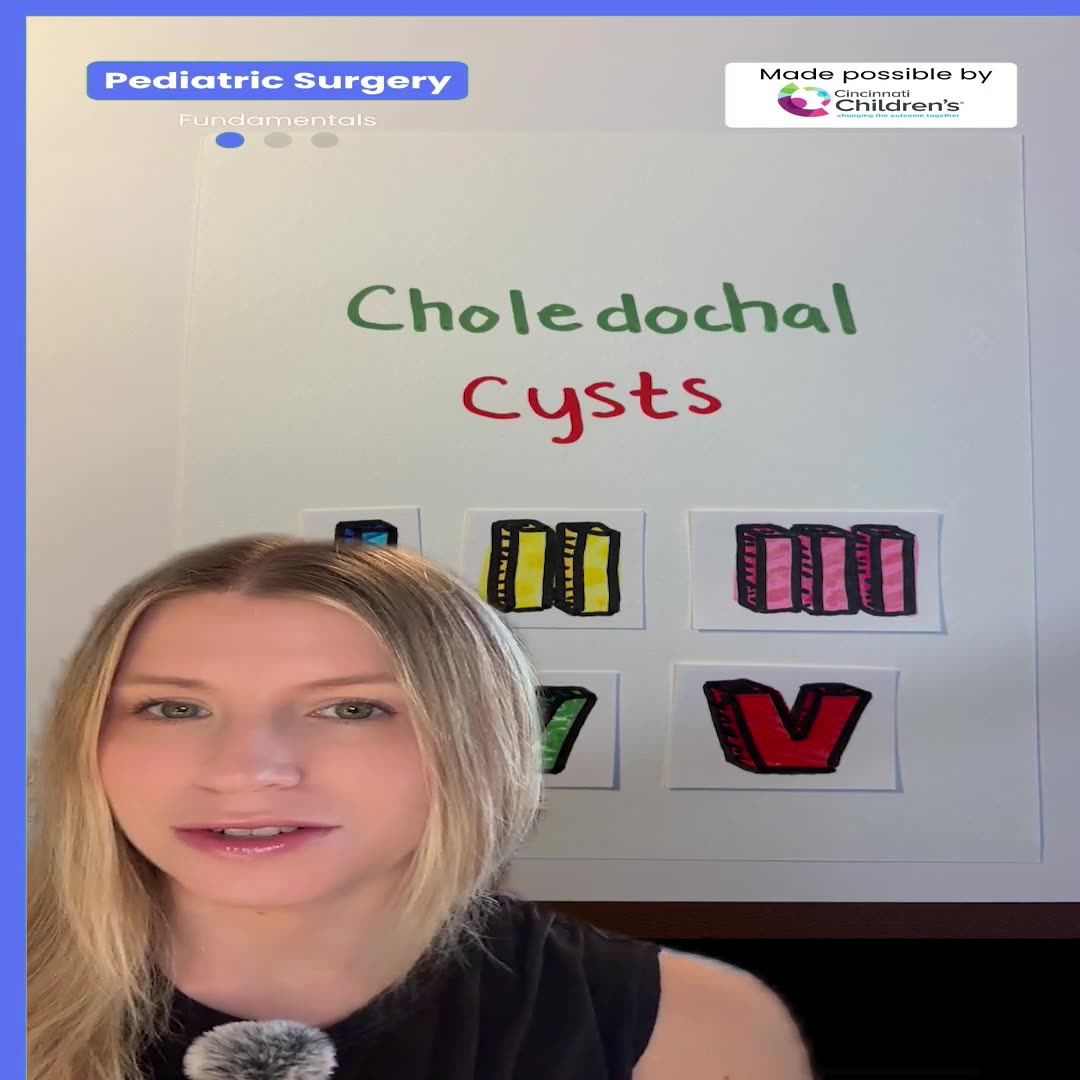
Choledochal Cyst Types Explained: Pediatric Surgery Fundamentals
1 min · Published Sep 2026
What the experts said
Henrik Kehlet published results 20 years ago showing open sigmoidectomy patients discharged within a couple of days with multimodal care, achieving rapid return to work without high readmission rates and with very low complication rates.
National anesthesia guidelines permit clear carbohydrate liquids until 2 hours before operation, though this is not widely practiced due to concerns about cancellations from patient misunderstanding.
Patients receive high-sugar electrolyte solutions until 2 hours before surgery after stopping solids at midnight, avoiding bringing a dehydrated patient to the operating room.
The sooner an IV is removed and the patient leaves the hospital, the safer the patient becomes, because as long as humans are administering care in hospitals, patients remain at risk for medication errors involving the five rights (right patient, dose, medicine, mode, timing).
Adult ERAS programs implement 17-20 protocol steps, whereas pediatric studies have only implemented about 5 steps, representing a significant implementation gap.
Preoperative pain medication cocktail includes gabapentin and acetaminophen in large quantities; adult programs add celecoxib to this regimen.
Foley catheters are removed immediately after surgery for ileocecectomy; for J-pouch procedures they are left overnight and removed in the morning, with no urinary retention issues reported.
Patients are fed and given fluids on postoperative day 0; if they drink successfully once, they are advanced to solid food, with the rationale that dexamethasone increases hunger, ondansetron prevents nausea, and avoiding overhydration and narcotics allows the gut to function.
A 17-year-old patient with ulcerative colitis had colectomy and was ready for discharge the night of surgery, actually discharged postoperative day 2; same pattern occurred for J-pouch creation and ileostomy closure.
IBD patients on TPN, steroids, and other medications do not go home in 2 days but will go home in 3-4 days with ERAS protocol, compared to longer traditional stays.
Individual ERAS components may not have significant evidence bases by themselves, but when bundled together like other care bundles, they create a second-order change in outcomes.
Patient and family education with goal sheets may be on equal footing with physiologic interventions in terms of impact, as empowering patients and giving them control over their care drives compliance and outcomes.
Creating a formal multidisciplinary team (anesthesia, perioperative nursing, floor nursing, nurse clinician) dramatically improved protocol compliance; before team formalization, 5-8 components were achieved, afterward compliance increased substantially.
Monthly team meetings review compliance for each individual patient, identify upcoming cases, discuss needed improvements, and provide ongoing education; this audit process is critical to program success.
Anesthesiologists view ERAS as part of their future through the 'surgical home' concept, making them natural partners in implementation.
Engaging partners through data demonstration rather than just advocacy is more effective; showing improved outcomes leads to adoption, whereas simply talking about the protocol has different results.
Gabapentin is an anti-seizure medication that influences neurologic pain and works well as part of multimodal analgesia; pediatric dosing is 10 mg/kg.
IV lidocaine given intraoperatively attenuates the inflammatory response to surgical wounding, helping patients recover more quickly; this is used in some adult programs.
Chewing gum given to school-aged patients generates saliva that goes down the GI tract, stimulating bowel function and gas passage; this is a cheap addition to the protocol.
When patients develop complications such as bowel obstruction or anastomotic leak, they come off the ERAS protocol and are treated as traditional patients; this occurred in approximately 10% of cases in the speaker's series.
NG tubes prolong ileus because they suction out material that would otherwise go downstream and stimulate bowel function.
Traditional intraoperative fluid administration delivers 3 times the IV volume compared to enhanced recovery protocols, as demonstrated by studies monitoring fluid administration.
Adult colorectal surgery has a large number of randomized controlled trials demonstrating ERAS reduces complications and length of stay without causing increased readmissions.
Meta-analysis from adult colorectal surgery demonstrates significant decrease in length of stay, significant decrease in non-surgical complications (VTEs, urinary tract infections, surgical site infections), without increase in readmissions when ERAS protocols are used.
Pediatric ERAS literature consists of only 5-6 articles, most written by Ben-Oni Mathai, showing decreased length of stay with similar complication rates and no increase in readmissions, but each study implemented only about 5 of 20 protocol components (approximately 25% compliance).
Goal-directed fluid therapy using pressors and albumin helps limit fluid administration; the most important inflection point in MD Anderson's program was preventing residents from bolusing patients postoperatively.
A Journal of Pediatric Surgery study showed that 70% of patients are NPO longer than necessary when coming to the operating room, arriving dehydrated despite standard NPO guidelines.
The most recent literature on mechanical bowel preparation suggests that combining both mechanical prep and oral antibiotics provides the best outcomes, though this recommendation has changed yearly.
Gawande's checklist manifesto demonstrated that a 30% compliance rate with a protocol dropped mortality in half, suggesting that partial ERAS compliance still provides benefit.
Sleeve gastrectomy patients implementing ERAS components, particularly gabapentin, have gone home on postoperative day 1 in all but one case, compared to previous average of closer to 2 days.