


From
StayCurrentMD
Keys to Building a Successful Interdisciplinary Program-Creating the...
Part of
Cancer 13 items
Chapter 1 of 5 · Fundamentals
Session intro
Introduction to Interdisciplinary Program Building Session
Expert statements on this page
No expert statements were drawn from this page.
Host summaries · secondary, not cited in answers
Educational content from recorded physician discussions — not medical advice. Talk to your (or your child's) care team about your situation.
Video
Female Fertility Cryopreservation Outcomes in Childhood Cancer: A Systematic Review
59 s · Published May 2024
Podcast
Unconscious Bias
58 min · Published Mar 2019
Video
Ethical Considerations in Pediatric Fertility Preservation: Pediatric...
32 min · Published Jul 2017
Video
Dr. Ramy Shaaban - Best of the Best in Pediatric Surgery 2025
Dr. Todd Ponsky · 9 min · Published Mar 2025
Video
Off the grid: how I got off the grid & you can too | Lee Ponsky | TEDxCLE
Dr. Lee Ponsky · 20 min · Published Jul 2015
Video
Dr. Timothy B. Lautz - Best of the Best in Pediatric Surgery 2025
Dr. Todd Ponsky · 10 min · Published Mar 2025
Video
Intestinal Atresia Types Explained: Grossfeld Classification for Pediatric Surgery
1 min · Published Sep 2026
Video
Derivation and validation of the Pediatric Community-Acquired Pneumonia Severity (PedCAPS) score: A prospective cohort study
50 s · Published Sep 2026
Video
FETO for Late-Diagnosed Severe Congenital Diaphragmatic Hernia (CDH) at Cincinnati Children's with Dr. Beth Rymeski
4 min · Published Sep 2026
Video
Severe Congenital Diaphragmatic Hernia (CDH) Case: FETO Management & Unexpected Findings with Dr. Beth Rymeski
3 min · Published Sep 2026
Video
Fetoscopic Endoluminal Tracheal Occlusion (FETO) Procedure: Step-by-Step Guide with Dr. Beth Rymeski
4 min · Published Sep 2026
Video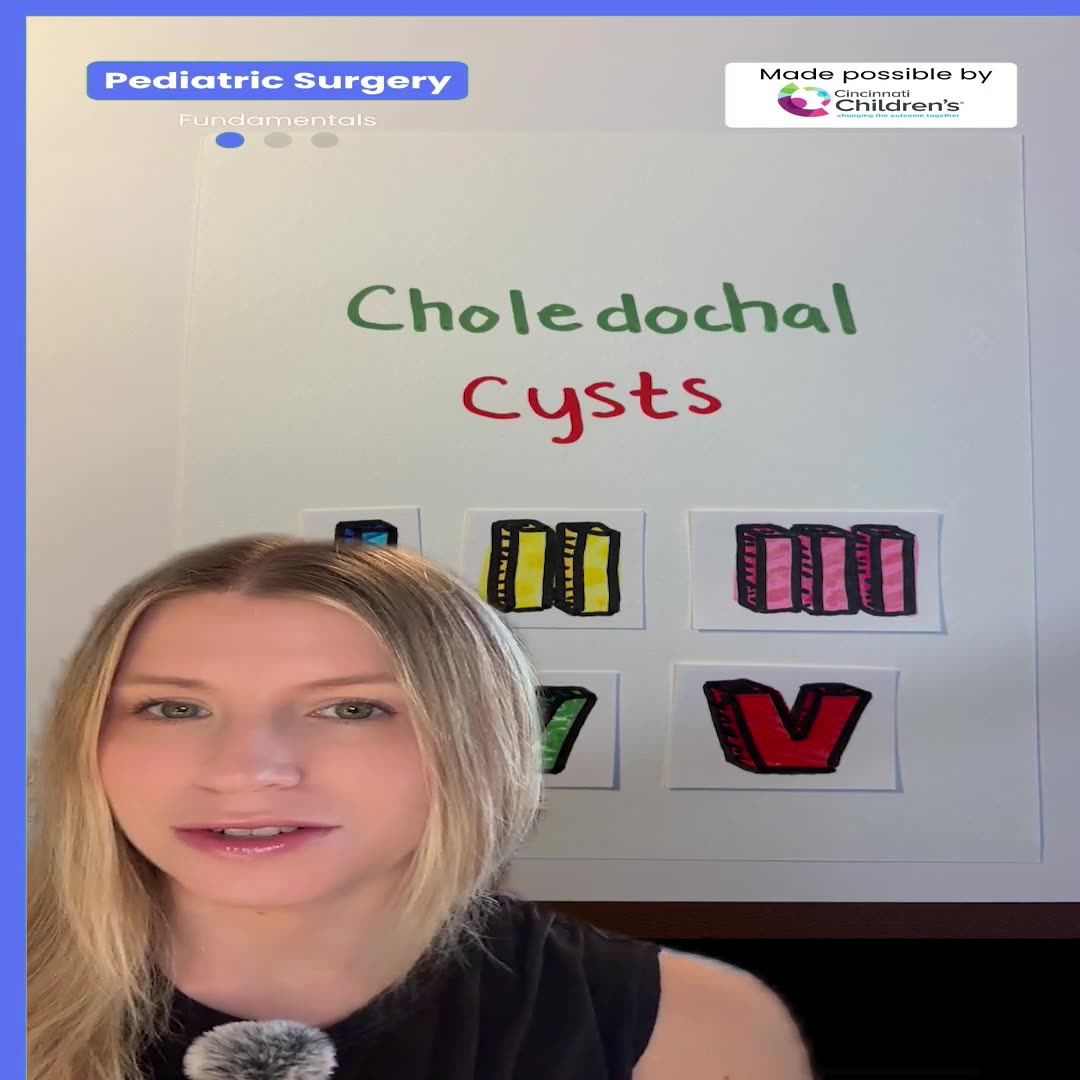
Choledochal Cyst Types Explained: Pediatric Surgery Fundamentals
1 min · Published Sep 2026
What the experts said
The biggest thing that is important in doing a fertility preservation program is having a collaboration of multidisciplinary providers from both the medical and surgical aspects of the patient's care including oncology, surgical aspects, and primary care physicians.
Ancillary care team members including care managers from oncology, patient navigators from the fertility team, social work, psychology, genetics, and ethicists help optimize decision making and final outcomes.
The fertility navigator role is one of the most important steps in the consultation workflow.
Two oncologists work as part of the fertility preservation program and perform risk assessments instead of the primary oncologist.
The oncologist on the fertility team provides risk assessment information to either the gynecologist or urologist depending on whether the consultation is for a male or female patient.
Research coordinators assist with experimental fertility preservation techniques.
The program has a motto that every patient should receive a fertility preservation consultation regardless of their risk.
Families need to understand why different patients receive different fertility preservation options, which may be due to differences in risk or age.
Patient decision aids and shared decision-making tools guide families through the decision-making process by explaining available options, time frames, risks and benefits, and costs of different procedures.
The shared decision-making tools include considerations such as ethical considerations, religious considerations, genetics, and social services.
The shared decision-making tools are available for use at other centers.
Educational videos provide a brief introduction to fertility preservation that families can watch prior to consultation.
The program has a dedicated website not housed in any of the participating disciplines where patients, families, and providers can find information about the program and how to consult the team.
The body's sperm and egg cells are vulnerable to cancer treatment.
Most people start from birth with the ability to have children.
The fertility preservation team consists of a fertility navigator, a pediatric oncologist, a pediatric gynecologist for girls, or urologist for boys.
For young children, the choice to undergo fertility preservation lies with the parent or guardian, but teenagers and young adults can help make the decision after learning all the facts.
Four factors determine procedure options and risk of infertility: chemotherapy type and dose, patient age, timing of cancer therapy, and patient sex.
As patients get older, their risk of infertility increases, and there are more procedure options once a patient has gone through puberty.
For boys, fertility preservation options include freezing sperm cells or testicular tissue; for girls, options include freezing eggs, embryos, or ovarian tissue.
Cryopreservation is the process of freezing cells at an extremely cold temperature, and the cells can be stored for up to years at a time until they are needed.