


From
StayCurrentMD
Update Course Rewind: Updates in Achalasia 2023
With Dr. Mikol Petrossian & Dr. Whit Holcomb & Dr. Timothy Kane · hosted by Dr. Cecilia Gigena
Part of
Achalasia 9 items
Chapter 1 of 4 · Fundamentals
Achalasia types
Achalasia Classification and Diagnosis
Expert statements on this page
No expert statements were drawn from this page.
Host summaries · secondary, not cited in answers
Educational content from recorded physician discussions — not medical advice. Talk to your (or your child's) care team about your situation.
Video
Update Course 2023 - Updates in Pediatric Achalasia Management
26 min · Published Aug 2023
Video
How effective is POEM in children?
Published Oct 2019
Video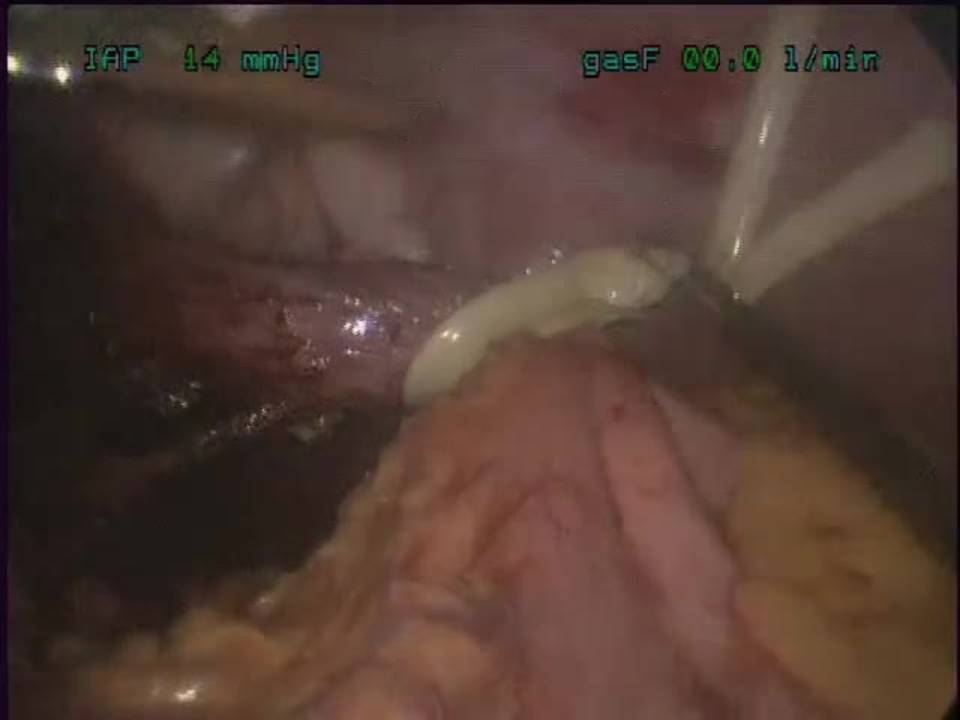
Laparoscopic Heller Myotomy
3 min · Published Feb 2020
Podcast
Gastroesophageal Reflux Disease
Jeffrey Ponsky · 33 min · Published Jun 2016
Podcast
Gastroesopheal Reflux Disease
33 min · Published Dec 2016
Video
Update Course Rewind: 2023 Top Ten Key Takeaways
16 min · Published Jun 2024
Only a few other public items share this expert — go deeper there →
Video
Intestinal Atresia Types Explained: Grossfeld Classification for Pediatric Surgery
1 min · Published Sep 2026
Video
Derivation and validation of the Pediatric Community-Acquired Pneumonia Severity (PedCAPS) score: A prospective cohort study
50 s · Published Sep 2026
Video
FETO for Late-Diagnosed Severe Congenital Diaphragmatic Hernia (CDH) at Cincinnati Children's with Dr. Beth Rymeski
4 min · Published Sep 2026
Video
Severe Congenital Diaphragmatic Hernia (CDH) Case: FETO Management & Unexpected Findings with Dr. Beth Rymeski
3 min · Published Sep 2026
Video
Fetoscopic Endoluminal Tracheal Occlusion (FETO) Procedure: Step-by-Step Guide with Dr. Beth Rymeski
4 min · Published Sep 2026
Video
Choledochal Cyst Types Explained: Pediatric Surgery Fundamentals
1 min · Published Sep 2026
What the experts said
In all cases of achalasia, the lower esophageal sphincter fails to relax at the right time, but depending on the rest of the esophageal movements, there are three types of achalasia.
In type one achalasia, the esophagus barely contracts, so food moves down because of gravity alone.
In type two achalasia, pressure builds up in the esophagus, causing it to become compressed.
In type three achalasia, there are abnormal contractions on the bottom of the esophagus where it meets the stomach.
Type three achalasia does not respond well to treatments, and recurrences happen much more in patients with type three achalasia.
All three types of achalasia respond to myotomy of the lower esophageal sphincter, but the outcomes are a little different.
Type two achalasia is the most common and responds the best to surgery.
The Eckardt score is the grading system most frequently used for the evaluation of symptoms, status, and efficacy of achalasia treatment, consisting of weight loss, dysphagia, chest pains, and regurgitation.
Laparoscopic Heller myotomy is probably standard of care in pediatrics and is the tried and true approach for achalasia.
There is a large and increasing experience in POEM in the world.
Laparoscopic Heller myotomy is probably the gold standard procedure as of today.
In the adult literature, if a Heller is done, there's a fair amount of good literature showing that you don't need to do a fundoplication.
In the current population of pediatric patients who had POEM and were biopsied a year out, the rate of reflux is about 5%, compared to around 50% in adults.
Reflux tends to be much less common in kids compared to adults after achalasia surgery.
50% of pediatric achalasia patients had some intervention before Heller myotomy, whether Botox or dilatations.
Botox is not used as commonly anymore because people are learning it causes a lot of scar tissue.
Many patients have had dilatations before Heller myotomy and the fibrosis is pretty minimal, so it is not recognized too much during surgery.
In kids who have had Hellers or POEMs before, you have to get into a different plane because it's pretty scarred.
Fundoplications are not recommended at the time of laparoscopic Heller myotomy, as they can cause torsion in the esophagus and recurrence of symptoms.
An incomplete myotomy is basically not going far enough down during the initial surgery.
Recurrent achalasia is categorized as related to growth, such as when a young child who had surgery grows significantly.
If a child has symptoms within a year of surgery, it is likely an incomplete myotomy.
Recurrent achalasia means the patient had achalasia, resolved symptoms after surgery, and due to growth presents with symptoms again after a long period of time, meaning more than one year.
An incomplete myotomy is a patient that never fully resolved symptoms or did so for only a short period of time after surgery.
For patients with prior achalasia surgery presenting with symptoms, investigation should include manometry, EGD, and biopsy to determine if the issue is a wrap problem, incomplete myotomy, or recurrent achalasia.
Manometry will sometimes show achalasia that never goes away, with the same manometry findings, so kids are not routinely sent for manometry unless confirming achalasia from a different institution or if readings are equivocal.
EndoFLIP is a machine with a soft balloon that measures esophageal distensibility and diameter, used through endoscopy to determine if the myotomy was long enough.
If there is a perforation of the anterior esophagus during laparoscopic esophageal myotomy, an anterior fundoplication can help with healing or preventing complications, but you can also put a couple stitches in it and be just fine.
EndoFLIP measures the diameter of the esophagus before and after myotomy and also measures distensibility index, which is the amount of pressure needed to distend the esophagus a certain amount.
There are accepted standards for normal distensibility index in adults, which are extrapolated to kids as treatment targets.
The gold standard treatment for achalasia is laparoscopic Heller myotomy, but POEM is increasing in popularity and is better for recurrences.