


From
StayCurrentMD
Thoracoscopic-Assisted Partial Rib Resection: Pediatric Surgery Difficult...
Part of
Chest Pain 6 items
Chapter 1 of 2 · Case-Based Learning
Case presentation
Case presentation: thoracoscopic-assisted partial rib resection for chest wall lesion
Expert statements on this page
No expert statements were drawn from this page.
Host summaries · secondary, not cited in answers
Educational content from recorded physician discussions — not medical advice. Talk to your (or your child's) care team about your situation.
Video
Tricks - Thoracoscopic-Assisted Partial Rib Resection - Jack Langer
9 min · Published Nov 2018
Video
Narrated R Adrenal Coolseal
Dr. Steve Rothenberg · 8 min · Published May 2026
Video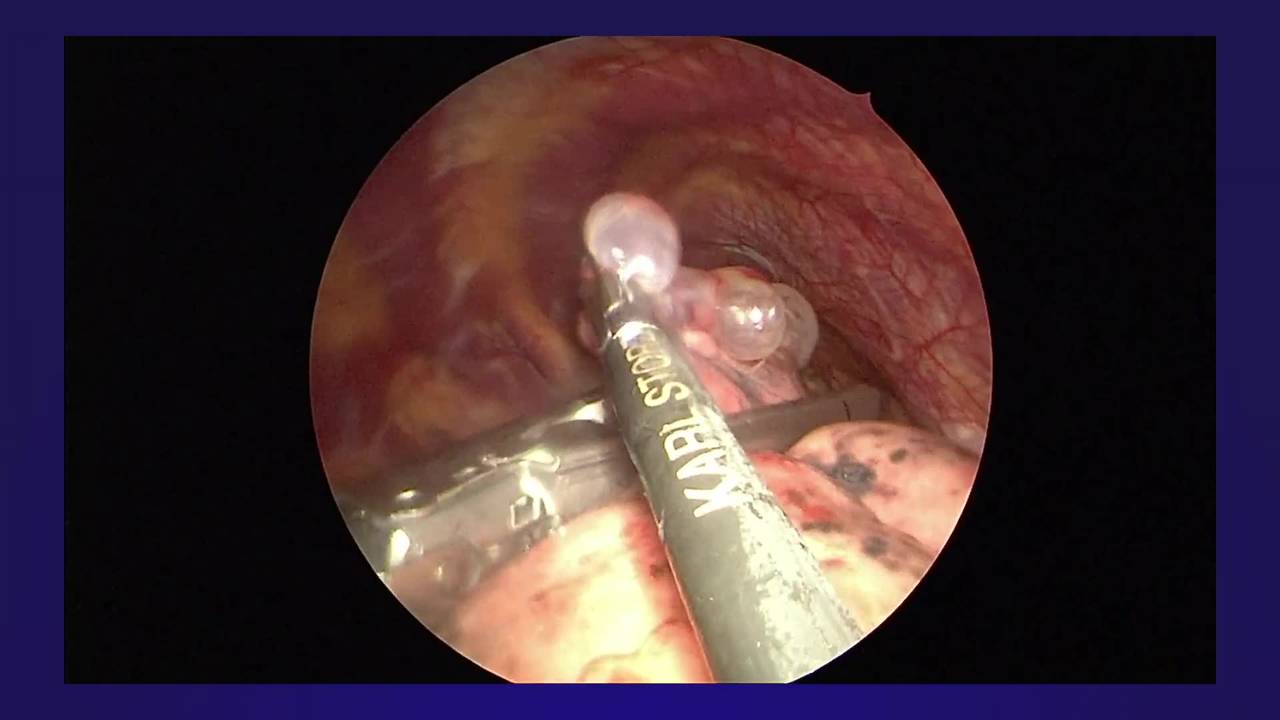
Thoracoscopic Treatment of Spontaneous Pneumothorax
3 min · Published Feb 2020
Video
Pectus-Patient Testimonial and Experience
CCHMC Pediatric Surgery · 14 min · Published Mar 2022
Video
Patient Testimonial and Experience: Pectus Innovations
CCHMC Pediatric Surgery · 13 min · Published Oct 2015
Video
Update Course Rewind: Updates in Achalasia 2023
Published Mar 2024
Video
Intestinal Atresia Types Explained: Grossfeld Classification for Pediatric Surgery
1 min · Published Sep 2026
Video
Derivation and validation of the Pediatric Community-Acquired Pneumonia Severity (PedCAPS) score: A prospective cohort study
50 s · Published Sep 2026
Video
FETO for Late-Diagnosed Severe Congenital Diaphragmatic Hernia (CDH) at Cincinnati Children's with Dr. Beth Rymeski
4 min · Published Sep 2026
Video
Severe Congenital Diaphragmatic Hernia (CDH) Case: FETO Management & Unexpected Findings with Dr. Beth Rymeski
3 min · Published Sep 2026
Video
Fetoscopic Endoluminal Tracheal Occlusion (FETO) Procedure: Step-by-Step Guide with Dr. Beth Rymeski
4 min · Published Sep 2026
Video
Choledochal Cyst Types Explained: Pediatric Surgery Fundamentals
1 min · Published Sep 2026
What the experts said
A 16-year-old male presented with a two-month history of left-sided chest pain
Chest X-ray showed an ill-defined 3×5×5 centimeter calcified lesion in the left lower lung zone
CT scan showed the lesion was pedunculated and exophytic, arising from the internal aspect of the left 6th rib
Resection was advised due to ongoing symptoms of pain and diagnostic uncertainty
A single 5 millimeter port was placed posteriorly in the fifth intercostal space for thoracoscopic visualization
A 22 gauge needle was passed through the chest wall to map out the smallest incision possible and define margins
A 5 centimeter incision was made with electric cautery
The intercostal muscles and neurovascular bundles were separated from above and below the 6th rib
The rib was cut anterior and posterior to the stalk of the lesion and the rib segment and lesion were extracted
The specimen consisted of a 3.5 centimeter rib segment and a 5×3×5 centimeter lesion
Final pathology showed an atypical osteochondroma with normal underlying rib and negative margins
The operation duration was 67 minutes
The operation was complicated by a small postoperative pneumothorax which was managed with oxygen therapy
The patient was discharged on the 3rd postoperative day
At 8 months follow-up, the patient was pain-free and back to normal activities
For chest wall defects up to three ribs, a Surgisis patch can be used without struts
For very large chest wall defects, struts or methylmethacrylate may be required
Surgisis patches heal in well with scar tissue formation
Osteochondromas can be shaved off rather than requiring rib resection
For large chest wall gaps from resection, patches can leave significant cosmetic deformity with respiratory variation
An intact rib above or below the resection can be harvested and used as a free graft to replace the resected rib, providing better chest wall contour
Autologous rib grafts function similarly to rib grafts used by plastic surgeons and orthopedists for other reconstructions
Metal struts that screw into the rib are used in trauma to close rib gaps
In patients with multiple hereditary exostosis, symptomatic lesions can be shaved off rather than requiring rib resection, particularly in younger children where malignancy is unlikely
Needle mapping through the chest wall is useful to determine the optimal incision location for chest wall lesion resection