


From
StayCurrentMD
Escalation Injuries: Pediatric Trauma Series 2017
Chapter 1 of 6 · Fundamentals
NAT screening rationale
Background and Rationale for NAT Screening Protocol Development
Expert statements on this page
No expert statements were drawn from this page.
Host summaries · secondary, not cited in answers
Educational content from recorded physician discussions — not medical advice. Talk to your (or your child's) care team about your situation.
Only a few other public items share this diagnosis — go deeper there →
Video
Intestinal Atresia Types Explained: Grossfeld Classification for Pediatric Surgery
1 min · Published Sep 2026
Video
Derivation and validation of the Pediatric Community-Acquired Pneumonia Severity (PedCAPS) score: A prospective cohort study
50 s · Published Sep 2026
Video
FETO for Late-Diagnosed Severe Congenital Diaphragmatic Hernia (CDH) at Cincinnati Children's with Dr. Beth Rymeski
4 min · Published Sep 2026
Video
Severe Congenital Diaphragmatic Hernia (CDH) Case: FETO Management & Unexpected Findings with Dr. Beth Rymeski
3 min · Published Sep 2026
Video
Fetoscopic Endoluminal Tracheal Occlusion (FETO) Procedure: Step-by-Step Guide with Dr. Beth Rymeski
4 min · Published Sep 2026
Video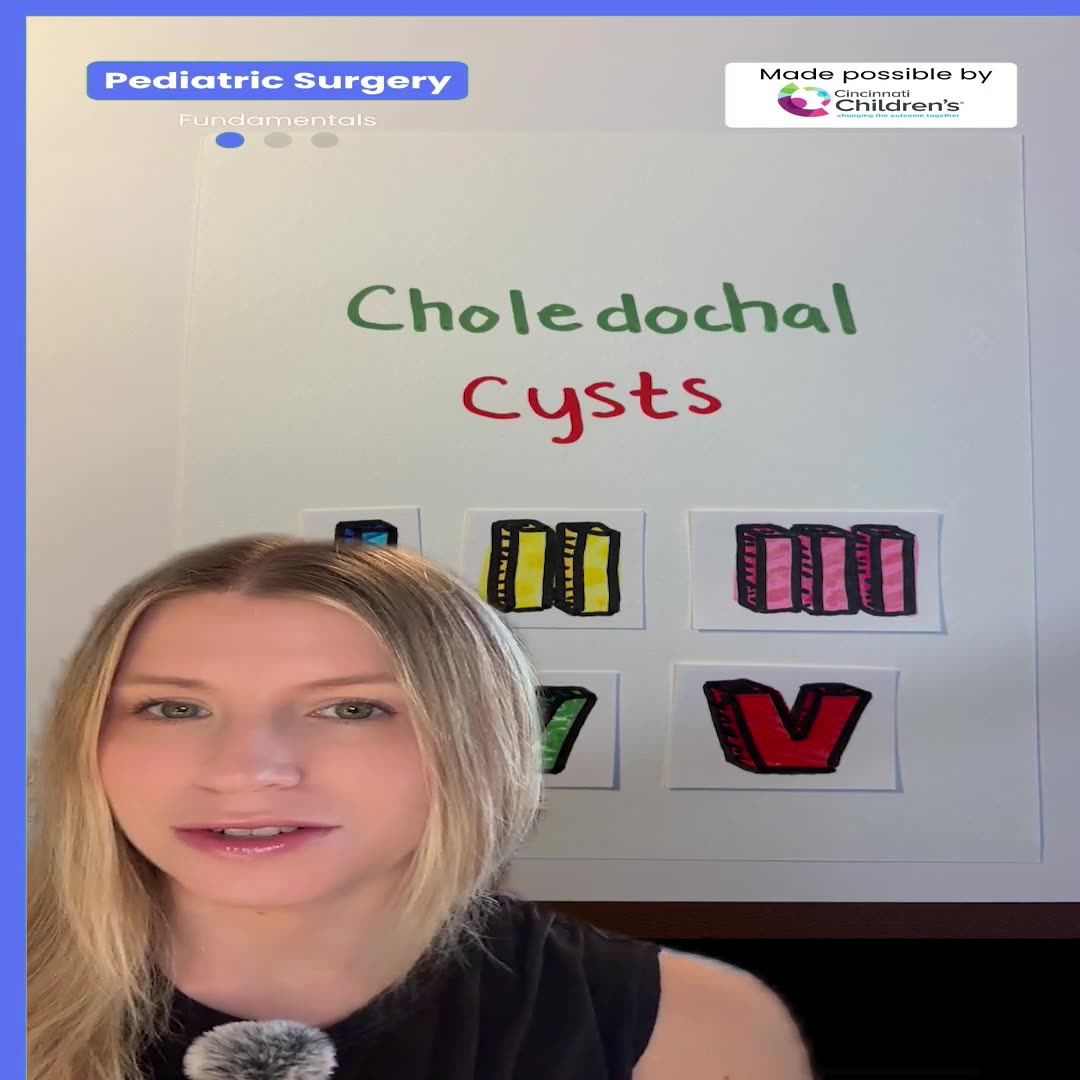
Choledochal Cyst Types Explained: Pediatric Surgery Fundamentals
1 min · Published Sep 2026
What the experts said
48% of child fatalities each year are a result of physical abuse.
Approximately 12% of child fatalities from abuse involve families that had some sort of CPS intervention in the last 5 years prior to the fatality.
The majority of child fatalities from abuse were less than 4 years of age.
At one level 1 trauma center, only about a little over half of the kids being evaluated for NAT were seen by a pediatric surgeon.
Approximately 30% of children with abusive head trauma had NAT not originally considered or recognized (from Carol Jenny's study).
Patients with recurrent NAT had a significantly higher mortality than during their first presentation (from Kate Dean's group in Columbus).
In the retrospective cohort, 89% of NAT cases had inconsistent or missing history.
79% of NAT cases in the retrospective cohort had unwitnessed injuries.
Almost 40% of NAT patients had a prior ED visit, and 60% of those were less than a year of age.
41% to 73% of NAT patients were missing social history data in the retrospective review.
Bruising was found in almost 2/3 of NAT patients in the retrospective cohort.
Perineal bruising or injury was found in a small number of patients, with the majority less than 4 years of age, and was associated with significantly increased risk of mortality and increased morbidity.
60% of NAT patients less than a year of age had fractures, with a fraction having undiagnosed healing fractures in other sites.
Of patients with subdural or subarachnoid hemorrhages, the vast majority were less than a year of age.
A third of NAT patients had rib fractures, which were significantly associated with other undiagnosed healing fractures, and half had an injury severity score ≥16.
9 patients died in the retrospective cohort, with 2/3 having had a prior ED visit.
5 of the 9 patients who died had prior contact with CPS.
Although 3 patients who died had a history of domestic violence recorded, the majority did not have data at all on domestic violence.
There is a significantly increased number of severely injured patients when they come in with NAT as a mechanism compared to overall accidental trauma patients.
After implementation of the standardized screening tool on January 1, 2014, there was no significant increase in the number of NATs diagnosed.
There was an increase in referral to pediatric surgeons after implementation of the screening tool.
The use of head CT did not change after implementation of the screening tool.
ED length of stay did not change after implementation of the screening tool.
The number of admissions went down after implementation, posited to be due to more standardized screening in the ER and safer disposition planning from the start, resulting in fewer medical holds.
The 10-4 clinical prediction rule (torso, ears, and neck bruising in children <4 years, or any bruising in infants <4 months) is highly suspicious for NAT, developed by Mary Clyde Pierce.
Characteristic patterns of bruising such as whip marks or cigarette burns warrant a child abuse workup.
Up to 25% of children admitted to a burn center had been abused (from the most recent Parkland systematic review).
Greater than 95% of patients presenting with intentional burns were aged less than 5 years.
For intracerebral injury or abusive head trauma, the PD Burn clinical prediction rule and the PREDAHT clinical prediction rule have the largest amount of evidence.
If there is a traumatic brain injury associated with additional features from the PD Burn or PREDAHT rules, a NAT workup is recommended.
Hollow viscous injuries, specifically duodenal injuries in children less than 4 years, are highly suggestive of abuse.
If there is an associated hollow viscous injury and solid organ injury in children less than 4 years, a non-accidental trauma workup is recommended.
Abusive abdominal injury can occur without external signs such as bruising.
Screening for elevated liver function tests is recommended, and if elevated, further axial imaging is recommended to evaluate for intraabdominal injury.
High-risk long bone injuries include proximal and mid humeral fractures, femur fractures, and especially rib fractures in infants without a preceding history of major trauma.
If skeletal injury patterns are inconsistent with the degree of mobility, a child abuse workup is recommended.
The American Academy of Pediatrics recommends a skeletal survey to screen for occult fractures in any child less than 2 years with suspected non-accidental trauma, read by a pediatric radiologist.
Bucket handle fractures are classically associated with NAT in smaller children due to the twisting motion.
Posterior rib fractures result from a squeezing type of mechanism in infants.
In mobile children, the incidence of lip injuries, oral injuries, and frenulum injuries are equivalent between accidental trauma and non-accidental trauma mechanisms.
Frenulum tears in and of themselves do not have sufficient evidence to recommend a child abuse workup, but in an infant with an oral injury it should raise a red flag, and if there is another finding, a workup is recommended.
Historical factors are the least well studied of all the NAT screening categories.
Historical factors in conjunction with a finding suspicious for non-accidental trauma typically prompt the child abuse workup.
Anecdotally, there was more comfort discussing NAT workup with parents from both physicians and staff once the language was standardized.
Implementation of the NAT screening guideline did not lead to increased utilization of resources and resources were felt to be better utilized.