


From
StayCurrentMD
Venous Thromboembolism Prophylaxis In Trauma Patients: Practice Gap...
hosted by Dr. Todd Ponsky
Chapter 1 of 4 · Fundamentals
Topic transition
Transition from previous topic
Expert statements on this page
No expert statements were drawn from this page.
Host summaries · secondary, not cited in answers
Educational content from recorded physician discussions — not medical advice. Talk to your (or your child's) care team about your situation.
Video
VTE PPX in High Risk Trauma Patients: 2018 Pediatric Surgery Practice Gap #7
Dr. Todd Ponsky · Published Jun 2019
Video
How do we manage thrombogenicity and thrombosis in the Fontan? New Horizons...
CCHMC Pediatric Surgery · 16 min · Published Jul 2017
Podcast
Post-pubertal gynecologic evaluation and management of patients with anorectal malformations
22 min · Published Sep 2026
Video
Quick Literature Updates Ep 21
4 min · Published Sep 2025
Video
2025 Pediatric Surgery Update Course - Updates in Pediatric Surgery feat. non-JPS Journals
Dr. Todd Ponsky · 22 min · Published Aug 2025
Video
Ulcerative Colitis and Familial Adenomatous Polyposis: Update Course 2016
46 min · Published Aug 2017
Video
Intestinal Atresia Types Explained: Grossfeld Classification for Pediatric Surgery
1 min · Published Sep 2026
Video
Derivation and validation of the Pediatric Community-Acquired Pneumonia Severity (PedCAPS) score: A prospective cohort study
50 s · Published Sep 2026
Video
FETO for Late-Diagnosed Severe Congenital Diaphragmatic Hernia (CDH) at Cincinnati Children's with Dr. Beth Rymeski
4 min · Published Sep 2026
Video
Severe Congenital Diaphragmatic Hernia (CDH) Case: FETO Management & Unexpected Findings with Dr. Beth Rymeski
3 min · Published Sep 2026
Video
Fetoscopic Endoluminal Tracheal Occlusion (FETO) Procedure: Step-by-Step Guide with Dr. Beth Rymeski
4 min · Published Sep 2026
Video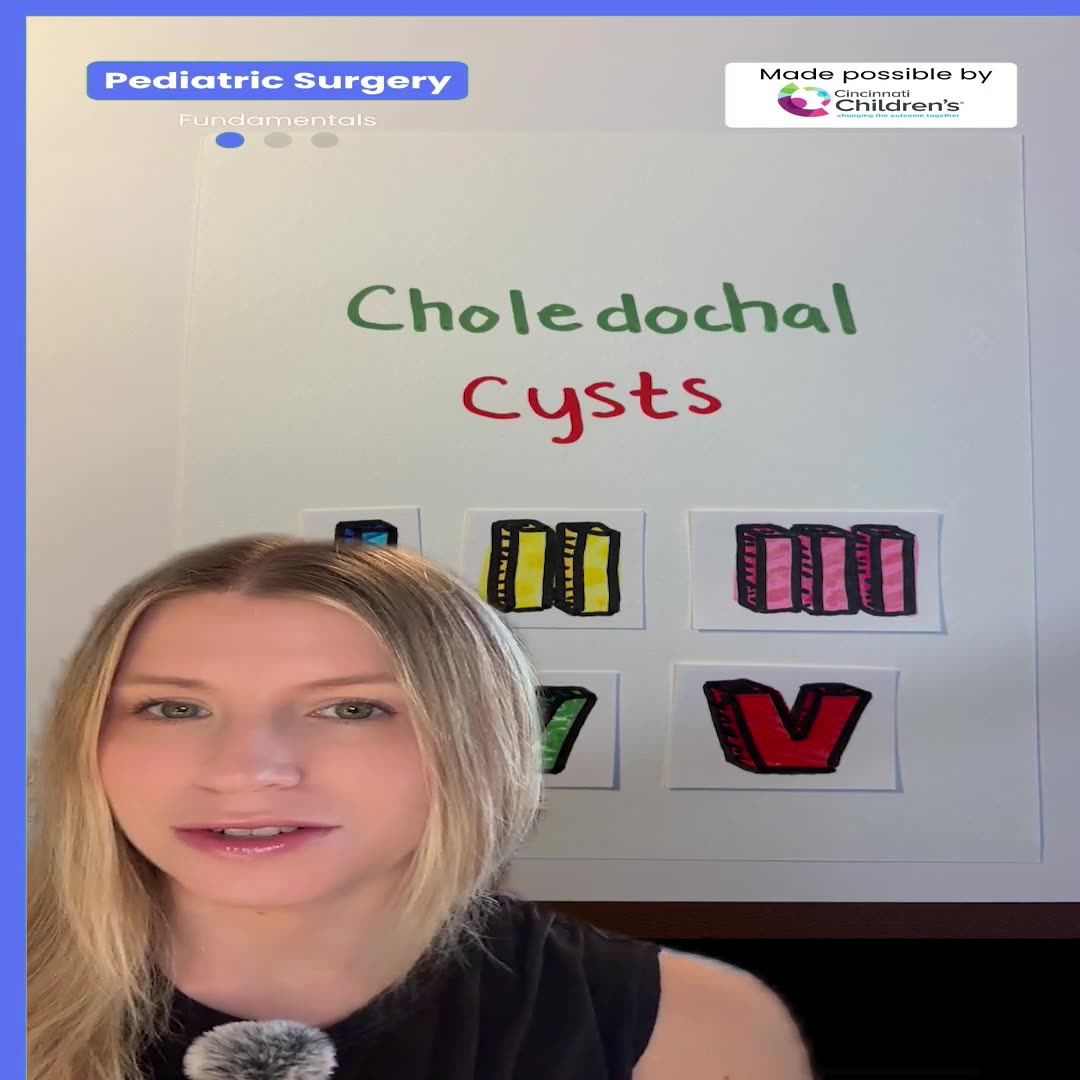
Choledochal Cyst Types Explained: Pediatric Surgery Fundamentals
1 min · Published Sep 2026
What the experts said
Pediatric surgeons historically did not routinely address VTE prophylaxis, with general teaching some time ago being that kids just didn't get this problem.
Recognition of pediatric VTE has increased significantly over the last 10-20 years, possibly to the point of overuse (e.g., SCDs for 30-minute inguinal hernia repairs).
The Midwest Pediatric Surgery Consortium is conducting a multi-center study (at 11 centers) of a standardized VTE prophylaxis protocol involving chemoprophylaxis with antithrombin 1A, compression devices, and daily ultrasound evaluation.
The number of DVT complications in pediatric patients is very small but catastrophic when they occur.
The vast majority of pediatric DVTs occur around central lines, and all central lines have a fibrin sheath if examined closely.
SCDs should be activated prior to induction of anesthesia in the operating room.
The Landish article (David Gourlay's article) is probably the best protocol available for pediatric VTE prophylaxis and forms the basis for the MWPSC multi-center study.
The theoretically correct answer for the case is screening ultrasound on ICU day 7, because pharmacologic prophylaxis is contraindicated due to significant head bleed.
A 2017 seminars summary by Dr. Perry (current chair of the Abstinence trauma Committee) provides a comprehensive review of pediatric VTE prophylaxis in trauma.
VTE incidence in pediatric trauma patients is estimated between 0.16% and 1%, probably on the order of 1% or less in general.
In adult trauma patients, VTE incidence is about 3-5%.
In adult neuro trauma patients, VTE incidence is significantly higher at 10-15%.
Pediatric VTE risk factors include central catheters, inflammatory bowel disease (chronic inflammatory states), blood transfusion, and obesity.
According to the Landish schema, high-risk patients are defined as those greater than 12 years with one or more risk factors, or less than 12 years with more than 4 risk factors.
For high-risk patients without bleeding concerns, treatment is low molecular weight heparin plus SCDs until ambulatory.
For high-risk patients who are not candidates for pharmacologic prophylaxis, treatment is SCDs until ambulatory plus screening ultrasound on day 7.