


From
StayCurrentMD
Isotonic maintenance fluid: Practice Gap discussion at Update Course 2018
Chapter 1 of 4 · Case-Based Learning
Vignette introduction
Clinical vignette and historical context of IV fluid selection
Expert statements on this page
No expert statements were drawn from this page.
Host summaries · secondary, not cited in answers
Educational content from recorded physician discussions — not medical advice. Talk to your (or your child's) care team about your situation.
Video
The Role of Diversion During Ileal Pouch Anal Anastomosis (IPAA) Creation in Pediatric Ulcerative Colitis - JPS
Published Feb 2024
Video
El papel de la ostomía durante la creación del Pouch ileal coon anastomosis anal (IPAA) en la colitis ulcerosa pediátrica - JPS
Published Feb 2024
Video
Enterocolitis in Hirschsprung Disease: Update Course 2015
CCHMC Pediatric Surgery · 5 min · Published Nov 2015
Video
Best of the Best Gen Surg - Therapeutic Effect of Oridonin against Inflammatory Bowel Disease Involves Inhibition of Intestinal Fibrosis via NF-kB and p38STAT1 Pathways - Dr. Mao
11 min · Published Sep 2022
Video
What's New in Pediatric Surgery 2020 - FULL SHOW
CCHMC Pediatric Surgery · 57 min · Published Oct 2020
Video
Inflammatory Bowel Disease (IBD) - Samir Pandya: Update Course 2014
28 min · Published Nov 2018
Video
Intestinal Atresia Types Explained: Grossfeld Classification for Pediatric Surgery
1 min · Published Sep 2026
Video
Derivation and validation of the Pediatric Community-Acquired Pneumonia Severity (PedCAPS) score: A prospective cohort study
50 s · Published Sep 2026
Video
FETO for Late-Diagnosed Severe Congenital Diaphragmatic Hernia (CDH) at Cincinnati Children's with Dr. Beth Rymeski
4 min · Published Sep 2026
Video
Severe Congenital Diaphragmatic Hernia (CDH) Case: FETO Management & Unexpected Findings with Dr. Beth Rymeski
3 min · Published Sep 2026
Video
Fetoscopic Endoluminal Tracheal Occlusion (FETO) Procedure: Step-by-Step Guide with Dr. Beth Rymeski
4 min · Published Sep 2026
Video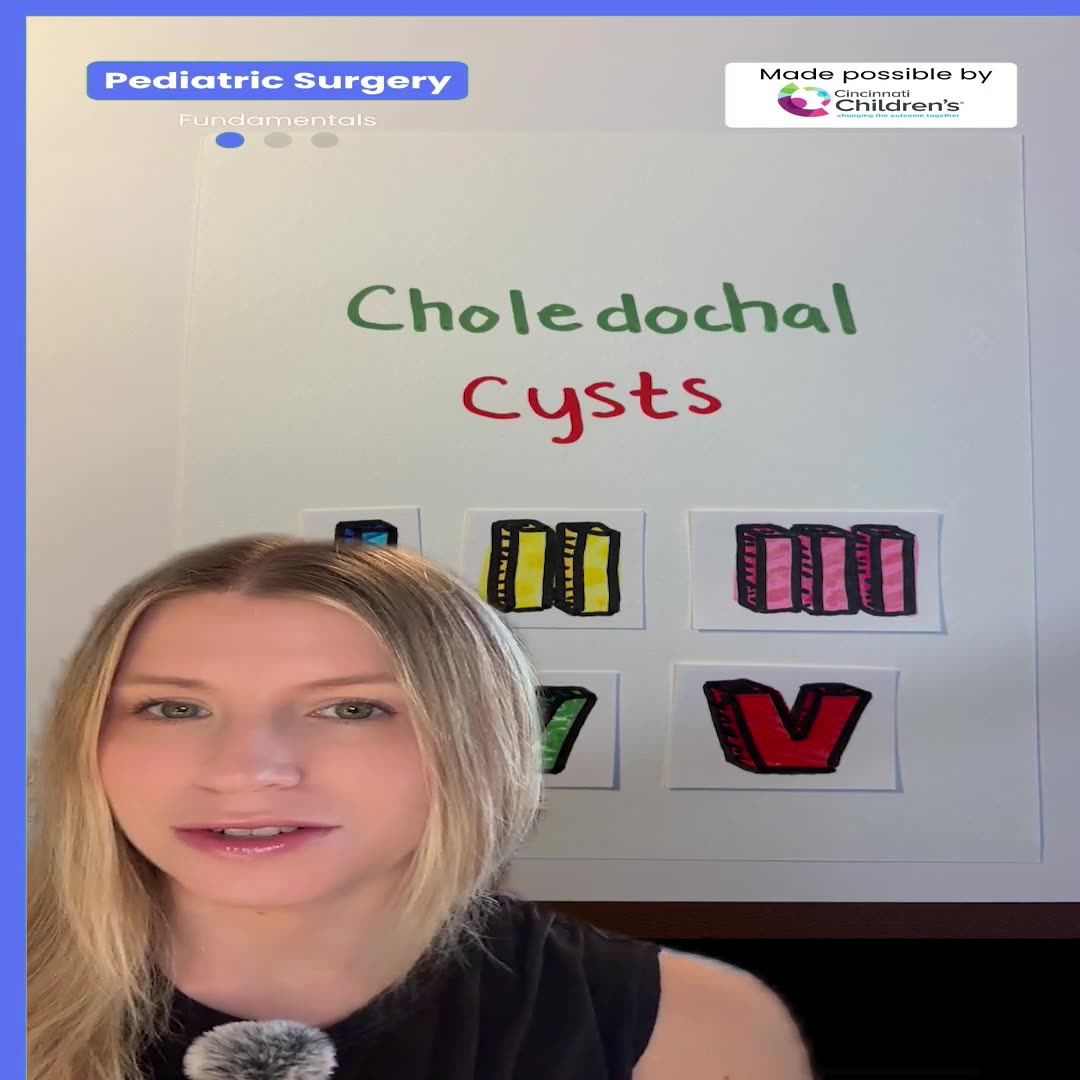
Choledochal Cyst Types Explained: Pediatric Surgery Fundamentals
1 min · Published Sep 2026
What the experts said
Iatrogenic hyponatremia is one of the biggest problems in hospitals, related to ADH physiology and the use of hypotonic fluids rather than normal saline.
Children become hyponatremic because they are given half normal saline, and the data on this are clear.
The correct maintenance fluid for a 15-year-old post-colectomy patient is D5 normal saline with 20 milliequivalents of potassium.
The American Academy of Pediatrics is coming out with a consensus statement on isotonic maintenance fluids (anticipated as of March).
Hospitalized children develop hyponatremia because they receive less than isotonic (hypotonic) solutions, leading to cerebral edema and other complications.
The traditional teaching was to resuscitate with isotonic fluid and then convert to hypotonic maintenance fluids; the new practice is to keep patients on isotonic fluid to prevent hyponatremia.
At ABSA, 48% of respondents correctly identified isotonic fluid as the answer, which the speakers considered a high number given the radical change from traditional teaching.
Hypotonic fluids were originally developed based on theoretical calculations of sodium and chloride losses by a scientist approximately 100 years ago, not on evidence from real patients.
Newborn babies are different because their kidney function is immature when first born, so the amount of electrolytes given changes over the first couple of days of life.
Term newborns on the first day of life should receive D10W (dextrose 10% in water) with no saline.
In adult critical care literature, practice is shifting from normal saline to lactated Ringer's as the normal isotonic solution, and the same shift is expected to occur in pediatrics.
Lactated Ringer's is a more physiologic isotonic solution than normal saline.
There is not yet literature in children supporting the use of D5 lactated Ringer's, but it is anticipated.