


Chapter 1 of 17 · Fundamentals
Introduction
Introduction and importance of neurogenic bladder for pediatric surgeons
Expert statements on this page
No expert statements were drawn from this page.
Host summaries · secondary, not cited in answers
Educational content from recorded physician discussions — not medical advice. Talk to your (or your child's) care team about your situation.
Video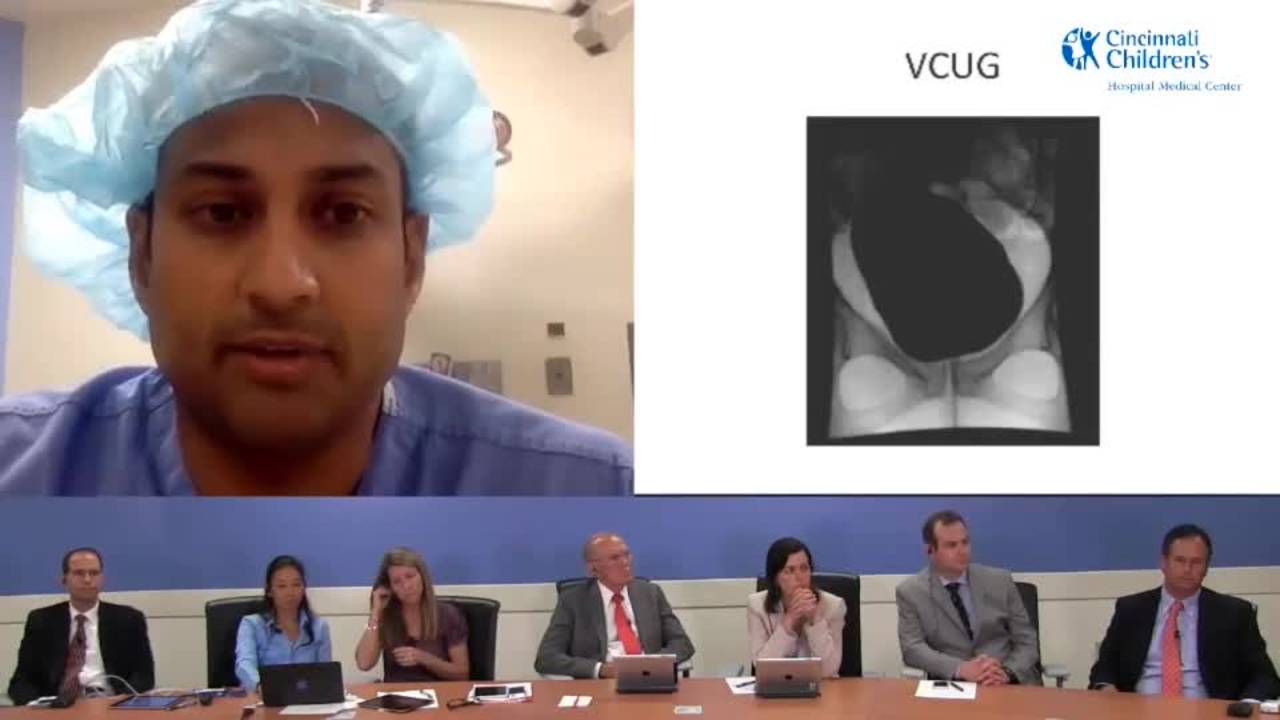
Surgical Management and Follow-Up: Cloaca and Complex ARMs 2015
25 min · Published Oct 2015
Video
Urologic and Gynecologic Aspects in Anorectal Malformations: Pediatric...
Dr. Todd Ponsky · 41 min · Published Apr 2012
Video
Cloaca - Urologic Concerns
25 min · Published Nov 2018
Podcast
Colorectal Quiz Episode 30: Tethered Cord
21 min · Published Mar 2022
Video
Association Between Social Determinants of Health and Choice of Urinary Reconstruction in Children
1 min · Published Jun 2026
Podcast
Cloaca Management with Dr. Marc Levitt & Dr. Aaron Garrison
43 min · Published Dec 2016
Only a few other public items share this expert — go deeper there →
Video
Intestinal Atresia Types Explained: Grossfeld Classification for Pediatric Surgery
1 min · Published Sep 2026
Video
Derivation and validation of the Pediatric Community-Acquired Pneumonia Severity (PedCAPS) score: A prospective cohort study
50 s · Published Sep 2026
Video
FETO for Late-Diagnosed Severe Congenital Diaphragmatic Hernia (CDH) at Cincinnati Children's with Dr. Beth Rymeski
4 min · Published Sep 2026
Video
Severe Congenital Diaphragmatic Hernia (CDH) Case: FETO Management & Unexpected Findings with Dr. Beth Rymeski
3 min · Published Sep 2026
Video
Fetoscopic Endoluminal Tracheal Occlusion (FETO) Procedure: Step-by-Step Guide with Dr. Beth Rymeski
4 min · Published Sep 2026
Video
Choledochal Cyst Types Explained: Pediatric Surgery Fundamentals
1 min · Published Sep 2026
What the experts said
Neurogenic bladder affects children with spinal cord abnormalities including spina bifida, spinal cord injury after trauma, cloacal exstrophy, anorectal malformations, and VACTERL complex with known spinal cord problems.
Baseline evaluation for newborns with myelomeningocele includes renal bladder ultrasound and VCUG to assess for two kidneys, hydronephrosis, bladder shape, trabeculations, reflux, and bladder neck/urethral contour.
The majority of children with spina bifida will have very normal imaging studies at birth, making baseline pictures important for tracking changes.
Urodynamics should be performed within the first month or couple of months of life to measure bladder pressure and compliance during filling.
A normal bladder should be low pressure during filling with good compliance (minimal pressure change as volume increases); pathologic or neuropathic bladders tend to have higher pressures, which is the most dangerous thing to the kidneys.
A hostile bladder is defined as having high pressure, demonstrating signs of instability, or contracting during filling (when it should be quiet and relaxed).
Detrusor-sphincter dyssynergia (DSD) is a discoordination between the bladder and sphincter seen in neurogenic bladder, where the sphincter fails to relax during bladder contraction, creating a high-pressure situation that can damage kidneys over time.
DSD can occur in any neurogenic bladder situation including spinal cord injury or trauma, not just spina bifida.
Clean intermittent catheterization (CIC) is the mainstay of management for neurogenic bladder patients, enabling complete bladder emptying, reducing pressure, and bypassing sphincter dysfunction.
Some bladders are areflexic (hold urine but don't efficiently empty), and CIC addresses this by ensuring regular complete emptying.
Some urologists advocate starting all children with spina bifida on CIC from birth to familiarize families, allow child acceptance, and potentially influence bladder development protectively.
There is emerging data suggesting early CIC may improve overall bladder dynamics as the child grows and be protective in a proactive way.
The traditional approach was to start CIC only in patients with worrisome features or hostile bladders on initial testing, but this may allow damage to occur before intervention.
Strong indications for initiating CIC include bladder pressures >40 cm H₂O on urodynamics, hydronephrosis, small bladder capacity, vesicoureteral reflux, or detrusor-sphincter dyssynergia.
Spina bifida management is optimally done in a multidisciplinary clinic including neurosurgeon, orthopedist, neurologist, urologist, pediatric surgery, GI, social work, and developmental pediatrician, with a care coordinator to integrate plans.
Oxybutynin (Ditropan), an anticholinergic medication, helps relax the bladder and increase compliance; in combination with CIC it is the key therapy for managing hostile bladders.
Some suggest all spina bifida patients should be started on oxybutynin prophylactically, but there is insufficient evidence to support universal use given medication side effects.
For stable patients, renal ultrasound should be done every 3-6 months in the first several years of life and urodynamics every 6-12 months, with closer intervals for high-risk patients or after medication changes.
There is no hard and fast rule for how long high bladder pressures (>40 cm H₂O) can persist before causing renal damage; the timeline is unknown.
Vesicoureteral reflux in neurogenic bladder patients is often secondary reflux caused by abnormally high bladder pressures overwhelming the ureterovesical valve mechanism, which is a very poor prognostic sign.
High-grade reflux combined with recurrent UTIs creates a dangerous situation where kidneys are exposed to both high pressure and bacterial showers, leading to pyelonephritis and scarring that damages future kidney function.
Cutaneous vesicostomy is the gold standard temporary diversion for infants with hostile bladders, high-grade reflux, and recurrent UTIs; it involves opening the bladder dome and sewing it to the skin as an incontinent stoma above the pubic bone.
A freely draining vesicostomy prevents bladder filling, eliminates high pressure, stops reflux, and prevents pyelonephritis, though it becomes messier to manage as the child grows.
Vesicostomy is viewed as temporary; closure timing depends on family readiness and having a plan for subsequent bladder management, since closing it will likely recreate the original high-pressure situation.
Continence surgery comes at a price: anything done to help a patient gain continence could adversely affect bladder function and can convert a non-hostile bladder into a hostile situation.
Urinary incontinence in neurogenic bladder can be multifactorial: bladder squeezing inappropriately, sphincter not opening/closing at right times, sphincter always open, or insufficient bladder capacity.
Urinary tract reconstruction for continence can consist of augmentation cystoplasty (physically enlarging the bladder with bowel), bladder neck procedures (increasing outlet resistance), and continent catheterizable channels (providing a reliable catheterization route).
Patient selection for reconstruction must consider mobility, hand function, cognitive status, family dynamics, and long-term independence—if parents age or the patient requires institutional care, who will manage complex catheterization?
Augmentation cystoplasty typically uses a 20-30 cm segment of detubularized ileum or colon anastomosed to a widely opened bladder to increase capacity and reduce pressure; detubularization eliminates inherent contractile properties of the bowel.
Bladder neck procedures include rectus fascial sling (lassoing the bladder neck to tighten it), artificial sphincters, urethral lengthening procedures, or complete bladder neck closure (the most definitive way to eliminate leakage).
The Mitrofanoff (appendicovesicostomy) uses the appendix preserved on its mesentery, tunneled into the bladder with one end to bladder and proximal end brought to skin as a catheterizable stoma.
If no suitable appendix is available, a Yang-Monty tube can be created from a small piece of ileum that is detubularized transversely and closed longitudinally to form a catheterizable channel.
Cystoscopic Botox injection into the detrusor muscle is increasingly offered as a minimally invasive option to paralyze overactive bladder and reduce pressure, potentially delaying or avoiding major reconstruction, though it requires repeated treatments and may not fully address continence.
Transition from pediatric to adult care for spina bifida patients is poorly developed at many centers, with barriers including patients getting lost to follow-up, mistrust of healthcare, and adult providers being uncomfortable managing complex congenital anomalies.
Optimal transition requires dedicated transitional clinics starting in teenage years with gradual handoff to adult providers, and a next generation of adult specialists interested in congenital urology and reconstruction.
Prior to widespread use of clean intermittent catheterization in the 1970s, the most common cause of mortality in spina bifida patients was renal deterioration.