


Chapter 1 of 5 · Medical Management
Prescribing practices
Current opioid prescribing practices for common pediatric procedures
Expert statements on this page
No expert statements were drawn from this page.
Host summaries · secondary, not cited in answers
Educational content from recorded physician discussions — not medical advice. Talk to your (or your child's) care team about your situation.
Video
Unanticipated consequences of COVID-19 pandemic policies on pediatric acute appendicitis surgery
Published Jul 2023
Video
Mini lap appy
Dr. Steve Rothenberg · 4 min · Published May 2026
Video
Persistent Abdominal Pain - Median Arcuate Ligament Syndrome: Update Course 2014
22 min · Published Nov 2018
Video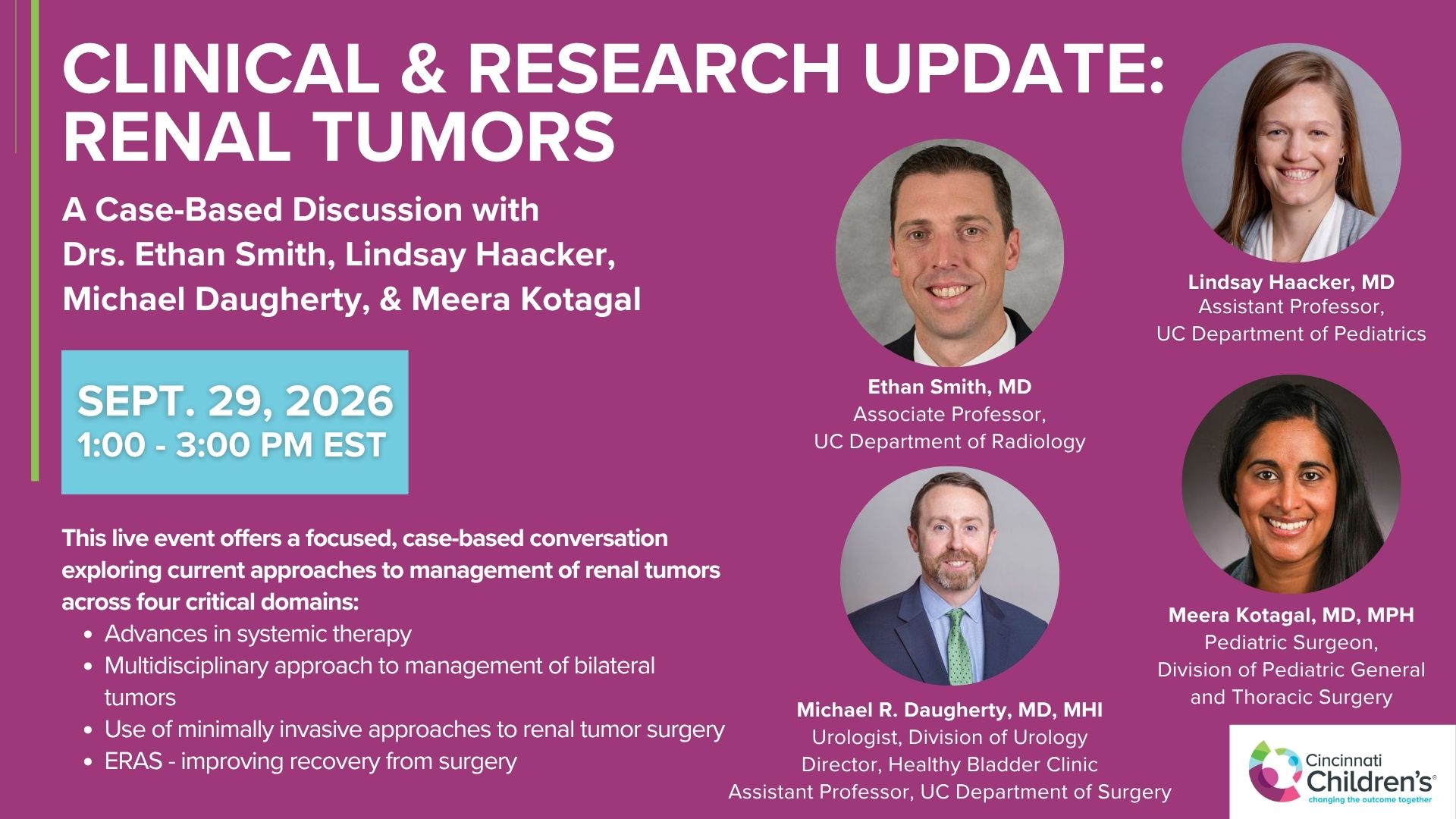
Clinical & Research Update: Renal Tumors with Drs. Ethan Smith, Lindsay Haacker, Michael Daugherty, and Meera Kotagal
71 min · Published Sep 2026
Video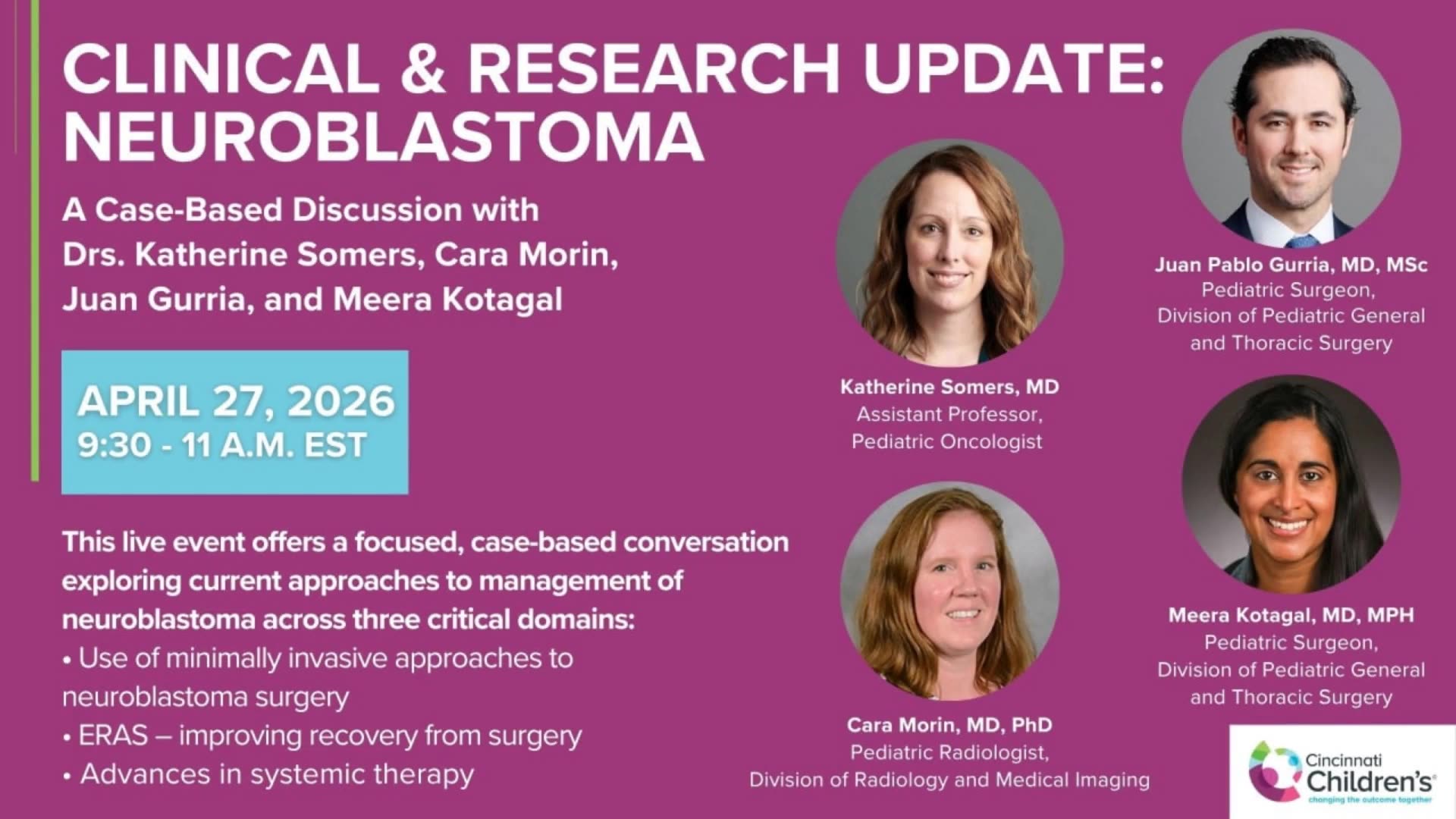
Clinical & Research Update: Neuroblastoma with Drs. Katherine Somers, Cara Morin, Juan Gurria, and Meera Kotagal
67 min · Published Sep 2026
Video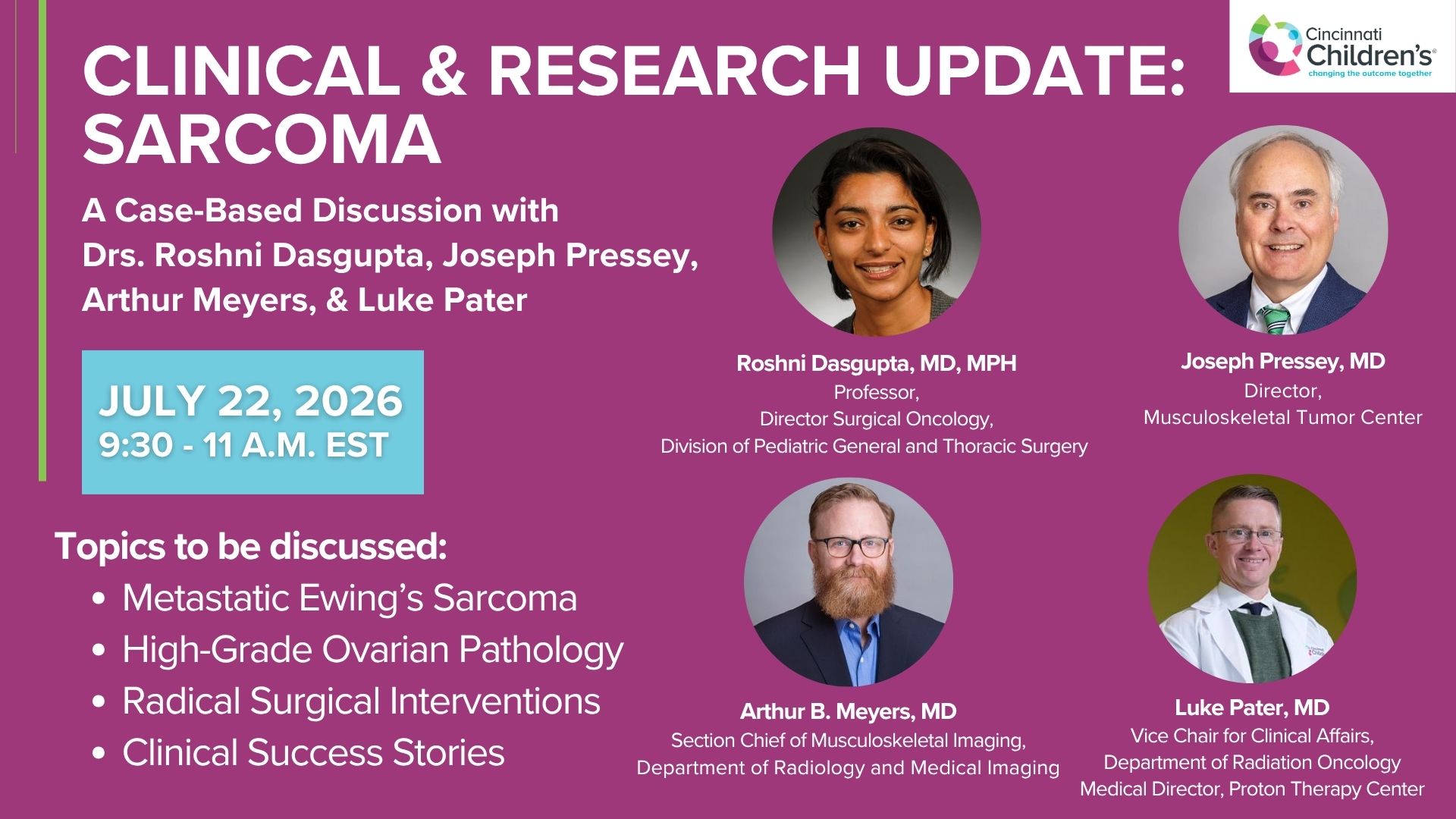
Clinical & Research Update: Sarcoma w/ Drs. Roshni Dasgupta, Joseph Pressey, Arthur Meyer, Luke Pater
66 min · Published Sep 2026
Video
2026 Laparoscopic Pediatric Hernia Repair
123 min · Published Jun 2026
Video
Beyond the Spectrum: Diagnosis, Myths & Management - Caitlin Couch & Leslie Lopez - APP Conference 2026
50 min · Published May 2026
Video
Dysautonomia: Navigating the Journey - Martha Willis - APP Conference 2026
55 min · Published May 2026
What the experts said
For acute appendicitis, the speaker's group does not prescribe opioids at discharge and has not had problems with patients calling back.
For umbilical hernia repair, patients are put on scheduled acetaminophen and ibuprofen alternating every four hours when awake.
Julie Rios gives fewer narcotics to adult patients, using acetaminophen and ibuprofen, and sends them home with a few oxycodone tablets as breakthrough for one or two days.
Gabapentin is used at 300 milligrams TID in bigger kids.
Gabapentin is continued even if patients are NPO, as part of ERAS protocol with very short NPO times.
In bariatric patients using gabapentin, postop day one discharge increased from about 20% to 50 plus percent.
TAP blocks involve medicine that goes intercostally with a catheter that numbs the abdominal wall, allowing patients to get up, move, and pass gas the same day without narcotic medication.
IV Tylenol is very expensive compared to per rectum Tylenol.
IV Tylenol is no more or less efficacious than per rectum Tylenol.
IV Tylenol used to be hundreds of dollars a dose and is now maybe 20 or 30 dollars a dose.
Per rectum Tylenol works just as well as IV with the same bioavailability, according to pharmacy literature on kinetics.
Over the past 18 years, 9,000 children and adolescents have died from opioids.
Opioid mortality rate in children has increased threefold.
In kids zero to four years old, there is a 7% death rate from kids getting opioids.
25% of pediatric opioid deaths have been homicides.
81% of pediatric opioid deaths are adolescent.
The heroin death rate has increased 485%.
Kurt Heist says the return to system or coming back to the hospital or call backs are the same for those with or without opioids, if the Tylenol motrin dosings are scheduled and given in advance.
In a study from 2006 to 2014, 68% of patients were prescribed opioids.
Adult general surgeons tended to give more opioids than pediatric surgeons.
The opioid group has increased ED visits for constipation.
In umbilical hernia data from 2012 to 2015, 52% of 4,000 patients received post-op opioids.
Six years old or older patients tended to get more opioids than younger kids.
Southern US was more problematic than Northeast in opioid prescribing.
Duration of opioid prescribing: less than three days was 50%, four to 10 days was almost 50%, and greater than 10 days was 4%.
After the Buffalo intervention, opioid prescribing at discharge for appendectomy dropped from 84% to 7%.
After the Buffalo intervention, acetaminophen prescribing at discharge increased from 31% to 94%.
After the Buffalo intervention, ibuprofen prescribing at discharge increased from 58% to 86%.
After the Buffalo intervention, automatic Miralax at discharge dropped from 77% to 47% as there were fewer problems with constipation.
Gabapentin dose for younger kids is 5 milligrams per kilo per dose TID for three to five days, according to Dr. Heist.