


From
StayCurrentMD
CDH - MIS vs. Open: Update Course 2015
Chapter 1 of 3 · Complications
MIS vs open outcomes
Complications and recurrence: MIS versus open CDH repair
Expert statements on this page
No expert statements were drawn from this page.
Host summaries · secondary, not cited in answers
Educational content from recorded physician discussions — not medical advice. Talk to your (or your child's) care team about your situation.
Video
CDH-ECMO Routine Patient Preoperative Workup, Timing, Technique: Update...
3 min · Published Nov 2015
Podcast
Case-Based Journal Review: Congenital Diaphragmatic Hernia 2023
19 min · Published Oct 2023
Video
BOB Ped Surg 2023 - Shelby Sferra, AAP - Presentation
5 min · Published Feb 2023
Video
BOB in Ped Surg 2023 - AAP Winner - Shelby Sferra, MD
11 min · Published Feb 2023
Video
Controversies in Congenital Diaphragmatic Hernia: Update Course 2018
41 min · Published Aug 2018
Video
Severe Congenital Diaphragmatic Hernia (CDH) Case: FETO Management & Unexpected Findings with Dr. Beth Rymeski
3 min · Published Sep 2026
Video
Intestinal Atresia Types Explained: Grossfeld Classification for Pediatric Surgery
1 min · Published Sep 2026
Video
Derivation and validation of the Pediatric Community-Acquired Pneumonia Severity (PedCAPS) score: A prospective cohort study
50 s · Published Sep 2026
Video
FETO for Late-Diagnosed Severe Congenital Diaphragmatic Hernia (CDH) at Cincinnati Children's with Dr. Beth Rymeski
4 min · Published Sep 2026
Video
Fetoscopic Endoluminal Tracheal Occlusion (FETO) Procedure: Step-by-Step Guide with Dr. Beth Rymeski
4 min · Published Sep 2026
Video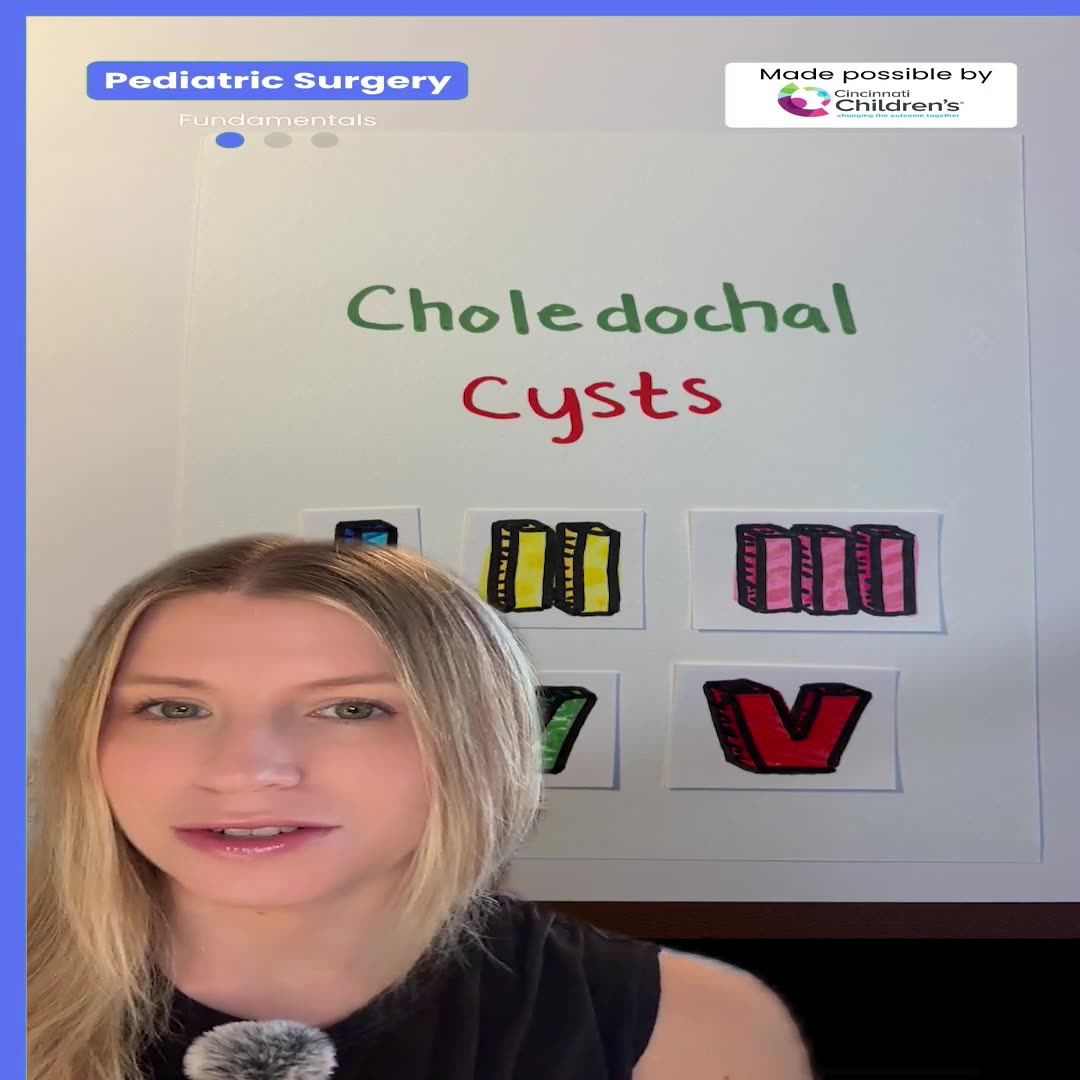
Choledochal Cyst Types Explained: Pediatric Surgery Fundamentals
1 min · Published Sep 2026
Video
Automated control of inspired oxygen in mechanically ventilated trauma and acute care surgery patients: A randomized controlled trial
48 s · Published Sep 2026
What the experts said
In multivariate analysis of CDH repair complications, open repair is associated with higher risk of small bowel obstruction compared to MIS repair.
Recurrence rates in primary CDH repairs were 3.9% for open and 7.8% for MIS repairs, a difference that was not statistically significant.
Muscle flap repair for CDH is not feasible using minimally invasive technique.
At Cincinnati Children's, zero recurrences occurred in muscle flap CDH patients over 10 years.
Patients who received patches or other repair types had recurrences, but muscle flap patients did not.
Primary CDH repairs represent a different patient population than those requiring muscle flap or Gore-Tex, making direct comparison problematic.
For primary CDH repairs, laparoscopic or thoracoscopic approach offers better patient selection compared to open repair.
All surgeons have high recurrence rates with patch repair for CDH except when using muscle flaps.
For near-agenesis CDH defects (not complete agenesis), MIS repair resulted in poor outcomes despite technical success, similar to open repair outcomes.
For large CDH defects, open repair is more expeditious than prolonged MIS attempts.
For primary CDH repairs, thoracoscopic approach is a good option with potential to reduce recurrence by placing more sutures and ensuring adequate lateral corner closure.
Biologic mesh used alone as a patch for CDH has a high recurrence rate.
Biologic mesh for CDH repair has been largely abandoned by surgeons.
Among CDH patients who have been on ECMO, 25% had defects small enough to be successfully repaired with laparoscopic approach.
Initial laparoscopic assessment of CDH defect size adds only 5-10 minutes to operative time before converting to open if needed.
Recent papers have addressed hypercapnia concerns during MIS CDH repair, requiring communication with anesthesiology.
Data from Utah and other centers suggest recurrence rate is dramatically lower with muscle flap repair compared to patch repair for CDH.
Ted Brand at the speaker's other hospital reported 0% recurrence rate with muscle flap CDH repairs.
Some surgeons with good outcomes have data showing higher recurrence rates with MIS CDH repair.