


Chapter 1 of 3 · Surgical Management
Ovarian preservation
Ovarian preservation in torsion: evidence and technique
Expert statements on this page
No expert statements were drawn from this page.
Host summaries · secondary, not cited in answers
Educational content from recorded physician discussions — not medical advice. Talk to your (or your child's) care team about your situation.
Video
Ovarian Torsion with Dr. Dasgupta
Published Sep 2022
Video
GYN #2 Oophoropexy in Adnexal Torsion with Dr. Lesley Breech
CCHMC Pediatric Surgery · Published May 2024
Video
Update Course Rewind: Ovarian Torsion Management 2023
Published Dec 2023
Video
Ovarian Salvage (Torsion & Benign Tumor): Practice Gap discussion at Update...
14 min · Published Aug 2018
Video
Management of Ovarian Torsion: 2018 Pediatric Surgery Practice Gap #8
Dr. Todd Ponsky · Published Jun 2019
Podcast
Ovarian Torsion with Dr. Jennifer Dietrich
47 min · Published Jan 2017
Video
Intestinal Atresia Types Explained: Grossfeld Classification for Pediatric Surgery
1 min · Published Sep 2026
Video
Derivation and validation of the Pediatric Community-Acquired Pneumonia Severity (PedCAPS) score: A prospective cohort study
50 s · Published Sep 2026
Video
FETO for Late-Diagnosed Severe Congenital Diaphragmatic Hernia (CDH) at Cincinnati Children's with Dr. Beth Rymeski
4 min · Published Sep 2026
Video
Severe Congenital Diaphragmatic Hernia (CDH) Case: FETO Management & Unexpected Findings with Dr. Beth Rymeski
3 min · Published Sep 2026
Video
Fetoscopic Endoluminal Tracheal Occlusion (FETO) Procedure: Step-by-Step Guide with Dr. Beth Rymeski
4 min · Published Sep 2026
Video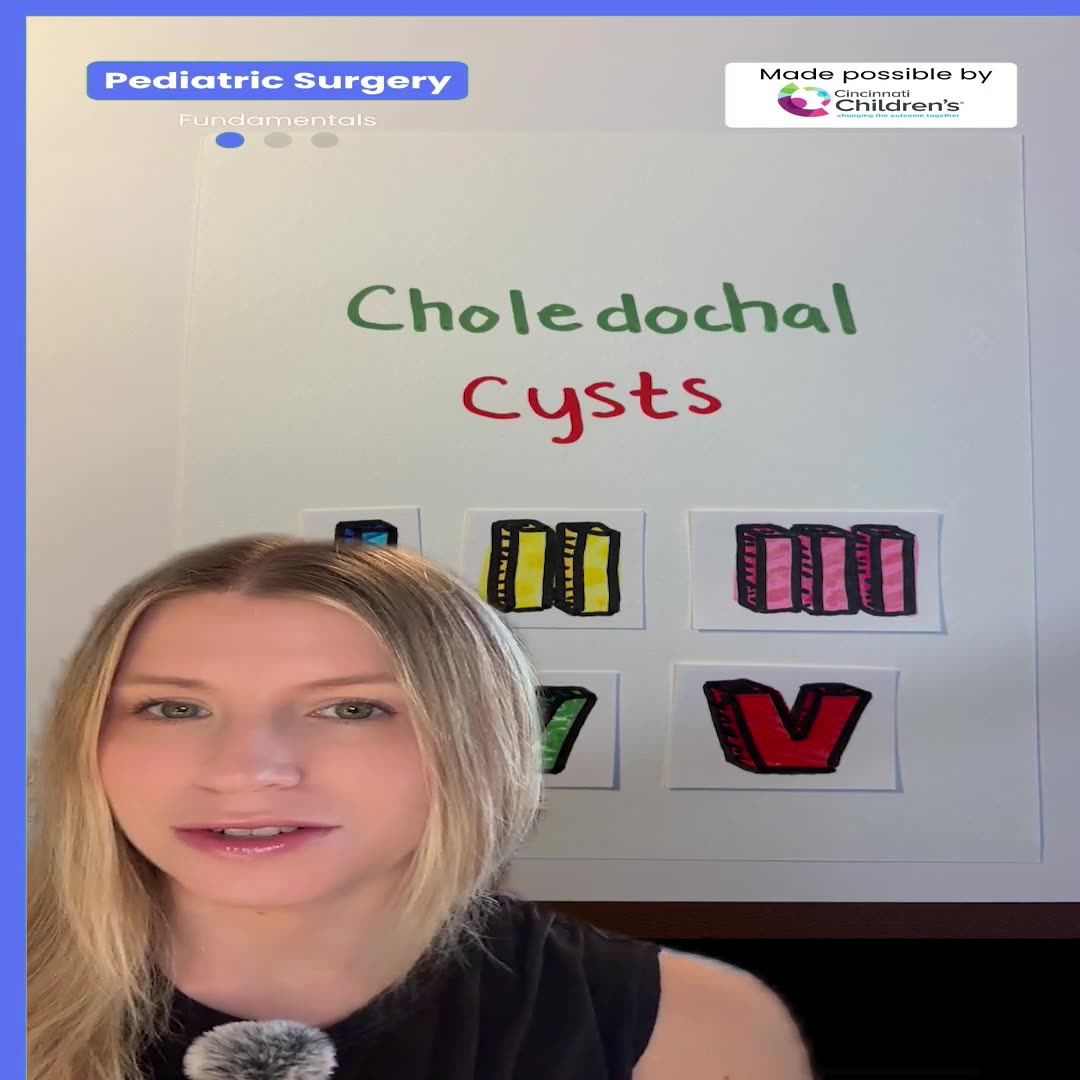
Choledochal Cyst Types Explained: Pediatric Surgery Fundamentals
1 min · Published Sep 2026
What the experts said
Ovarian torsion is most common in teenage girls and is being seen as an urgent rather than emergent situation when aiming to preserve the ovary.
Many black-colored ovaries actually have viable follicles in them, and ovarian preservation should be the goal.
In oophorectomy specimens removed for torsion where the surgeon believed the ovary was dead, 76% had normal ovarian tissue, only 13% had no ovarian tissue, and only 11% were completely necrotic.
Microscopically, ovarian tissue looks very different than it does in the gross setting when a surgeon is looking at the ovary.
Pain is the most commonly reported consequence of oophoropexy, which is usually short-lived and resolves in about a week.
The ability to preserve ovarian function is related to age; in pediatric patients, surgeons should be aggressive about preserving the ovary, but in older adults there are fewer active follicles.
The recommendation is for detorsion without complete oophorectomy.
Ultrasound sensitivity and specificity for blood flow in ovarian torsion is in the 50-60% range.
If the child is in a lot of pain, surgery needs to be done right away; ultrasound blood flow findings should not be relied upon.
Ultrasound blood flow findings are dependent on the pressure the sonographer is using and how much the bladder is filled.
For fertility reasons, placing ovaries behind the uterus during oophoropexy is preferred over lateral placement.
Pediatric radiologists, including presidents of their national organization, have stated that ultrasound does not help in the setting of suspected ovarian torsion.
If an ovary is twisted, just because there's blood flow doesn't mean it's not twisted; it may mean at that point in time it might not be so tight, but a minute later it could be tight again.