


From
StayCurrentMD
Cryptorchidism Rapid Fire Session: Update Course 2015
Chapter 1 of 3 · Fundamentals
Cryptorchidism overview
Cryptorchidism Overview and Management Controversies
Expert statements on this page
No expert statements were drawn from this page.
Host summaries · secondary, not cited in answers
Educational content from recorded physician discussions — not medical advice. Talk to your (or your child's) care team about your situation.
Video
Intestinal Atresia Types Explained: Grossfeld Classification for Pediatric Surgery
1 min · Published Sep 2026
Video
Derivation and validation of the Pediatric Community-Acquired Pneumonia Severity (PedCAPS) score: A prospective cohort study
50 s · Published Sep 2026
Video
FETO for Late-Diagnosed Severe Congenital Diaphragmatic Hernia (CDH) at Cincinnati Children's with Dr. Beth Rymeski
4 min · Published Sep 2026
Video
Severe Congenital Diaphragmatic Hernia (CDH) Case: FETO Management & Unexpected Findings with Dr. Beth Rymeski
3 min · Published Sep 2026
Video
Fetoscopic Endoluminal Tracheal Occlusion (FETO) Procedure: Step-by-Step Guide with Dr. Beth Rymeski
4 min · Published Sep 2026
Video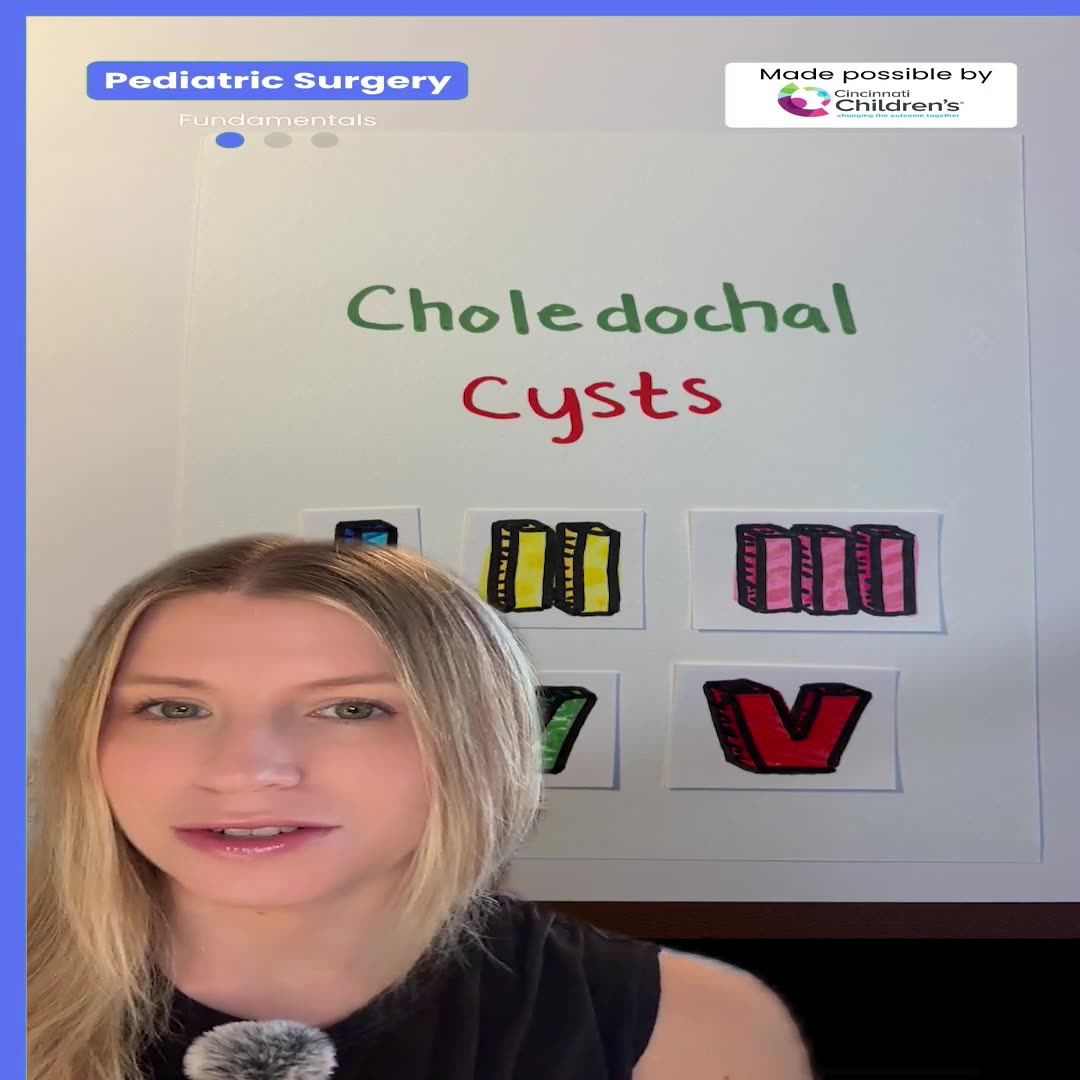
Choledochal Cyst Types Explained: Pediatric Surgery Fundamentals
1 min · Published Sep 2026
What the experts said
Cryptorchidism is one of the most common pediatric disorders of the male endocrine glands and the most common genital disorder identified at birth.
There are two types of cryptorchidism: congenital (found at birth) and acquired (testicles previously descended but can no longer be brought down without discomfort).
Treatment of cryptorchidism reduces risks including impaired fertility, testicular malignancy, risk of torsion, and treats associated inguinal hernia.
The actual mechanism of action of hormonal therapy agents for cryptorchidism is unknown.
Published studies on hormonal therapy included multiple treatment strategies with different doses and intervals, none showing good response rates or demonstrable long-term benefits.
Hormonal therapy should not be used to induce testicular descent due to low response rates and lack of evidence for long-term efficacy.
70% of undescended testicles are palpable, though they may not be palpable during examination while the child is awake but are usually palpable under anesthesia.
Ultrasound has a sensitivity of only 45% and specificity of only 78% in determining testicle location and size.
Most of the time the testes can be brought down without needing to divide the testicular vessels.
Ultrasound cannot identify intra-abdominal testicles.
For prepubertal patients (e.g., 10 years old), orchiopexy should be attempted; for pubertal patients (e.g., 14 years old), orchiectomy is preferred; 12 years old is a difficult decision point.
The teaching is that if the patient is prepubertal, orchiopexy can be attempted, but if going through puberty, orchiectomy should be performed.
Other imaging modalities are expensive, require anesthesia, or irradiate tissues, and no radiologic test is 100% accurate to determine whether a testicle is absent.
Surgical exploration (diagnostic laparoscopy or open exploration) must be performed on all non-palpable unilateral and many bilateral cryptorchid patients.
There is no apparent advantage of one-stage versus two-stage Fowler-Stevens procedure when testicular vessels cannot be spared.
Orchiectomy may be prudent in the presence of a normal contralateral descended testicle.
Imaging should not be performed for cryptorchidism as it is not helpful and can actually delay treatment.
There is no advantage for laparoscopic versus open exploration for intra-abdominal testicles.
For salvageable intra-abdominal testicles, three surgical options exist: primary orchiopexy, one-stage Fowler-Stevens, or two-stage Fowler-Stevens.
The decision tree for intra-abdominal testicles prioritizes sparing testicular vessels if possible.