


From
StayCurrentMD
Long-Term Sensory Function 3 years after Minimally Invasive Repair of Pectus Excavatum with Cryoablation
With Dr. Kim Priban
Part of
Pectus Excavatum 58 items
Chapter 1 of 3 · Evidence & Research
Introduction and Context
Expert statements on this page
No expert statements were drawn from this page.
Host summaries · secondary, not cited in answers
Educational content from recorded physician discussions — not medical advice. Talk to your (or your child's) care team about your situation.
Podcast
Journal of Pediatric Surgery Article Review: Q1 (Jan-Mar) 2024
13 min · Published Jun 2024
Video
Cost and outcomes of intercostal nerve cryoablation versus thoracic epidural following the Nuss procedure
1 min · Published Oct 2023
Video
Six Years of Quality Improvement in Pectus Excavatum Repair: Implementation of Intercostal Nerve Cryoablation and ERAS Protocols for Patients Undergoing Nuss Procedure
51 s · Published Apr 2025
Video
Criteria for Pectus Repair: Update Course 2015
55 s · Published Nov 2015
Video
Vacuum Bell Therapy for Pectus Excavatum: Long-term Experience at a Single Center
58 s · Published Apr 2025
Video
APSA - Is same day discharge possible following the Nuss repair for pectus excavatum - R. Luke Rettig
7 min · Published May 2022
Only a few other public items share this expert — go deeper there →
Video
Intestinal Atresia Types Explained: Grossfeld Classification for Pediatric Surgery
1 min · Published Sep 2026
Video
Derivation and validation of the Pediatric Community-Acquired Pneumonia Severity (PedCAPS) score: A prospective cohort study
50 s · Published Sep 2026
Video
FETO for Late-Diagnosed Severe Congenital Diaphragmatic Hernia (CDH) at Cincinnati Children's with Dr. Beth Rymeski
4 min · Published Sep 2026
Video
Severe Congenital Diaphragmatic Hernia (CDH) Case: FETO Management & Unexpected Findings with Dr. Beth Rymeski
3 min · Published Sep 2026
Video
Fetoscopic Endoluminal Tracheal Occlusion (FETO) Procedure: Step-by-Step Guide with Dr. Beth Rymeski
4 min · Published Sep 2026
Video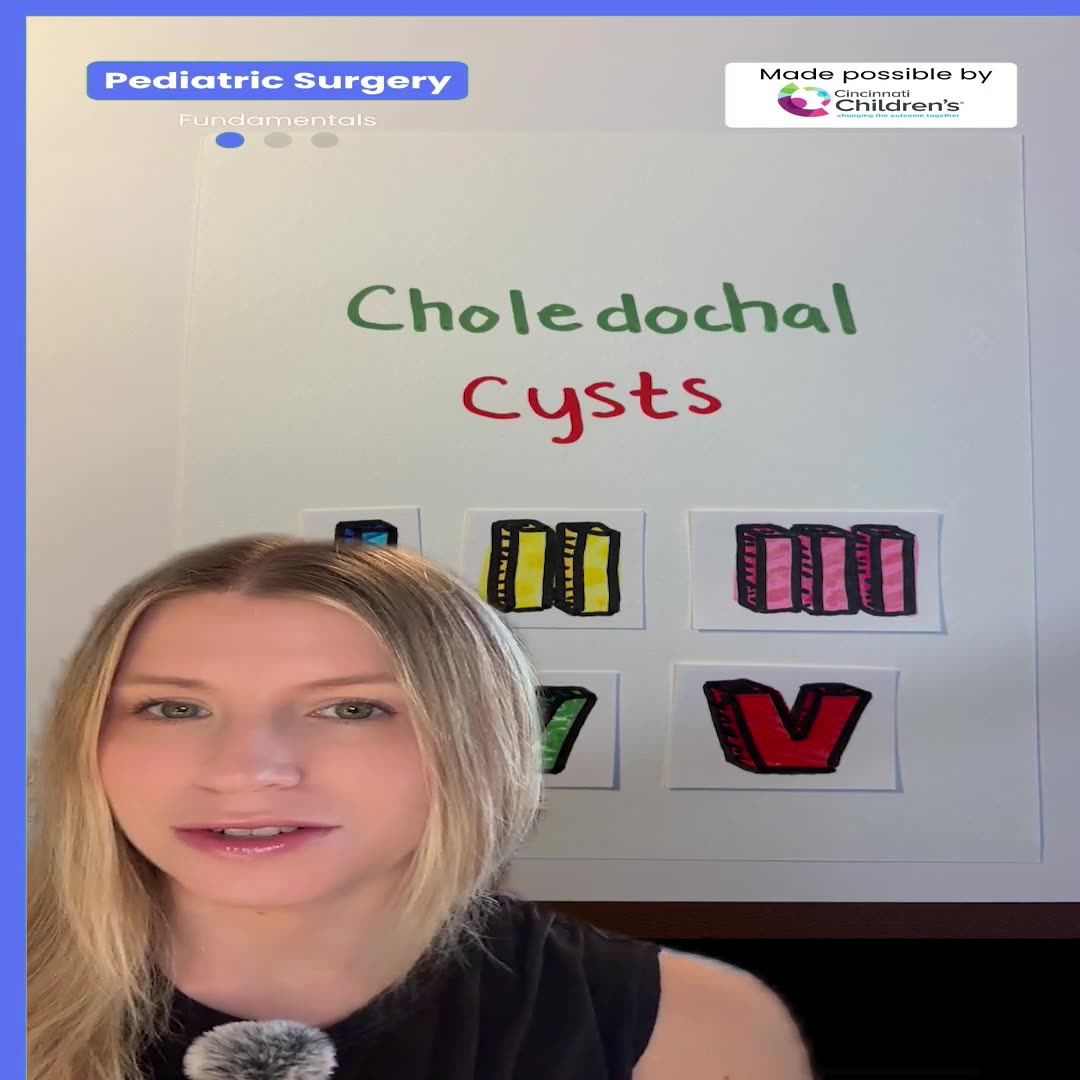
Choledochal Cyst Types Explained: Pediatric Surgery Fundamentals
1 min · Published Sep 2026
What the experts said
Repair of pectus excavatum using minimally invasive techniques with intercostal nerve cryoablation decreases patient length of stay and opioid use
This was a single institution prospective cohort study of 47 patients under 21 years of age
Patients presented for bar removal after a median of two bars were placed for 2.9 years
The study assessed patients for chest wall hypoesthesia to cold, soft touch, and pinprick, as well as neuropathic pain
46.8% of patients had identifiable chest wall hypoesthesia
9.3% of patients had hypoesthesia to cold response
7.7% of patients had hypoesthesia to soft touch
11.8% of patients had hypoesthesia to pinprick
Neuropathic pain symptoms were identified in 13% of patients
None of the patients with neuropathic pain symptoms required treatment
Pediatric patients who underwent minimally invasive repair with cryoablation will often develop some small areas of hypoesthesia
Clinically significant neuropathic pain is rare after minimally invasive pectus excavatum repair with cryoablation