


FEMALE FERTILITY AFTER CHILDHOOD CANCER: IS IT POSSIBLE? | ST. JUDE USA | SYSTEMATIC REVIEW | 2004 - 2022 | GIRLS 0-21 YEARS | CANCER DIAGNOSIS | HAD OVARIAN TISSUE CRYOPRESERVATION | 12 ARTICLES | OVARIAN TISSUE CRYOPRESERVATION | n=501 | OVARIAN TISSUE TRANSPLANTATION* | 30/501 (5.9%) | PREGNANCY | 9/501 (1.8%) | LIVE BIRTHS | 6/501 (1.2%) | *27 DESIRED PREGNANCY | Srinithya R Gillipelli, et al. Mar 2024 DOI: 10.1016/j.jpedsurg.2024.02.015 | Journal of Pediatric Surgery
From
StayCurrentMD
Female Fertility Cryopreservation Outcomes in Childhood Cancer: A Systematic Review
Part of
Pediatric Oncology 696 items
Infographic · May 2024 · 2 min read
In brief
In brief
Systematic review of 612 pediatric cancer patients across 7 countries found that while ovarian tissue cryopreservation is feasible, only 6% underwent transplantation, with 33% achieving pregnancy and 67% live birth rate. Study highlights critical need for long-term outcomes data in prepubertal patients to standardize fertility preservation recommendations.
- OTC successfully performed in 501 pediatric cancer patients; 6% later underwent ovarian tissue transplantation with 33% achieving pregnancy
- Live birth rate of 67% among pediatric cancer survivors who became pregnant after ovarian tissue transplantation
- Long-term outcome data for pediatric OTC remains limited; most studies focus on adult patients in high-income countries
- Hematological malignancies (81%) and CNS tumors (56%) are most common cancers requiring fertility preservation consideration
- Standardized fertility preservation guidelines needed for pediatric cancer patients across all income levels globally
Written by the GCMD Library team from the infographic.
A horizontal flow diagram with a red sidebar on the left containing study metadata (St. Jude USA, systematic review, 2004-2022). The main panel shows a female figure icon followed by four stages connected by teal arrows: ovarian tissue collection and cryopreservation, tissue transplantation, pregnancy, and live birth. Each stage displays outcome statistics with simplified anatomical illustrations.
New infographic by Dr. Jose Campos & the Chilean Society of pediatric Surgery
"Female Fertility Cryopreservation Outcomes in Childhood Cancer: A Systematic Review"
Authors: Srinithya R. Gillipelli, Luca Pio, Paul D. Losty, Abdelhafeez H. Abdelhafeez
Full article: https://gcmd.co/3QNpBML
Background and aims
As survival rates in childhood cancer progress significantly, health outcomes in adulthood are pivotal to quality of life (QoL). Female patients undergoing chemotherapy and radiation for childhood cancer may experience adverse effects such as gonadotoxicity-related ovarian insufficiency. Ovarian tissue cryopreservation (OTC) is well studied in adults, but has only recently started to be explored in an effort to preserve fertility in young patients with childhood cancer. This systematic review aims to critically highlight contemporary outcomes of cryopreservation in female pediatric cancer patients.
Methods
A systematic search was conducted in PubMed, Embase, and Web of Science databases to identify English-language full text articles and abstracts published between 2004 and 2022 describing cryopreservation among female children (0–21 years old) with cancer. Abstracts and full-text articles were screened for inclusion. Subsequently, data from eligible studies was extracted and analyzed. Descriptive statistics were utilized to estimate overall outcomes of cryopreservation.
Results
Of 104 abstracts and 34 full-text articles, 12 studies were included. Data was collected from 7 world countries and involved some 612 pediatric and adolescent patients with malignant disease. Most common cancers included hematological malignant disease (81%), CNS nervous system malignant tumors (56%), and sarcomas (39%). Of the 6 studies with full reporting, OTC was undertaken in 501 patients, and 5.9% (30/501) of these patients underwent ovarian tissue transplantation (OTT). After OTT, 27 patients desired pregnancy and 33% (9/27) became pregnant. Six of these 9 patients (67%) had live births.
Conclusions
Preliminary analysis showed that OTC has been successfully performed but not yet studied thoroughly in pediatric cancer patients in a longitudinal manner. This study has further shown that cryopreservation outcomes are mainly reported among adult patients living in high income countries, demonstrating a crucial need for long-term outcome studies focused on pediatric and prepuberal OTC, subsequent OTT, and potential pregnancy. This work is considered critical to aid standardize recommendations of fertility preservation in childhood cancer patients and to better inform the efficacy of these procedures to benefit patients in world nations of all fiscal income levels.
The text in the image
Educational content from recorded physician discussions — not medical advice. Talk to your (or your child's) care team about your situation.
Video
Oncology Tumor Board Showdown: Pediatric Oncology 5 Question Quiz
1 min · Published Oct 2026
Article
Minimally invasive surgery for abdominal and thoracic neuroblastic tumors: A systematic review by the APSA Cancer committee
Juan Pablo Gurria · Published Oct 2026
Video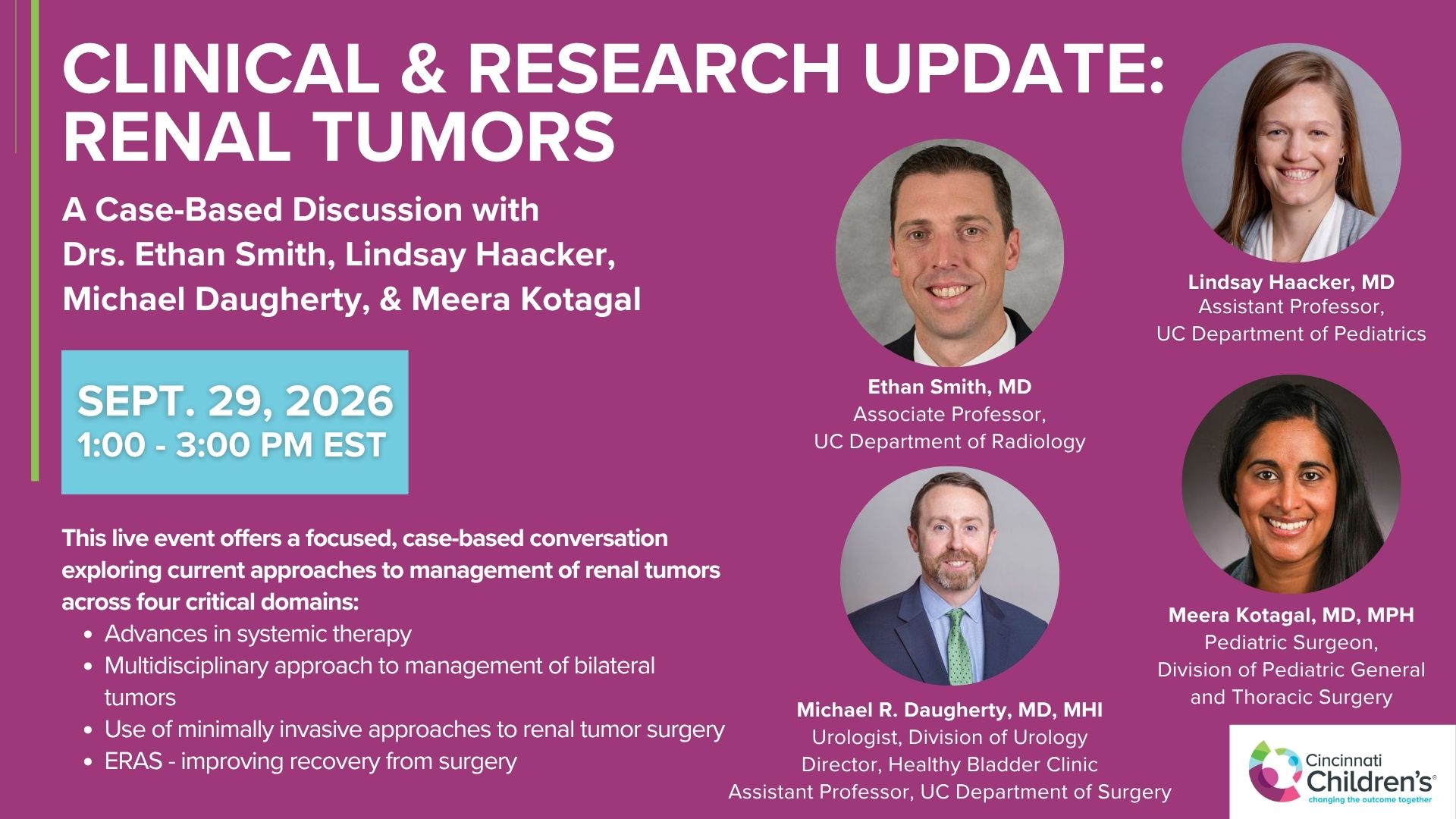
Clinical & Research Update: Renal Tumors with Drs. Ethan Smith, Lindsay Haacker, Michael Daugherty, and Meera Kotagal
71 min · Published Sep 2026
Video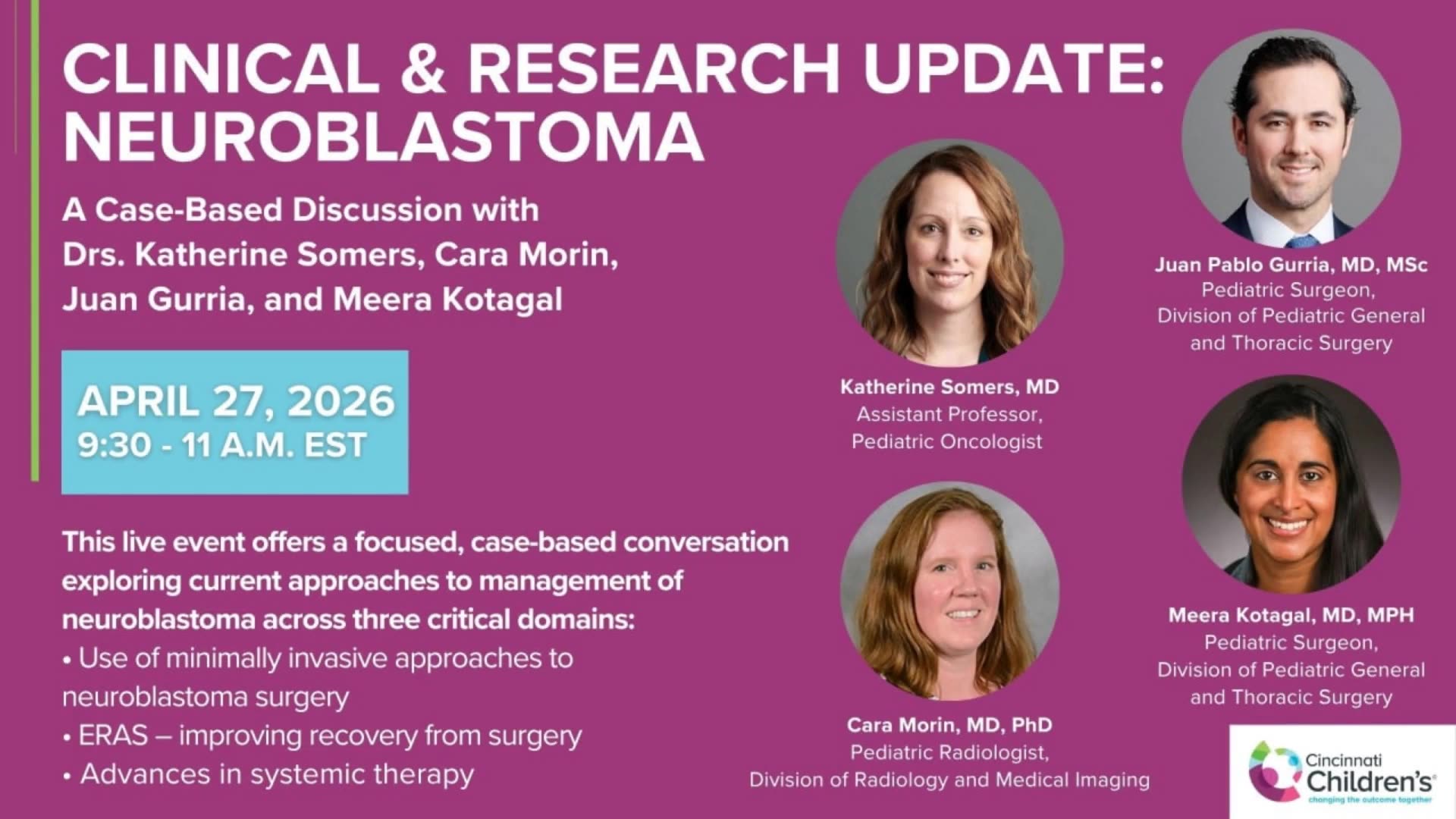
Clinical & Research Update: Neuroblastoma with Drs. Katherine Somers, Cara Morin, Juan Gurria, and Meera Kotagal
67 min · Published Sep 2026
Video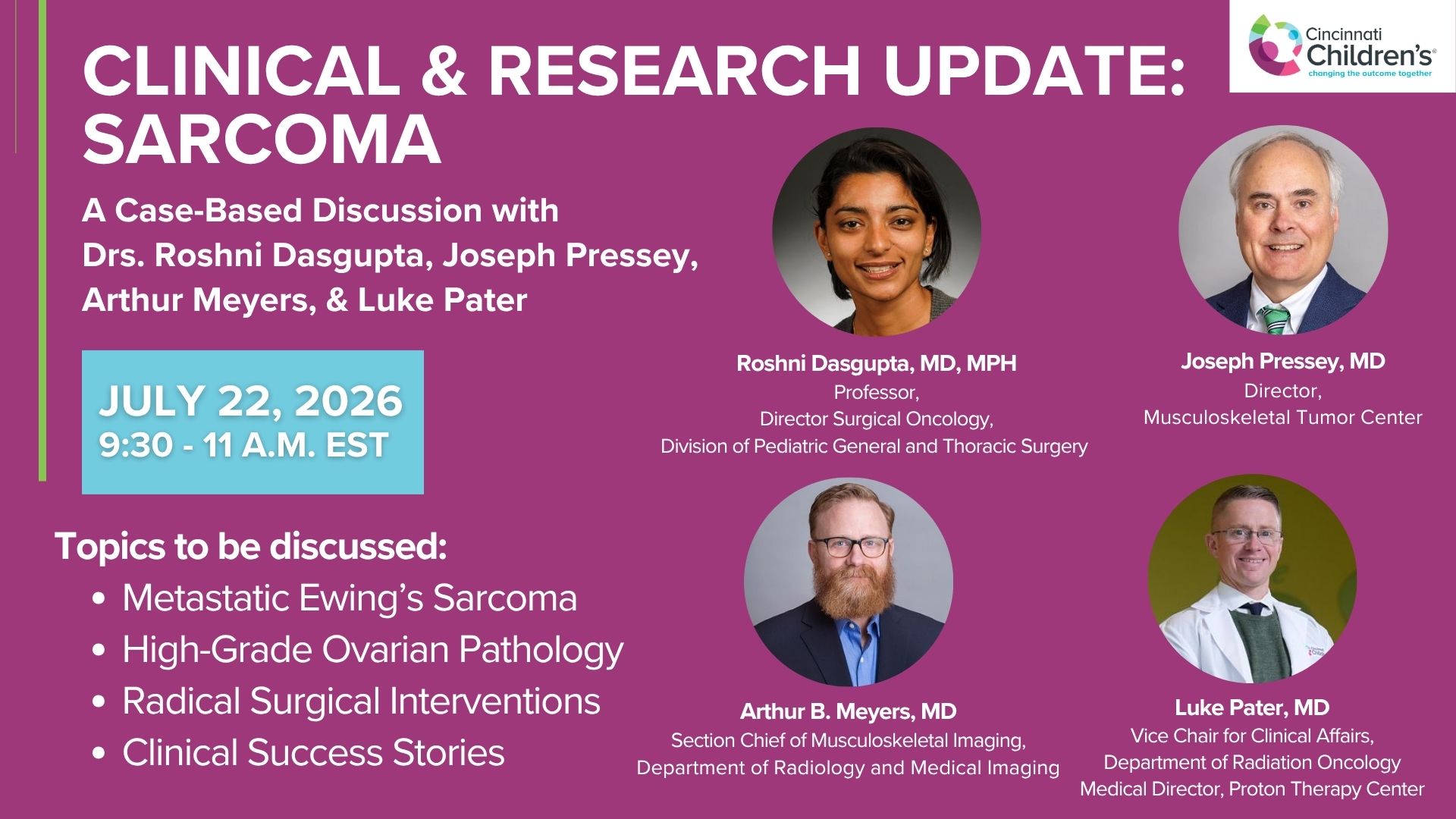
Clinical & Research Update: Sarcoma w/ Drs. Roshni Dasgupta, Joseph Pressey, Arthur Meyer, Luke Pater
66 min · Published Sep 2026
Video
Update Course Rewind 2025: Nerve Monitoring in Pediatric Thyroid Surgery
6 min · Published Jul 2026
Video
Intestinal Atresia Types Explained: Grossfeld Classification for Pediatric Surgery
1 min · Published Sep 2026
Video
Derivation and validation of the Pediatric Community-Acquired Pneumonia Severity (PedCAPS) score: A prospective cohort study
50 s · Published Sep 2026
Video
FETO for Late-Diagnosed Severe Congenital Diaphragmatic Hernia (CDH) at Cincinnati Children's with Dr. Beth Rymeski
4 min · Published Sep 2026
Video
Severe Congenital Diaphragmatic Hernia (CDH) Case: FETO Management & Unexpected Findings with Dr. Beth Rymeski
3 min · Published Sep 2026
Video
Fetoscopic Endoluminal Tracheal Occlusion (FETO) Procedure: Step-by-Step Guide with Dr. Beth Rymeski
4 min · Published Sep 2026
Video
Choledochal Cyst Types Explained: Pediatric Surgery Fundamentals
1 min · Published Sep 2026