


From
Live Event Content
Giussepe Cala, PhD candidate - Best of the Best in Pediatric Surgery 2024
With Dr. Giuseppe Cala
Chapter 1 of 3 · Fundamentals
Introduction
Introduction of Giuseppe Cala and Research Topic
Expert statements on this page
No expert statements were drawn from this page.
Host summaries · secondary, not cited in answers
Educational content from recorded physician discussions — not medical advice. Talk to your (or your child's) care team about your situation.
Video
Yuichiro Miyake, MD - Best of the Best in Pediatric Surgery 2024
Dr. Todd Ponsky · 7 min · Published Feb 2024
Video
Dr. Adriana Dekirmendjian - Best of the Best in Pediatric Surgery 2025
Dr. Todd Ponsky · 9 min · Published Mar 2025
Podcast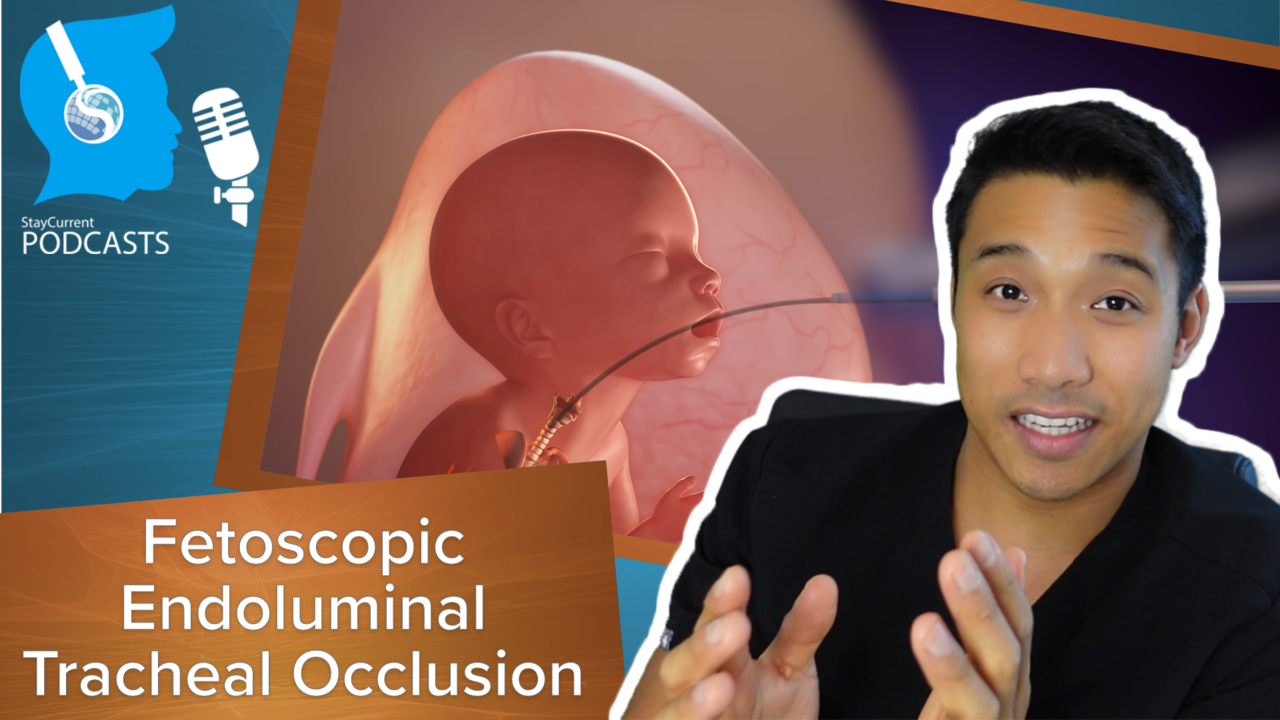
Fetoscopic Endoluminal Tracheal Occlusion (FETO)
5 min · Published Jul 2021
Video
EUPSA - Circular RNA profiles isolated from amniotic fluidscan distinguish between CDH survivors and non-survivers - Richard Wagner
9 min · Published May 2022
Video
Best of the Best in Pediatric Surgery Winner Announcement
8 min · Published Apr 2022
Video
CDH Live Webinar Series Part 1: Research: Lung Compression in CDH Generates Cellular Chronic Hypoxia and Energy Failure
CCHMC Pediatric Surgery · Published May 2023
Only a few other public items share this expert — go deeper there →
Video
Clinical & Research Update: Renal Tumors with Drs. Ethan Smith, Lindsay Haacker, Michael Daugherty, and Meera Kotagal
71 min · Published Sep 2026
Video
Clinical & Research Update: Neuroblastoma with Drs. Katherine Somers, Cara Morin, Juan Gurria, and Meera Kotagal
67 min · Published Sep 2026
Video
Clinical & Research Update: Sarcoma w/ Drs. Roshni Dasgupta, Joseph Pressey, Arthur Meyer, Luke Pater
66 min · Published Sep 2026
Video
2026 Laparoscopic Pediatric Hernia Repair
123 min · Published Jun 2026
Video
Beyond the Spectrum: Diagnosis, Myths & Management - Caitlin Couch & Leslie Lopez - APP Conference 2026
50 min · Published May 2026
Video
Dysautonomia: Navigating the Journey - Martha Willis - APP Conference 2026
55 min · Published May 2026
What the experts said
Organoids are an advanced in vitro system grown from tissue-specific stem cells that can be derived from fetal or adult tissues and used to study tissue biology and diseases.
Fetal organoids can be derived only after the termination of pregnancy when using traditional tissue-based methods.
Amniotic fluid is recirculated by different developing organs and contains stem cells.
The first amniotic fluid cell atlas revealed that the majority of cells present in the fluid are epithelial at the single cell level.
Epithelial cells in amniotic fluid are shed from various developing organs including the gut, kidney, and lung.
Viable cells isolated from amniotic fluid can be cultured in 3D to form epithelial organoids of fetal origin that display different morphologies.
Gene expression profiling of amniotic fluid organoids shows they form three different groups: lung, kidney, and intestinal organoids.
Amniotic and tracheal fluid can be collected from CDH fetuses undergoing tracheal occlusion.
Lung organoids can be expanded from the fluid of CDH patients and contain lung epithelial stem progenitor cells.
CDH organoids derived after fetal tracheal occlusion display fewer differentially expressed genes compared to those derived before the procedure, making them more similar to control organoids.
The gene expression changes in CDH organoids indicate that fetal surgery is changing something at the molecular level, which is reflected in the organoid model.
CDH organoids appear to have impaired differentiation and function based on ciliary beating frequency measurements.
Single-cell RNA sequencing revealed that CDH organoids exhibit a very different cell type composition when compared to healthy controls.
Amniotic fluid contains fetal epithelial stem cells that can form organoids in culture, and these organoids can be generated during pregnancy without using tissue samples.
Lung organoids can be derived prenatally from the fluids of CDH fetuses.
This organoid technology may serve in the future as a tool for functional prenatal diagnosis and clinical decision making.
Fetal organoids can be used to study development because it is difficult to access fetal tissue, providing a different tool to study the epithelium of fetuses.
Organoids can be used to test both known compounds already working in clinics and new compounds, with the outcome of organoid phenotype after treatment correlated with patient clinical outcomes.
For the CDH organoid system, the translational potential is in drug testing rather than transplantation.
A drug testing platform is being established to test as many drugs as possible on CDH organoids, with interest in drugs that enhance proliferation of epithelial cells.
In CDH, the lungs are hypoplastic, and drugs could potentially improve lung maturation by testing on organoids.
Drugs tested on organoids could potentially be implemented with the endoluminal tracheal occlusion procedure, similar to how nanoparticles could be implemented.
A patent is ongoing for the organoid technology but the organoids are not yet commercially available.