


From
Live Event Content
Manish Raiji, MD - 2024 Pediatric Bariatric Surgery Update Course
With Dr. Manish Raiji
Chapter 1 of 6 · Fundamentals
Introduction
Introduction of Dr. Manish Raiji
Expert statements on this page
No expert statements were drawn from this page.
Host summaries · secondary, not cited in answers
Educational content from recorded physician discussions — not medical advice. Talk to your (or your child's) care team about your situation.
Video
Public Policies to Address Obesity: Pediatric Obesity 2017
46 min · Published Feb 2018
Video
Postoperative Pediatric Pain Practice Post the Codeine Era: Peri-Operative...
61 min · Published Jul 2017
Video
AAP Policy for Adolescent Bariatric Surgery: Pediatric Obesity 2017
27 min · Published Feb 2018
Video
Pediatric Obesity Is a Disease: Treatment, Medications, Surgery & Equity in Care with Dr. Justin Ryder
Lurie Children's Hospital · 6 min · Published Mar 2026
Video
Marc Michalsky, MD - 2024 Pediatric Bariatric Surgery Update Course
14 min · Published Feb 2024
Video
Stephanie Walsh, MD - 2024 Pediatric Bariatric Surgery Update Course
16 min · Published Feb 2024
Only a few other public items share this expert — go deeper there →
Video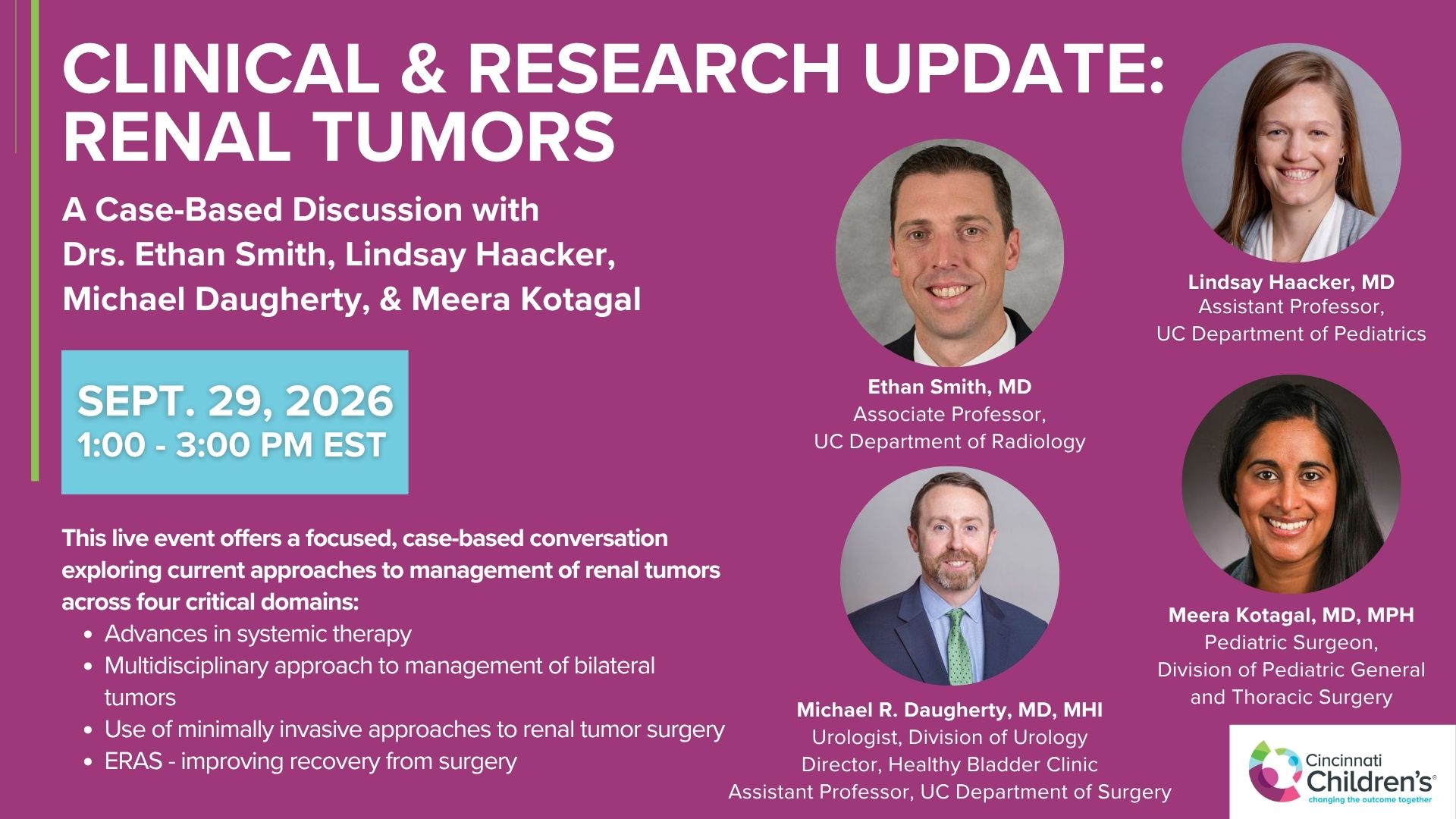
Clinical & Research Update: Renal Tumors with Drs. Ethan Smith, Lindsay Haacker, Michael Daugherty, and Meera Kotagal
71 min · Published Sep 2026
Video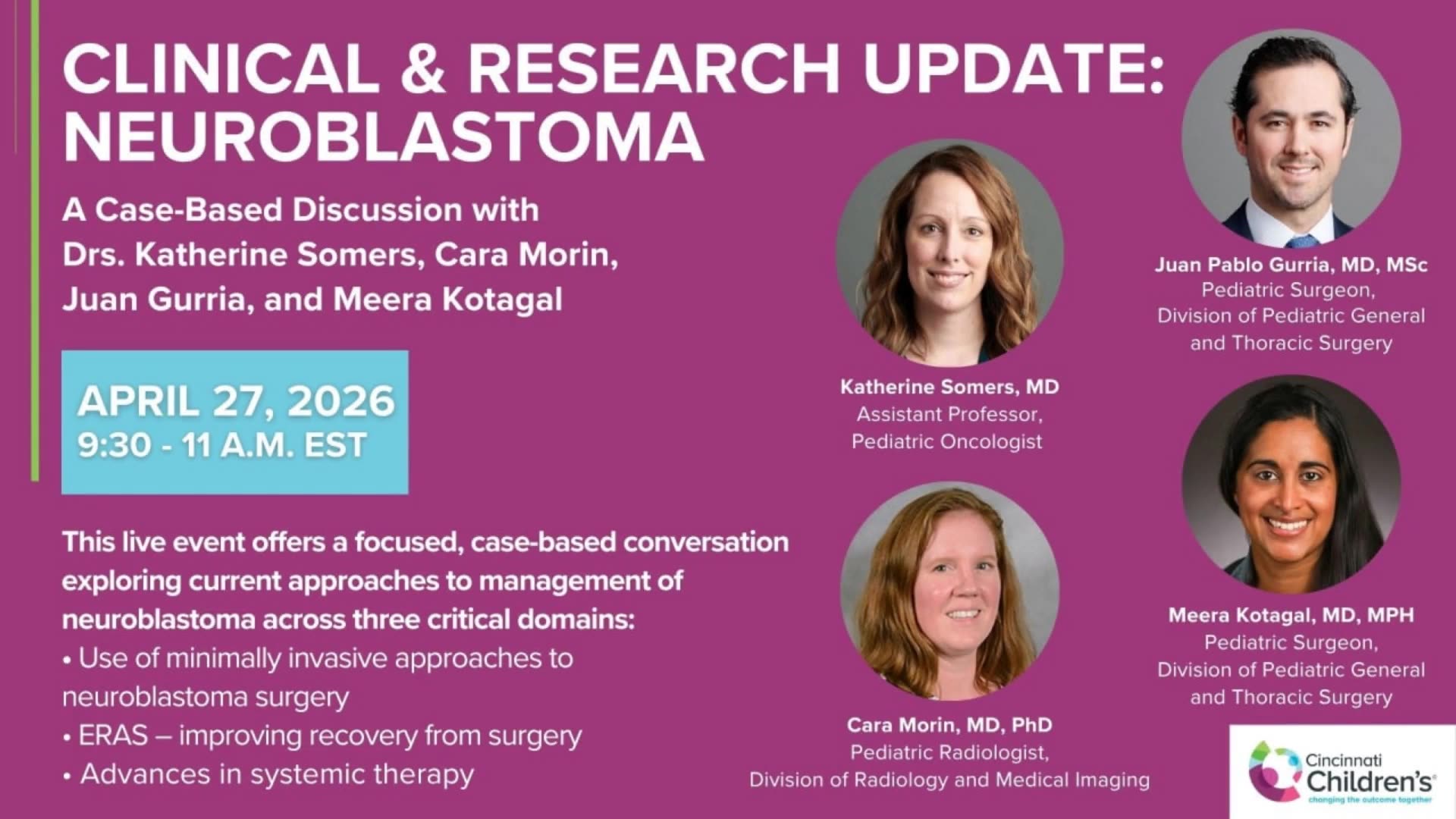
Clinical & Research Update: Neuroblastoma with Drs. Katherine Somers, Cara Morin, Juan Gurria, and Meera Kotagal
67 min · Published Sep 2026
Video
Clinical & Research Update: Sarcoma w/ Drs. Roshni Dasgupta, Joseph Pressey, Arthur Meyer, Luke Pater
66 min · Published Sep 2026
Video
2026 Laparoscopic Pediatric Hernia Repair
123 min · Published Jun 2026
Video
Beyond the Spectrum: Diagnosis, Myths & Management - Caitlin Couch & Leslie Lopez - APP Conference 2026
50 min · Published May 2026
Video
Dysautonomia: Navigating the Journey - Martha Willis - APP Conference 2026
55 min · Published May 2026
What the experts said
In adult patient-physician relationships, the patient and physician are at the central portion of the relationship, but in pediatrics the parents and entire family unit must be included.
A 17-year-old cancer patient has a lot of influence on the decisions being made for her, unlike a neonate who has no autonomy.
The medical values of children as they become adults are influenced very heavily by their parents.
Bariatric surgery fits in the category of low-risk, high-reward procedures based on data showing procedures are safe in children with excellent outcomes.
Incapacitated adults often have a lifetime of behavior upon which surrogate decision makers can base perceived values, but none of that exists for a child.
Children on Medicare and Medicaid are up to 2 times more likely to suffer from obesity, but comprise just over a third of patients obtaining bariatric services.
There is a large mismatch between the number of bariatric centers per state versus the prevalence of obesity in those states.
Children as young as 7 or 8 years of age require assent, especially for invasive procedures.
Most guidelines suggest no age limits for the performance of bariatric surgery.
Children with intellectual and developmental delays are 1.5 to 2 times more likely to have obesity due to medications, behavioral issues, and dietary issues.
Bariatric surgery should be thought of as a very effective strategy and more as a primary intervention rather than an endpoint to a spectrum of failed other options.
Clinical practice guidelines intend to offer bariatric therapy when it's available, not when everything else has been tried.
Many referring pediatricians and families still think bariatric surgery is risky and dangerous.
Obesity disproportionately affects vulnerable populations that don't have the same kind of insurance access.
Societal bias that obesity is a personal choice is the first barrier that leads people not to seek any kind of care or treatment.
Tonsillectomy and adenoidectomy for sleep apnea is only 35% effective in kids with obesity.
ENT surgeons are now recognizing the limited effectiveness of tonsillectomy in children with obesity and sleep apnea.
Published papers show that bariatric surgery is a safe procedure in children and is safer than not operating on them.