IPEG 2021 - Presidential Address with Introduction
Timestops (7)
Tools Used
Topic Overview
IPEG 2021 Annual Meeting
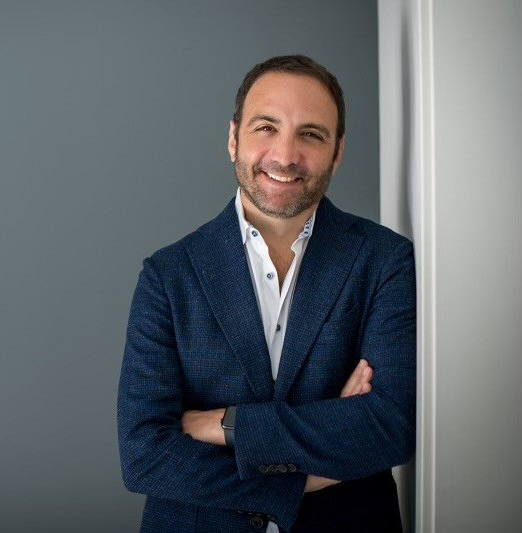
Presidential Address - Todd Ponsky
Full Session with Introduction
Keywords
Hashtags
Transcript
I know I worked my ass off, but I still can't pay it. Just enough to get off in this club. a good time. All my time is up. Hey, let's get in. Oh, give me the time. Ne This is the last $20 I got, but I'm gonna have a good time balling in that. Let the bartender line up some sides because I'm gonna get loose tonight. She's on fire. She's so hot. I'm no liar. She burned up the spot. Look like Mariah. I'll take another shot. holder, drop, drop, drop, drop it like it's hot. Dirty, dirty man. She a freaky girl, and I'm a freaky man. She on the rebound. Your sky. your and OK, so we're gonna have Doctor Steve Rothenberg introduce um, Doctor Ponsky. Great. Thanks, Samir. Uh, I'm gonna go ahead and share my screen. With you guys. I hope everyone is well. Um, It's certainly quite a daunting task uh to introduce Todd, but it's, uh, certainly my great pleasure. Uh, Todd, Todd is a, a great friend and I believe a great leader of IPEC. Uh, Todd was born in March of 27th of 1973 in Cleveland, Ohio, and, uh, got his graduate degree in Skidmore College. He went to medical school at Case Western, um, and then did a surgical residency in George Washington University in DC and then a surgical research fellowship and eventually it's pediatric surgery all in DC. So you can see Todd likes to stay in the same place for a long time. He then came to Denver where he did an advanced minimally invasive pediatric surgery fellowship with me, uh, and that certainly changed my life, uh, for the better after that. He then went to work at Rainbow Babies in Cleveland, Ohio, uh, became an attending at Akron's Children's Hospital, and eventually moved on to, uh, Cincinnati Children's where he is the director of clinical growth and transformational surgical Services. He's published over 125 manuscripts, edited 3 textbooks, written numerous chapters, uh, directed numerous courses, spoken all over the world, and he's an editor for most of our major journals. Uh, his main research interests are MIS surgery, inguinal hernia repair, surgical telementoring, and endoscopic repair of esophageal atresia, and surgical education, which I think is where his true, uh, great contribution to pediatric surgery is and will continue to be. So what? Big deal. What does that all really mean? Who's the real Todd? Well, I think to understand Todd, you need to understand where he came from. And certainly, uh, his parents, uh, who, if you haven't met them are great, uh, Jackie and Jeff Ponsky had a huge role in, in defining who Todd would be. Um, for those of you who don't know Jeff, he's uh, a world leader in, uh, Endoscopic and minimally invasive surgery and as a past president of SAGES, and it's certainly been a mentor to me and uh I think a guiding light to Todd. Uh, but I think it's also been a great weight for Todd to bear. For those of you who may have been in Seattle, uh, this was Todd, uh, um, singing to his father that basically anything he could do, uh, he, Todd could do better. And I think that's probably a heavy uh lift for any child, but I think uh Todd has certainly given it a run for his money. Uh, but Todd is, uh, has had, uh, quite a varied experience growing up, and he certainly made an impression at each point in his life. Uh, perhaps his greatest, uh, disc, but he's always been a, a bit of a cowboy, and I think that certainly applies to his career in surgery. Uh, what many of you may not know is that his love for being on the camera came early, although he had a failed attempt as a, uh, male model early on. Uh, but luckily, he's had strong family around him to help ground him and, uh, lead him and, and keep him tethered, uh, which I think has always been very important. Certainly, his family is the most important thing to Todd. He has an incredible wife, Diana, who, uh, I'm not quite sure how she lives with him every day, and three incredible girls who, uh, who share his joy and, and love of exploration and interest and, and keep him grounded. So how do we describe Todd? Well, I've put it the IT of Todd since he's all about um uh intellectual property. I think Todd's innovative, he's intense, he's inquisitive, he's infectious, he's intuitive, he's intelligent, he's inclusive, and he's ins inspirational. And when you really get to know him, he's exhausting. Uh, Todd has a million ideas coming all the time, uh, and he never slows down. But he's also extremely determined, and that determination has certainly helped make IPEG uh for the better over the last year. Uh, it's been my great honor and pleasure to travel with Todd all over the world, and many of you have seen him in various places, and he's been an incredible ambassador for IPEG and for minimally invasive surgery in children. And he was probably the person most suited to deal with the pandemic, uh, in that he, uh, has changed how we do this. The only problem is I can't turn on my computer, I can't turn on my phone, I can't get on Instagram, I can't get on Facebook without having Todd look back at me. So it's a kind of a mixed bag. But I think Todd's truest and greatest contributions will be insurgical education and certainly he has um done this not only for pediatric surgery and IPEG but for all uh branches of medical education and, and this will have a long-lasting and, and uh significant impact on how we all train, learn, and, and continue to learn. And then there's this part of Todd. Uh, I'm not sure Elon Musk would, uh, totally appreciate with this, but this is a little bit what it's like to have Todd at the wheels of uh iPad. So what's next for Todd? Well, no one really knows for sure, but this pitcher might give you a little hint. I wouldn't be surprised if we hear more about him, uh, in 2004, 2024. So who is Todd? Well, this is one of my favorite quotes and I think it certainly applies to him. Todd is a master of the art of life. He draws no sharp distinction between work and play, his labor and his leisure, his mind and body, his education and recreation. He hardly knows which is which. He simply pursues his vision of excellence through whatever he is doing and leaves others to determine whether he is working or playing. To him, he always seems to be doing both. So, it is my great honor to introduce your president, Doctor Todd Ponsky, a great friend, a great mentee, a great mentor, a great leader, uh, and a great thinker, and, uh, he's now going to give us his keynote speech. Todd, thank you for all you've done for IPEG, um, and for me over the years. I will turn it back to Todd. Uh, thank you, Steve. I don't know where you got those pictures. Um, that must have been my mom or my wife. Uh, Steve, you've been everything to me. Uh, so I devote my whole career to you. So thank you for, for everything you've done. Uh, you put me in the direction, introduced me to IPEG, and I've, uh, it's been, our IPEG's been part of my heart and soul. Uh, and this has been the biggest honor ever to be, uh, president. Um, I, I wanna, um, Say that I have a great team that, that I work with. So all the, the content you see comes from this team. But you know what, it's, it's finally time, you know, they're always on camera, they're always out there, uh, educating the world, but it's time that I get the spotlight. And I want the spotlight now, and finally, I get to give a presidential address without my fellows, you know, in front of me, I get to finally give my address. So let me give my address. Uh, thank you, IPEG. You know what, I'm gonna call Zach and Romy. Hey, what's up guys? What's up, Rob? Hey Rob, how are you? Doing great. I just keep getting these texts from Todd. He keeps bothering me about this presidential address. Is he texting you guys? Yeah, always, yeah. I don't know what to do. Well, I mean, he can't do it without us, so that's a great point. He can't do this without us. That gives me a great idea, thanks guys. Hey IPEG, it's been an absolute crazy year. Hi there, IPEG. I'm Rod Gerardo, research resident at Cincinnati Children's Hospital, and if Todd thinks he's gonna give this talk without me, he is out of his mind. So, without further ado, here is your presidential address. But out of that, we saw the power of digital, and how we can teach and educate in alternative means. So the title of the talk is a peek into the Future of surgical Learning, a king, an ox, and Elon Musk. So if we look at the traditional methods of surgical education, it has to do with textbooks, journals, and society memberships, but are these still relevant? And if we look at what has happened over the last decade, we've seen entire industries toppled overnight and disrupted. And one of the most disrupted industries has been the publishing industry. If you look at magazine industry, or magazine sales have gone down almost completely, and if you look at the newspaper industry, the same thing. OK, so how do we apply that to medical publishing? Let's talk about. What the biggest problem is, and the reason I think that medical publishing will change is this concept of exponential growth of knowledge. So let's look back to the early 1900s. It would take about 100 years for knowledge to double. Fast forward to the 1940s and 1950s, it would take about 25 years. And then in 1982, knowledge was doubling every 12 to 13 months. And then in 2020, IBM predicts that knowledge will be doubling every 11 to 12 hours. In fact, if you look at medical publications over the last, Century, you can see that it's been exponentially growing. OK, hold up. So take a look at this graph here. So in the 1950s, the doubling time of medical information was about 50 years. Fast forward to today, it takes about 70 days for the amount of medical information to double. So who cares? Who cares? Medical knowledge doubles. Is that a big problem? Well, let me tell you a story about a king and a chessboard. Once upon a time, this man invents a chessboard, and he takes the game to the king and he says, here king, this beautiful game of chess, and the king says, this is the most amazing game I've ever seen. What can I do to repay you? And the man says, I'm a simple man. All I need is rice. Just give me rice, and I'll take it home to my family. And the king says, how much rice do you want? And he says, Well, let's play a game with the chessboard. So what I want you to do is I want you to put 1 grain of rice on the first square, and double it. So 2, and then 4, and then 8, and when you fill. The chessboard, I'll take it home. So the king does so, and he puts 1, and then 2, and then 4, and he realizes that when he gets to the second half of the chessboard, something happens. A big number becomes a massive number. And then the entire room that they're in fills up with rice, and then the palace fills up with rice, and then the entire country of India fills up with 3 ft of rice. Then they finally covered the chessboard. That's the power of doubling, and that's what's happening with knowledge right now. We are on the second half of the chessboard. Do the math, that's 18 quintrillion grains of rice. Let's talk about the textbook. Right now, textbooks are published, uh, about every 10 years or so. This made sense in the early 1900s when the amount of information between two editions of a textbook wasn't too different. But now, when you look at between 1982 and 2020, look how much, look how much knowledge grew in the last 40 years at that rate. You're gonna have to update the textbook every day. So textbooks don't work because they're always gonna be outdated now. So this is the new problem. When a great article is published, it's impossible to identify because it's camouflaged by so much other stuff. So, when my dad was a medical student and went through medical school, and then he did his entire career, the amount of medical knowledge was vastly smaller than the amount that's out there today. So a general surgeon could really be that, a general surgeon and know and operate on anything and everything. But this is us now. This is us. We are on the second half. For the chessboard. So for us to keep up with information is almost impossible. Maybe what happens is we wake up in the morning and you lay down and we just load knowledge into our brains. We just load pediatric surgery into our brains and we say, ah, that hurt, and OK, I know pediatric surgery now. Sounds really crazy, but look at this company that the Doge King himself, Elon Musk, is investing in. Billionaire entrepreneur Elon Musk has launched a new startup which will work to implant artificial intelligence technology into the human brain. OK, Elon, that's really interesting, but how do we get to that point of knowledge? Well, this is a great book. This is called Harnessing Our Digital Future by Andrew McAfee. And this talks about 3 concepts that are probably going to revolutionize how everything is going to be done using digital in the future, and I want to talk about #1. Number 1 is machine. All right, Todd, what is machine learning? Normally we code a computer and say, if the user does this, then you do that, and we tell the computer very specifically what to do. In machine learning, we actually program the computer to learn on its own, so that as time goes on, it starts making its own decisions. Here's Google CEO Sundar Pichai demoing Google's AI assistant. When you just ask it, make me a haircut appointment between 10:00 and 120. What happens? Is the Google Assistant makes the calls seamlessly in the background for you. So what you're gonna hear is the Google Assistant actually calling a real salon to schedule the appointment for you. Let's listen. So how can I help you? Hi, I'm calling to book a woman's haircut for a client. I'm looking for something on May 3rd. Sure, give me 1 2nd. Mm hm. Sure, what time are you looking for around? At 12:00 p.m. we do not have a 12:00 p.m. available. The closest we have to that is a 1:15. Do you have anything between 10:00 a.m. and uh 12 p.m. Depending on what service she would like, what service is she looking for? Just a woman's haircut for now. OK, we have a 10 o'clock. 10:00 a.m. is fine. OK, what's her first name? The first name is Lisa. OK, perfect. So I will see Lisa at 10 o'clock on May 3rd. OK, great, thanks. Great. Have a great day, bye. OK, that's cool and all, but how are we going to use that to solve the problem of too much medical information? Well, actually, we set forth on a project to see if we could use artificial intelligence and machine learning to better determine a good article and create a filter. Alex Cassar and Todd took over 500 abstracts from ABSA and put them into a machine learning algorithm to see if it could predict the editorial process. We have 520 abstracts. We use natural language processing algorithm. Natural language processing is the concept that the machine can actually start to learn and understand the words used. In the abstract. They came up with an 85% negative predictive value. That means that 85% of the time, the machine was able to predict when an article was rejected by the editorial board. We are now gonna be adding more and more abstracts to this to get it into the high 90s. OK, so machine learning can be used to help filter all this content. Now, let's change gears a bit. Let's say it's 1998, you're on Who Wants to Be a Millionaire, and you don't know the answer to a question. What are you gonna do? You could either have them narrow it down to 50% of the choices. The second option is that you can call an absolute expert. You can phone a friend, the most expert person you know. And the third option is, you can ask the audience. Which one are you gonna choose? Well, here's what happens if you pick the 50/50 option. Your odds of getting it right are 50%, because there's only two choices. What happens if you call up your expert friend? Your odds of getting it right are 66%. If you ask the audience, your odds of getting it right. Are 91% The crowd is always right. So that brings us to #2. The crowd. In the late 1800s, Francis Galton took an ox to the state fair. He asked 800 random people, how much does the ox weigh? The average guess was 1,197 pounds. The actual weight of the ox was 1,198 pounds. The crowd is always right. In fact, this research experiment was just repeated by Planet Money, and they got the exact same result. OK, so how do you apply that to medical publishing? Well, right now, the scientists, all they want is to take their research and have the world see it. They don't want to make money on it. They don't want anything other than disseminate it around the world. Here's how the process works now. When a scientist does a research project, they send it to a publishing company. The publishing company then looks at the paper. And an editorial board evaluates the article. Then if the editorial board likes it enough, then they push it out for publication, send it to the masses, and say, hey, buy our journal and you can get this information. And by the way, this entire process takes about a year. So Todd, how do you think we should share knowledge? So what if we just get rid of the publishing companies? Why do we need them now? I mean, at this point, we can disseminate our content on our own using digital means. All right, Todd, that's pretty radical, but I'm on board. Here's my question, how do you replace the editorial board? What if we just use the crowd as the editorial board? Well, this was done in the Social Science Research Network. They actually have a journal where anyone can contribute an article and the crowd determines what's good. Put AI and the crowd together, what do you get? Scientists publish their articles, they are reviewed by the AI and the crowd, and then the crowd can see what articles they want to read. OK, so now we've filtered out the articles that we really like. We took out the middleman. How do we get people to read these articles? Well, that's number 3, platform. The way to get this knowledge around the world is with modern day platforms and mechanisms to disseminate the knowledge. Look at mainstream. Everything is converting from print to media, streaming. Listening Social media, gaming. In fact, there are more audiobooks being downloaded than digital print books from Amazon. This is the way of the world. It's digital consumption. But then what about medicine? We're still using print. If you look at the back of Fauci's office, he's got books and journals. Why are we always so behind? Well, the good news is we're finally catching up to the mainstream. So now content is being converted from print to digital. And this is the priority of our lab that we have been working for years now in taking print medical information and converting it to digital. That means videos, podcasts, interactive media like games. This is the way that we will be consuming knowledge in the world. This is more relevant to the modern era. So what we do is we take an article, and we put it through our machine of ideation, and we convert it, and we make this engaging and fun, and then we disseminate it through social media and different platforms. This is how content will and should be shared in the modern era. OK, so turning articles into video summaries, here's Todd back in 2017 doing just that. This is Todd Ponsky with the Journal of Pediatric Surgery, and today we're gonna address a hot topic of debate in the operating room, which is the safest headgear to wear in the operating room? Is it this? Is it this or is it this? Well, this question was just answered in a recent study called Hats Off, a study of different operating room headgear assessed by environmental quality indicators. This isn't always easy, and sometimes making these videos is a bit of a hassle. Is it? It's It's it. Is it this? Well, let me tell you this, my fellow, Nick Bruns, years ago, went and presented at SAGE's conference. I was very proud of him. There were hundreds of people in the audience. But a week later, we published this on social media, and we had 50,000 people reached. So whether you like it or hate it, you can't deny the fact that this is how you reach the majority of people. And here are some examples of converting medical knowledge into media. So how are people getting information now? What is the fastest growing social media network? Any guesses? It's TikTok Why? Well, so here's the story about how Todd's content gradually shortened over time. We started doing online courses, and they would go 1 or 2 days, all day, and then we started doing half days, and then we started doing 2 hours or 1 hour, and now people are wanting content that's 1 minute. It seems as though people prefer shorter bits of content as opposed to multiple days of education. So this is why TikTok is so successful. It delivers information in bytes of information that are 30 seconds to 1 minute long. Here's an example of Rod Gerardo, my current research fellow, doing JPS articles on TikTok. In that case, yeah, it's taking forever. I bet the residents doing it. Get the point. I wonder how much longer surgeries take when they have residents in them. I'm Rod from Cincinnati Children's, and here's an article that looked at just that. Study authors looked at about 1800 appendectomies, some of them with and some of them without a resident, and they compared things like operative time, cost, and then the post-operative outcomes that they find. Residents. Involvement was associated with a significantly increased cost, about $600 and operative time, about 10 minutes, but there was no significant difference in post-operative complications. We've also realized the power of audio. Today I want to talk about a four letter word. Pimp. Well, at least in medicine it's like a four letter word. When the pimp's in the crib, man, drop it like it's hot. No, no, no, you see, I don't, I don't mean pimping like the way Snoop Dogg talks about it. I'm talking about the kind of pimping that you see on Grey's Anatomy. Name the common causes of post-op fever, uh, from your head, not from a book. So doctors around the world learn a lot about clinical medicine from this style of teaching. And we call it pimping, pimp questions, pimping, pimp pimp questions. It's that constant barrage of clinical questions from whoever you're learning from, and we continue to use it because we believe that you'll never forget something, and if you get it wrong, you'll never forget it. When I get a question wrong, like that's something I'll never forget. People love listening. Why? Because you can do it while you're doing something else. It fits into the lifestyle of a busy surgeon. You can drive, you can work out, you can, between cases, take a listen to something and learn when you're multitasking. This is the power of audio, and this is really the trend on how people are consuming knowledge. All right, so now we have all this great content, but it goes out there in kind of this unorganized fashion. So how do you tailor it so that someone can get just the content that they want? This is how music started off. People would listen to music on an album and they would go buy the album, but then when music went digital, we had a problem. Because we had all these digital files all over the place, but there was no organization to it. You'd have to go on the internet and try to find music files here and there until Spotify came out, and Spotify actually was able to aggregate this content into a usable, organized way. OK, so how do we do that with medical knowledge? I mean, let's say you look up a disease, how do we aggregate all of the possible media relevant to that topic? All right, changing gears a bit. What about live events? Is that the next big medical thing that needs a digital upgrade? I wanna talk about something that my research fellows, Rod Gerardo and Rami Sha Aban came up with. When they first started doing their research with me, I gave them a challenge, as I do all my fellows. We're gonna work on the existing projects, but I want you to come up with something that you think will be game-changing in how digital media will teach the world. And they came up with this idea called the story cast. The idea is that it would be a choose your own adventure, interactive video learning session, where the audience or the user decides the outcome. Let's take a look. Hey, there you are. I just got the call. 5 year old male pulled from a house fire. Vitals are listed here. What should we do first? Looks like there's a pelvic fracture on X-ray. Here are the vitals What do you wanna do? All right, let's start taking out some of these packs. Do you see what I see? It looks like a splenic laceration, probably a type one, but it's not bleeding anymore. What do you wanna do? Great job. So in summary, the patient came in. You immediately evaluated his ABCs. Realizing that the airway may have been compromised from inhalation injury, you elected to intubate, and you did it. You saved his life. So this idea was very exciting, but we wanted to take it one step further. Could we apply this to live? So what did we do? We made a neuroblastoma storycast and created a live webinar without PowerPoints or slides or anything. We just let the audience decide every clinical decision tree to determine the outcome of the case. We're gonna try a fully immersive digital way of teaching that we think is starting to get us on track of, of how we should be teaching medical knowledge these days. Trying all new technology. First, you're gonna take a quiz to test your pre-course knowledge. A QR code's gonna pop up on your screen. Hold your phone up to that QR code, and a quiz will download to your phone. Take that quiz over the next few minutes, and at the end, we'll tell you who the top 3 scores were, and they'll earn a $25 Amazon gift card. Then, you're gonna participate in a live action story cast, where as a group, you will determine the outcome of the patient. And finally, we'll play an animated video that explains everything you just learned. Rami, why don't you start the story cast? Hey, there you are. I just saw our first clinic patient, one year old male, mom noticed an abdominal mass while bathing him, but on exam, there's a non-tender palpable mass in the left upper quadrant. What do you wanna do? OK, so we've got a non-tender palpable mass in the left upper quadrant, so we have two choices here. You can either A, order lab work, including urine catecholamines, UA and abdominal ultrasound, or B, order a beta HCG, CEA, AFP, and abdominal ultrasound. We're gonna go with what the audience chooses here, so whatever the majority is, is what we're gonna go with. And it keeps creeping up. It looks like the majority, well, it keeps going up higher. It looks like the majority definitely wanna do A, really washing out B there. Uh, so, I think we have enough answers that I think the majority are definitely gonna go with A. So Ray, go ahead and take us through A. Ultrasound shows that the mass is adrenal in origin. A CT chest, abdomen and pelvis doesn't show any lesions anywhere else in the body. What other tests do we have to get? Well, over the past several years, we've seen an incredible interest in people that are really passionate about using media to teach the world. So we've thought about, should we have a fellowship? Should we have a training program in how to use media to teach medicine? It would be maybe a new career path. This fellowship would consist of learning from marketing, learning digital video editing, audio editing, learning about social media, all the things that go into responsible digital reporting of medical information. So in summary, things are absolutely gonna have to change. With this exponential growth in medical knowledge, the traditional societies, journals and textbooks are not going to be adequate. We're going to have to find new ways of getting the right information all over the world. Filtration. We're going to have to use crowds and AI to help find the important information. Dissemination. How do we democratize this knowledge and get it all over the world? New platforms, digital and audio media, social media. And finally, as this becomes a more popular way of sending knowledge around the world, we're going to have to train people who know how to do this in the right way. And that's a wrap on Todd's presidential address. IPEG, thank you so much, and Todd, awesome talk, boss. Thank you so much. Hope you have a great morning, afternoon and evening. So thank you, IPEG. Um, thank you to Rod and the team. As you can see, they are everything. I ride on their shoulders. Um, this has been the biggest honor of my life. So, uh, thank you so much and I think you're in very good hands with your next president, Miguel Gilfond. Thank you, IPEG.