


From
Live Event Content
Update Course 2023 - Update Course 2022 and Best of the Best Recap
hosted by Dr. Todd Ponsky
Part of
Appendicitis 29 items
Chapter 1 of 4 · Fundamentals
Introduction
Introduction and Overview of Update Course and Best of the Best
Expert statements on this page
No expert statements were drawn from this page.
Host summaries · secondary, not cited in answers
Educational content from recorded physician discussions — not medical advice. Talk to your (or your child's) care team about your situation.
Video
Update Course 2021: DEI – CONCORDANCE AND POST OP COMPLICATION STUDIES
Published May 2022
Video
Appendicitis Management & APPY Trial: Update Course 2016
31 min · Published Oct 2018
Podcast
Journal Club: Appendicitis in 2021
15 min · Published Aug 2021
Podcast
Update Course Rewind: Perforated Appendicitis 2019
12 min · Published Apr 2021
Video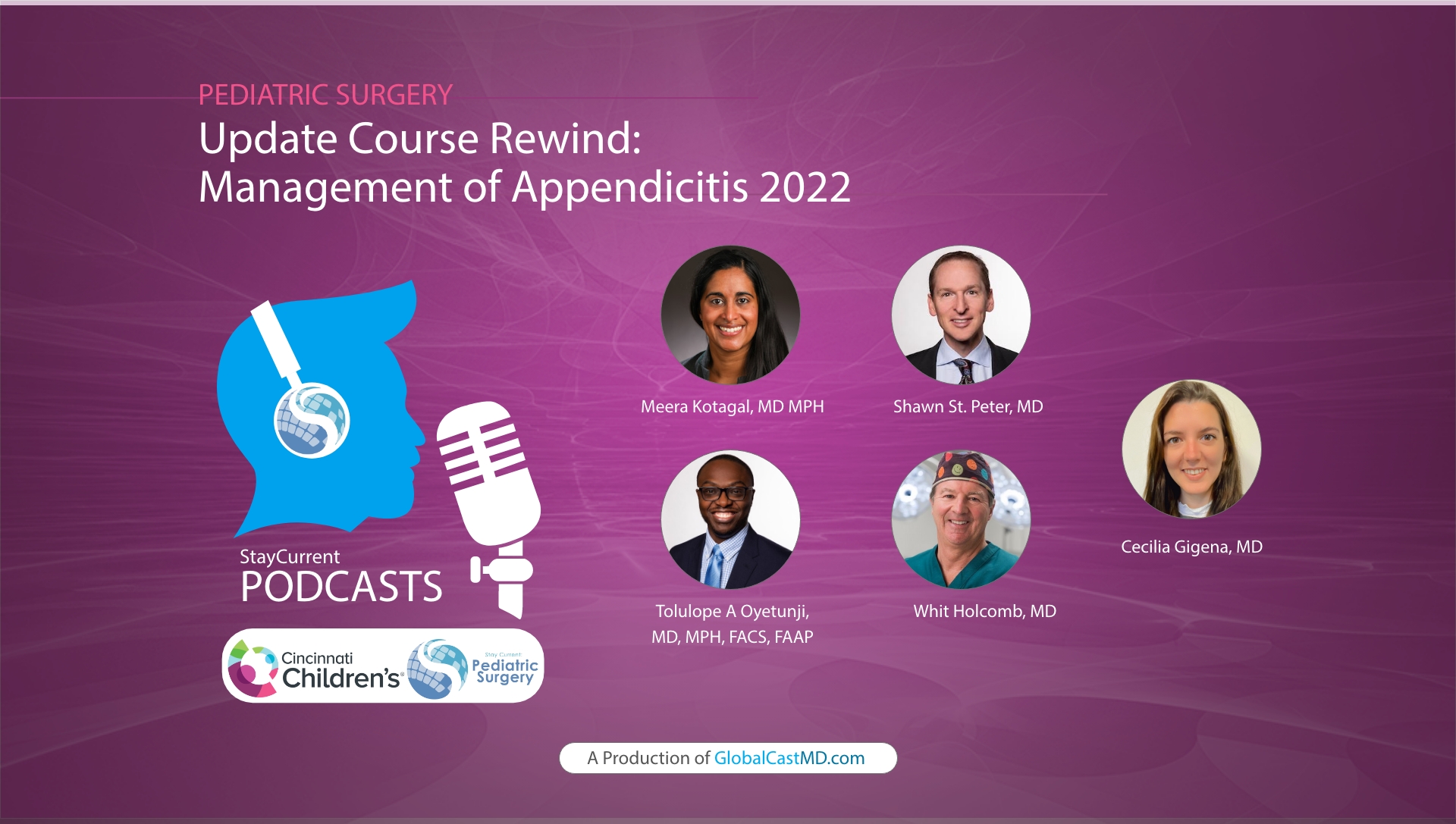
Update Course Rewind: Management of Appendicitis 2022
Published May 2023
Podcast
Biliary Atresia, Appendicitis, Intestinal Failure, and Anesthetic...
44 min · Published May 2017
Video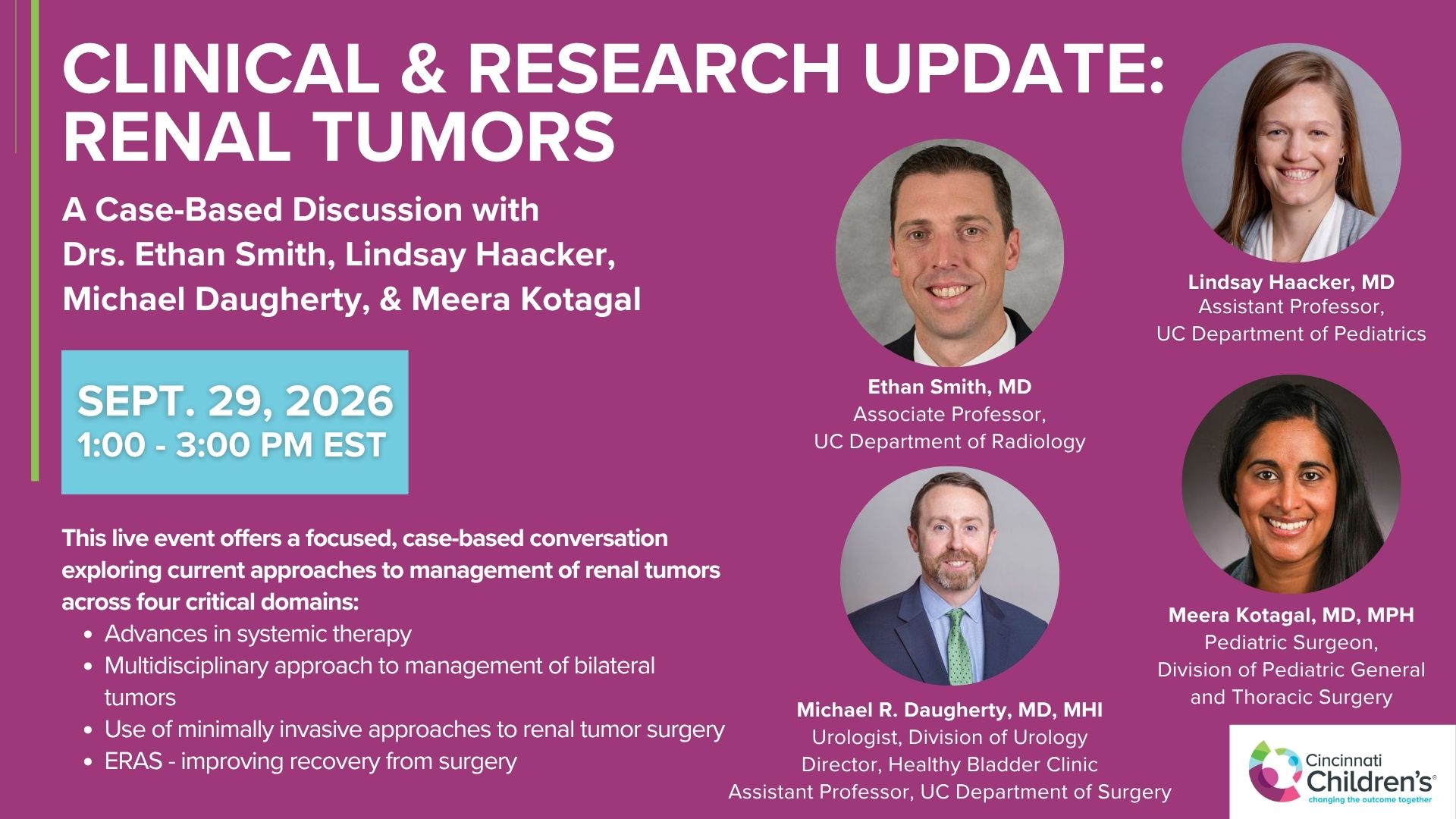
Clinical & Research Update: Renal Tumors with Drs. Ethan Smith, Lindsay Haacker, Michael Daugherty, and Meera Kotagal
71 min · Published Sep 2026
Video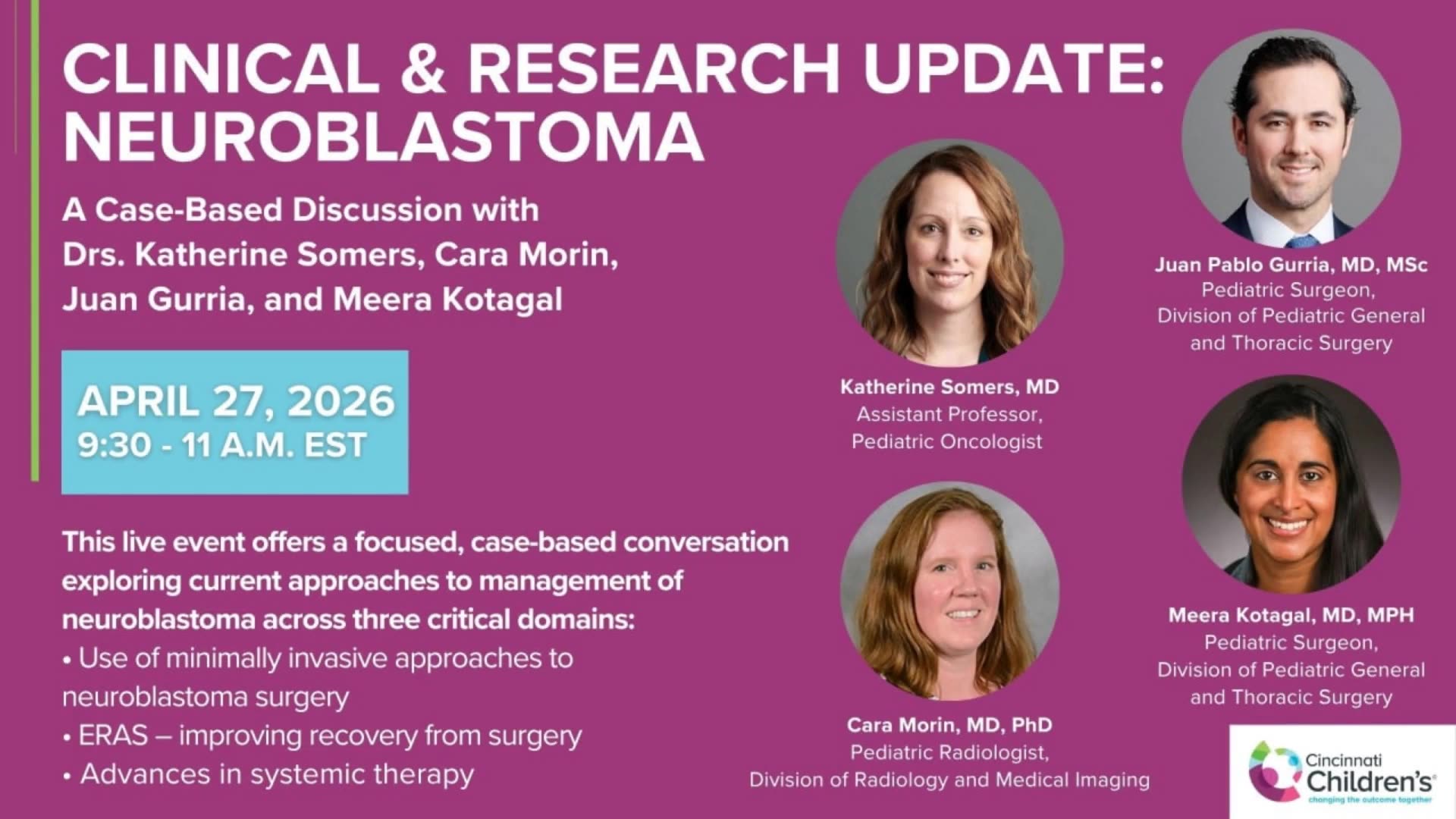
Clinical & Research Update: Neuroblastoma with Drs. Katherine Somers, Cara Morin, Juan Gurria, and Meera Kotagal
67 min · Published Sep 2026
Video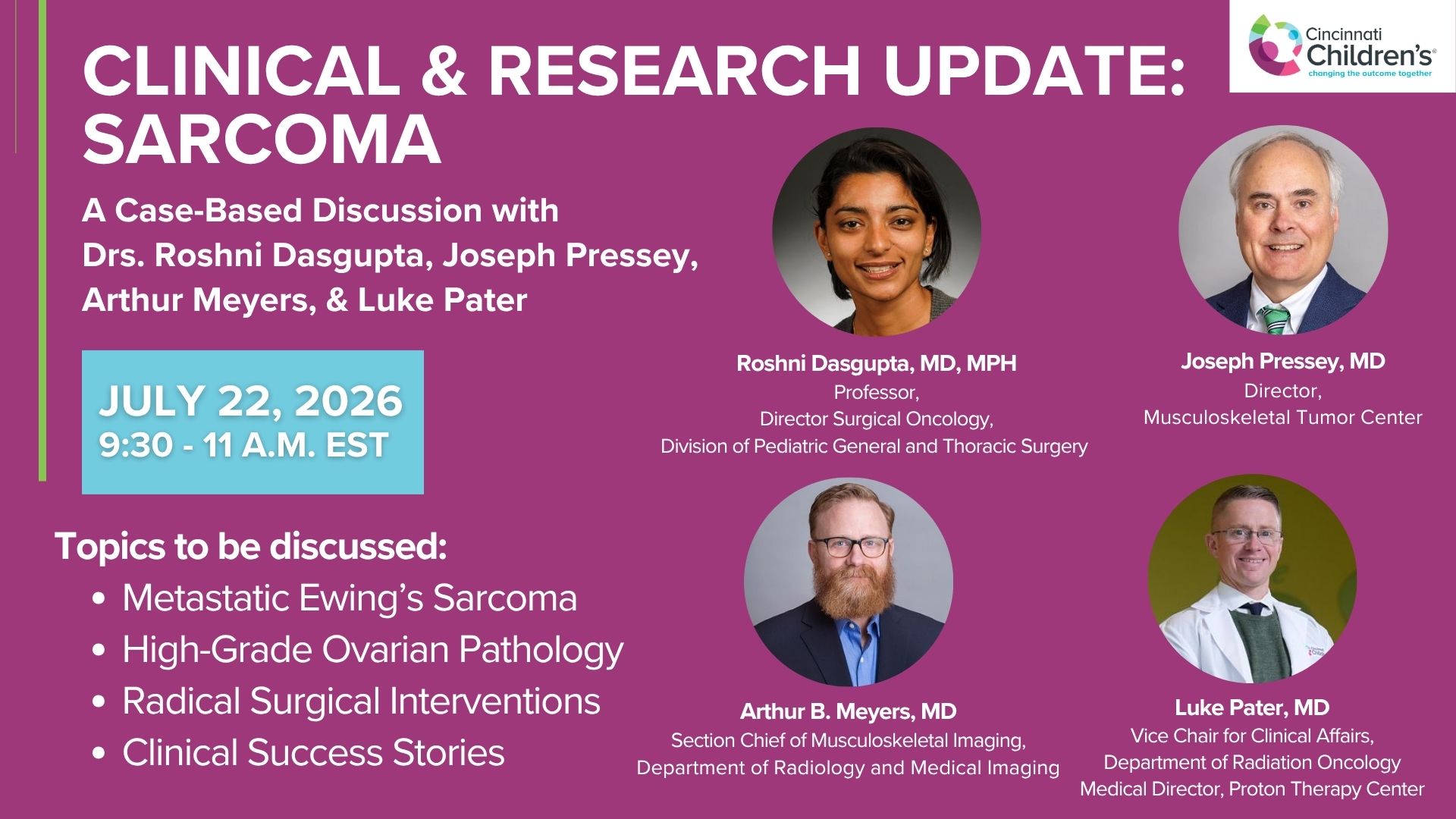
Clinical & Research Update: Sarcoma w/ Drs. Roshni Dasgupta, Joseph Pressey, Arthur Meyer, Luke Pater
66 min · Published Sep 2026
Video
2026 Laparoscopic Pediatric Hernia Repair
123 min · Published Jun 2026
Video
Beyond the Spectrum: Diagnosis, Myths & Management - Caitlin Couch & Leslie Lopez - APP Conference 2026
50 min · Published May 2026
Video
Dysautonomia: Navigating the Journey - Martha Willis - APP Conference 2026
55 min · Published May 2026
What the experts said
The 2022 Update Course had 1,467 registrants who attended live and 1,800 people who watched immediately after.
Over 8,000 people visited the event page and watched videos from the 2022 Update Course.
To combat implicit and explicit bias, one should stand up for people when they are being called out or championed in the moment, not in private places afterward.
Small children do not necessarily need an IV line for hydration because they can be hydrated by mouth until 2 hours prior to surgery according to current fasting guidelines.
Collimation (making the radiation field smaller) can produce better images without increasing radiation dose.
If shielding patients during fluoroscopy, the shield must be placed on the bottom of the OR table, not on top of the patient, to be effective.
CT for suspected airway foreign body in patients with reactive airway has over 94% sensitivity and specificity.
Mechanical bowel preparation is not needed to reduce surgical site infections.
In the NEC trial comparing drainage versus laparotomy, laparotomy showed better neurodevelopmental outcomes.
Non-perforated appendicitis patients can be discharged on the same day of surgery.
Dr. Sean St. Peter reduced abscess rates in perforated appendicitis from 20% to 10% by treating patients as if they are not sick.
Non-surgical management of appendicitis has approximately 30% failure rate, making it not better than surgery, but it remains an option in certain cases.
Congenital esophageal stenosis can be treated with dilations in most cases, with good outcomes and no need for resection.
If congenital esophageal stenosis has a cartilage remnant, resection may be needed; otherwise dilation might be sufficient.
Advocacy for pediatric gunshot injury prevention includes talking to parents at every visit about safe gun storage, not just after an injury occurs.
After gastroschisis closure, patients can be fed as soon as possible as long as they are clinically stable.
Feeding protocols improve outcomes in gastroschisis patients.
Emesis is normal in gastroschisis patients after closure, so clinicians should not be alarmed by it.
Asymptomatic spontaneous pneumomediastinum does not require hospital admission.
Asymptomatic spontaneous pneumothorax does not require hospital admission.
Straddle injuries with no active bleeding do not require hospital admission.
Intussusceptions that resolve with water enema or air reduction do not require hospital admission.
Low-grade solid organ injuries can be discharged from the emergency department.
Most esophageal leaks can be managed by observation or chest drain without surgical intervention.
For external esophageal fistulas in the neck or persistent leaks, an endo-vac (negative pressure device placed inside the esophagus at the leak site) is a good treatment option.
After any esophageal leak (whether resolved with endo-vac, observation, or chest drain), stricture rates are increased, so patients should be monitored for strictures.
Best of the Best 2022 had over 2,000 registered participants, 800 attended live, and represented 116 different countries.
Rebecca Figueira from Hospital for Sick Children in Canada won the world winner award for Best of the Best 2022 for work on fetal vascular development in CDH, marking the second consecutive year this lab has won.
For positive cutaneous melanoma, sentinel lymph node biopsy with ultrasound surveillance is sufficient instead of complete lymph node dissection.
In pulmonary sequestrations, surgical treatment was found to be better than embolization in a multi-center European (especially Italian) comparison study.
Tele-simulation is as effective as standard in-person simulation for surgical training; trainees trained by either method showed equivalent outcomes.