


From
StayCurrentMD
Management of Primary Spontaneous Pneumothorax in Children
hosted by Dr. Cecilia Gigena
Chapter 1 of 1 · Evidence & Research
Study overview
Retrospective Analysis of Spontaneous Pneumothorax Management in Adolescents
Expert statements on this page
No expert statements were drawn from this page.
Host summaries · secondary, not cited in answers
Educational content from recorded physician discussions — not medical advice. Talk to your (or your child's) care team about your situation.
Video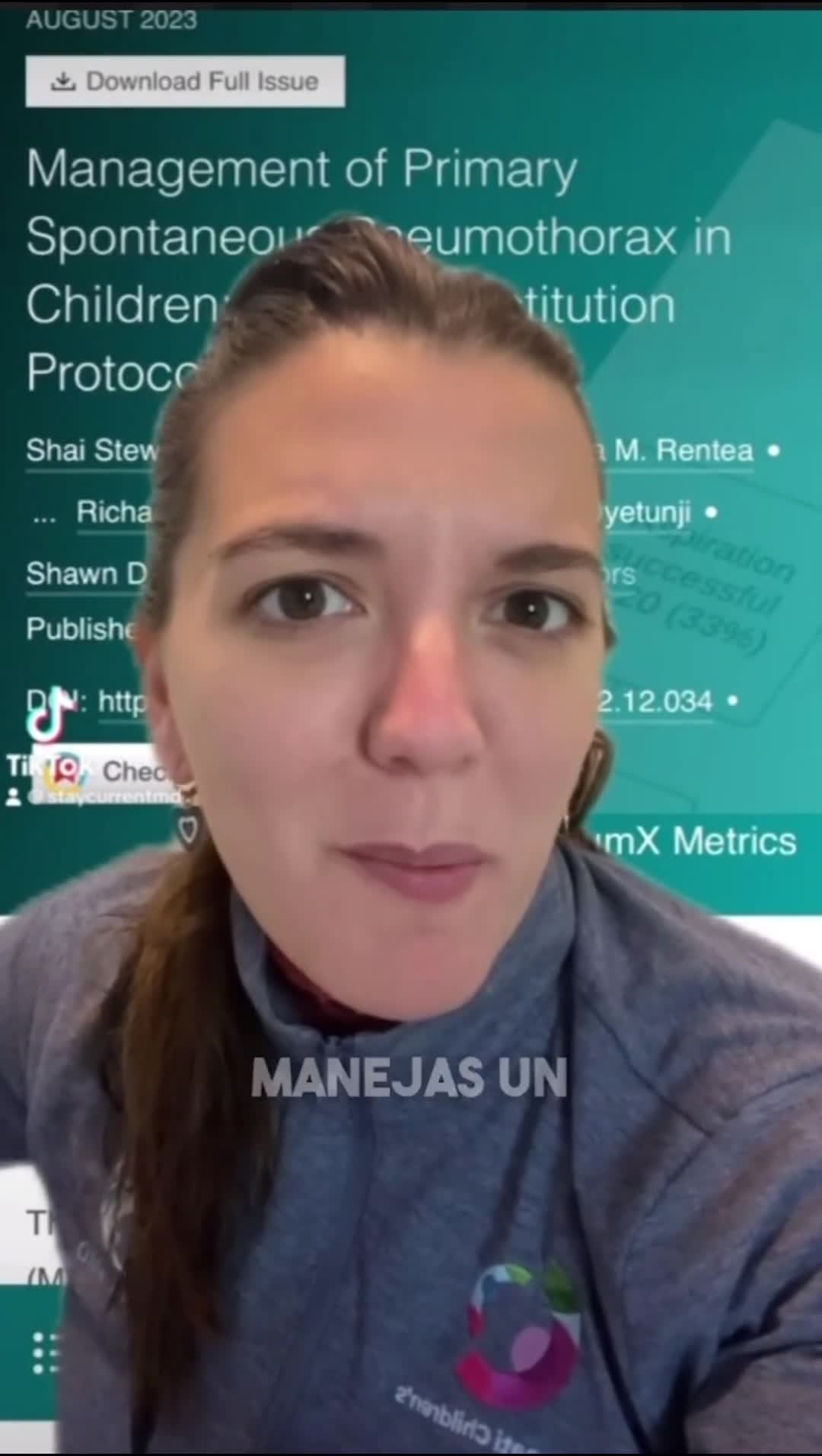
Manejo del neumotórax primario espontáneo en niños
Published Sep 2023
Video
Aspiration Test Predicts Need for Operation in Pediatric Spontaneous...
Published Feb 2020
Video
Update Course Rewind: Spontaneous Pneumothorax 2021
Dr. Todd Ponsky · Published Oct 2021
Video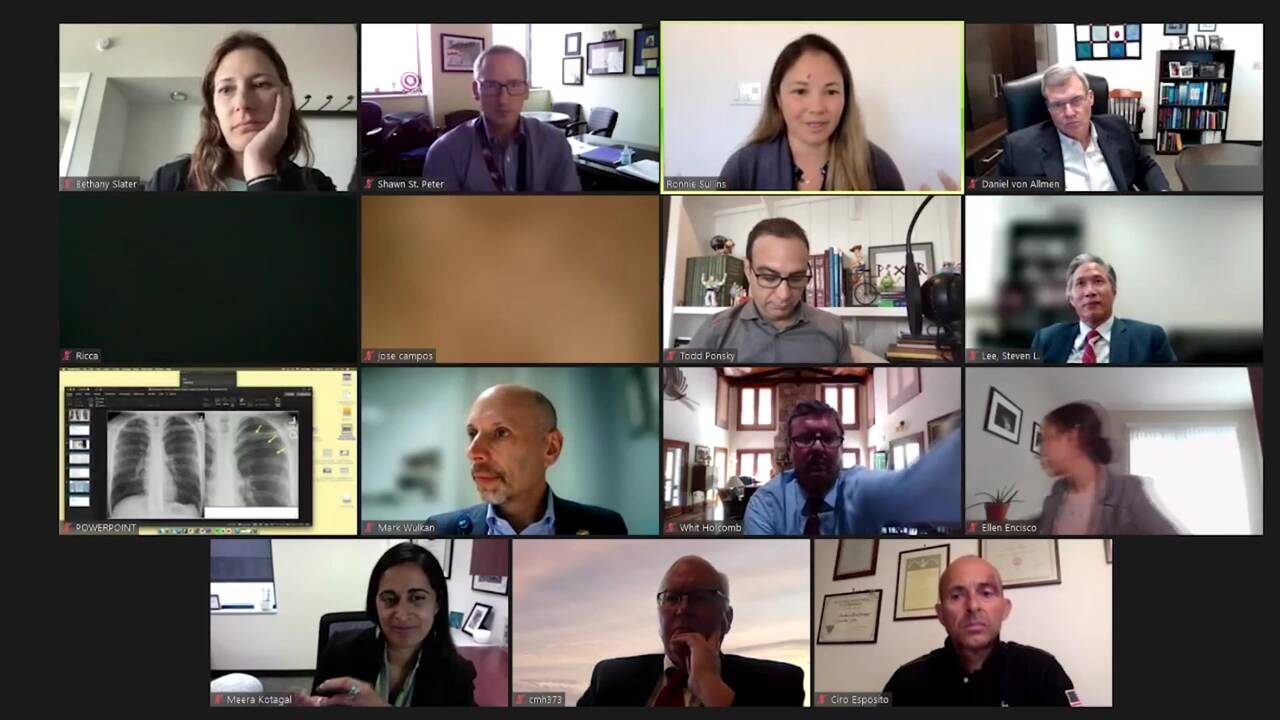
Update Course 2021: PNEUMOTHORAX
Published May 2022
Video
Update Course Rewind: 2021 Top Ten Key Takeaways
Dr. Todd Ponsky · 16 min · Published Oct 2021
Video
Spontaneous Pneumothorax: Update Course 2014
15 min · Published Sep 2014
Video
Intestinal Atresia Types Explained: Grossfeld Classification for Pediatric Surgery
1 min · Published Sep 2026
Video
Derivation and validation of the Pediatric Community-Acquired Pneumonia Severity (PedCAPS) score: A prospective cohort study
50 s · Published Sep 2026
Video
FETO for Late-Diagnosed Severe Congenital Diaphragmatic Hernia (CDH) at Cincinnati Children's with Dr. Beth Rymeski
4 min · Published Sep 2026
Video
Severe Congenital Diaphragmatic Hernia (CDH) Case: FETO Management & Unexpected Findings with Dr. Beth Rymeski
3 min · Published Sep 2026
Video
Fetoscopic Endoluminal Tracheal Occlusion (FETO) Procedure: Step-by-Step Guide with Dr. Beth Rymeski
4 min · Published Sep 2026
Video
Choledochal Cyst Types Explained: Pediatric Surgery Fundamentals
1 min · Published Sep 2026
What the experts said
The study is a retrospective analysis from Children's Mercy Hospital in Kansas City examining spontaneous pneumothorax management.
The study population included patients between 12 and 18 years old with spontaneous pneumothorax between 2016 and 2021.
The institutional protocol was to start with simple aspiration and escalate to VATS if aspiration failed.
The study included 59 patients total.
33% of patients received simple aspiration as their treatment.
66% of patients ended up receiving VATS.
The aspiration group had a 45% recurrence rate.
The aspiration group had a median length of stay of 20.4 hours.
The VATS group had a 25% recurrence rate.
The VATS group had a median length of stay of 3.1 days.