


From
Live Event Content
BOB Ped Surg 2023 - Brittany Hegde, PAPS - Presentation
With Dr. Britney Hegdy
Part of
Pectus Excavatum 58 items
Chapter 1 of 4 · Fundamentals
Introduction and Background
Expert statements on this page
No expert statements were drawn from this page.
Host summaries · secondary, not cited in answers
Educational content from recorded physician discussions — not medical advice. Talk to your (or your child's) care team about your situation.
Video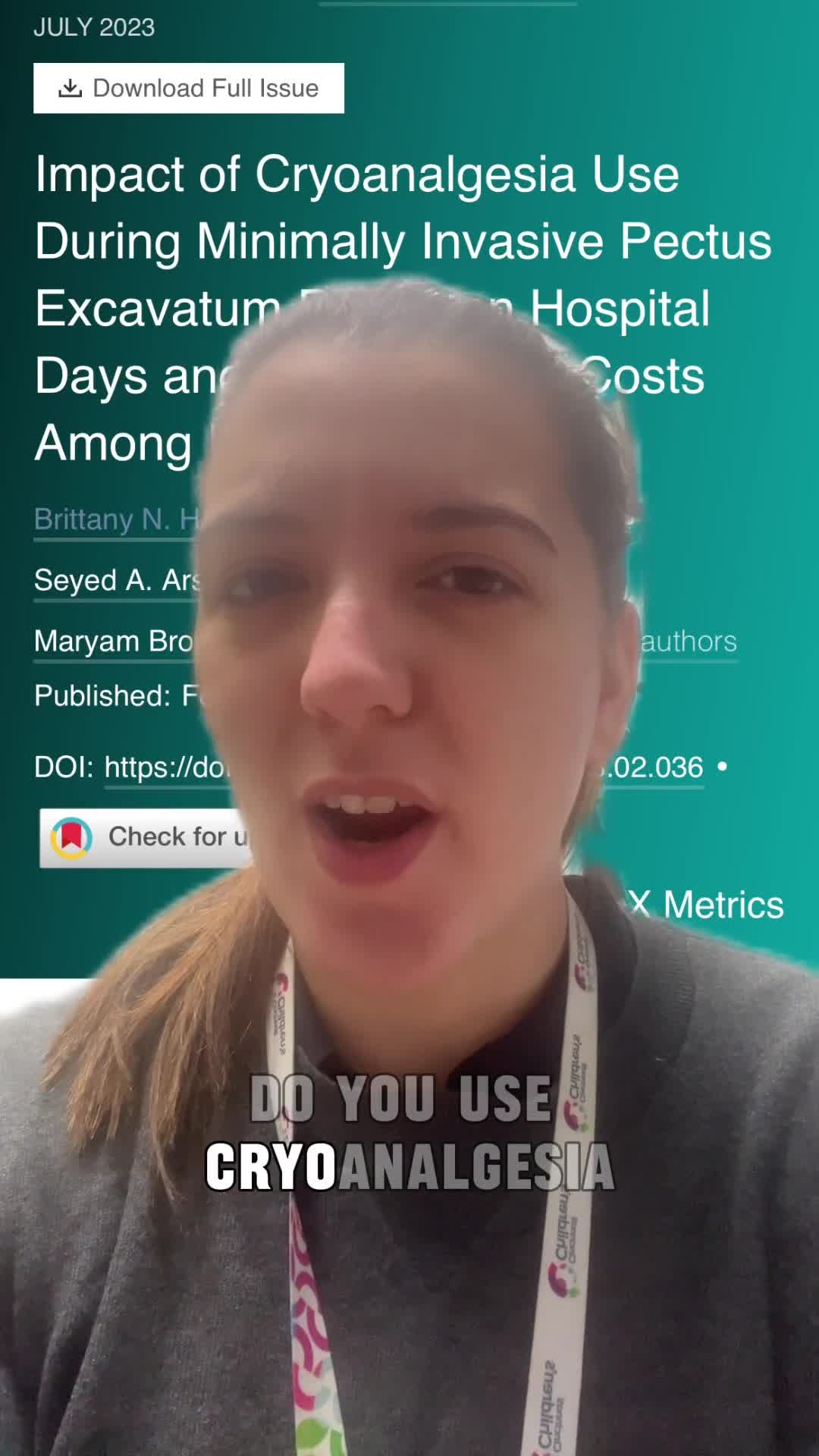
Impact of Cryoanalgesia Use During Minimally Invasive Pectus Excavatum Repair on Hospital Days and Total Hospital Costs Among Pediatric Patients
59 s · Published Jan 2024
Video
Novel index to estimate the cephalocaudal extent of the excavation in pectus excavatum - JPS article
1 min · Published May 2023
Video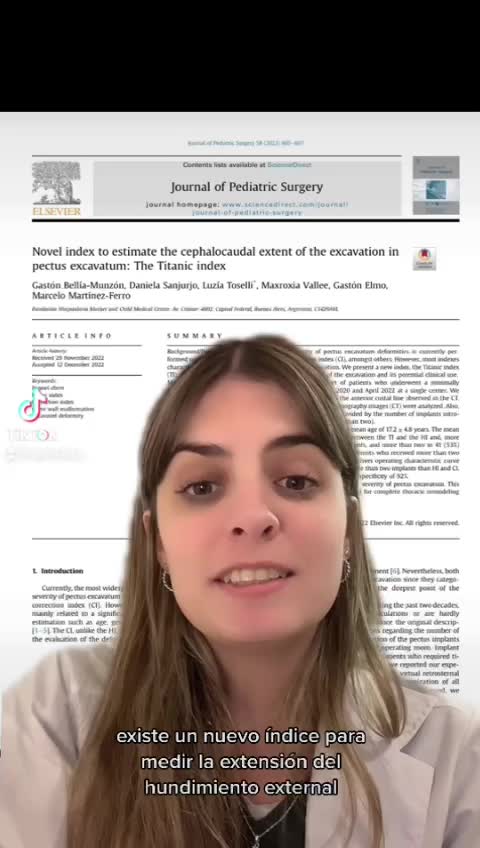
Novedoso indice para estimar la extensión cefalocaudal del hundimiento esternal en el pectus excavatum: El Índice Titanic
Published May 2023
Video
Cardiopulmonary Impact of the Minimally Invasive Repair of Pectus Excavatum in Pediatric Patients: A Prospective Pilot Study
55 s · Published Apr 2025
Video
Cryoablation in 350 Nuss procedures
56 s · Published Oct 2023
Video
Quick Literature Updates Episode 13
4 min · Published Nov 2023
Only a few other public items share this expert — go deeper there →
Video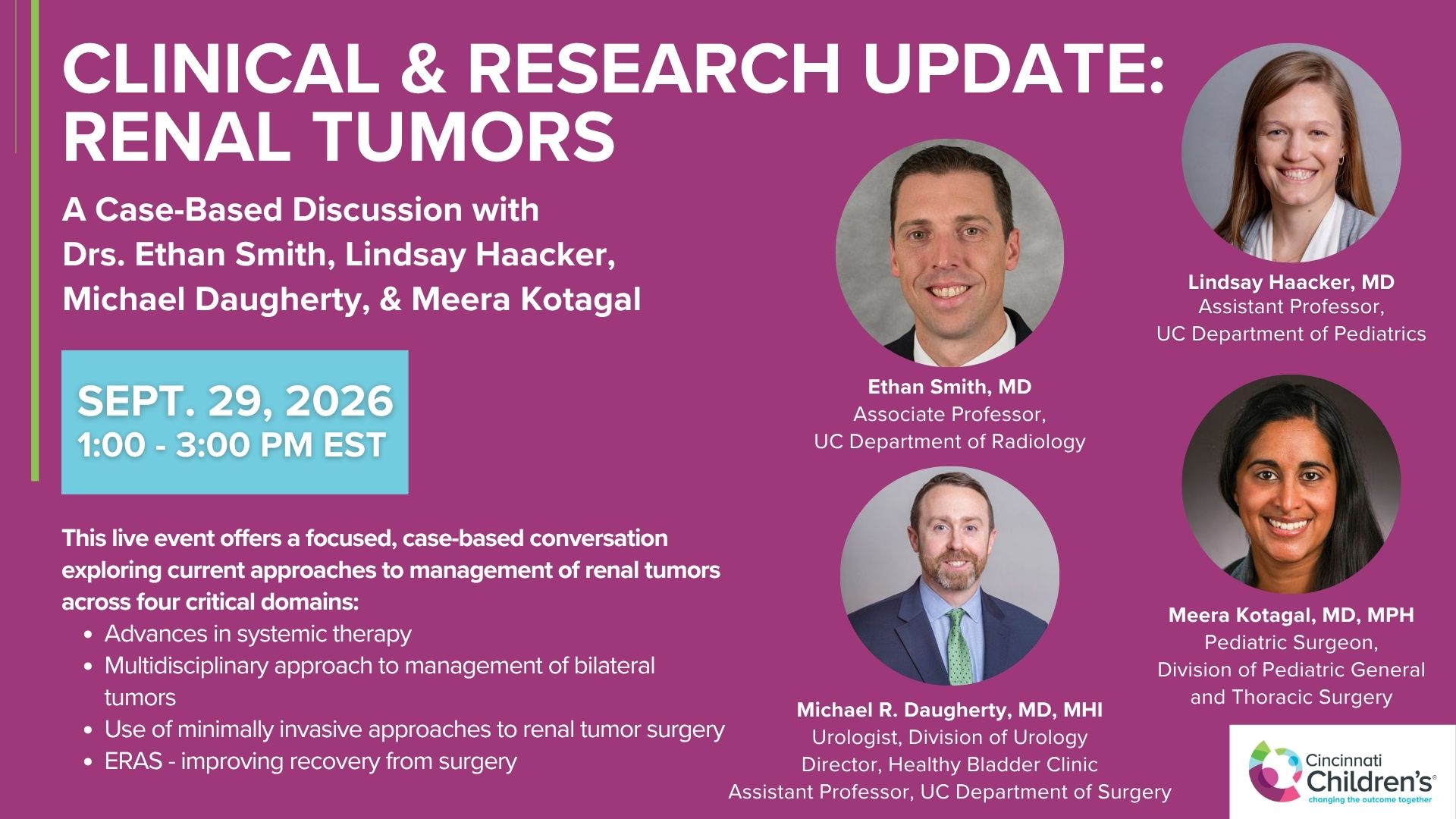
Clinical & Research Update: Renal Tumors with Drs. Ethan Smith, Lindsay Haacker, Michael Daugherty, and Meera Kotagal
71 min · Published Sep 2026
Video
Clinical & Research Update: Neuroblastoma with Drs. Katherine Somers, Cara Morin, Juan Gurria, and Meera Kotagal
67 min · Published Sep 2026
Video
Clinical & Research Update: Sarcoma w/ Drs. Roshni Dasgupta, Joseph Pressey, Arthur Meyer, Luke Pater
66 min · Published Sep 2026
Video
2026 Laparoscopic Pediatric Hernia Repair
123 min · Published Jun 2026
Video
Beyond the Spectrum: Diagnosis, Myths & Management - Caitlin Couch & Leslie Lopez - APP Conference 2026
50 min · Published May 2026
Video
Dysautonomia: Navigating the Journey - Martha Willis - APP Conference 2026
55 min · Published May 2026
What the experts said
Minimally invasive repair of pectus excavatum is used to correct the most common thoracic anomaly in pediatric patients
Minimally invasive approach has been associated with decreased operative time, less blood loss and a quicker return to baseline compared to previous open approaches
MIRPE remains a painful procedure that historically required multiple adjuncts and a large amount of narcotics to achieve pain relief
A previous study at the institution found the use of cryo during minimally invasive repair lowered post-operative opioid use and hospital length of stay without increasing complications
Cryoablation is performed thoracoscopically using cryo nerve block probes under direct visualization
Probes are inserted via thoracoscopic port sites and activated at the site of intercostal nerves, usually bilaterally and within intercostal spaces three through seven
Cryo ablation subjects the intercostal nerves to extreme cold and is estimated to allow for pain control lasting weeks to months post ablation
Study included pediatric patients less than 18 from January 2011 to December 2021 who underwent minimally invasive repair
Cryo was introduced at the institution in November 2016 and every patient treated after this date received it
Total hospital cost data was adjusted for inflation by the consumer price index for medical services
Of the 44 patients included, 29 (65.9%) received cryo during minimally invasive repair
A greater percentage in both treatment groups were male
Both treatment groups were similar regarding age, height, weight, insurance status, race, symptoms at presentation and Haller index
Bayesian models were used to analyze the impact of cryo on various outcomes utilizing a neutral prior assuming no treatment effect
Cryo use was associated with an 89% probability of total hospital cost reduction compared to no cryo use with a difference in total cost of $880
The decrease in total cost is likely attributable to the impact of cryo use on hospital days
Cryo use was associated with a 100% probability of reduction in index hospital days compared to no cryo use
When comparing total hospital days including readmissions during 90 days, there was a 99% probability of total hospital days reduction with the use of cryo
The incidence of post-operative complications did not differ between treatment groups
Cryo use was associated with a 70% probability of reduction in post-operative complications compared to no cryo use