

From
Live Event Content
BOB Ped Surg 2023 - Georgina Falcioni, CIPESUR - Presentation
With Dr. Georgina Falcioni
Chapter 1 of 4 · Fundamentals
Study introduction
Introduction and Background
Expert statements on this page
No expert statements were drawn from this page.
Host summaries · secondary, not cited in answers
Educational content from recorded physician discussions — not medical advice. Talk to your (or your child's) care team about your situation.
Video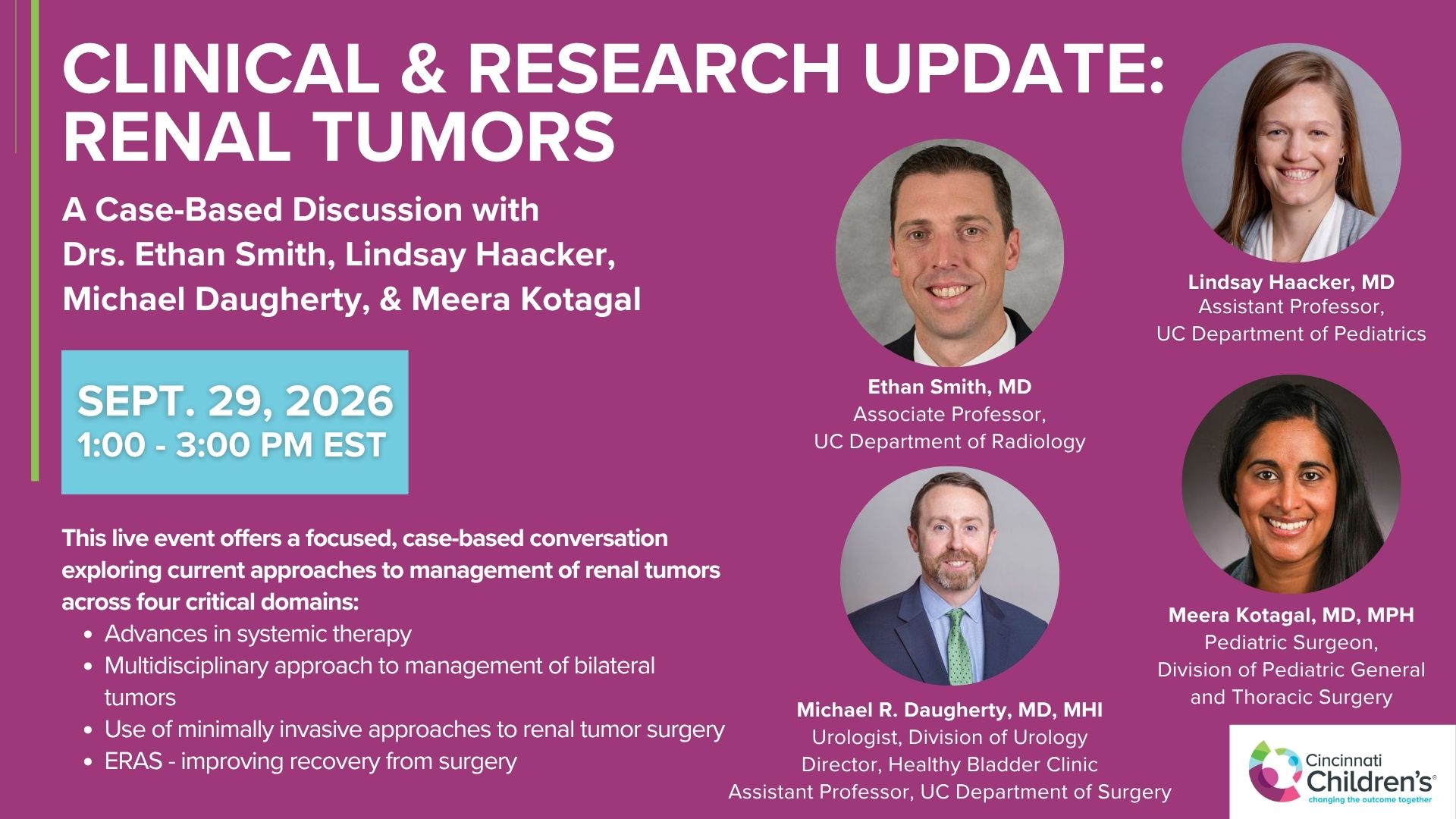
Clinical & Research Update: Renal Tumors with Drs. Ethan Smith, Lindsay Haacker, Michael Daugherty, and Meera Kotagal
71 min · Published Sep 2026
Video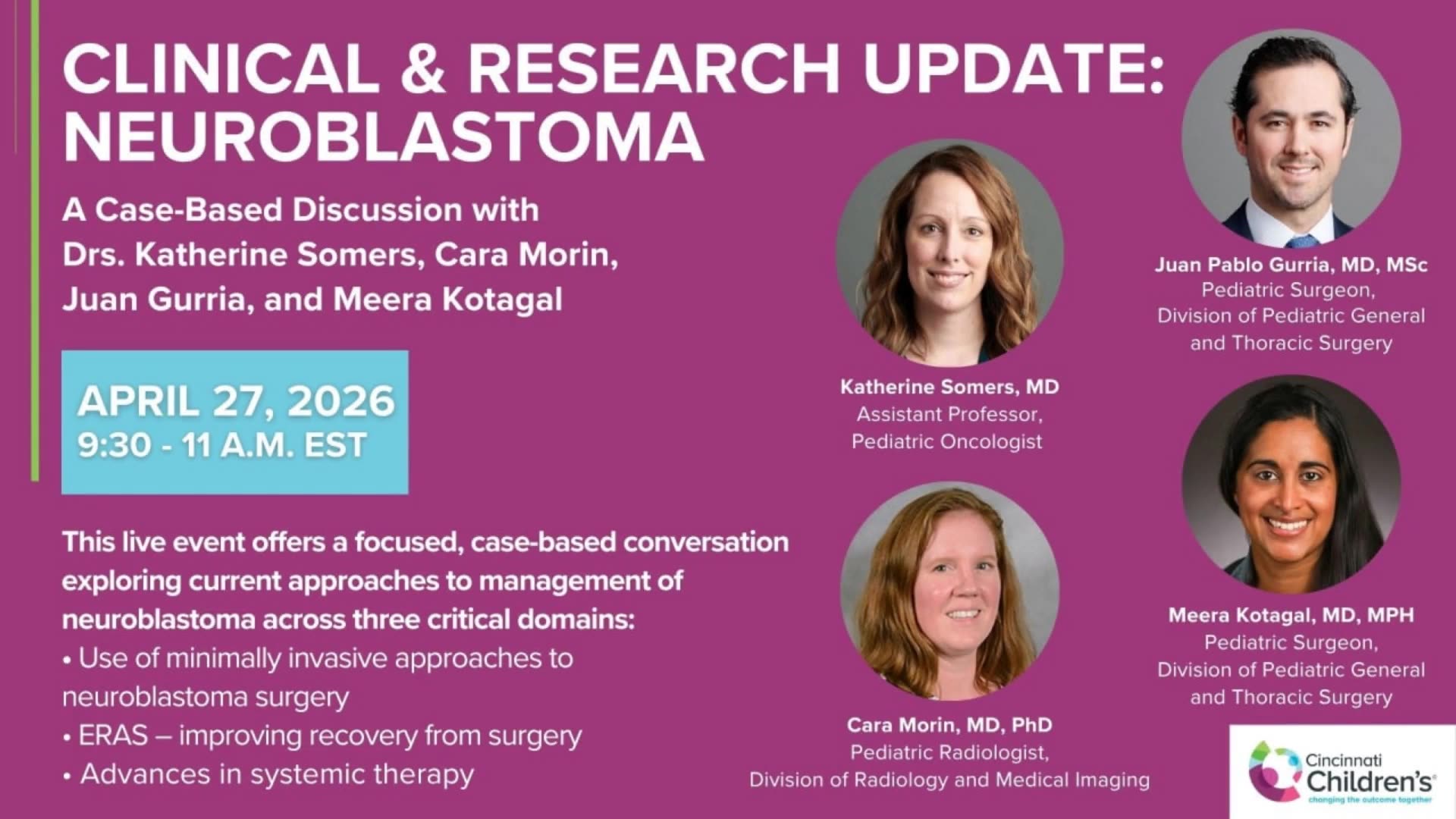
Clinical & Research Update: Neuroblastoma with Drs. Katherine Somers, Cara Morin, Juan Gurria, and Meera Kotagal
67 min · Published Sep 2026
Video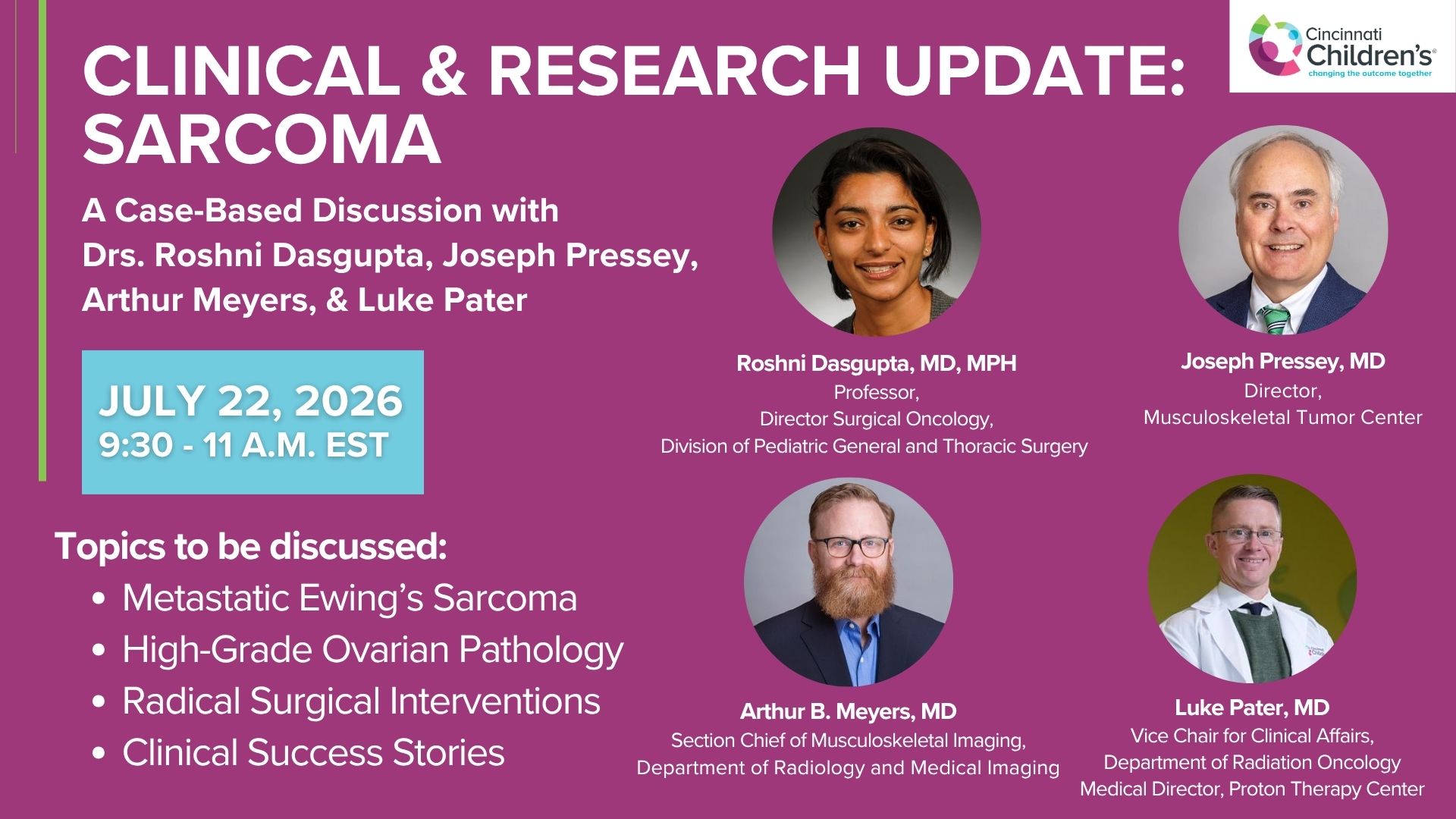
Clinical & Research Update: Sarcoma w/ Drs. Roshni Dasgupta, Joseph Pressey, Arthur Meyer, Luke Pater
66 min · Published Sep 2026
Video
2026 Laparoscopic Pediatric Hernia Repair
123 min · Published Jun 2026
Video
Beyond the Spectrum: Diagnosis, Myths & Management - Caitlin Couch & Leslie Lopez - APP Conference 2026
50 min · Published May 2026
Video
Dysautonomia: Navigating the Journey - Martha Willis - APP Conference 2026
55 min · Published May 2026
What the experts said
In person proctor training simulation based education had been a standard choice for MIS skills training programs development since 2012 at Garrahan Children Hospital.
In the context of the COVID-19 pandemic and social distance protocols, the curricula was adapted to a telesimulation Essentials skills training model.
Both standard and telesimulation Essentials skills training models included academic lectures, tutorials for ergonomics and seven performance tasks.
The hands on practice was scheduled into two sessions of three hours for both groups.
Twenty participants assessments from different institutions were randomly selected for each group.
The telesimulation group had access to all content through an online campus and completed hands-on practice with a proctor through a virtual meeting platform.
The standard simulation group attended conferences and hands-on practice at the simulation center with an onsite proctor.
Both groups had the same educators giving summative feedback and debriefing.
The three assessed tasks were circle cutting pattern, extracorporeal Roeder knot, and intracorporeal square knot.
For each task, initial score adapted from GOALS and time and final score and time were registered.
At precision cutting, there was a significant improvement in the score as well as a significant decrease in time between the initial and final assessments independently for telesimulation and standard groups.
When comparing the achieved progress between both groups for precision cutting, there were no statistical significant differences between telesimulation and standard groups.
For the extracorporeal Roeder knot task, there was considerable and almost parallel progress in the initial and final assessments for both telesimulation and standard groups.
At the square knot task, the result structures repeated showing improvement of the score and decrease in time.
The comparative outcomes were relatively symmetric for telesimulation and standard groups after practice.
Statistically significant improvements in the scores and decrease in times were observed for all the assessed tasks in telesimulation and standard groups.
The comparative progression observed in telesimulation and standard groups were effective and accounted almost parallel.
Data analysis showed that close performance could be achieved with both telesimulation and standard simulation strategies.
Telesimulation has the capability to provide educational benefit in MIS Essentials skills training to learners who don't have direct access to onsite simulation resources within a proctor training program.