


From
Live Event Content
BOB in Ped Surg 2023 - CIPESUR Winner - Georgina Falcioni, MD
With Dr. Georgina Falcioni · hosted by Dr. Todd Ponsky
Chapter 1 of 5 · Evidence & Research
CIPESUR intro
Introduction of CIPESUR presentations and audience voting
Expert statements on this page
No expert statements were drawn from this page.
Host summaries · secondary, not cited in answers
Educational content from recorded physician discussions — not medical advice. Talk to your (or your child's) care team about your situation.
Video
ERNICA Research Collaboration Webinar on Quality of Life
61 min · Published Nov 2023
Podcast
Journal of Pediatric Surgery Article Review: December 2021
16 min · Published Jan 2022
Video
Quick Literature Updates Episode 9
Published Jun 2023
Video
Journal of Pediatric Surgery Article Review: February 2022 - BAPS Issue
Todd Ponsky · 11 min · Published Jul 2026
Video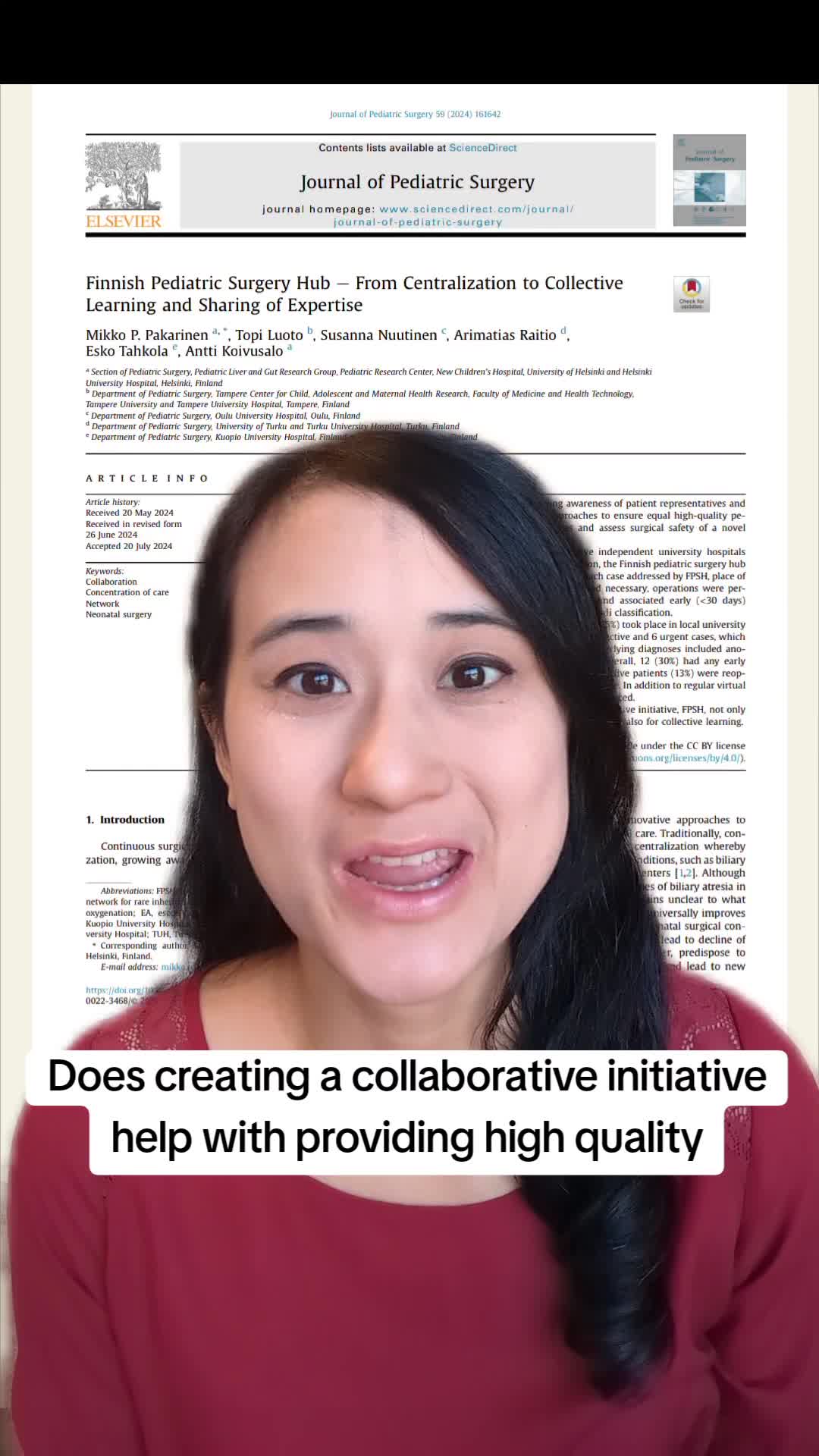
Finnish Pediatric Surgery Hub - From Centralization to Collective Learning and Sharing of Expertise
48 s · Published Feb 2025
Video
Prophylactic Acid-suppression Medication to Prevent Anastomotic Strictures After Oesophageal Atresia Surgery
Published Dec 2023
Video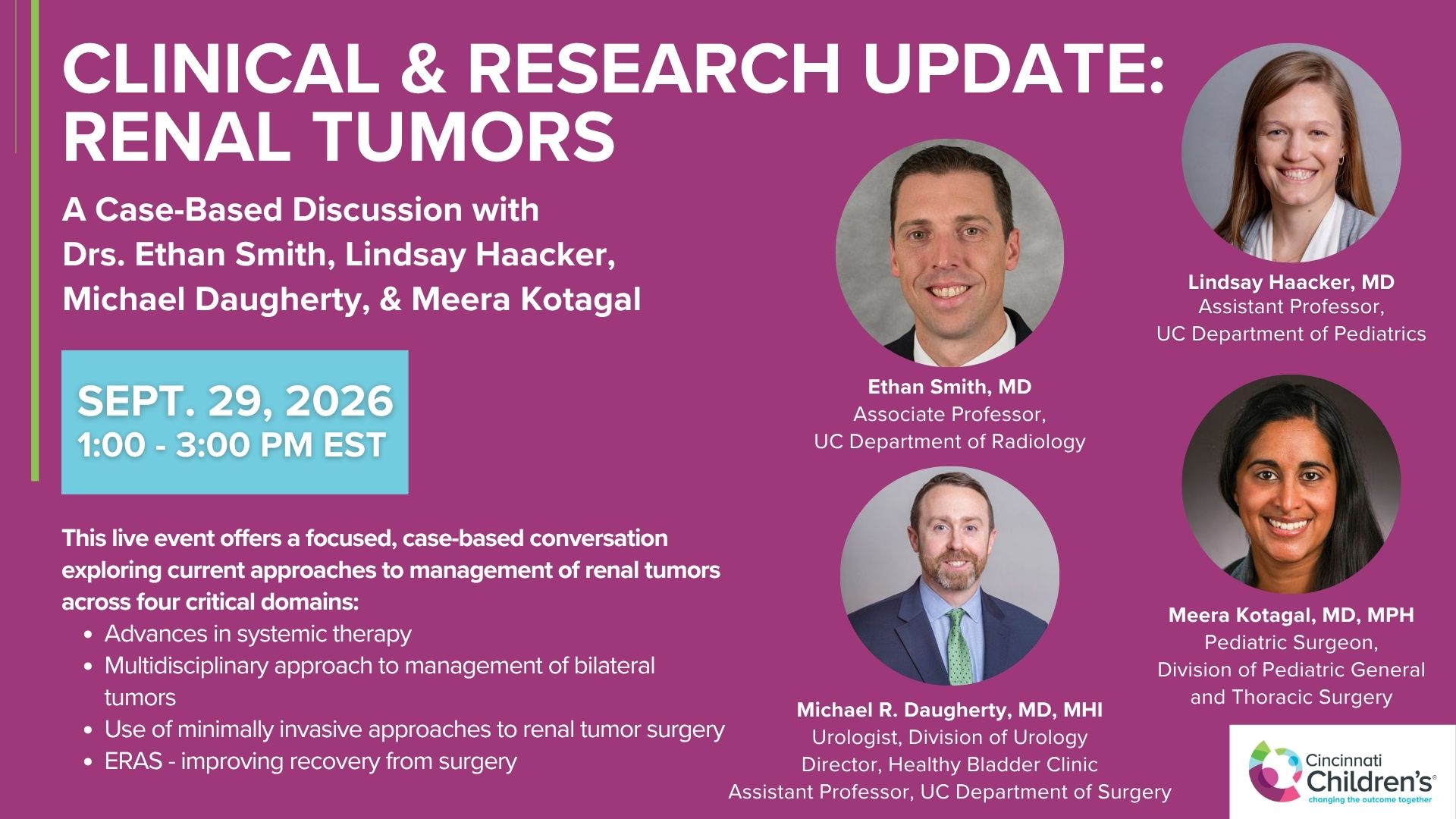
Clinical & Research Update: Renal Tumors with Drs. Ethan Smith, Lindsay Haacker, Michael Daugherty, and Meera Kotagal
71 min · Published Sep 2026
Video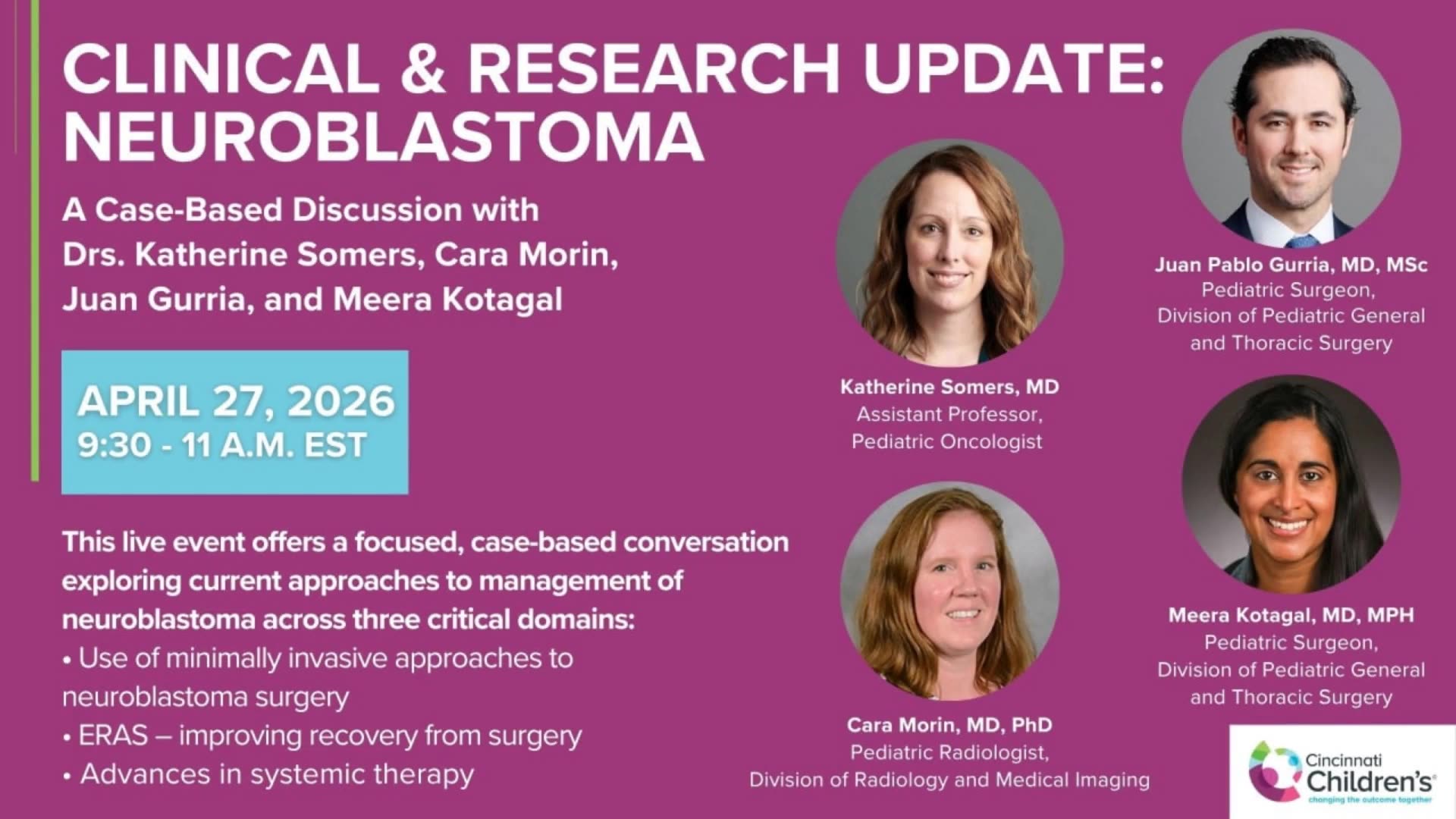
Clinical & Research Update: Neuroblastoma with Drs. Katherine Somers, Cara Morin, Juan Gurria, and Meera Kotagal
67 min · Published Sep 2026
Video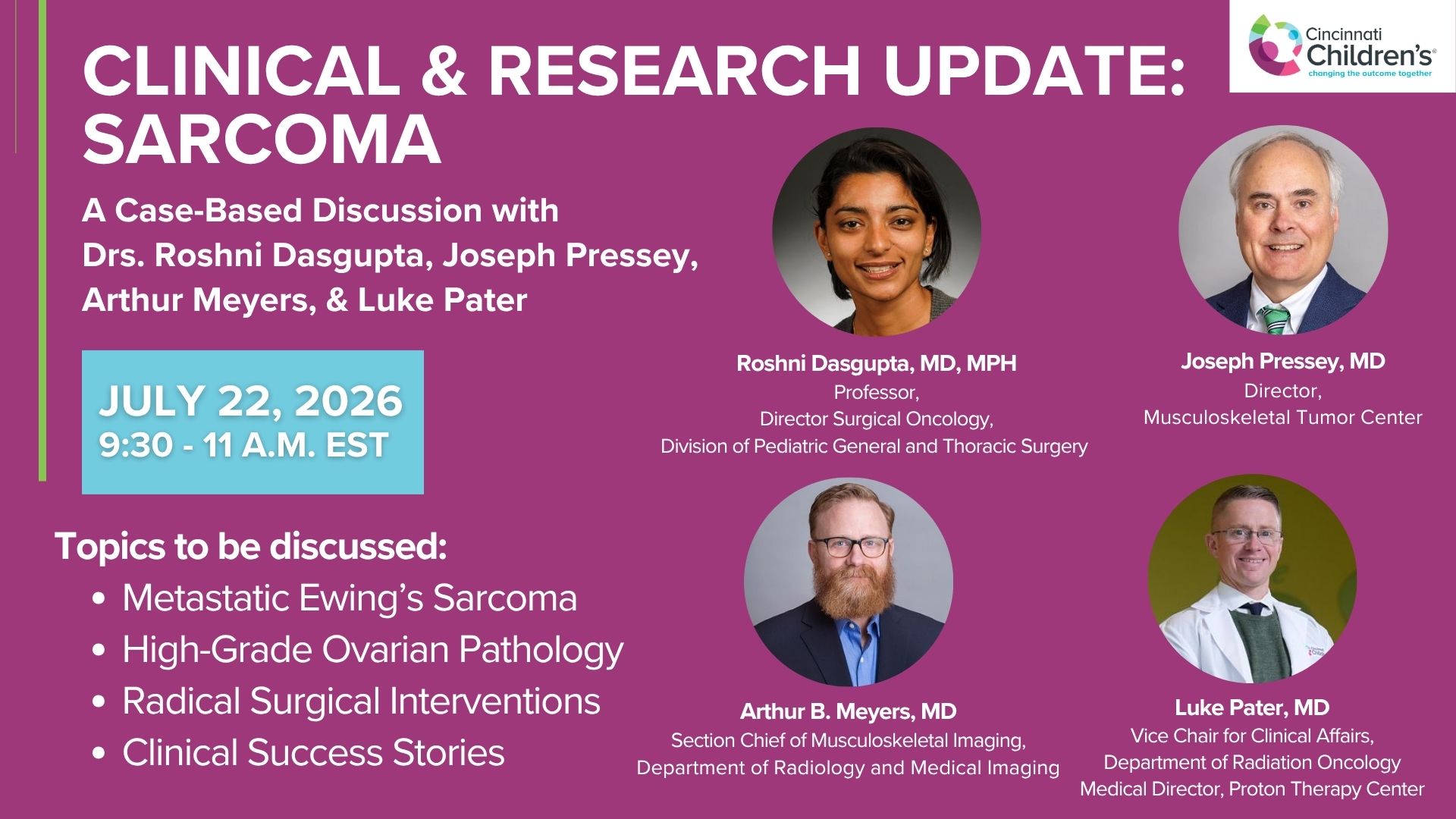
Clinical & Research Update: Sarcoma w/ Drs. Roshni Dasgupta, Joseph Pressey, Arthur Meyer, Luke Pater
66 min · Published Sep 2026
Video
2026 Laparoscopic Pediatric Hernia Repair
123 min · Published Jun 2026
Video
Beyond the Spectrum: Diagnosis, Myths & Management - Caitlin Couch & Leslie Lopez - APP Conference 2026
50 min · Published May 2026
Video
Dysautonomia: Navigating the Journey - Martha Willis - APP Conference 2026
55 min · Published May 2026
What the experts said
In-person proctor-trainee simulation-based education has been the standard choice for MIS skills training programs development at Garrahan Children's Hospital since 2012.
During the Covid-19 pandemic, the curricula was adapted to a telesimulation essential skills training model, which was reported at IPAC 2021.
Both standard and telesimulation essential skills training models included academic lectures, tutorials for ergonomics, and seven performance tasks, with hands-on practice scheduled into two sessions of three hours.
The study randomly selected 20 participant assessments from different institutions for each group (telesimulation and standard simulation).
The telesimulation group accessed all content through an online campus and completed hands-on practice with a proctor through a virtual meeting platform.
The standard simulation group attended conferences and hands-on practice at the simulation center with an onsite proctor.
Both groups had the same educators giving summative feedback and debriefing.
The three assessed tasks were circle cutting pattern, extracorporeal reder knot, and intracorporeal square knot.
For precision circle cutting, there was significant improvement in score and significant decrease in time between initial and final assessments independently for both telesimulation and standard simulation groups.
When comparing the achieved progress between both groups for circle cutting, there were no statistically significant differences between telesimulation and standard simulation groups.
For the extracorporeal knot task, a similar pattern was observed showing considerable and almost parallel progress in initial and final assessments for both telesimulation and standard simulation groups.
For the intracorporeal square knot task, results showed improvement in score and decrease in time, with comparative outcomes relatively symmetric for telesimulation and standard simulation groups after practice.
Statistically significant improvements in scores and decrease in times were observed for all assessed tasks in both telesimulation and standard simulation groups.
The comparative progression observed in telesimulation and standard simulation groups were effective and accounted almost parallel.
Data analysis shows that close performance could be achieved with both telesimulation and standard simulation strategies.
Telesimulation can provide educational benefit in MIS essential skills training to learners who don't have direct access to onsite simulation resources within a proctor training program.
Telesimulation allows learners to learn from expert mentors who may not live in their city or country.
Telesimulation is very low cost because it uses trainers that can be sent like toys and doesn't need fancy equipment, using only tablets or phones.
The most difficult part of telesimulation is finding good educators and establishing effective communication.
Doing very good intracorporeal suturing in a very small space (low-fidelity skill) will translate to high-fidelity models of newborn procedures.
Essential low-fidelity skills training should be completed before arranging an advanced course.
High-fidelity simulation is more complicated to do via telesimulation because it sometimes requires equipment like pumps to make lungs breathe that cannot easily be sent to trainees' homes.
Low-fidelity simulation involves practicing skills of movement such as moving a peg from one place to another, cutting, and sewing.
High-fidelity simulation involves replicas of actual tissue where surgeons try to simulate procedures like esophageal atresia or duodenal atresia repair.
High-fidelity telesimulation is possible but not quite developed yet, with multiple places developing new approaches.
Virtual reality and artificial intelligence may help address missing elements like haptics in telesimulation.
Telesimulation allows trainees to take models home and practice during their free time outside of work or fellowship.