


From
StayCurrentMD
Tricks - Imperforate Anus and Rectourethral Fistula
With Dr. Sharif Emil & Dr. Jeff Blair
Chapter 1 of 5 · Surgical Management
Fistula measurement
Laparoscopic repair of imperforate anus with rectourethral fistula: fistula measurement technique
Expert statements on this page
No expert statements were drawn from this page.
Host summaries · secondary, not cited in answers
Educational content from recorded physician discussions — not medical advice. Talk to your (or your child's) care team about your situation.
Video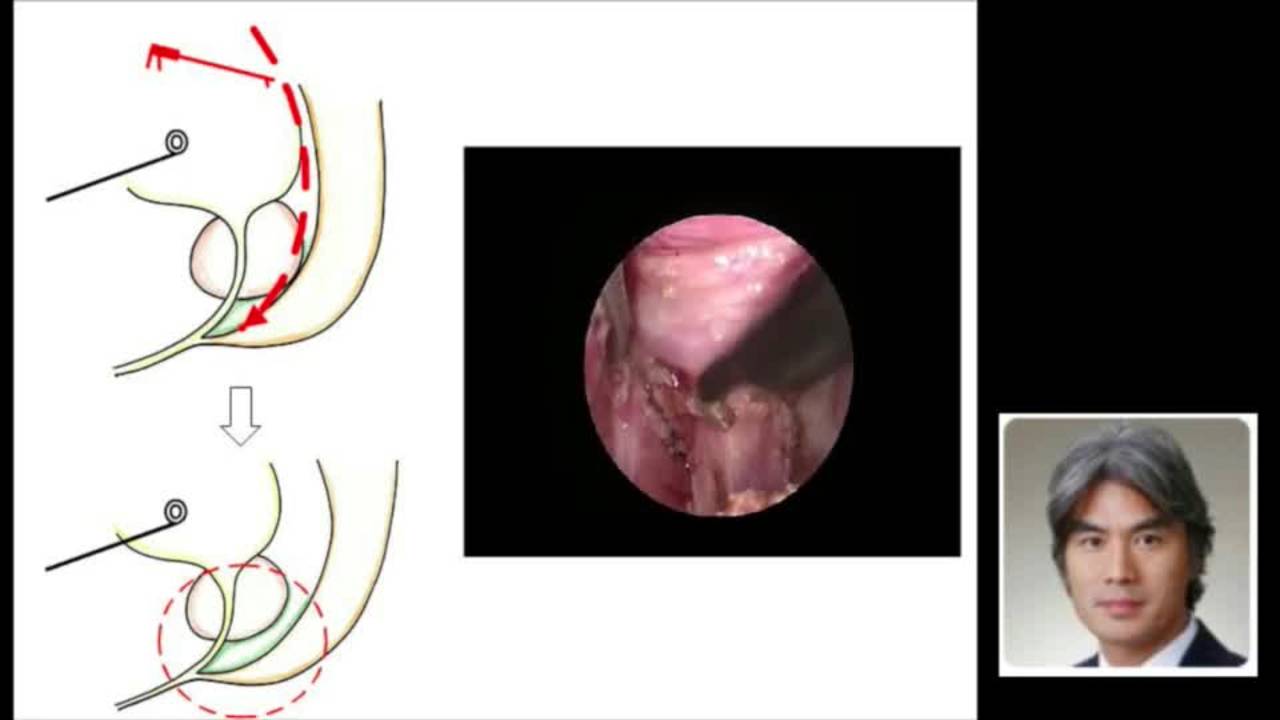
Imperforate Anus & Rectourethral Fistula Technique & Discussion: Difficult Cases
25 min · Published Dec 2013
Video
Esophageal Atresia in Brief: Presentation, Workup, Diagnosis, and Treatment
Dr. Todd Ponsky · Published Feb 2022
Video
Pediatric Colorectal Contraversies Part III: Pediatric Colorectal...
Dr. Todd Ponsky · 19 min · Published Aug 2017
Video
Update Course 2013: EA & TEF
38 min · Published Sep 2013
Podcast
The Colorectal Quiz: Episode 1
Marc Levitt · 15 min · Published Jan 2021
Video
How I Do It Levitt PSARP
7 min · Published Sep 2016
Video
Validation of an anorectal malformation trainer - Can a high-fidelity model simulate real life?
1 min · Published Jun 2026
Video
Complications and Long-Term Outcomes of Patients With Cloacal Malformation After Bowel Neovagina...
1 min · Published Jun 2026
Video
Safety and utility of long-acting steroid injection for management of post-operative stricture...
1 min · Published Jun 2026
Video
Association Between Social Determinants of Health and Choice of Urinary Reconstruction in Children
1 min · Published Jun 2026
Video
The Perineal Body Preserving PSARP (PPP)
11 min · Published Jun 2026
Video
Update Course Rewind 2025: Hirschsprung + ARM: Rare but Real
1 min · Published May 2026
More from this expert
Dr. Sharif EmilVideo
Intestinal Atresia Types Explained: Grossfeld Classification for Pediatric Surgery
1 min · Published Sep 2026
Video
Derivation and validation of the Pediatric Community-Acquired Pneumonia Severity (PedCAPS) score: A prospective cohort study
50 s · Published Sep 2026
Video
FETO for Late-Diagnosed Severe Congenital Diaphragmatic Hernia (CDH) at Cincinnati Children's with Dr. Beth Rymeski
4 min · Published Sep 2026
Video
Severe Congenital Diaphragmatic Hernia (CDH) Case: FETO Management & Unexpected Findings with Dr. Beth Rymeski
3 min · Published Sep 2026
Video
Fetoscopic Endoluminal Tracheal Occlusion (FETO) Procedure: Step-by-Step Guide with Dr. Beth Rymeski
4 min · Published Sep 2026
Video
Choledochal Cyst Types Explained: Pediatric Surgery Fundamentals
1 min · Published Sep 2026
What the experts said
Dissection of the fistula in anorectal malformations must extend to the 'red line' (urethral level) to prevent residual fistula, while avoiding injury to nerves, prostate, urethra, and sphincters.
A novel technique allows the surgeon to measure the inside length of the rectourethral fistula between the rectal opening and urethral orifice using a calibrated catheter inserted laparoscopically while another surgeon observes its emergence via cystoscopy.
If the residual fistula length is longer than 5 millimeters, the rectal end is further dissected toward the urethra using mucosectomy to prevent injury to the prostate and urethra.
For bulbar fistula repair, suprapubic tube cystostomy is very important to decompress the bladder and open up a clear view of the deep pelvic floor; otherwise the operation cannot be performed.
For bulbar fistula, trocar position differs from prostatic fistula in that right and left trocars are placed much closer to the telescope, which is key for reaching the deep pelvis despite increased difficulty in forceps handling.
In a series of 23 males with rectourethral fistulas, initial measurements showed fistula lengths of 13, 15, 12, 10, 15, 21, 10, and 5 millimeters from rectal to urethral orifice; seven cases required further dissection to achieve ≤5mm residual length.
During cystoscopy, normal saline refluxed into the pelvic floor through the fistula in 6 of 8 cases, indicating a large fistula; no reflux occurred in 2 cases, indicating a very narrow fistula.
All 23 cases were well after mean follow-up of 2 years with no evidence of diverticular formation due to residual fistula on voiding cystourethrography or MRI.
The residual fistula from rectal site to urethral side was much longer than expected.
Sigmoid colostomy can fix the rectum and colon, requiring takedown of the sigmoid colostomy to achieve adequate length for pull-through, which is why right transverse colostomy is preferred.
A sigmoid colostomy placed very proximal in the sigmoid or at the descending colon-sigmoid junction provides enough length for pull-through even for high fistulas.
Transverse colostomy has too many problems including urine absorption, infection, and prolapse; a very small minority of surgeons still use transverse colostomies.
With sigmoid colostomy on the left side, ports can be placed in the left upper quadrant lateral to the colostomy without difficulty.
For prostatic or bladder neck fistula, the dissection can be done without the measurement technique if the surgeon is familiar with laparoscopic anorectal malformation operations and can get very close to the end of the fistula.
The laparoscopic approach for bulbar fistula is far more difficult and more dangerous than for higher fistulas; the technique is extremely complicated for the average pediatric surgeon, and the PSARP technique is easy for those patients.
There is no convincing data that the laparoscopic approach results in any better outcomes for bulbar fistulas than PSARP does.
The reason for using laparoscopy even for bulbar fistula is to avoid cutting the anal sphincter muscle and nerves.
Combining VCUG and distal colostogram by putting dye in from both sides usually allows clear visualization of the fistula.
It is probably a good idea to cystoscope all anorectal malformation cases at the beginning to ensure the catheter is in the bladder before starting the case.
When performing cystoscopy during the case, saline injection fills the bladder, so suprapubic tube cystostomy is needed to decompress the bladder; otherwise the pelvic floor cannot be visualized.
In thoracoscopic TEF repair, the majority of surgeons divide the distal esophagus completely, but leaving one-quarter of the fistula uncut prevents cranial retraction of the distal esophagus and makes anastomosis easier.
For the proximal esophagus in TEF repair, leaving 10-15% of the tip uncut as a 'cap' allows grasping with forceps without damaging the anastomotic site.
If there is a 1-2 vertebral body gap in esophageal atresia, the assistant can pull the proximal esophagus caudally using the uncut cap of the proximal esophagus.
In thoracoscopic TEF repair, the first stitch is placed in the middle of the posterior wall rather than at the edge, which is much easier.
The fistula is completely divided after 1-2 anastomotic stitches are placed, and the uncut cap of the proximal esophagus is divided after 2-3 stitches.
Finding the fistula laparoscopically in esophageal atresia is much easier than open; you can appreciate how much esophagus to leave without leaving too much on the trachea side.
Dissecting the upper segment of the esophagus thoracoscopically is difficult; the main challenge is handling the esophagus without damaging the wall needed for anastomosis.
In thoracoscopic TEF repair, the first half of the case (dissection and fistula division) feels advantageous, but once starting the anastomosis, the surgeon questions why they chose the thoracoscopic approach.
Clips for TEF closure should be applied to oppose rather than crush tightly; tight clipping will crush the esophageal muscle and cause erosion, leading to fistula recurrence.
An empty bladder is critically important when doing laparoscopic anorectal malformation repair; sometimes the Foley catheter goes into the fistula and rectum rather than the bladder, which may not be discovered until mid-operation.
Steve Rothenberg uses clips routinely for TEF and has never had a clip erode, despite other surgeons experiencing clip erosion into the esophagus with fistula recurrence.