


From
Colorectal Channel
Sphincter Reconstruction for Patients with Soiling after a Pull-Through for Hirschsprung Disease
Chapter 1 of 5 · Case-Based Learning
Case presentation
Case presentation and anatomic findings
Expert statements on this page
No expert statements were drawn from this page.
Host summaries · secondary, not cited in answers
Educational content from recorded physician discussions — not medical advice. Talk to your (or your child's) care team about your situation.
Video
Surgical treatment for Hirschsprung’s Disease: An ERNICA animation for parents and families
3 min · Published Dec 2023
Podcast
The Colorectal Quiz Episode 22: Hirschsprung Disease - the Soiling Patient Part 1
19 min · Published Nov 2021
Podcast
Hirschsprung
Marc Levitt · 22 min · Published Jun 2019
Video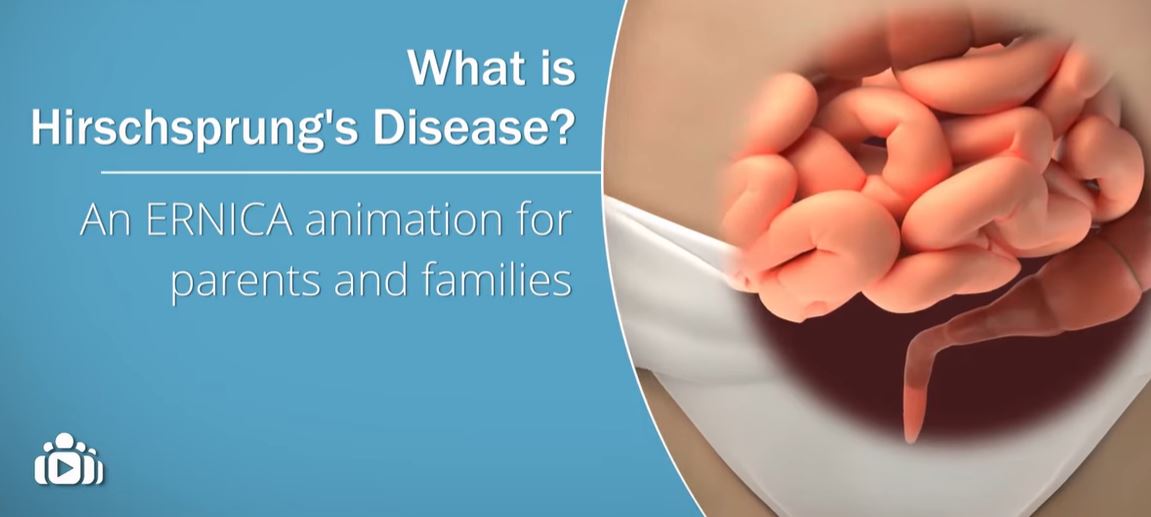
What is Hirschsprung's Disease? An ERNICA animation for parents and families
4 min · Published Dec 2023
Video
Error Traps and Culture of Safety in Hirschsprung Disease
CCHMC Pediatric Surgery · Published Oct 2019
Podcast
Colorectal Quiz: Episode 47
Marc Levitt · 22 min · Published May 2025
Video
Validation of an anorectal malformation trainer - Can a high-fidelity model simulate real life?
1 min · Published Jun 2026
Video
Complications and Long-Term Outcomes of Patients With Cloacal Malformation After Bowel Neovagina...
1 min · Published Jun 2026
Video
Safety and utility of long-acting steroid injection for management of post-operative stricture...
1 min · Published Jun 2026
Video
Association Between Social Determinants of Health and Choice of Urinary Reconstruction in Children
1 min · Published Jun 2026
Video
The Perineal Body Preserving PSARP (PPP)
11 min · Published Jun 2026
Video
Update Course Rewind 2025: Hirschsprung + ARM: Rare but Real
1 min · Published May 2026
Podcast
Long-term obstetric and gynecologic care for patients with anorectal malformations
21 min · Published Sep 2026
Podcast
Post-pubertal gynecologic evaluation and management of patients with anorectal malformations
22 min · Published Sep 2026
Podcast
Pre-pubertal gynecologic evaluation and management of patients with anorectal malformations
23 min · Published Sep 2026
Podcast
Methods of gynecologic evaluation for patients with anorectal malformations
21 min · Published Sep 2026
Podcast
Gynecologic care in patients with anorectal malformations: A primer and call to action
18 min · Published Sep 2026
Podcast
Evaluation and Management of Postsurgical Patient With Hirschsprung Disease Neurogastroenterology & Motility Committee: Position Paper of North American Society of Pediatric Gastroenterology, Hepatology, and Nutrition (NASPGHAN)
17 min · Published Sep 2026
What the experts said
The patient is a 10-year-old boy with a prior pull-through for Hirschsprung's disease who suffered from fecal incontinence for many years.
Physical exam showed a patulous anus and an absent dentate line.
These anatomic problems (patulous anus and absent dentate line) result from an overstretching of the anal sphincters and a dissection started too low during the initial procedure.
To manage his incontinence, a Malone appendicostomy was given for antegrade flushes.
The patient was able to be clean and socially continent, albeit mechanically, with the Malone appendicostomy.
The novel sphincter reconstruction technique aims to improve the patient's ability to squeeze the anus closed and enable voluntary bowel movements.
Three-dimensional anorectal manometry confirmed objectively the absence of good sphincteric contraction, particularly on the anterior aspect.
The operation is performed in prone position.
Lone Star retractor pins are placed just at the skin level, as there is no dentate line to preserve.
Dissection is started at the skin edge, staying in the plane between the bowel wall and the surrounding sphincter muscle.
The plane between the bowel and the muscle frees up easily, as the muscle is not very adherent to the pull-through.
A nice areolar plane is visible between the bowel and muscle, and the external sphincter muscle is seen circumferentially.
The surrounding external sphincter muscles need to be more firmly attached to the distal pull-through to provide adequate squeeze to close the anus.
If the patient can detect the presence of stool in the anal canal, they will be able to close the anus in time to avoid an accident.
The plan is for the patient to practice voluntary squeeze during their antegrade flushes, with the anticipation they will get better and better at holding in their flush.
The depth of dissection measures 3 to 3.5 centimeters; deeper to this location is ischiorectal fat.
The muscle is tacked to the bowel circumferentially, starting anteriorly, which was the most problematic area noted on the manometry.
Absorbable sutures are placed from the seromuscular bowel layer to the muscle.
After tacking is complete, the mucosal edge is sutured back to the skin circumferentially.
Post-operatively, the anus is more closed; digital exam confirms the anus is supple and easily distensible, but now compressed by the surrounding external sphincter.
After a period of time with continued antegrade flushes and hopefully improvement in control, the plan is to allow the patient to have their own bowel movements and demonstrate voluntary control.
Repeat three-dimensional anorectal manometry confirmed objectively an improvement in the symmetry of the muscles around the pull-through and in their increased tone.