


From
StayCurrentMD
Machine Learning - Transforming Healthcare, Episode 8 Part 1
With Dr. Todd Ponsky
Chapter 1 of 1 · Fundamentals
ML vs AI
Introduction to Machine Learning and Its Distinction from AI
Expert statements on this page
No expert statements were drawn from this page.
Host summaries · secondary, not cited in answers
Educational content from recorded physician discussions — not medical advice. Talk to your (or your child's) care team about your situation.
Video
Acute Cholecystitis
Todd Ponsky · 32 min · Published Jul 2026
Video
Update Course Rewind 2025: Updates in NEC Management
11 min · Published Jul 2026
Video
Pediatric Pre-Operative Bowel Prep
Todd Ponsky · 1 min · Published Jul 2026
Video
Journal of Pediatric Surgery Article Review: September 2021
Todd Ponsky · 11 min · Published Jul 2026
Video
22. HerniaTalk LIVE Q&A: Pediatric Hernias
Todd Ponsky · 59 min · Published Jul 2026
Video
ATLS 2021 Pediatric Surgery Update
Todd Ponsky · 16 min · Published Jul 2026
Video
Intestinal Atresia Types Explained: Grossfeld Classification for Pediatric Surgery
1 min · Published Sep 2026
Video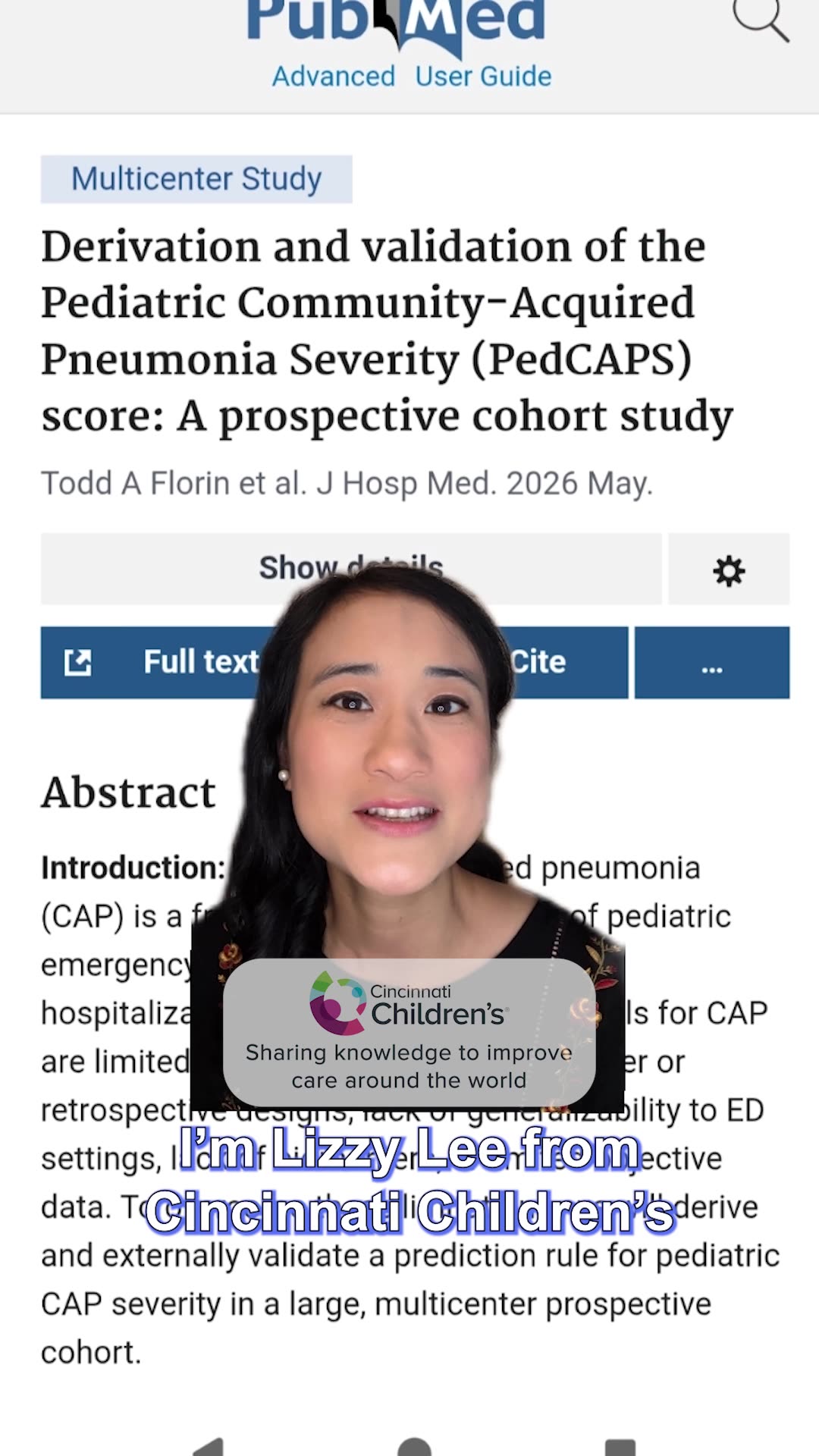
Derivation and validation of the Pediatric Community-Acquired Pneumonia Severity (PedCAPS) score: A prospective cohort study
50 s · Published Sep 2026
Video
FETO for Late-Diagnosed Severe Congenital Diaphragmatic Hernia (CDH) at Cincinnati Children's with Dr. Beth Rymeski
4 min · Published Sep 2026
Video
Severe Congenital Diaphragmatic Hernia (CDH) Case: FETO Management & Unexpected Findings with Dr. Beth Rymeski
3 min · Published Sep 2026
Video
Fetoscopic Endoluminal Tracheal Occlusion (FETO) Procedure: Step-by-Step Guide with Dr. Beth Rymeski
4 min · Published Sep 2026
Video
Choledochal Cyst Types Explained: Pediatric Surgery Fundamentals
1 min · Published Sep 2026
What the experts said
Artificial intelligence is a technology that permits the machine to simulate human behavior.
Machine learning is a subfield of AI that allows a machine to automatically learn from past data without programming.
Machine learning learns and predicts based on passive observation, whereas artificial intelligence implies an agent interacting with the environment to learn and take actions that maximize its chance of successfully achieving its goals.
Present day machine learning has two purposes: classify data based on models which have been developed, and make predictions about future outcomes.
A hypothetical algorithm specific to classifying data may use computer vision of moles coupled with supervised learning to train it to classify cancerous moles.
Machine learning has proven valuable because it can solve problems at a speed and scale that can't be duplicated by the human mind alone.
With massive computational ability, machines can be trained to identify patterns in and relationships between input data and automate routine processes.