


From
Live Event Content
Challenges in Diaphragmatic Hernia Repair: Update Course 2016
hosted by Dr. Todd Ponsky
Chapter 1 of 6 · Surgical Management
MIS technique
Indications and Technical Approach to MIS CDH Repair
Expert statements on this page
No expert statements were drawn from this page.
Host summaries · secondary, not cited in answers
Educational content from recorded physician discussions — not medical advice. Talk to your (or your child's) care team about your situation.
Video
Controversies in Congenital Diaphragmatic Hernia: Update Course 2018
41 min · Published Aug 2018
Video
CDH-ECMO - VV vs. VA - Repair on ECMO: Update Course 2015
10 min · Published Nov 2015
Video
CDH-ECMO Routine Patient Preoperative Workup, Timing, Technique: Update...
3 min · Published Nov 2015
Video
Pediatric ECMO: Update Course 2018
42 min · Published Aug 2018
Podcast
Congenital Diaphragmatic Hernia with Dr. Charlie Stolar
82 min · Published Jan 2017
Video
BOB Winner Presentation - Dr. Rebeca Figueira - EUPSA
Published Feb 2023
Video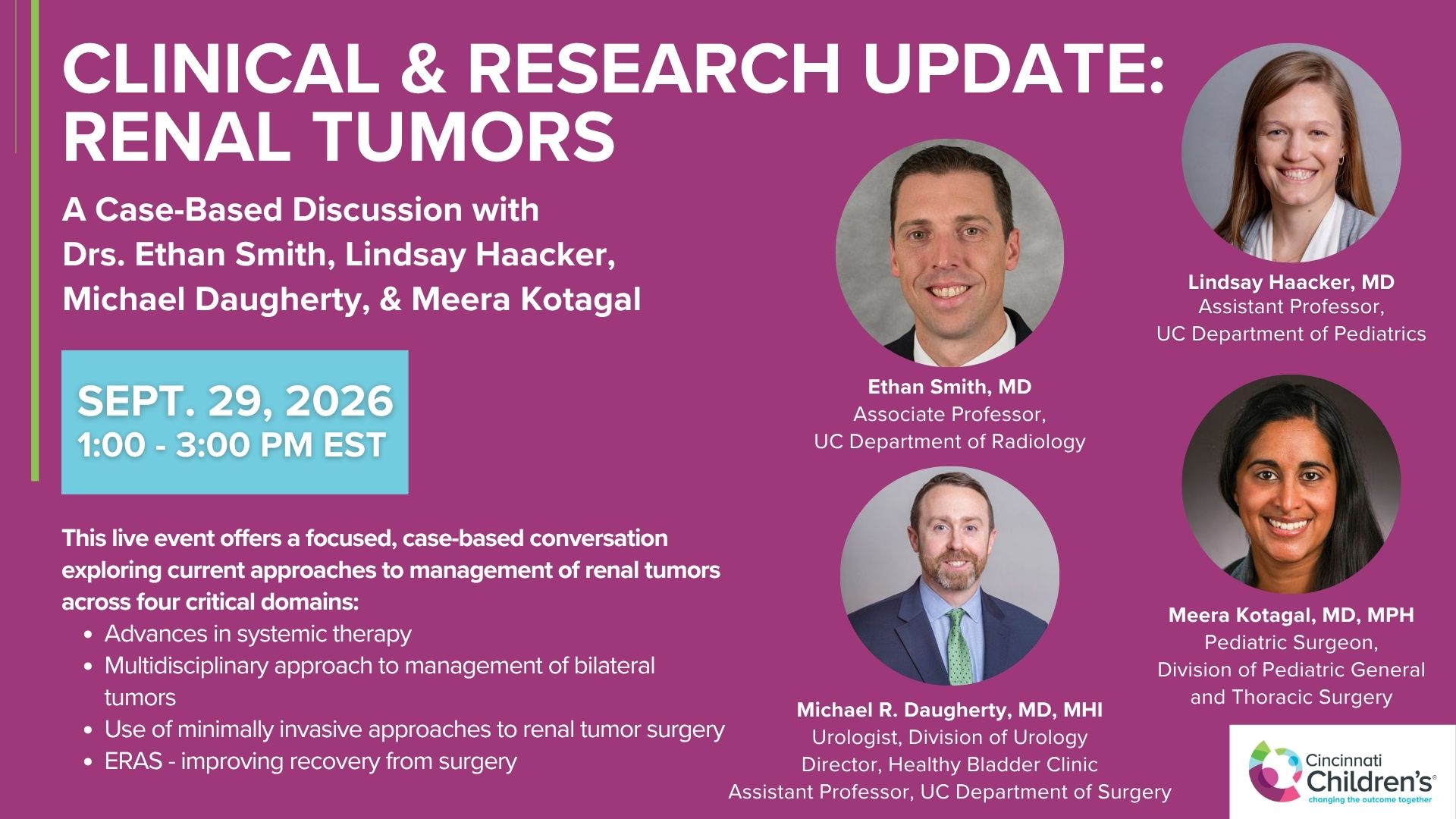
Clinical & Research Update: Renal Tumors with Drs. Ethan Smith, Lindsay Haacker, Michael Daugherty, and Meera Kotagal
71 min · Published Sep 2026
Video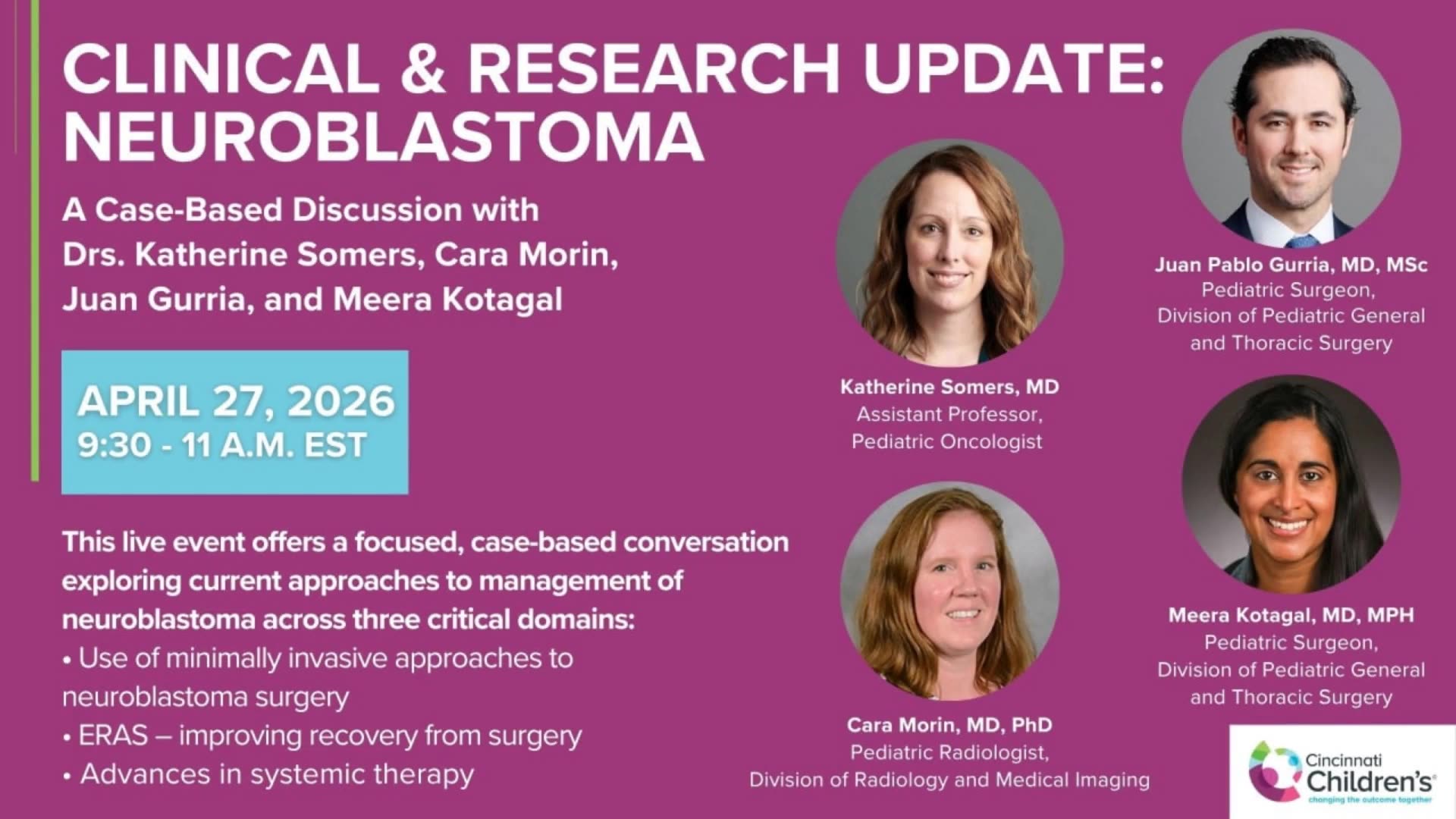
Clinical & Research Update: Neuroblastoma with Drs. Katherine Somers, Cara Morin, Juan Gurria, and Meera Kotagal
67 min · Published Sep 2026
Video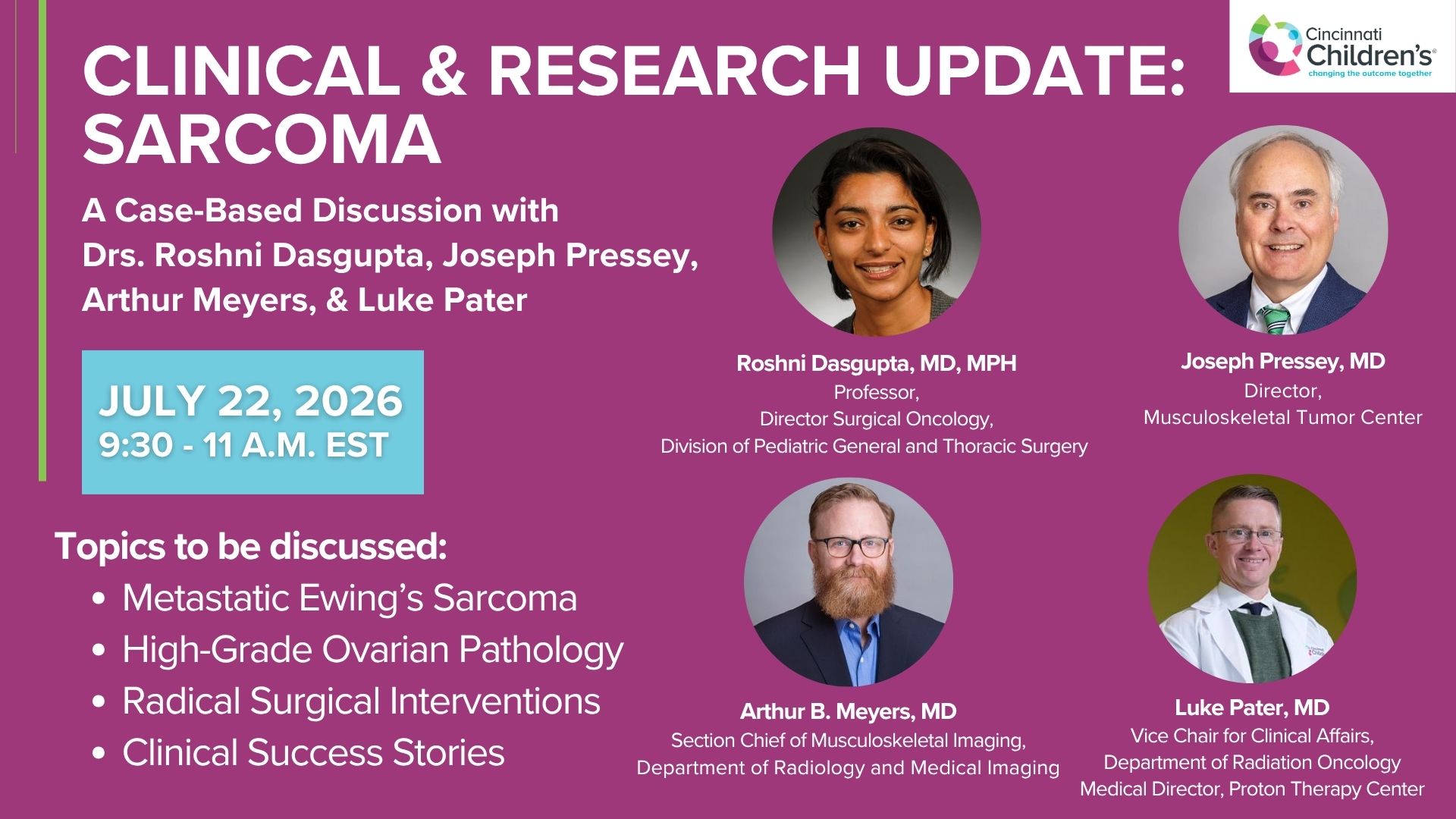
Clinical & Research Update: Sarcoma w/ Drs. Roshni Dasgupta, Joseph Pressey, Arthur Meyer, Luke Pater
66 min · Published Sep 2026
Video
2026 Laparoscopic Pediatric Hernia Repair
123 min · Published Jun 2026
Video
Beyond the Spectrum: Diagnosis, Myths & Management - Caitlin Couch & Leslie Lopez - APP Conference 2026
50 min · Published May 2026
Video
Dysautonomia: Navigating the Journey - Martha Willis - APP Conference 2026
55 min · Published May 2026
What the experts said
Indication for minimally invasive CDH repair is any patient stable enough to transport to OR, with pulmonary pressures lower than systemic.
Contraindications to MIS CDH repair include repair on ECMO; liver-up, stomach-up, oscillator use, and redo repair are NOT contraindications.
A laparotomy for CDH repair carries significant lifelong risk of small bowel obstruction, which may be underestimated and is a major advantage of MIS approach.
Technical pearls for MIS CDH repair include pericostal sutures, mesh reinforcement, and avoiding tension; agenesis or near-agenesis should prompt conversion to open.
All CDH patients have obligate pneumothorax post-repair due to pulmonary hypoplasia; chest tube use is debated.
Pericostal 'seesaw' suture technique involves bringing suture through small stab incision, around rib, and tying externally; scars fade over time.
Biologic mesh alone to bridge a CDH defect is associated with higher recurrence rates; biologics dissolve in the middle due to lack of tissue ingrowth on the chest side.
PTFE-biologic sandwich technique (PTFE on lung side, biologic on abdominal side) reduces recurrence compared to biologic alone, particularly for dome recurrences.
In multivariate analysis of institutional experience, use of biologic mesh alone was a major risk factor for CDH recurrence.
Biologic underlay should extend beyond the primary repair edge by 1-2 cm, with sutures taking bites of diaphragm and mesh away from the edge to create overlap.
Days to repair are less important than change in pulmonary pressure over time; goal is to avoid repairing during physiologic instability.
Historical 'honeymoon period' where stable CDH neonates suddenly crash to ECMO is seen less often now but remains a concern.
Physiologic defect in CDH is pulmonary, not the intestines in the chest ('not the chits in the chest').
Decision to place CDH patient on ECMO is joint between pediatric surgeon and neonatologist; institutional variability exists.
Institutional comfort and experience with VV ECMO management affects outcomes; some centers routinely convert VV to VA due to instability.
VV ECMO cannulation technique uses open cut-down with cephalad cannula to smooth out first 24 hours and improve flows.
Institutional practice: if CDH patient cannot be weaned from ECMO, transition to comfort measures rather than last-ditch repair on ECMO.
Some institutions repair very sick CDH patients early in ECMO run (first 24-48 hours) with reported decreased bleeding risk, though this is debated.
Patients who linger then have acute hypertensive crisis and go on ECMO may be repaired off ECMO after short run; long-riders may be repaired early if stable.
In recurrent-recurrent CDH, latissimus flaps or large chest wall muscle flaps may be used as salvage.
Sewing to good tissue is critical; recurrences may occur when suturing to scar tissue rather than viable diaphragm.
Transversus abdominis flap technique involves transverse abdominal incision at umbilicus level, developing transversus plane, maintaining blood supply; half the flap remains naturally attached to lateral wall.
Muscle flap reconstruction carries risk of abdominal wall deformity; patient selection is important.
Most centers wait to repair CDH until right-sided (pulmonary) pressures are lower than systemic pressures.
Recent study suggests waiting until after ECMO decannulation for CDH repair may improve survival rates.
Early studies from Babies Hospital showed relatively high recurrence rate for primary MIS CDH repair, but this may be related to technique.
Consensus among audience: wait 2-4 days before repairing stable term CDH neonate to ensure pulmonary hypertension does not develop.
Audience poll: 63% would perform thoracoscopic patch repair, 60% would do MIS repair after ECMO, 67% prefer thoracoscopic approach overall.
Standard ECMO criteria require repeated evidence of elevated OI over several hours, not single measurement.
VV ECMO overall outcomes may favor VV over VA ECMO for CDH; VA ECMO associated with more neurologic events, VV with more renal complications.
Propensity analysis showed VV ECMO survival 60% versus VA ECMO 46% for CDH.
Oxygen is an incredible inotrope; oxygenated blood via VV ECMO often allows weaning of pressors.
Muscle flap repair (transversus abdominis) has dramatically lower recurrence rate than patch repair for large CDH defects, particularly in ECMO population.
ELSO registry study of matched patients showed higher survival for CDH repair after ECMO versus on ECMO.