


From
Live Event Content
APSA - A contrast challenge is safe in children with adhesive small bowel obstruction- a multi-institutional review - Nathan Rubalcava
With Dr. Nate Rubocava
Chapter 1 of 4 · Evidence & Research
Introduction
Introduction and session setup
Expert statements on this page
No expert statements were drawn from this page.
Host summaries · secondary, not cited in answers
Educational content from recorded physician discussions — not medical advice. Talk to your (or your child's) care team about your situation.
Video
Gastrografin Protocol for Adhesive Small Bowel Obstruction (SBO)
CCHMC Pediatric Surgery · Published Sep 2019
Podcast
Journal of Pediatric Surgery Article Review: November 2023
12 min · Published May 2024
Podcast
Malrotation with Dr. Meera Kotagal
13 min · Published May 2023
Video
New Concepts in Radiology: Update Course 2017
40 min · Published Aug 2017
Video
Colorectal - Clinical Practice Updates
52 min · Published Sep 2020
Video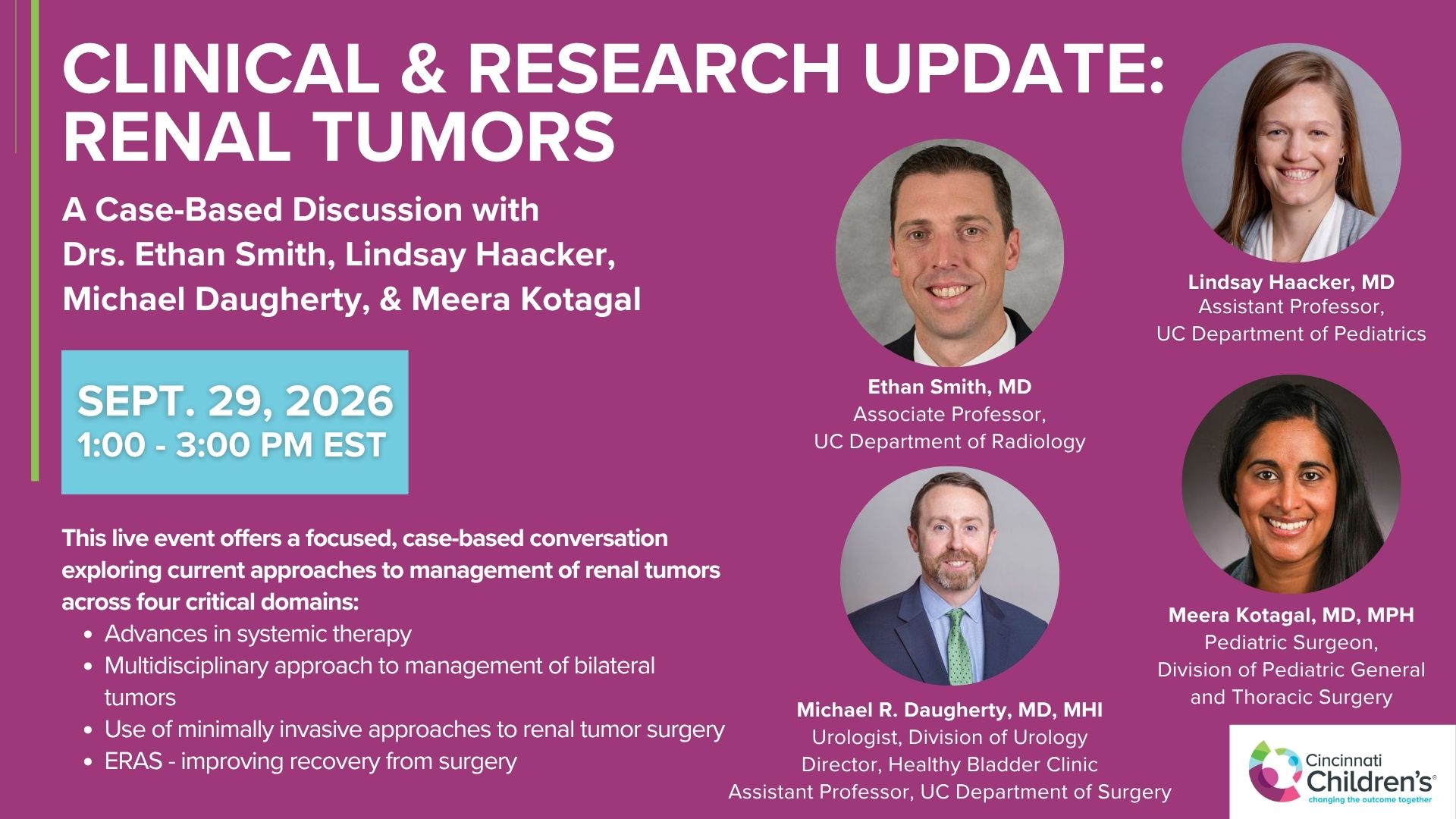
Clinical & Research Update: Renal Tumors with Drs. Ethan Smith, Lindsay Haacker, Michael Daugherty, and Meera Kotagal
71 min · Published Sep 2026
Video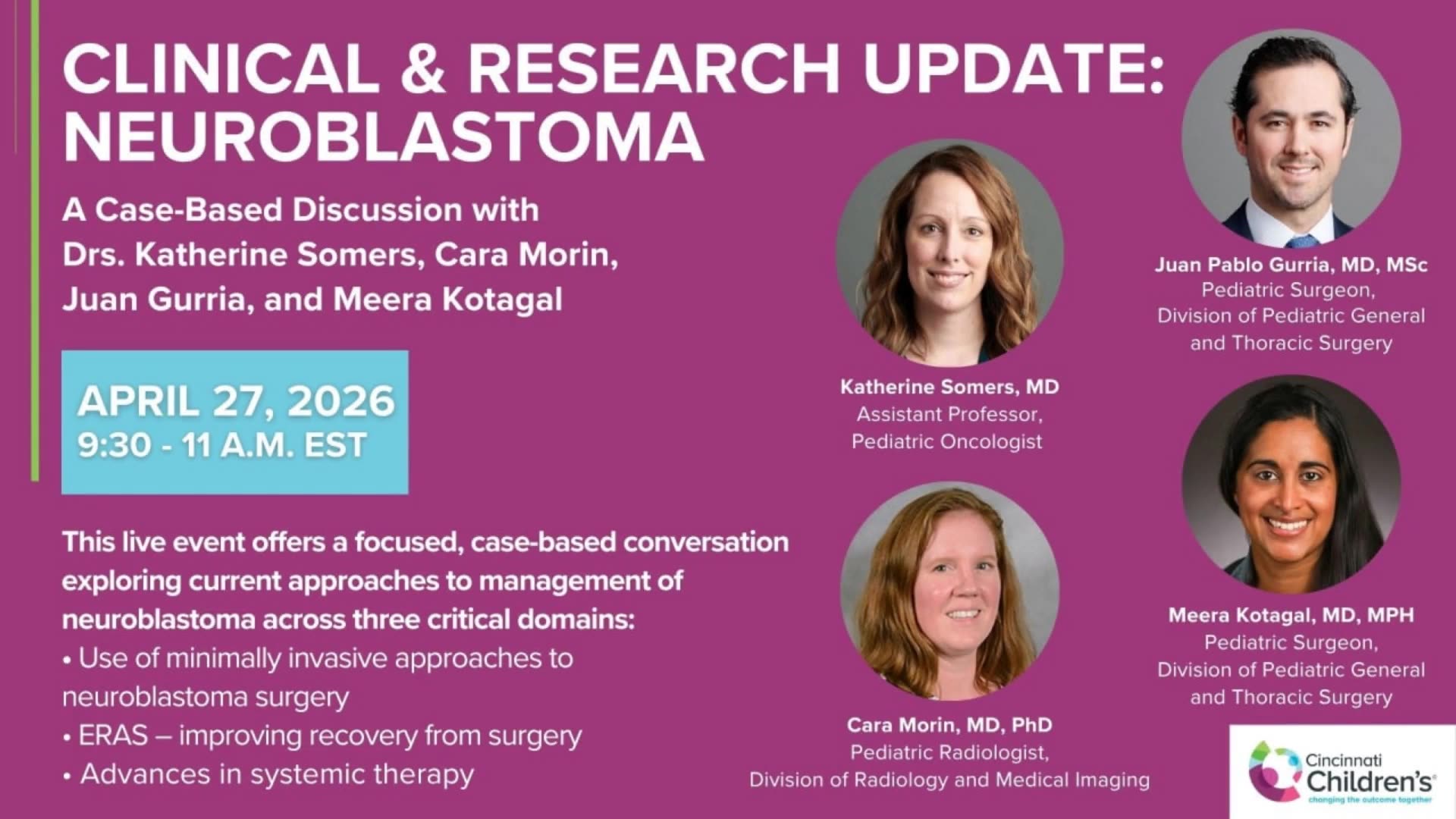
Clinical & Research Update: Neuroblastoma with Drs. Katherine Somers, Cara Morin, Juan Gurria, and Meera Kotagal
67 min · Published Sep 2026
Video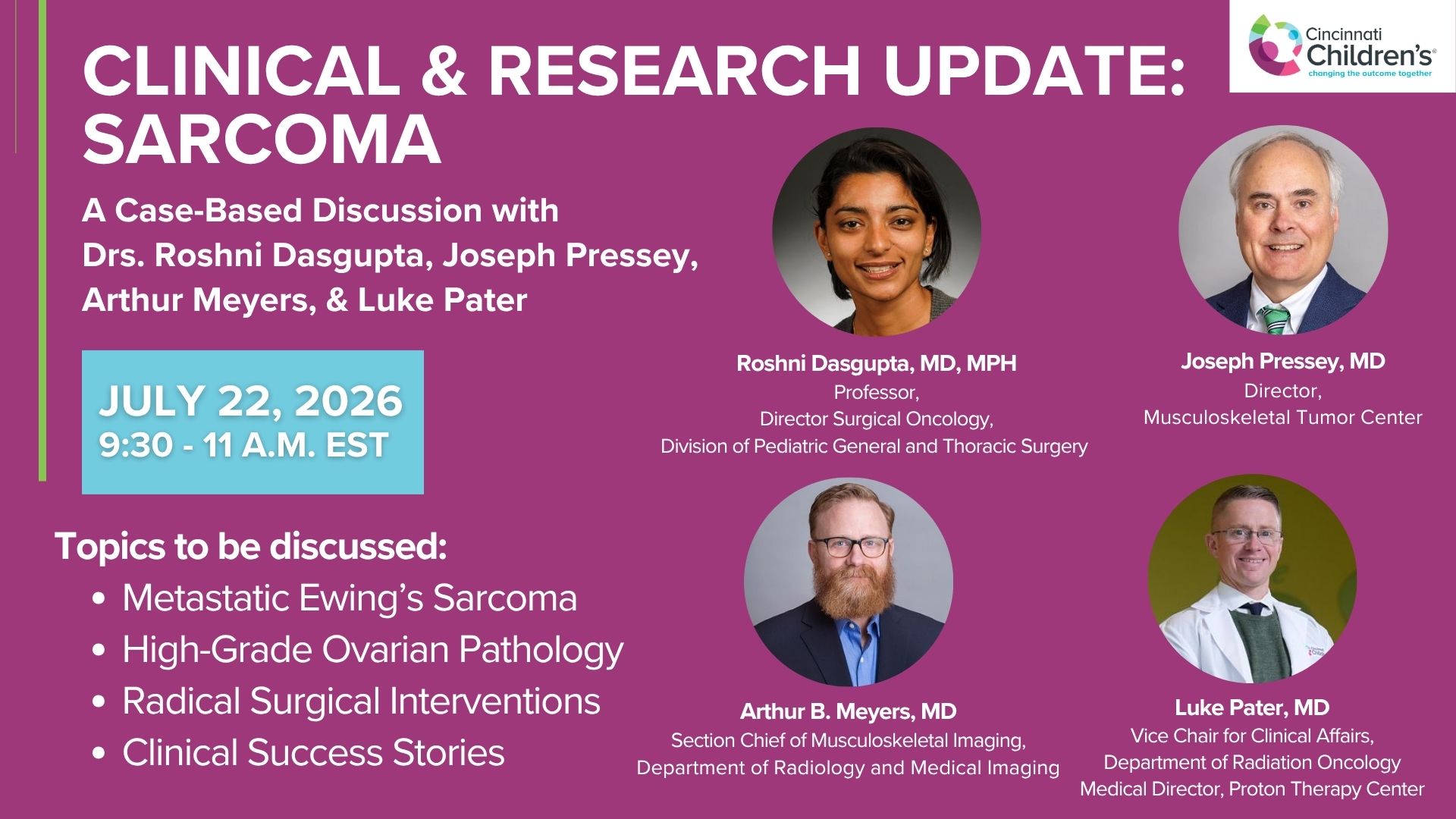
Clinical & Research Update: Sarcoma w/ Drs. Roshni Dasgupta, Joseph Pressey, Arthur Meyer, Luke Pater
66 min · Published Sep 2026
Video
2026 Laparoscopic Pediatric Hernia Repair
123 min · Published Jun 2026
Video
Beyond the Spectrum: Diagnosis, Myths & Management - Caitlin Couch & Leslie Lopez - APP Conference 2026
50 min · Published May 2026
Video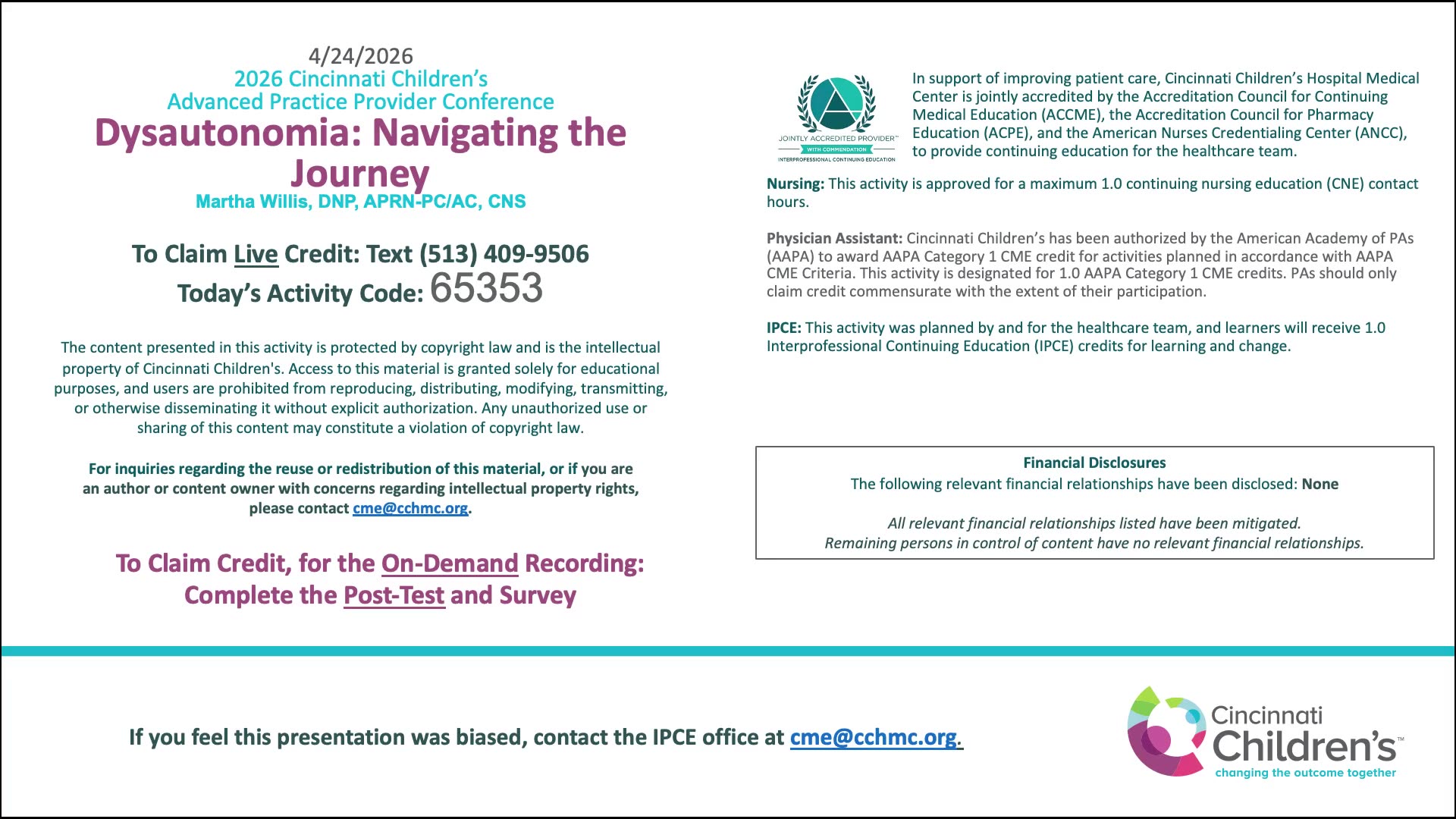
Dysautonomia: Navigating the Journey - Martha Willis - APP Conference 2026
55 min · Published May 2026
What the experts said
Adhesive small bowel obstructions are a well-known cause of morbidity in children following abdominal surgery
Traditional treatment for adhesive small bowel obstruction has been gastric decompression, bowel rest, fluid resuscitation, and electrolyte replacement
Over the last two decades, water-soluble contrast agents in management of small bowel obstructions have become well established in adult literature given their ability to predict success of non-operative management
A contrast challenge is performed after a period of gastric decompression, with abdominal X-ray obtained 8 to 10 hours after contrast administration
Contrast in the colon is considered having passed the contrast challenge, and patients are discharged after demonstrating clinical improvement with tolerance of regular diet
Patients without contrast in colon after repeat abdominal X-ray at 24 hours are considered to have failed their contrast challenge and are taken to surgery for exploration
Limited data exists regarding safety and use of contrast challenge in the pediatric population, despite multiple pediatric institutions adopting contrast challenge algorithms
The study performed retrospective review of all children undergoing contrast challenge across 5 children's hospitals over 8 years
By group consensus, a complication rate less than 5% would be considered safe to use a contrast challenge for clinical practice
Major complications were defined as aspiration, pneumonia, anaphylaxis, cardiovascular complications, and renal failure; minor complications included urticaria, dyspnea, and worsening abdominal pain
82 children underwent a contrast challenge; 57 initially passed with 53 having clinical improvement and successful discharge; 25 failed and were taken to surgery
There was a significant age difference between groups, with those passing the challenge being a median of 7 years older, but no differences between each age group
Over 30% of patients had neurologic and pulmonary comorbidities
Contrast agents used were institution-specific with relatively similar osmolality, with dilute gastrographin being the most commonly utilized agent
There were no major or minor complications in the study, with a 0% complication rate and confidence interval of 0 to 3.6%, significantly below the pre-set acceptable complication rate of 5%
There were no mortalities in either group
The group that failed their contrast challenge had a significantly longer hospital stay by 5 days
A total of 6 patients were readmitted within 30 days for recurrent small bowel obstruction
The contrast challenge has a sensitivity of 100%, specificity of 86%, negative predictive value of 100%, and positive predictive value of 93%
Every institution had a similar protocol that had been mirrored to Doctor Grace Mack from University of Chicago's study from 2018
This review of 82 patients is the largest to date in children demonstrating that a contrast challenge is safe, effective, and highly predictive in children
The Midwest Pediatric Surgery Consortium is conducting a prospective study looking at contrast challenges in pediatric adhesive small bowel obstruction
More pediatric surgeons have adopted the practice after the study showed it was safe and effective in predicting which children will be successfully managed non-operatively
This study will impact every single child that undergoes abdominal surgery because for the rest of their life they are at risk of adhesive small bowel obstruction