


From
StayCurrentMD
Pediatric Colorectal Contraversies Part II: Pediatric Colorectal...
With Dr. Long Lee · hosted by Dr. Em Gootee
Chapter 1 of 5 · Surgical Management
Vestibular repair timing
Vestibular fistula: primary repair versus colostomy timing and technique
Expert statements on this page
No expert statements were drawn from this page.
Host summaries · secondary, not cited in answers
Educational content from recorded physician discussions — not medical advice. Talk to your (or your child's) care team about your situation.
Podcast
Cloaca Management with Dr. Marc Levitt & Dr. Aaron Garrison
43 min · Published Dec 2016
Video
Surgical Management Of Female Anorectal Malformation Patients Including...
57 min · Published Nov 2018
Video
ARMs in Neonates: Pediatric Colorectal Controversies 2014
105 min · Published Apr 2012
Podcast
Colorectal Quiz Episode 28: Female ARM Management - Perineal Fistula
19 min · Published Feb 2022
Video
Anorectal Malformation Management of Female Patients Part II: Pediatric...
28 min · Published Apr 2012
Video
Anorectal Malformation Management of Female Patients Part I: Pediatric...
26 min · Published Apr 2012
Video
Validation of an anorectal malformation trainer - Can a high-fidelity model simulate real life?
1 min · Published Jun 2026
Video
Complications and Long-Term Outcomes of Patients With Cloacal Malformation After Bowel Neovagina...
1 min · Published Jun 2026
Video
Safety and utility of long-acting steroid injection for management of post-operative stricture...
1 min · Published Jun 2026
Video
Association Between Social Determinants of Health and Choice of Urinary Reconstruction in Children
1 min · Published Jun 2026
Video
The Perineal Body Preserving PSARP (PPP)
11 min · Published Jun 2026
Video
Update Course Rewind 2025: Hirschsprung + ARM: Rare but Real
1 min · Published May 2026
Video
Intestinal Atresia Types Explained: Grossfeld Classification for Pediatric Surgery
1 min · Published Sep 2026
Video
Derivation and validation of the Pediatric Community-Acquired Pneumonia Severity (PedCAPS) score: A prospective cohort study
50 s · Published Sep 2026
Video
FETO for Late-Diagnosed Severe Congenital Diaphragmatic Hernia (CDH) at Cincinnati Children's with Dr. Beth Rymeski
4 min · Published Sep 2026
Video
Severe Congenital Diaphragmatic Hernia (CDH) Case: FETO Management & Unexpected Findings with Dr. Beth Rymeski
3 min · Published Sep 2026
Video
Fetoscopic Endoluminal Tracheal Occlusion (FETO) Procedure: Step-by-Step Guide with Dr. Beth Rymeski
4 min · Published Sep 2026
Video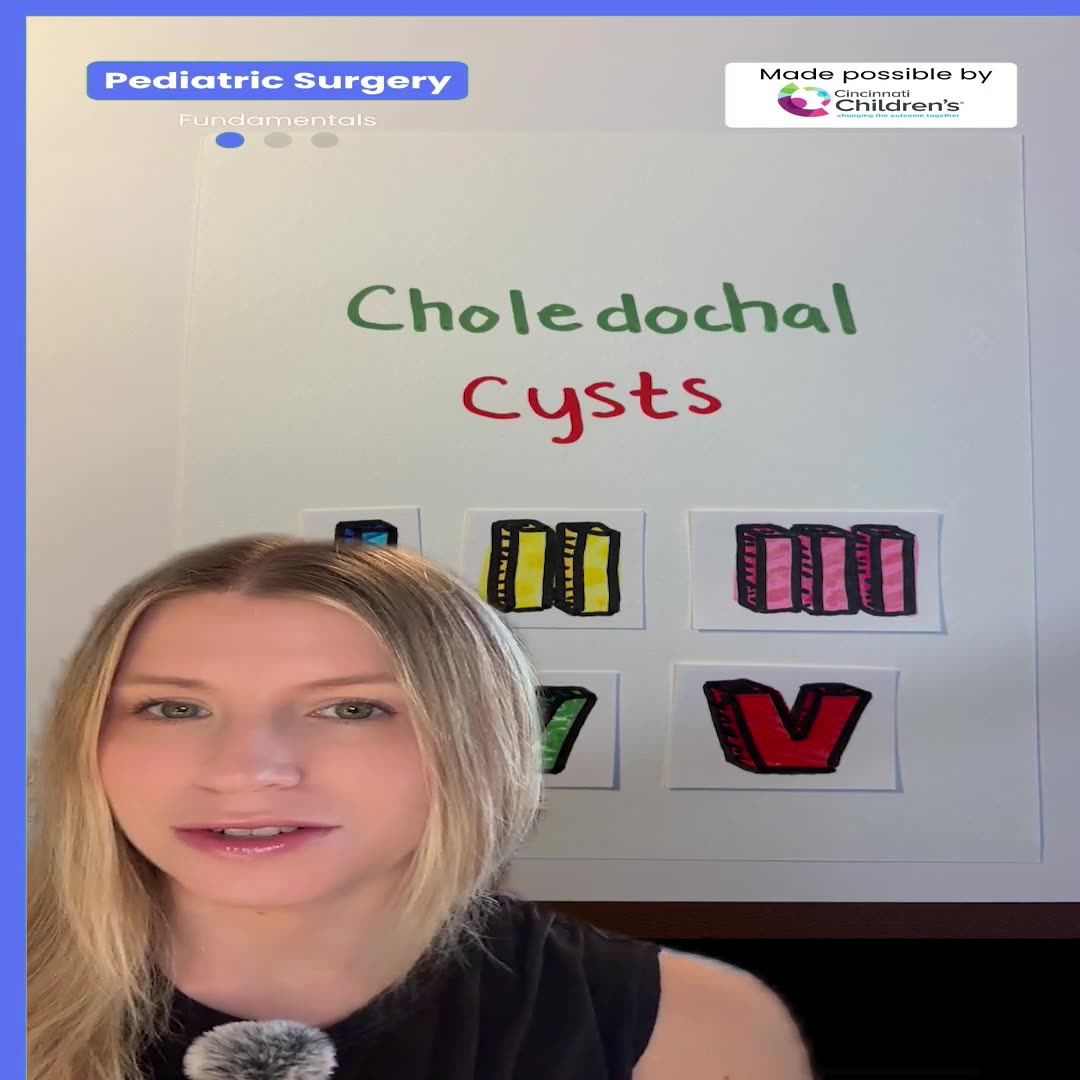
Choledochal Cyst Types Explained: Pediatric Surgery Fundamentals
1 min · Published Sep 2026
What the experts said
Primary repair is preferred in the neonatal period with a very nice fistula; older patients may require colostomy
Primary repair can be performed up to 3-4 months of age if surgeon is confident; otherwise two-operation approach is used
Teenagers repaired with classical three-operation approach have beautiful perineum and perfect function
Patients repaired primarily 7-8 years ago have more stenosis and adhesions because feces pass through during healing even with fasting
Vestibular fistula patients with normal sacrum and no cord have excellent prognosis with good operation
For babies born in hospital, operate within first 72 hours before colonization occurs
For 6-month-old baby with megacolon, clean colon with GoLYTELY completely, then central line with 7-10 days NPO on parenteral nutrition before repair
Oval-shaped anus with no radiating streaks is very specific for Currarino syndrome
Presacral mass corresponds to either anorectal stenosis (mass just in front of stenosis) or Currarino syndrome
Opening colostomy in fixed portion of colon (end of descending colon) prevents prolapse
Opening colostomy in mobile portion of colon will cause severe prolapse
Mucous fistula should be reduced in size and made tiny, only necessary for irrigation and diagnostic tests
Transverse colostomy dysfunctionalizes a very long piece of colon
It is extremely difficult to do a good distal colostogram through transverse colostomy because of difficulty applying enough hydrostatic pressure
Colon perforation with distal colostogram occurred mainly through transverse colostomy
Cleaning colon distal to transverse colostomy is almost impossible, leaving pool of meconium that colonizes
With transverse colostomy and rectourinary fistula, urine gets trapped in colon, is absorbed, and can cause hyperchloremic acidosis
Long-term transverse colostomy causes distal colon to become extremely dilated and full of meconium
There is a direct relationship between degree of megacolon and degree of constipation the patient will have
Loop colostomies have more prolapse than separated colostomies
For laparoscopic repair, distal colostomy can act as traction to help dissect fistula, then take down and open new one simultaneously
Cloaca is rarely diagnosed prenatally in second trimester; third trimester ultrasound more common
Midline abdominal mass in cloaca patient is always hydrocolpos; never seen a cloaca with that mass that was not hydrocolpos
Hydrocolpos compresses bladder trigone and produces acquired ureterovesical obstruction with megaureters and hydronephrosis
Draining hydrocolpos makes hydronephrosis disappear
Unnecessary nephrostomy, ureterostomy, or vesicostomy may be performed if urologist does not recognize that hydrocolpos drainage is the key
Consequences of not draining hydrocolpos are urosepsis and infected hydrocolpos (pyocolpos) that permanently damages vagina
Transperineal catheter drainage of hydrocolpos will come out in two days and hydrocolpos will reform
Drain hydrocolpos with permanent catheter through abdomen, not by dilating common channel
Interventional radiology can drain hydrocolpos under ultrasound guidance if it is large enough and close to abdominal wall
Vesicostomy is indicated when common channel is almost atretic and baby has difficulty emptying bladder after hydrocolpos drainage
For vestibular fistula, Professor Liam prefers primary repair around day 5-7 of life
About 30-40% of anorectal stenosis or rectal atresia cases will have a presacral mass
MRI is the best way to show a presacral mass
For anorectal stenosis repair, open posteriorly only to preserve anterior dentate line and avoid anterior rectal dissection
Loop colostomy is never completely diverting no matter how much surgeons believe it is
Spillage across loop colostomy causes urinary tract infections in patients with fistulas
Cleaning out distal colon at colostomy creation takes about 20-30 minutes and is very important
Distal sigmoid colostomy makes laparoscopic operation more difficult and may require opening to take down mucous fistula
Best tube for hydrocolpos drainage is curled pigtail tube because hydrocolpos recedes into pelvis over months; straight tube will fall out