


From
StayCurrentMD
Gastric Neurostimulators: Update Course 2017
hosted by Dr. Todd Ponsky
Part of
Gastroparesis 6 items
Chapter 1 of 6 · Case-Based Learning
Case 1 workup
Case 1: 17-year-old with autoimmune gastroparesis—workup and treatment decision
Expert statements on this page
No expert statements were drawn from this page.
Host summaries · secondary, not cited in answers
Educational content from recorded physician discussions — not medical advice. Talk to your (or your child's) care team about your situation.
Video
Gastroesophageal Reflux: Contemporary Management Pediatric Surgery Update...
32 min · Published Jul 2017
Video
BOB Ped Surg 2023 - Mohamad Qinawy, PAPSA - Presentation
8 min · Published Feb 2023
Podcast
Top Ten Things to Remember from the 2017 Stay Current Annual Update Course...
25 min · Published Oct 2017
Video
Top Ten Things to Remember: Update Course 2017
25 min · Published Oct 2017
Podcast
The invention of the PEG tube with Dr. Jeffrey Ponsky
Jeffrey Ponsky · 33 min · Published Jul 2026
Video
Laxative for Bowel Management: Pediatric Bowel Management 2013
Dr. Todd Ponsky · 26 min · Published May 2013
Video
Intestinal Atresia Types Explained: Grossfeld Classification for Pediatric Surgery
1 min · Published Sep 2026
Video
Derivation and validation of the Pediatric Community-Acquired Pneumonia Severity (PedCAPS) score: A prospective cohort study
50 s · Published Sep 2026
Video
FETO for Late-Diagnosed Severe Congenital Diaphragmatic Hernia (CDH) at Cincinnati Children's with Dr. Beth Rymeski
4 min · Published Sep 2026
Video
Severe Congenital Diaphragmatic Hernia (CDH) Case: FETO Management & Unexpected Findings with Dr. Beth Rymeski
3 min · Published Sep 2026
Video
Fetoscopic Endoluminal Tracheal Occlusion (FETO) Procedure: Step-by-Step Guide with Dr. Beth Rymeski
4 min · Published Sep 2026
Video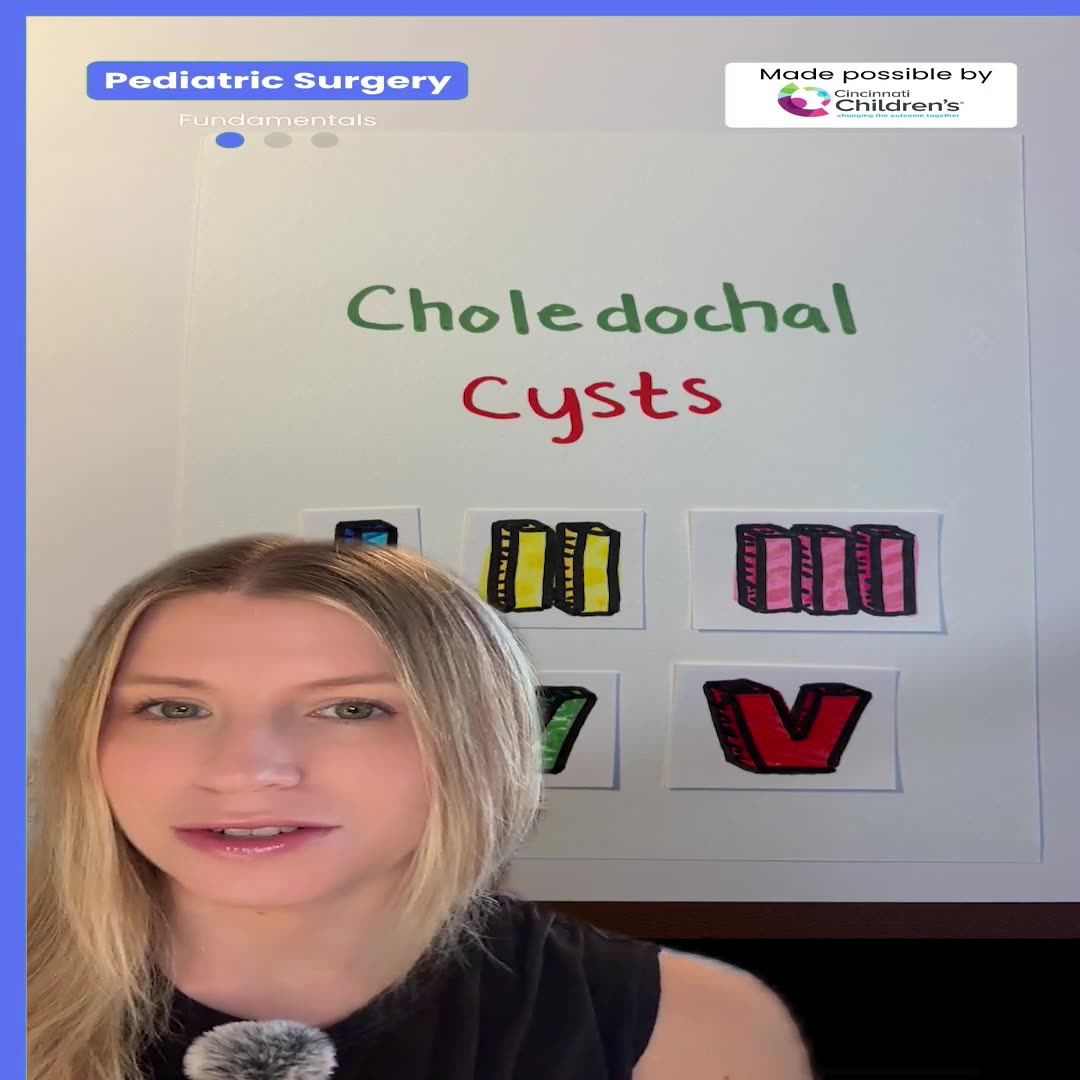
Choledochal Cyst Types Explained: Pediatric Surgery Fundamentals
1 min · Published Sep 2026
What the experts said
Gastric emptying scan showing 90% retention at 2 hours indicates severe gastroparesis.
Jejunal feeding is not a long-term solution for gastroparesis; it is a diagnostic test to assess symptom response to bypassing the stomach.
Performing Nissen fundoplication often improves delayed gastric emptying in pediatric patients.
Post-Nissen wretching in patients with intact fundoplication and delayed gastric emptying may respond to gastric stimulation.
Post-Nissen wretching is the most exciting outcome for gastric stimulation, with dramatic symptom relief.
Performing fundoplication for nausea alone (without reflux) is the wrong operation.
Performing Nissen fundoplication in a chronic vomiter may convert vomiting to wretching if gastroparesis is present.
Peroral pyloromyotomy (endoscopic) is now used in adults for gastroparesis and may change management, though pediatric experience is limited.
The stomach's intrinsic pacemaker (interstitial cells of Cajal) generates electrical activity at 3 cycles per minute, 20–40 millivolts.
Gastric electrical activity sets the pace for contractions but does not initiate them; a stomach with 3 waves/min cannot contract more than 3 times/min.
Gastric stimulation uses low voltage (≤7V) and low current (≤10 mA) to reorganize gastric electrical conductivity, not to directly pace the stomach.
Some patients feel transient sensation ("butterflies") when stimulator settings are changed, but most adapt within 1–2 days.
The implantable pulse generator (anode) can cause sensation if placed too close to the dermis, especially in thin children with little subcutaneous fat.
Approximately 30% of patients do not respond to permanent gastric stimulation; temporary trial predicts response.
Stimulation parameters: 14 Hz frequency, on 3 seconds / off 2 seconds, ≤10 mA current, ≤7V voltage.
Laparoscopic gastric stimulator implantation takes approximately 5 minutes in experienced hands.
Temporary gastric stimulation can be performed via nasal leads (cardiac pacing wires clipped endoscopically) or via G-tube using fetal scalp electrodes.
Temporary gastric stimulation trials should last more than 2–3 days to distinguish placebo effect from true response.
Some patients have initial response to gastric stimulation but experience symptom recurrence long-term, possibly due to psychosocial or other factors.
Patients reliably report symptom recurrence when gastric stimulator batteries fail.
Gastric stimulation likely works via vagal afferent modulation affecting brainstem nausea centers, not by improving gastric emptying.
Adult studies have not shown significant improvement in gastric emptying with gastric stimulation.
Gastric stimulation for obesity has passed FDA trials and is approved in Europe.
Pediatric insurance denials for gastric stimulation are rare, unlike in adult populations.
No patients who responded to temporary stimulation failed permanent implantation at the presenters' institution.
Tom Abel's blinded crossover study showed 100% of patients improved on day 1 (placebo effect), but by day 3 only the stimulation-on group sustained benefit.
Tom Abel demonstrated more coordinated gastric electrical waves after stimulation.